 Orcas Island
 Siding Built for Life on Lopez Island
Lopez Island homes face a specific combination of stresses that inland Washington siding never has to deal with: salt-laden air coming off the water, driving rain that hits from the water side of a house far harder than the road side, and a moss season that can stretch from late fall through spring. Any siding installed here has to handle all three at once, year after year, without babysitting from the homeowner. That's the standard we hold every Lopez Island installation to.
We install James Hardie fiber cement exclusively. That's not a marketing angle — it's a decision made after years of watching how different siding products actually perform on San Juan County homes, not how they perform in a brochure. On an island where a service call means a ferry ride, the siding on your house needs to be right the first time.
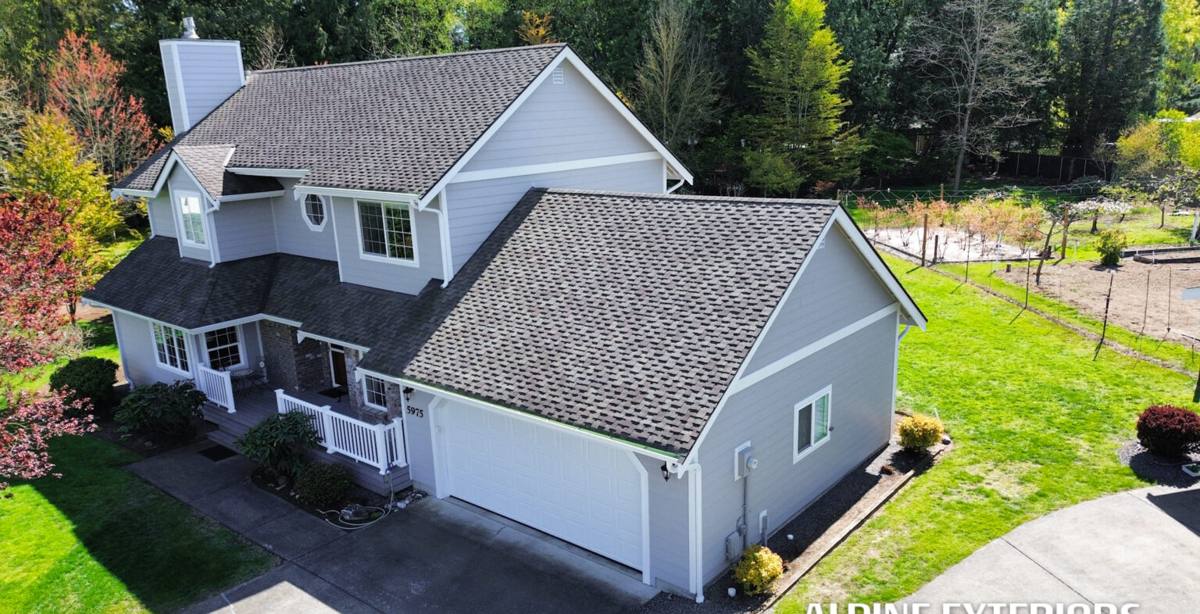
Why Lopez Island's Climate Is Harder on Siding Than It Looks
Salt Air and Corrosion
Homes with any water exposure on Lopez Island take on airborne salt that settles on exterior surfaces continuously, not just during storms. Salt accelerates corrosion in fasteners, trim hardware, and any siding product that isn't dimensionally stable. Over time it also degrades certain paint systems and caulking faster than manufacturers' standard warranties assume, which is why product choice and installation detailing both matter more here than in a typical mainland subdivision.
Driving Rain and Wind-Driven Moisture
San Juan County storms frequently come with sideways rain, and Lopez Island's open water exposure means many homes take direct wind-driven moisture on at least one elevation. Siding that relies on face-sealed joints or that swells and contracts significantly with moisture is more likely to let water find its way behind the cladding on these elevations. Correct water management — not just the siding material — is what actually keeps a wall assembly dry.
Moss, Mildew, and a Long Wet Season
The Pacific Northwest's wet season runs long, and shaded, tree-lined lots common on Lopez Island keep siding damp for extended stretches even when it isn't actively raining. Surfaces that stay damp longer are more prone to moss and mildew growth, especially on north-facing walls and anywhere tree canopy blocks sun and airflow. Siding that absorbs moisture into its substrate gives that growth something to root into; siding that doesn't makes it a surface-level cleaning problem instead of a structural one.
What Correct Siding Installation Actually Involves
A siding job is only as good as what's underneath it. On Lopez Island, where a mistake can take months to reveal itself and longer to get fixed on-island, we don't cut corners on the parts of the job that aren't visible after the crew leaves.
- Full removal of old siding and inspection of the sheathing underneath for rot, soft spots, or prior water damage
- Repair or replacement of any compromised sheathing or framing before anything new goes up
- A correctly lapped weather-resistive barrier, installed to shed water down and out rather than trap it
- Properly flashed windows, doors, and any penetrations — the single most common source of hidden leaks
- Rainscreen or vented gap detailing where the wall assembly and elevation exposure call for it
- Fastening to manufacturer spec — correct nail type, spacing, and depth, not "close enough"
- Factory-finished James Hardie panels or lap siding installed with the correct gaps, caulking, and trim details for this climate
Skipping any one of these steps doesn't usually cause an immediate problem. It causes a problem in year three or four, hidden behind siding that looks fine from the driveway — which is exactly the kind of failure that's expensive to diagnose and even more expensive to fix on an island.
Why We Install Only James Hardie Fiber Cement
We get asked why we don't offer vinyl, LP SmartSide, or cedar as options. The honest answer is that we made a call, based on what holds up on exposed island properties, and we'd rather stand behind one product system we trust completely than offer a menu and let a homeowner unknowingly choose the wrong one for their exposure.
| Consideration | Why It Matters on Lopez Island |
|---|---|
| Non-combustible material | Fiber cement doesn't feed a fire the way wood-based products can — meaningful for rural, tree-covered island properties with longer emergency response times |
| Moisture stability | Fiber cement doesn't swell, cup, or absorb water the way engineered wood substrates can, which matters directly given the driving rain and long wet season here |
| Factory-applied ColorPlus finish | Baked-on finish resists fading and holds up to salt air and UV better than field-applied paint, and it comes with its own finish warranty |
| Climate-engineered HZ product lines | Hardie manufactures different formulations for different climate zones; the HZ5 line used in the Pacific Northwest is built for exactly this kind of wet, marine exposure |
| Long-term maintenance burden | Once installed correctly, fiber cement asks less of the homeowner over time than products that need periodic refinishing or moisture monitoring |
None of this means other products are junk — vinyl is inexpensive and easy to install, and cedar has a look plenty of people love. But on an island property where a moisture mistake is hard to catch early and costly to fix late, we'd rather install the product with the strongest track record for exactly these conditions.
What This Looks Like on a Real Lopez Island Property
Most of the homes we look at on Lopez Island fall into one of a few categories: a waterfront or near-waterfront property taking direct salt and wind exposure, a tree-shaded lot with a persistent moss and moisture problem, or an older home where the original siding was never detailed for this climate to begin with. Each of those calls for slightly different attention during installation — waterfront homes need extra care on fastener corrosion resistance and joint sealing, shaded lots benefit from ventilation detailing that helps surfaces dry out between rain events, and older homes almost always need sheathing repair before new siding goes on.
We walk every property before quoting anything, because the right approach genuinely depends on which of these situations you're in — not a one-size-fits-all package.
Our Process for Lopez Island Jobs
- On-site assessment — we look at current siding condition, sheathing health, sun/shade exposure, and wind exposure by elevation
- Written scope and estimate — clear on what's being removed, repaired, and installed, with no vague allowances
- Scheduling built around ferry logistics — materials and crew timing planned around the realities of getting to and from the island, not treated as an afterthought
- Tear-off and substrate repair — nothing new goes over a compromised wall
- Weather barrier, flashing, and rainscreen detailing — the unglamorous work that determines whether the job lasts
- James Hardie installation to manufacturer spec — correct fasteners, gaps, and finish work
- Final walkthrough — so you know exactly what was done and why
Why Hiring a Crew That Already Works Lopez Island Matters
A contractor who treats Lopez Island as just another stop adds real risk to a siding job: trips get consolidated to save money, which means delays when weather or ferry schedules don't cooperate; unfamiliarity with how exposure varies from one side of the island to the other can lead to under-detailing a wall that actually needs more protection than a standard spec calls for. A crew that regularly works San Juan County islands plans for ferry schedules, orders materials with enough lead time to avoid mid-job delays, and already understands which elevations on an island property typically need extra attention.
That familiarity doesn't show up as a line item on an estimate, but it's a large part of why a job goes smoothly instead of turning into a stretched-out, frustrating project.
What to Check Before Hiring Anyone for Island Siding Work
- Do they carry proper licensing and insurance for exterior work, and will they provide proof?
- Do they have real experience working on islands, including planning around ferry access?
- Will they inspect and address sheathing condition before installing new siding, not just cover it up?
- Do they explain their flashing and water-management approach in plain terms, or wave it off as standard?
- Are they installing a product engineered for this specific climate, or a general-purpose option?
- Do they offer a clear, written warranty on both materials and labor?
Get an Honest Look at Your Siding
If your Lopez Island home has siding that's showing moss, staining, soft spots, or visible wear, it's worth getting an honest, no-pressure assessment before deciding what to do next. We'll walk the property, tell you what we actually see, and give you a clear estimate for James Hardie siding installation built for this climate — no vague pricing, no upsell to products we wouldn't put on our own homes. Request your free estimate using the form below.