 Orcas Island
 Rosario's Climate Is Genuinely Hard on Exterior Siding
Rosario sits close enough to the water that salt-laden air is a constant, not an occasional event. Add the driving rain that comes off the Sound in fall and winter storms, plus a shoulder season where damp shade and slow-drying north and east walls invite moss and algae to take hold, and you have three separate stresses working on a house at once. Most siding products are engineered for one climate problem at a time. San Juan County homes need a product and an installation that handles all three simultaneously, year after year, without babysitting.
This is why we install James Hardie fiber cement exclusively on Orcas Island homes, and why a Rosario job gets specific attention to product selection and detailing that a generic mainland install wouldn't need.
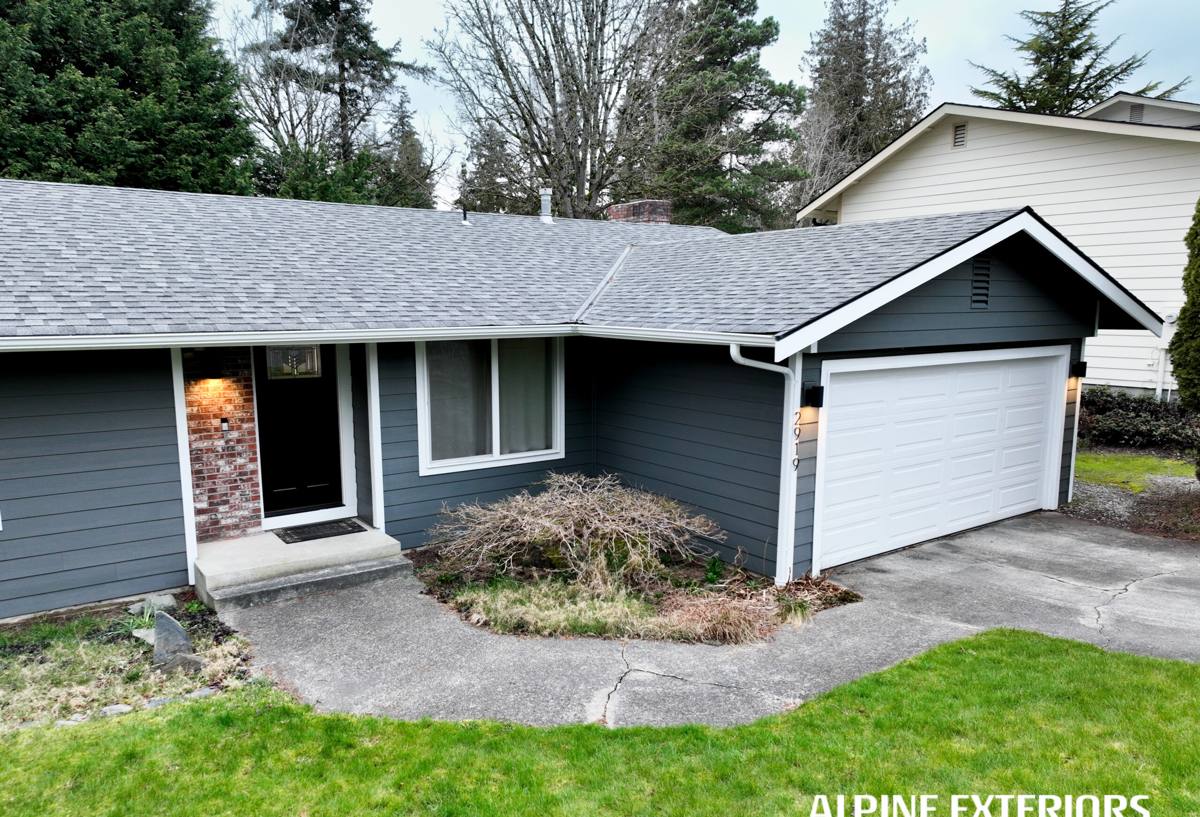
What Salt Air, Rain, and Moss Actually Do to a Wall
Salt Air
Airborne salt is corrosive to fasteners and metal flashing, and it accelerates the breakdown of paint films that aren't formulated to resist it. Over years, a lesser coating chalks, fades unevenly, and loses adhesion faster near the waterline of a bluff or shoreline lot than it would inland.
Driving Rain
Wind-driven rain doesn't just run down a wall — it gets pushed sideways and upward into laps, joints, and penetrations. A siding system is only as good as the water management behind it: the house wrap, flashing, and drainage gap that let any water that gets past the surface find its way back out instead of soaking into the sheathing.
Moss and Algae
Shaded, north-facing walls near mature fir and cedar stay damp far longer than a south wall. That moisture supports moss and algae growth on any surface that holds a film of water, and it's a slow, patient kind of damage — cosmetic staining at first, then a foothold for rot if the substrate underneath isn't holding up its end.
Why James Hardie Is the Right Answer for This Environment
James Hardie fiber cement is engineered from cement, sand, and cellulose fiber — there's no wood pulp on the surface for moss to feed on and no wood substrate to swell and rot when it stays damp. It's non-combustible, which matters on a wooded island where wildfire risk is part of the insurance conversation, and it holds paint and factory finish far longer than wood-based sidings because the material itself doesn't move seasonally the way wood does.
ColorPlus Factory Finish
Hardie's ColorPlus finish is baked on in a controlled factory environment, not brushed on in the field. That gives it better UV and fade resistance than field-applied paint, and in a salt-air environment that resistance is the difference between a wall that still looks sharp in year twelve and one that needs repainting by year six.
HZ5 Engineering
James Hardie makes climate-specific product formulations, and the HZ5 line is engineered for the Pacific Northwest's wet, marine-influenced conditions. It's the version we specify for Orcas Island work, including Rosario, rather than a formulation built for a drier climate zone.
Choosing the Right Hardie Product for a Rosario Home
Not every Hardie product line fits every home the same way. Part of our job is matching the product to the house's exposure, style, and the specific walls that take the worst weather.
| Product | Best Use on a Rosario Home | Notes |
|---|---|---|
| HardiePlank Lap Siding | Most walls, traditional and modern styles | Widest color and texture range; the default choice for full re-sides |
| HardiePanel Vertical Siding | Gable ends, accent walls, modern facades | Clean vertical lines; pairs well with board-and-batten detailing |
| HardieShingle | Homes matching a shingle-style island aesthetic | More labor-intensive install; higher per-square cost |
| HardieTrim | Corners, fascia, window and door trim | Keeps trim from becoming the weak point in an otherwise upgraded wall |
On a heavily shaded, north-facing wall we'll sometimes recommend a slightly different color or sheen than the rest of the house, simply because that wall is going to collect moss faster and a lighter, flatter finish shows it less between cleanings.
What a Correct Installation Involves
James Hardie's own installation instructions are specific, and skipping steps is where most siding failures — on any product — actually originate. On Rosario homes we pay particular attention to:
- A continuous, correctly lapped water-resistive barrier behind the siding, with all seams and penetrations sealed before a single board goes up
- A minimum 1/4-inch rainscreen gap where conditions call for it, so any moisture that does get behind the cladding can drain and dry instead of sitting against the sheathing
- Proper flashing at every window, door, and roof-to-wall intersection — the details that matter most in driving rain
- Correct fastener type, spacing, and embedment; corrosion-resistant fasteners matter more here than on an inland job because of the salt air
- Manufacturer-specified gaps and caulking at butt joints and trim, not tight-fit installation that traps moisture
- Field-cut edges primed or sealed per Hardie's specification, since a raw cut edge is the one place the factory finish isn't protecting the board
Any one of these skipped is invisible on install day and becomes a callback three to five years later. It's also exactly the kind of shortcut that voids the manufacturer's warranty, which only holds up when the installation follows spec.
Our Process on a Rosario Job
1. Site Assessment
We walk the property and look specifically at exposure: which walls take the worst of the wind-driven rain, which stay shaded and damp, and where the existing siding or trim is already showing moisture or moss damage. This shapes product and color choices, not just the labor plan.
2. Tear-Off and Substrate Check
Once the old siding is off, we inspect the sheathing and framing underneath. Any rot or soft spots get addressed before new siding goes up — covering a compromised wall with new siding just hides the problem for a few more years.
3. Water Management Layer
House wrap, flashing, and rainscreen furring (where called for) go in before any Hardie board is installed. This is the layer that actually keeps water out long-term.
4. Installation to Manufacturer Spec
Boards, panels, and trim go up following James Hardie's published fastening, gapping, and clearance requirements — not a generalized "close enough" approach.
5. Final Inspection
We walk the finished job checking caulk lines, fastener pattern, and clearances at grade and roofline before calling it complete.
Living With Hardie Siding in a Salt-Air, Moss-Prone Climate
Hardie siding is low-maintenance compared to wood-based alternatives, but "low-maintenance" isn't "no-maintenance" on an island lot with mature tree cover and salt exposure. A simple seasonal routine keeps it looking right:
- Rinse salt residue and pollen film off the siding once or twice a year with a garden hose and soft brush — avoid high-pressure washing directly at joints and butt seams
- Check gutters and downspouts each fall so water isn't overflowing onto the siding below
- Look at shaded, north-facing walls for early moss or algae growth and treat it promptly rather than letting it establish
- Keep shrubs and tree branches pulled back from the wall so airflow can help walls dry between rains
- Re-caulk any cracked or separated joints promptly — small gaps are cheap to fix and expensive to ignore
What This Costs
Every Rosario home is different in size, wall complexity, and how much of the existing structure needs repair before new siding goes on, so a real number only comes from a walk-through. In general terms:
| Cost Factor | Why It Matters Here |
|---|---|
| Home size and wall complexity | More corners, gables, and trim details mean more labor per square foot |
| Substrate condition | Rot repair found during tear-off is common on older island homes and adds to the scope |
| Product line and profile | HardieShingle and custom trim details cost more in labor than standard lap siding |
| Site access | Waterfront and bluff-adjacent lots can complicate staging and material delivery |
| Color and finish | Standard ColorPlus colors versus custom field-painted finishes affect both material and labor cost |
Why It Matters That We Already Work in Rosario
A crew that already knows Orcas Island's logistics — ferry scheduling, material delivery timing, and which weeks of the year actually give you a reliable dry window to tear off and re-side a wall — plans a Rosario job differently than a mainland crew parachuting in for one project. We know which walls in this kind of setting take the worst weather and we detail those walls accordingly, not as an afterthought. That local judgment, paired with installing only James Hardie and following its specification to the letter, is what keeps a re-side from becoming a five-year problem instead of a twenty-year solution.
If you're weighing a re-side or new construction siding for a home in Rosario, we're happy to walk the property, look at your specific exposure, and put together a straightforward, no-pressure estimate — just fill out the form below.