 Orcas Island
 Roofing Built for Friday Harbor's Marine Climate
Friday Harbor sits close enough to the water that salt-laden air is a daily fact of life for every roof in town, not just the ones with a view of the ferry landing. Add San Juan County's long wet season, driving rain off the Strait, and the shade cover that keeps much of the island cool and damp well into summer, and you have a climate that is genuinely harder on a roof than most manufacturers' warranty language assumes. Asphalt shingles remain a smart, cost-effective choice here, but only when the underlying system is built for these specific conditions rather than installed the same way it would be in a dry inland town.
The three forces that do the most damage locally are salt-air corrosion of exposed metal, sustained moisture intrusion from wind-driven rain, and moss and algae growth that thrives in shaded, damp roof sections for much of the year. A roofing job that doesn't specifically account for all three will look fine for a season or two and then start failing in ways that are expensive to trace back to the installation.
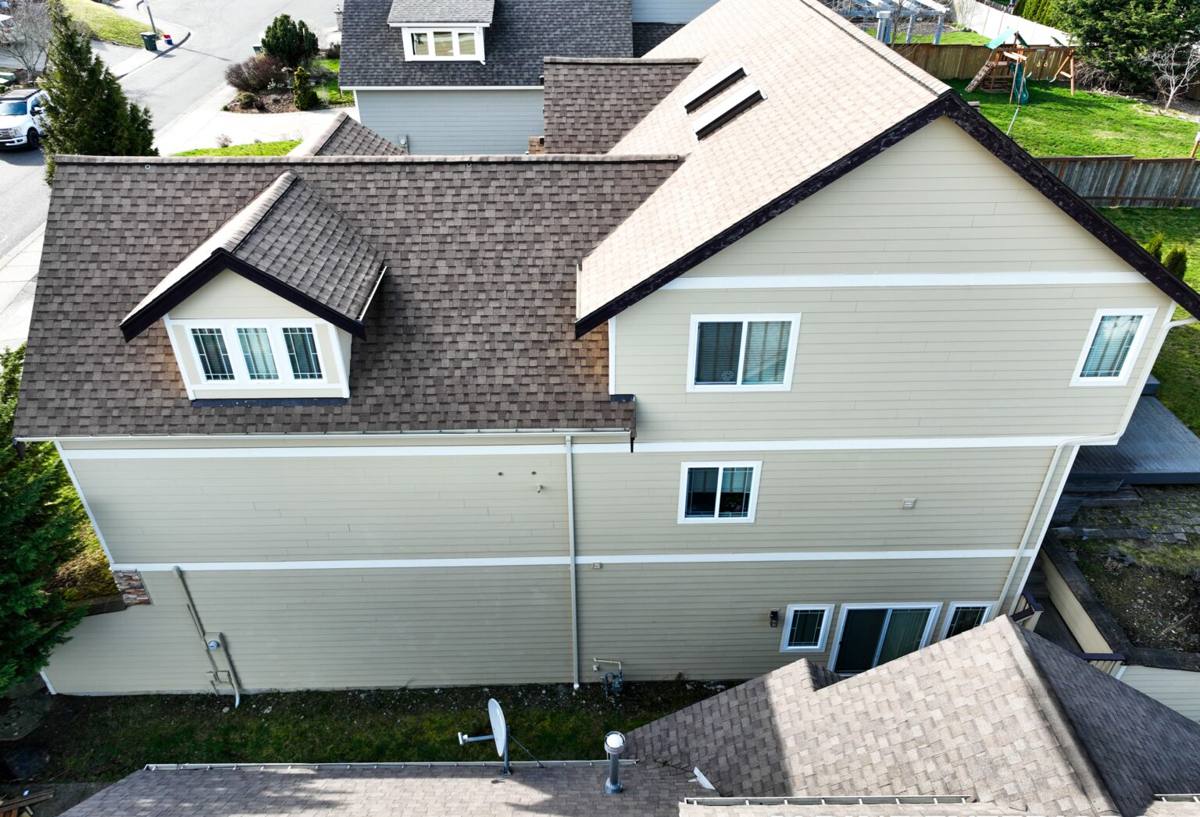
What a Correct Shingle Roof Needs in San Juan County
Underlayment and Water Management
In a climate with prolonged rain events and wind that can drive water sideways under shingle tabs, the underlayment layer matters as much as the shingles themselves. We use synthetic or self-adhering underlayment at valleys, eaves, and other water-concentration points rather than relying on shingles alone to shed water. Ice and snow are rarely the concern here that they are inland; the concern is weeks of steady rain finding any gap in the water barrier.
Flashing and Fasteners
Salt air corrodes unprotected or lower-grade metal faster than most homeowners expect, especially on roofs within a mile or two of the water. Flashing around chimneys, skylights, and roof-to-wall transitions should be corrosion-resistant metal, properly lapped, and sealed with materials rated for exterior marine exposure. The same goes for fasteners — the wrong nail coating is a slow leak waiting to happen, usually showing up as a stain on an interior ceiling two or three years later.
Ventilation
A shingle roof with poor attic ventilation traps moisture underneath the deck, which accelerates rot and shortens shingle life from below even while the top surface still looks fine. Balanced intake and exhaust ventilation is not optional in this climate — it is one of the most common gaps we find on older Orcas Island and Friday Harbor roofs.
Moss, Algae, and Shade: The Island's Signature Roof Problem
Almost every mature roof in this area eventually deals with moss, and the reason is straightforward: dense tree cover, persistent moisture, and north-facing or heavily shaded slopes create ideal growing conditions. Moss itself isn't just cosmetic — it lifts shingle edges as it grows, holds water against the roof surface, and accelerates granule loss. Algae streaking is more of an appearance issue but is often mistaken for a bigger problem by homeowners.
A correctly specified roof reduces moss pressure without relying on aggressive chemical treatment or pressure washing, both of which can shorten shingle life if done wrong. We favor prevention built into the install — proper slope-appropriate shingle selection, strip-style zinc or copper control where appropriate, and trimming recommendations for overhanging limbs — over repeated harsh cleaning after the fact.
Signs a Friday Harbor Roof Needs Attention
- Moss or dark green growth concentrated on shaded or north-facing slopes
- Granules collecting in gutters or at downspout outlets
- Shingle tabs curling, cupping, or lifting at the edges
- Rust streaking or visible corrosion around flashing and vent boots
- Interior ceiling stains, especially after a stretch of driving rain
- Soft or spongy decking felt underfoot near valleys or eaves
- Visible daylight or gaps at ridge or soffit vents
Our Asphalt Shingle Roofing Process
1. On-Site Assessment
Every job starts with a walk of the roof and attic, not just a look from the ground. We check deck condition, existing ventilation, flashing detail, and moss or moisture patterns specific to how the sun and shade hit that particular roof, since orientation matters more here than in flatter, less wooded climates.
2. Tear-Off and Deck Inspection
Full tear-off lets us actually see the decking rather than guess at its condition. Any soft, delaminated, or water-damaged sheathing gets replaced before a single new shingle goes down — covering over a compromised deck is the single most common shortcut that causes early failure.
3. Water Barrier and Flashing Installation
We install underlayment and flashing sized to this climate's rain load, with extra attention at valleys, chimneys, skylights, and any roof-to-wall intersection, since these are the points that fail first when installed by a crew unfamiliar with marine-climate detailing.
4. Ventilation Correction
Where intake or exhaust ventilation is inadequate, we correct it as part of the reroof rather than leaving a known moisture trap in place. This is usually a modest add to the job cost and a significant add to the roof's real lifespan.
5. Shingle Installation
Shingles go down to manufacturer nailing patterns adjusted for wind exposure, since some Orcas Island and San Juan County sites see stronger sustained wind off the water than a standard install spec assumes.
6. Final Walkthrough
We walk the finished roof and the attic with the homeowner, point out anything worth watching, and leave clear guidance on maintenance intervals suited to the site's specific shade and moisture exposure.
Shingle Options for a Marine, Shaded Climate
Standard three-tab shingles are increasingly hard to find and generally not what we recommend for this climate regardless. The more relevant comparison locally is between standard architectural shingles and algae-resistant (AR) shingle lines, which use copper-containing granules to slow algae and moss growth on shaded roof sections.
| Shingle Type | Typical Lifespan Here | Moss/Algae Resistance | Best Fit |
|---|---|---|---|
| Standard architectural shingle | 18-25 years | Standard — depends on maintenance | Sunnier, less-shaded roof sections |
| Algae-resistant (AR) architectural shingle | 20-28 years | Improved — copper-granule protection | Shaded, north-facing, or tree-covered roofs (most of Friday Harbor) |
| Impact/wind-rated architectural shingle | 20-30 years | Varies by product line | Sites with higher wind exposure off the water |
We generally recommend AR shingles as the default for Friday Harbor homes given how common shade and moisture are across the island, reserving standard lines for the minority of roofs with genuinely open, sun-exposed slopes.
Cost Factors Homeowners Should Actually Weigh
Two roofs of the same size can come in at very different prices, and the difference is almost always one of these factors rather than the shingle brand alone.
| Factor | Why It Moves the Price |
|---|---|
| Deck condition | Rotten or delaminated sheathing found at tear-off requires replacement before shingles can go on |
| Roof complexity | Valleys, dormers, and multiple roof planes take more flashing and labor time than a simple gable |
| Ventilation corrections | Adding proper intake/exhaust venting on an older home is a worthwhile add-on, not a base-price item |
| Access and site conditions | Tree cover, steep pitch, or limited driveway access on rural Orcas Island parcels can affect staging and labor time |
| Shingle grade | AR and wind-rated lines cost more per square than standard architectural shingles but reduce long-term maintenance |
Maintaining an Asphalt Shingle Roof on Orcas Island
Even a correctly built roof benefits from periodic attention in this climate. We recommend a visual check each fall before the wet season sets in, gutter and downspout clearing at least twice a year given the volume of leaf and needle debris common to wooded island lots, and prompt attention to any moss growth before it has a chance to lift shingle edges. None of this needs to be elaborate, but skipping it entirely is how a well-installed roof still ends up with an avoidable leak.
- Clear gutters and downspouts at least twice yearly, more often under heavy tree cover
- Trim overhanging branches to reduce shade, debris, and moss pressure on the roof surface
- Address moss growth early with appropriate, low-impact treatment rather than waiting
- Check attic ventilation isn't blocked by insulation or debris
- Have flashing and seals inspected every few years, especially around chimneys and skylights
Why a Friday Harbor-Familiar Crew Makes a Difference
A roofing crew that regularly works Orcas Island and greater San Juan County has already seen how this specific climate breaks roofs — which slopes hold moss, which flashing details fail near salt air, where ventilation gets neglected on older island homes. That experience shows up in the details: the underlayment choice at a valley, the fastener spec near the water, the decision to recommend AR shingles by default rather than as an upsell. It also matters logistically — island scheduling, material delivery, and site access all work differently here than on the mainland, and a crew that already accounts for that avoids delays and surprises.
If you're weighing a repair, a partial reroof, or a full replacement on a Friday Harbor home, we're happy to walk the roof, explain what we find in plain terms, and put together a straightforward estimate — no pressure, no obligation. Use the form below to get started.