 Orcas Island
 Doe Bay's Shoreline Climate Doesn't Go Easy on Siding
Doe Bay sits on the exposed eastern side of Orcas Island, where homes face open water, thick tree cover, and weather that comes in off the strait with real force. That combination is harder on exterior siding than most inland San Juan County properties ever see. Salt-laden air corrodes fasteners and trim hardware faster than dry inland air does. Driving rain, pushed sideways by wind off the water, finds every gap in flashing and caulk that a calmer climate would never expose. And the long, wet moss season here — often stretching from fall through late spring — keeps siding damp for weeks at a time, feeding algae and moss growth in shaded, north-facing walls and anywhere tree canopy blocks the sun.
None of that means your siding is doomed. It means siding repair in Doe Bay has to account for causes that a generic patch job ignores. A repair that only replaces the visible damaged board, without addressing the moisture path or the fastener corrosion underneath it, tends to fail again within a season or two. We've built our repair process around what actually causes damage on this part of the island, not a one-size-fits-all approach borrowed from drier climates.
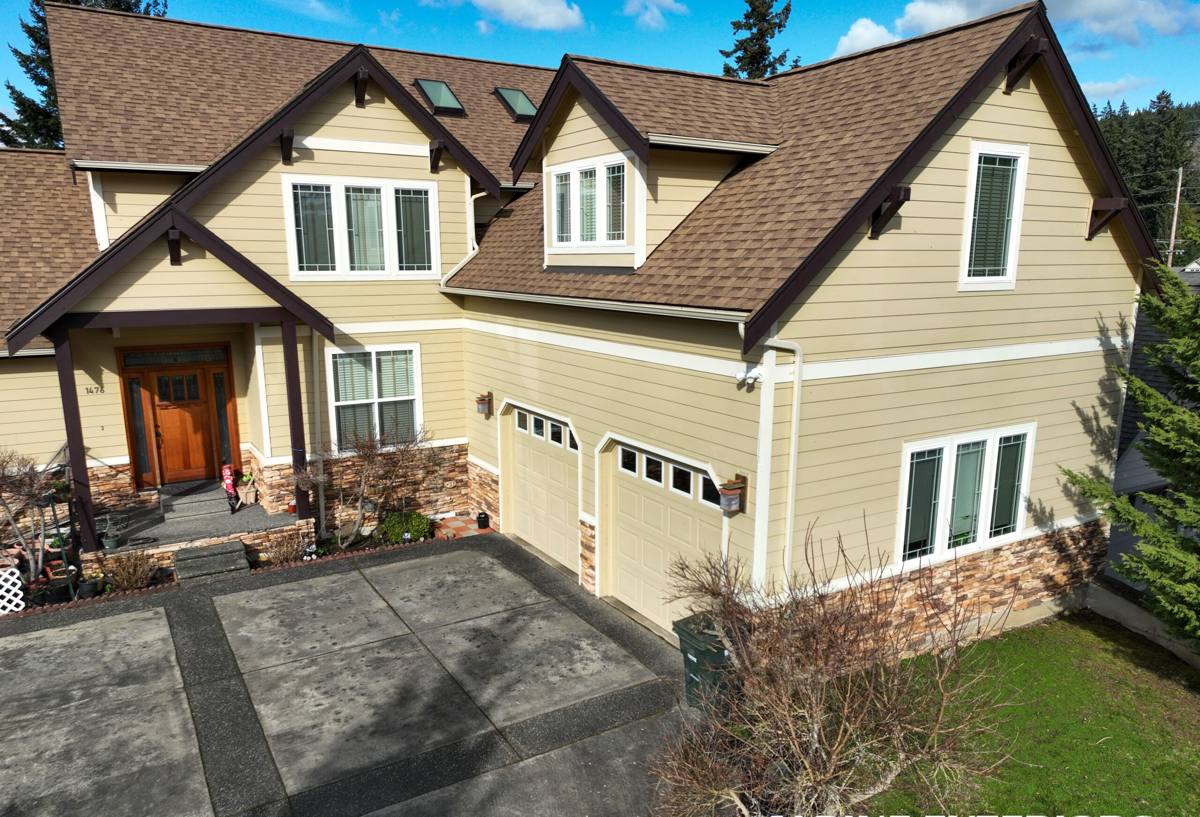
Signs Your Doe Bay Home Needs Siding Repair
Most siding problems on Orcas Island start small and get dismissed as cosmetic until they're not. Catching them early is the difference between a repair that costs a few hundred dollars and one that turns into a multi-wall replacement.
- Soft or spongy spots when you press on a board, especially near the bottom courses or around windows
- Visible moss or dark green-black staining that keeps returning after cleaning
- Paint that's bubbling, peeling, or chalking unevenly across a wall
- Gaps opening up at seams, corners, or where siding meets trim, window casings, or the roofline
- Rust streaks running down from nail heads or fastener locations
- Warped, cupped, or visibly separating boards, particularly on walls that face the water or stay shaded most of the day
- A musty smell or visible staining on interior walls that back up to an exterior wall showing outside damage
If you're seeing any of these, the underlying issue is almost always moisture that's found a way behind the siding rather than just sitting on top of it. That distinction matters for how the repair gets done.
What a Correct Repair Actually Involves
Diagnosing the Real Cause First
Before any board comes off, we look at why that section failed. Was it a caulk joint that dried out and cracked, letting wind-driven rain behind the siding? Is the moss holding moisture against the surface longer than the material can dry out between storms? Is a fastener corroding and backing out, leaving a path for water? Repairing the symptom without fixing the cause is the single most common reason siding repairs don't last on this coastline.
Matching Materials the Right Way
A patch that doesn't match the existing siding's profile, reveal, or finish stands out immediately and can also create new water-shedding problems at the seam. When we repair James Hardie fiber cement siding, we match the exact plank profile and, where the home was finished in ColorPlus factory-applied color, we match that finish rather than relying on a field-applied paint that will weather differently over time.
Sealing and Flashing Done Properly
Most of the moisture damage we find in Doe Bay traces back to flashing and sealant details, not the siding material itself. A correct repair re-flashes any window, door, or penetration point in the repair area, uses sealants rated for marine and coastal exposure, and re-establishes the drainage plane behind the siding so water that does get past the surface has somewhere to go besides your wall sheathing.
Repair vs. Replacement: How We Decide
Not every damaged section needs a full re-side, and we don't push replacement when a targeted repair will genuinely hold up. Here's the general framework we use when we walk a Doe Bay property:
| Factor | Favors Repair | Favors Replacement |
|---|---|---|
| Extent of damage | Isolated to one or two walls or sections | Spread across multiple elevations |
| Underlying sheathing | Dry, solid when probed | Soft, spongy, or visibly rotted |
| Siding material | Still in good condition elsewhere on the home | Original material is failing broadly (common with aging wood or older composite products) |
| Age of siding | Well within expected service life | Near or past its realistic lifespan |
| Moisture source | Identifiable and fixable at the repair site | Systemic — poor drainage plane or water management across the whole house |
We'll tell you honestly which side of that table your home falls on. If a repair is the right call, that's what we'll recommend and price.
Why Repairs and Replacements Go on This House the Same Way: James Hardie Only
We install and repair James Hardie fiber cement siding exclusively. We don't patch in vinyl, LP SmartSide, primed spruce, cedar, or other composite products, even when a homeowner already has one of those on their house and just wants a small section fixed. That's a deliberate standard, not a sales pitch.
In a salt-air, high-moisture environment like Doe Bay, the material doing the repair matters as much as the workmanship. Fiber cement doesn't absorb water the way wood-based products can, and it's non-combustible, which matters on a forested island where wildfire risk is a real consideration for insurance and building decisions alike. Hardie's HZ5 product line is engineered specifically for wetter, harsher climates, and the factory-applied ColorPlus finish holds color and resists the chalking and peeling that field-painted repairs are prone to in this kind of weather. When we can't match an existing non-Hardie repair area cleanly, we'll say so upfront and talk through whether a slightly larger repair scope, done in Hardie, is the more durable long-term fix rather than a patch that won't age the same way as what's around it.
Our Repair Process for Doe Bay Homeowners
1. On-Site Inspection
We walk the affected areas, probe for hidden moisture and soft sheathing, and check fastener condition, flashing, and caulk joints beyond just the visibly damaged boards. Damage on coastal-exposed walls is often worse a few feet past where it's visible.
2. A Clear, Written Scope
You get a plain-language explanation of what's failing, why, and what the repair will include — not just a board count. If we find something during the walk that changes the scope, we tell you before we start, not after.
3. Scheduling Around Island Logistics
Working on Orcas Island means planning material deliveries and crew scheduling around ferry timing, weather windows, and the reality that a forgotten part isn't a quick supply-house run. We build that into the schedule we give you so timelines are realistic, not optimistic.
4. The Repair Itself
Damaged material comes out, the sheathing and framing underneath get inspected and dried or repaired as needed, flashing and drainage details get corrected, and new Hardie siding goes in matched to the existing profile and finish.
5. Cleanup and Walkthrough
We clear debris and old material from the site and walk the repair with you before we call the job done.
What Affects the Cost of a Siding Repair Here
Every repair is different, but the same handful of factors drive most of the cost variation we see on Doe Bay jobs:
| Cost Factor | Why It Matters |
|---|---|
| Size of the damaged area | A single board is a much smaller job than a full wall section |
| Condition of sheathing underneath | Rotted sheathing adds structural repair before new siding can go on |
| Accessibility | Steep lots, second-story sections, or waterfront-facing walls can require staging or lift work |
| Color and profile matching | Matching an existing ColorPlus finish or an older discontinued profile can take extra sourcing |
| Flashing and drainage corrections | Fixing the actual water path, not just the surface, adds labor but prevents repeat failure |
We won't quote a number without seeing the damage in person — anyone who does that on a coastal repair is guessing. What we will do is walk you through which of these factors apply to your home before we give you a price.
Why a Crew That Already Works Doe Bay Matters
A contractor who mostly works drier inland areas of Washington will diagnose Doe Bay damage differently than one who sees this coastline's failure patterns regularly. We know which walls on this side of the island take the worst wind-driven rain, which orientations grow moss fastest under the tree canopy, and how quickly corrosion sets in on fasteners left exposed to salt air. That familiarity shows up in fewer repeat calls — we're fixing the actual cause the first time, not just the board that happened to show damage first.
It also shows up in how realistically a job gets scheduled. A crew unfamiliar with island logistics can underestimate how ferry schedules, weather windows, and material lead times affect a project timeline. We plan around that reality instead of promising a mainland-style turnaround we can't actually deliver.
If you're seeing moss, soft boards, peeling paint, or gaps opening up on your Doe Bay home, we're happy to take a look. There's no cost and no pressure for the estimate — just an honest read on what's actually going on with your siding and what it would take to fix it right. Use the form below to get started.