 Orcas Island
 Board & Batten in a Place Like Doe Bay
Doe Bay sits on the exposed east side of Orcas Island, tucked against the water and wrapped in the kind of dense evergreen cover that defines the San Juan Islands. It's a setting that shapes what people build here — cabins, A-frames, timber-framed homes, and newer builds that lean into a rustic, vertical-board look. Board & batten siding fits that aesthetic naturally: strong vertical lines, deep shadow reveals at the battens, and a look that reads as both rugged and refined. It's one of the most requested siding profiles we get calls about on this end of the island.
But board & batten isn't just a style choice out here — it's a performance choice too, and it needs to be treated that way. A board & batten installation that would hold up fine in a dry inland climate can fail early in Doe Bay if it's not detailed for what this specific stretch of coastline throws at a house.
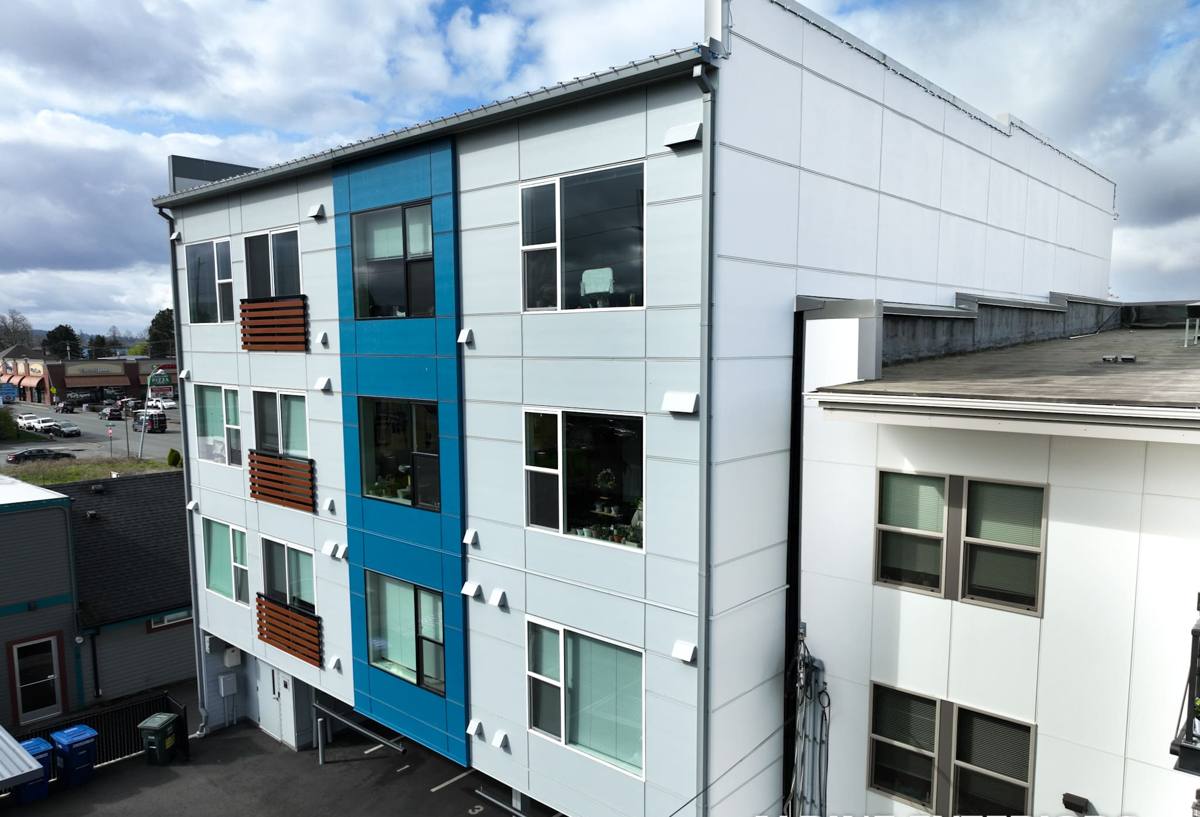
What Doe Bay's Climate Actually Does to Vertical Siding
San Juan County doesn't get the volume of rain that hits the Washington coast, but Doe Bay's exposure to Rosario Strait and the open water to the east means it takes wind-driven rain straight-on during fall and winter storms. Combine that with salt air off the water and the deep, shaded moss season that runs long here thanks to tree cover and persistent damp — and you've got three separate stresses working on a wall system at once, not one.
Salt Air
Airborne salt accelerates corrosion on fasteners, flashing, and any metal trim components. On a board & batten wall, the batten strips create more seams and more fastener penetrations per square foot than a standard lap profile, which means more places for corrosion to start if the wrong hardware gets used.
Driving Rain
Vertical board & batten relies on the battens to shed water off the seams between boards. When wind pushes rain sideways during a real Doe Bay storm, water gets forced up and under battens that aren't fastened or flashed correctly, and it finds its way behind the cladding instead of running down the face of it.
Moss and Prolonged Moisture
The tree cover that makes Doe Bay beautiful also keeps siding shaded and slow to dry. Moss and algae take hold fastest on surfaces that stay damp longest — north-facing walls, anything under overhanging branches, and lower courses near grade or landscaping. A material that absorbs moisture gives that growth something to root into over time.
What a Correct Board & Batten Job Actually Involves
Board & batten looks simple from the street — boards, battens, done. The installation underneath it is not simple, and it's where most of the long-term performance is decided, long before the battens ever go on.
- Drainage plane and weather-resistive barrier installed and lapped correctly behind the cladding, not just stapled on as an afterthought.
- Rainscreen gap (furring) between the barrier and the siding on exposed elevations, so water that does get behind the boards has somewhere to drain and air to dry it out.
- Correct fastener schedule and material — corrosion-resistant fasteners sized and spaced to manufacturer specs, not whatever's fastest to shoot.
- Flashing at every horizontal interruption — window and door heads, transitions, and the base of the wall where board & batten meets foundation or trim.
- Batten spacing and fastening that accounts for the panel's expansion and contraction without trapping moisture at the seam.
- Factory-finished color on the face and cut edges sealed and touched up on-site, rather than relying on field-applied paint to do the sealing work.
Skip any one of these and the siding can still look right for a year or two. On a site like Doe Bay, with the rain angle and moisture load it sees, shortcuts show up as staining, soft trim, or moss colonization well before they should.
Why We Only Install James Hardie for This
We install James Hardie fiber cement exclusively — we don't offer vinyl, LP SmartSide, Cemplank, Allura, or raw wood board & batten, and that's a deliberate call, not a default. For a climate like Doe Bay's, the reasons are specific:
- Non-combustible core. Fiber cement doesn't feed a fire the way wood-based products can, which matters on a heavily wooded island with limited fire department response relative to mainland suburbs.
- Engineered for wet climates. Hardie's HZ10 product line is formulated specifically for high-moisture, marine-adjacent climates like the Pacific Northwest coast — which is exactly what Doe Bay is.
- ColorPlus factory finish. The color and sealing are baked on in a controlled factory process, not applied on a scaffold in variable island weather. That finish resists the fading and moisture intrusion that field-painted wood or primed board products are prone to.
- Dimensionally stable. Fiber cement doesn't swell, cup, or split at the batten line the way wood does when it cycles wet and dry through a long moss season.
- Backed by a real transferable warranty on both the substrate and the finish, which matters more on a coastal property where you want the coverage to survive a resale.
Wood board & batten can look beautiful, and cedar in particular has real appeal for this setting — but it asks for a maintenance commitment (recoating, caulk inspection, moisture monitoring) that most Doe Bay homeowners aren't set up to keep pace with, especially on a second home or vacation property they're not at every week. LP SmartSide and other engineered wood products bring their own moisture-sensitivity trade-offs at cut edges and seams. Vinyl board & batten can't match the shadow-line depth that makes the profile work visually, and it becomes brittle faster in cold, salt-laden air. James Hardie is the product we're willing to warranty and put our name behind out here.
Our Process for a Doe Bay Project
- On-site assessment. We look at exposure by elevation — which walls face the water and prevailing storms, which stay shaded and damp longest — before we ever talk product or price.
- Tear-off and substrate check. Existing siding comes off and we inspect sheathing and framing underneath for moisture damage before anything new goes up.
- Barrier and rainscreen installation. Weather-resistive barrier, flashing at every penetration and horizontal transition, and furring for drainage on exposed faces.
- Board & batten installation to spec. Correct fastener type, spacing, and batten layout, with cut-edge sealing wherever a panel is field-trimmed.
- Trim, caulk, and final detailing. Corners, window and door surrounds, and transitions finished to shed water, not trap it.
- Walkthrough. We go over the finished work with the homeowner before we call it done.
Cost Factors on a Doe Bay Board & Batten Project
| Factor | Why It Affects Cost |
|---|---|
| Existing siding removal | Wood or older siding often needs full tear-off and substrate repair before new cladding goes on |
| Wall exposure | East and south-facing walls toward the water typically need more robust flashing and rainscreen detailing |
| Site access | Long or narrow driveways and limited staging space on rural island lots can affect crew logistics |
| Trim complexity | Multiple gables, dormers, and window surrounds add labor beyond flat wall area |
| Batten spacing/pattern | Tighter batten spacing uses more material and more fastening labor per square foot |
| Material delivery | Ferry-dependent freight scheduling factors into project timelines more than material cost itself |
Living With Board & Batten Once It's Up
James Hardie board & batten is low-maintenance, not no-maintenance, especially in a moss-prone, salt-air environment like Doe Bay. A little seasonal attention goes a long way toward protecting the installation and the warranty.
- Rinse pollen, salt residue, and organic debris off the siding once or twice a year with a garden hose — avoid high-pressure washing directly at seams and battens.
- Trim back tree limbs and brush that keep any wall shaded and damp longer than the rest of the house.
- Check caulking at trim and window transitions annually; recaulk hairline gaps before they widen.
- Watch north-facing and lower-course areas for early moss or algae growth and address it before it spreads.
- Keep gutters clear so overflow isn't running down the face of the siding during heavy storms.
Why Local Experience on Orcas Island Actually Matters
A lot of siding crews will quote a Doe Bay job the same way they'd quote a job in a dry inland subdivision, because they haven't spent enough time on this side of the island to know better. A few things only show up once you've actually worked this coastline: which elevations take the worst of the winter storms coming across Rosario Strait, how far moss creeps up a shaded wall in a single wet season, and how ferry-dependent material scheduling actually shapes a project timeline. San Juan County's permitting process also has its own pace and requirements that a crew unfamiliar with the islands can misjudge.
We've built our process around those realities instead of learning them on someone's house. That's the difference between a board & batten installation that looks good for the first photo and one that's still performing correctly a decade of Doe Bay winters later.
If you're considering board & batten siding for a home in Doe Bay, we're happy to walk the property, look at your specific exposure, and put together a straightforward, no-pressure estimate — just fill out the form below to get started.