 Orcas Island
 Windows Built for the Way Crow Valley Actually Weathers
Crow Valley sits back from the open water that gets most of the attention on Orcas Island, and that inland, tree-sheltered setting cuts both ways. Homes here are somewhat buffered from the harshest wind-driven rain that hits the shoreline, but the tradeoff is shade and airflow. Surrounded by trees and hills, valley properties often hold onto moisture longer after a storm than a home out in the open would. Combine that with San Juan County's long, damp shoulder seasons and you get exactly the conditions where old or marginal windows start failing quietly — long before anyone notices water on the sill.
We've replaced windows on enough Orcas Island homes, in valley settings and along the water, to know the failure patterns aren't identical. A window replacement plan for Crow Valley has to account for reduced direct sun, slower drying times, and the moss and mildew growth that comes with both. This page is about that specific job — not a generic rundown of window options, but what actually matters when you're replacing windows on a home that sits in the shade for a good part of the day, most of the year.
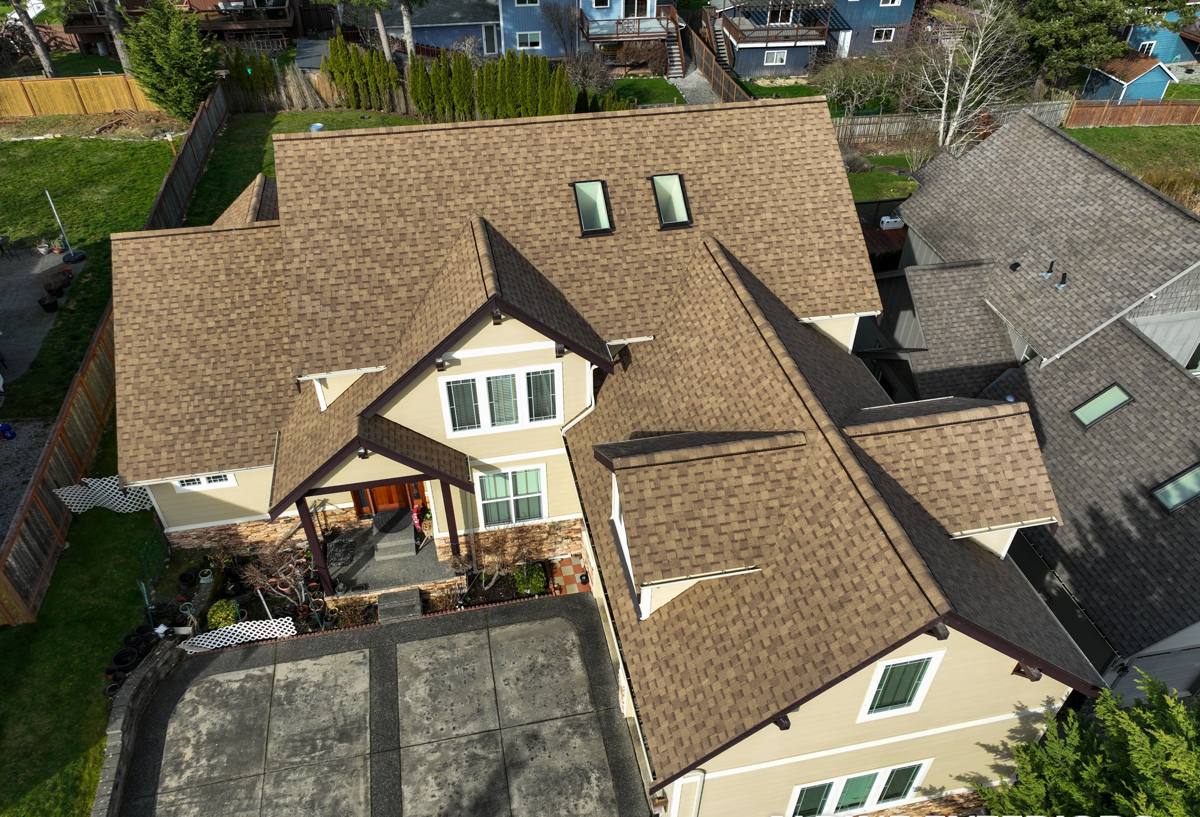
How the Valley Climate Wears Down Windows Differently
Salt air is a factor everywhere on Orcas Island, and it still reaches inland properties on wind, just in smaller doses than waterfront homes get. But the bigger issue in a valley setting is dwell time — how long moisture sits against the building before it evaporates.
- Slower drying cycles: Less direct sun and more tree cover mean wood trim, sills, and frames stay damp longer after rain, giving rot and mildew more time to take hold.
- Moss and algae buildup: Shaded, moist surfaces are prime moss territory. On windows, that shows up as green growth on sills, tracks, and exterior trim, which holds even more moisture against the surface.
- Condensation load: Cooler, shaded homes often run a bigger gap between indoor and outdoor temperatures, which increases interior condensation on older, single-pane or poorly sealed windows.
- Wood movement: Original wood-frame windows swell and shrink with the damp-dry cycle, which loosens joints, cracks glazing putty, and opens gaps around the frame over years of exposure.
None of this means valley homes are worse off than waterfront ones — they just fail differently. A window that would be fine on a breezy, sun-exposed lot can be quietly rotting from the inside on a shaded Crow Valley property, simply because nothing dries it out between storms.
What This Means for an Aging Window
If your windows are original to the home or original to a decades-old renovation, the signs to watch for in a valley setting include soft or spongy wood at the bottom corners of the frame, paint that bubbles or peels specifically at the sill, persistent fogging between panes on double-glazed units, and a musty smell near the window when it rains. Any one of these is worth a look before it becomes a bigger repair.
What a Correct Window Replacement Actually Involves
Swapping in a new window is the easy part. The work that actually determines whether that window lasts happens around it — the flashing, the sealant, and how the new unit ties into your existing siding and wall assembly. In a damp, shaded location like Crow Valley, cutting corners here is exactly what leads to the same rot problem showing up again in a few years, just hidden behind a brand-new window.
- Remove the old unit carefully. We pull the existing window and inspect the rough opening — the framing, sheathing, and any existing flashing — for hidden moisture damage before anything new goes in.
- Address what we find. Soft framing, rotted sheathing, or failed old flashing gets repaired or replaced. Installing a new window into a compromised opening just guarantees an early repeat of the same problem.
- Flash the opening properly. Correct flashing — sill pan, jamb flashing, and head flashing installed in the right order — is what actually keeps water out over time, more than the window itself.
- Set and shim the window. The unit is leveled, plumbed, and shimmed so it operates smoothly and seals evenly, not just fastened in wherever it happens to sit.
- Seal and insulate the gap. The space between the window frame and rough opening is insulated and sealed with the right materials — not just packed with whatever's on hand — to control both air leakage and moisture.
- Finish and tie in trim and siding. Exterior trim and siding are refit tight around the new window so there's no gap or ledge where water and debris can collect.
Any one of these steps done poorly can undo the benefit of a good window. We treat the flashing and sealing as the actual core of the job, with the window itself as one part of a correctly built assembly.
Choosing the Right Window for a Shaded, Damp Lot
Frame material and glass package matter more in a location like Crow Valley than they would in a drier, sunnier spot, simply because the window has less chance to dry out between wet spells.
| Frame Material | How It Handles Valley Moisture | Maintenance Reality |
|---|---|---|
| Vinyl | Won't rot; performs consistently in prolonged damp and shade | Low — occasional cleaning, no repainting |
| Fiberglass | Dimensionally stable in temperature and moisture swings; strong long-term option | Low — durable finish, minimal upkeep |
| Aluminum-clad wood | Wood interior offers warmth, but the exterior clad face needs sound seams to keep moisture from reaching the wood core | Moderate — watch seams and joints over time |
| Solid wood | Most vulnerable to sustained damp and shade without diligent upkeep | High — regular painting/sealing, especially on shaded elevations |
We don't push one material on every home — the right call depends on your home's style, your budget, and how much upkeep you actually want to do. On shaded, damp lots we do steer people away from solid wood on north-facing or heavily treed elevations unless they're committed to a real maintenance schedule, simply because the conditions don't give the wood much chance to dry out between rains.
Glass and Seal Considerations
For a shaded home, we usually recommend paying more attention to the seal quality and warranty on the insulated glass unit than to maximizing solar performance ratings, since a valley property isn't fighting intense sun exposure the way an open, south-facing waterfront lot might be. A well-sealed double-pane unit with a solid warranty on seal failure is often the more practical investment than premium coatings aimed at heat gain that isn't the primary concern here.
Why Local, Crow Valley-Familiar Experience Matters
Window replacement isn't a one-size-fits-all job, and San Juan County adds its own layer of complexity — permitting on Orcas Island can vary by property and jurisdiction, ferry-dependent material delivery means poor scheduling costs real time, and older valley homes often have framing quirks from decades of local additions and repairs. A crew that already works this area shows up knowing the practical realities: what typically needs replacing versus repairing on a valley home, how to schedule around ferry logistics so materials arrive when needed, and what correct flashing looks like for this specific climate rather than a generic install method that assumes a drier region.
We're not learning San Juan County's weather patterns on your project. That familiarity shows up in fewer surprises mid-job and a finished install that's actually built for how your specific property dries out — or doesn't.
Signs It's Time to Replace, Not Repair
- Soft, spongy, or visibly rotted wood at the sill or frame corners
- Persistent fogging or moisture trapped between panes of double-glazed glass
- Windows that are difficult to open, close, or lock due to swelling or warping
- Visible daylight or drafts around the frame when the window is closed
- Moss or algae that keeps returning to the sill and lower frame despite cleaning
- A noticeable rise in heating costs alongside cold drafts near the windows
If you're only seeing one or two of these and the frame itself is sound, a repair may still be the right call — we'll tell you honestly if that's the case rather than pushing a full replacement you don't need yet.
What to Expect From Our Process
We start with an on-site look at your windows and the surrounding wall assembly, not just a quote based on measurements alone. That's the only way to catch hidden framing or moisture issues before they become part of the job. From there, we'll walk you through material options suited to your home's exposure, give you a straightforward cost range, and schedule the work around ferry logistics so materials are on hand when the crew arrives — no half-finished openings sitting exposed to Crow Valley's weather while we wait on a delivery.
During the install, openings are only fully exposed for as long as necessary, and we work in a sequence that limits how long any part of your home is open to the weather. When the job's done, we walk you through what we found, what we did, and what to watch for going forward — especially if we uncovered any moisture issues in the framing that are worth keeping an eye on.
Get a Straightforward Estimate
If your windows are showing wear, feeling drafty, or just old enough that you're wondering whether repair or replacement makes more sense, we're happy to take a look. Reach out for a free, no-pressure estimate using the form below — we'll give you an honest read on your windows and what a correct fix looks like for your Crow Valley home.