 Orcas Island
 Windows in Crow Valley: What the Land Asks of Them
Crow Valley sits inland from Orcas Island's shoreline, tucked between wooded hillsides and open farmland, but "inland" on Orcas doesn't mean sheltered. Salt-laden air still moves up the valley on the wind, driving rain still comes sideways off the Sound in winter storms, and the shade from surrounding trees keeps things damp enough that moss and algae get a long growing season on anything that holds moisture. Windows here take a different kind of beating than windows in a dry inland climate — it's not heat and UV that wear them out first, it's water finding its way in around the frame, sill, and flashing, year after year, quietly.
That's the piece homeowners in Crow Valley need to understand before they think about style or brand: the window itself matters less than how it's installed. A mediocre window installed correctly will outlast a premium window installed carelessly, especially in San Juan County's wet, marine climate.
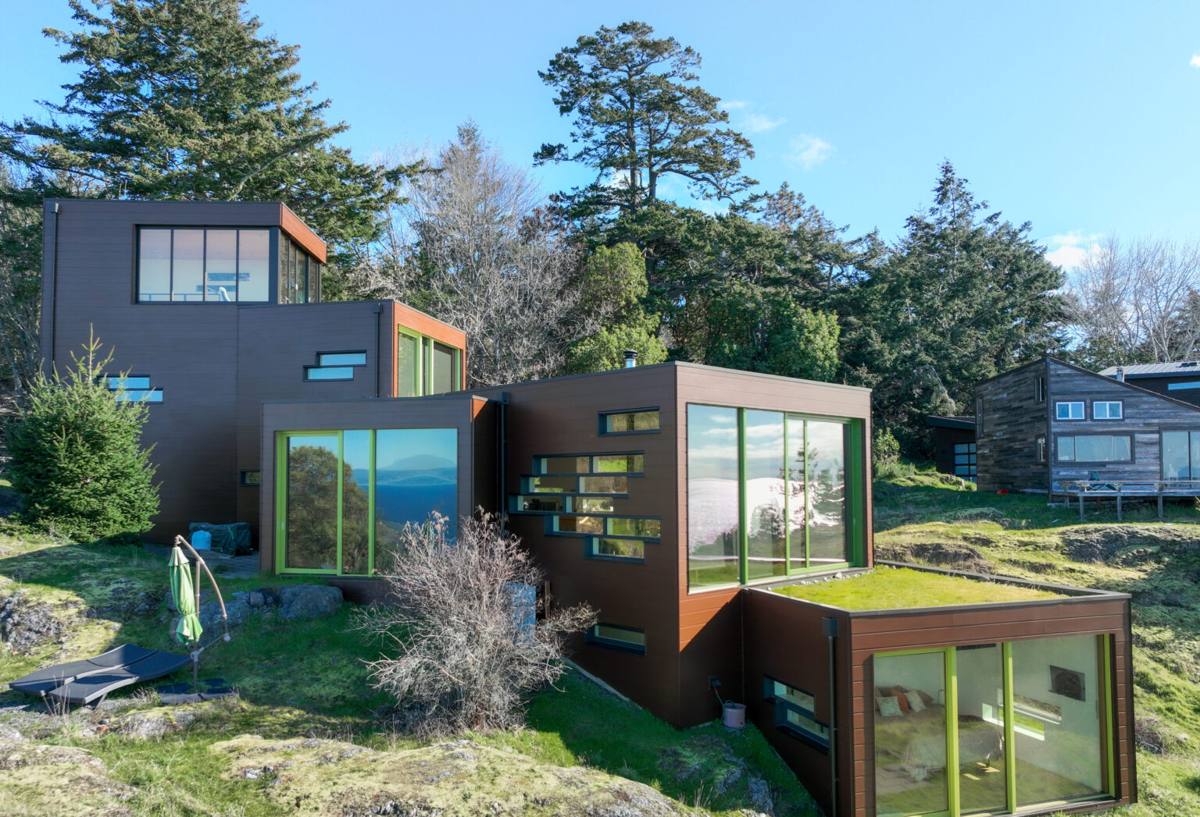
Why Window Installation Fails Around Here
Most window failures we're called out to inspect on Orcas Island aren't manufacturing defects. They're installation shortcuts that don't show themselves for a few years — long enough for the original crew to be gone and the homeowner to assume the window itself is bad.
The usual culprits
- No sill pan or sloped sill flashing, so water that gets past the window sits against bare wood sheathing instead of draining back out
- House wrap or building paper lapped the wrong direction, so water runs behind it instead of over it
- Caulk used as the primary water barrier instead of proper flashing — caulk is a backup, not a system
- Nailing fins fastened without a drainage gap, trapping moisture against the frame
- Gaps around the rough opening filled with the wrong material, which compresses, sags, or lets air and moisture through within a few seasons
Every one of these mistakes is invisible on installation day. They only become obvious after two or three wet winters, when trim starts to soften, paint starts to bubble, or a windowsill develops that telltale dark, spongy feel. By then the fix usually involves cutting into the wall, not just swapping glass.
What a Correct Installation Actually Involves
There's no shortcut around doing this in order. Every layer has a job, and skipping one doesn't save real time — it just moves the cost of the mistake a few years down the road, onto the homeowner.
- Remove the old window and inspect the rough opening and sheathing for rot or soft spots before anything new goes in
- Install a sloped sill pan so any water that gets past the window drains outward, not into the wall cavity
- Integrate flashing tape and house wrap in the correct shingle-lap order — each layer overlapping the one below it, like siding
- Set the window level, plumb, and square, then fasten per the manufacturer's schedule (not "however many screws feel right")
- Insulate the gap between the frame and rough opening with a low-expansion foam or fiberglass — never packed too tight, which can bow the frame
- Flash and seal the head, jambs, and sill with a purpose-built weather barrier, with caulk as the final, visible seal — not the only seal
- Finish exterior trim and touch up siding so the whole assembly sheds water the way the original wall design intended
This is the same sequence whether it's one window or a whole house, and it's the difference between a window that lasts twenty-plus years in this climate and one that starts causing problems by year five.
Choosing a Frame Material for Crow Valley's Conditions
There's no single "best" window material — there's a best fit for your home's exposure, budget, and how much upkeep you want to take on. Here's how the common options actually hold up under Orcas Island's damp, salt-air conditions.
| Frame Material | Moisture Resistance | Maintenance | Typical Lifespan Here |
|---|---|---|---|
| Vinyl | Good — won't rot, but seams and corners need quality welds | Low — occasional cleaning | 20–30 years |
| Fiberglass | Excellent — dimensionally stable, doesn't expand/contract with moisture | Low | 30–40 years |
| Aluminum | Fair — durable but prone to condensation without a thermal break | Low to moderate | 20–30 years |
| Wood (unclad) | Poor without diligent upkeep — attractive but needs repainting/sealing | High — ongoing maintenance | Varies widely with care |
| Wood-clad (exterior vinyl/aluminum shell) | Good — cladding shields the wood from weather | Low exterior, some interior wood care | 25–35 years |
For most Crow Valley homes, we steer clients toward vinyl or fiberglass for anything exposed to weather, and reserve solid wood for interiors or well-protected elevations where it can be maintained. It's less about brand names and more about matching the material's moisture behavior to how exposed a given wall actually is — a north-facing wall under tree cover behaves very differently than a south wall catching full weather.
Cost Factors Beyond the Window Itself
Homeowners are often surprised the window unit is only part of the bill. What actually drives cost on a given project:
| Factor | Why It Matters |
|---|---|
| Rot or damage found at the opening | Sheathing or framing repair adds labor and materials before the new window can even go in |
| Window size and shape | Custom or oversized units cost more and take longer to source and set |
| Siding type around the opening | Removing and reinstalling fiber cement or lap siding cleanly takes more care than vinyl |
| Access | Second-story or hard-to-reach windows add setup time |
| Number of windows | Per-window cost usually drops as the job scales up |
Our Process for Crow Valley Projects
We keep the process straightforward because window work shouldn't be a mystery to the homeowner paying for it.
What to expect
- Walkthrough and assessment — we look at each opening, check for existing water damage, and talk through what you actually need versus what's optional
- Honest quote — a written estimate that separates window cost, labor, and any repair work we find
- Scheduling around the weather — we work with San Juan County's wet stretches, not against them, timing openings for dry windows when possible
- Removal and inspection — old windows come out carefully so we can check the rough opening before closing anything back up
- Correct installation — sill pans, flashing, and sealing done in the right order, every time, not just when someone's watching
- Cleanup and walkthrough — we show you the finished work and explain anything you should keep an eye on
Signs Your Crow Valley Home May Need New Windows
Not every drafty window needs full replacement, and not every old window is a problem. Here's what actually warrants a closer look:
- Fogging or moisture between panes on double- or triple-glazed units — a sign the seal has failed
- Soft, discolored, or spongy trim or sill wood, especially on the interior
- Visible daylight or noticeable drafts around the frame when it's shut
- Windows that are difficult to open, close, or lock — often a sign the frame has shifted
- Paint that bubbles or peels repeatedly in the same spot near a window, which usually points to trapped moisture underneath
- Moss or dark streaking building up on the sill or surrounding trim faster than on the rest of the house
If you're seeing more than one of these, it's worth having someone look at the whole opening — not just the glass — before deciding what to do.
Why Local Experience Matters for This Work
Crow Valley's conditions aren't identical to the rest of Orcas Island, and Orcas Island's conditions aren't identical to the mainland. A crew that mostly works drier inland climates will often default to installation habits — lighter flashing details, less attention to drainage — that hold up fine somewhere else and fail here. We work window and siding projects across Orcas Island and San Juan County, which means we're used to building in a margin for the rain, the salt air, and the moss season, not treating them as edge cases.
That local familiarity also shows up in smaller ways: knowing how to time work around ferry schedules and weather windows, knowing which materials actually perform in this climate versus which ones just look good on a spec sheet, and being around afterward if a question comes up a year or two into ownership.
Get a Straight Answer About Your Windows
If you're dealing with drafts, moisture, or windows that are simply reaching the end of their service life in Crow Valley, we're happy to take a look and give you a straightforward assessment — no pressure, no upsell. Use the form below to request a free estimate, and we'll walk the property with you and tell you honestly what we'd recommend.