 Orcas Island
 Why Crow Valley Homes Wear Out Their Siding Faster Than You'd Expect
Crow Valley sits inland enough that people sometimes assume it's sheltered from the worst of what Orcas Island throws at a house. It isn't, not really. San Juan County's marine climate doesn't stop at the shoreline — salt-laden air still moves through the valley on prevailing winds, driving rain still finds its way into every horizontal seam and window return, and the shaded, moisture-holding pockets created by tree cover and hillside terrain create some of the longest moss seasons on the island. Add in the temperature swings between valley floor and surrounding slopes, and you get a siding environment that's arguably tougher on wood-based products than the more exposed, better-ventilated waterfront lots nearby.
We've installed and repaired enough siding on this island to know that Crow Valley's combination of shade, moisture retention, and salt exposure is its own animal. A siding installation done right here has to account for all three at once — not just one of them.
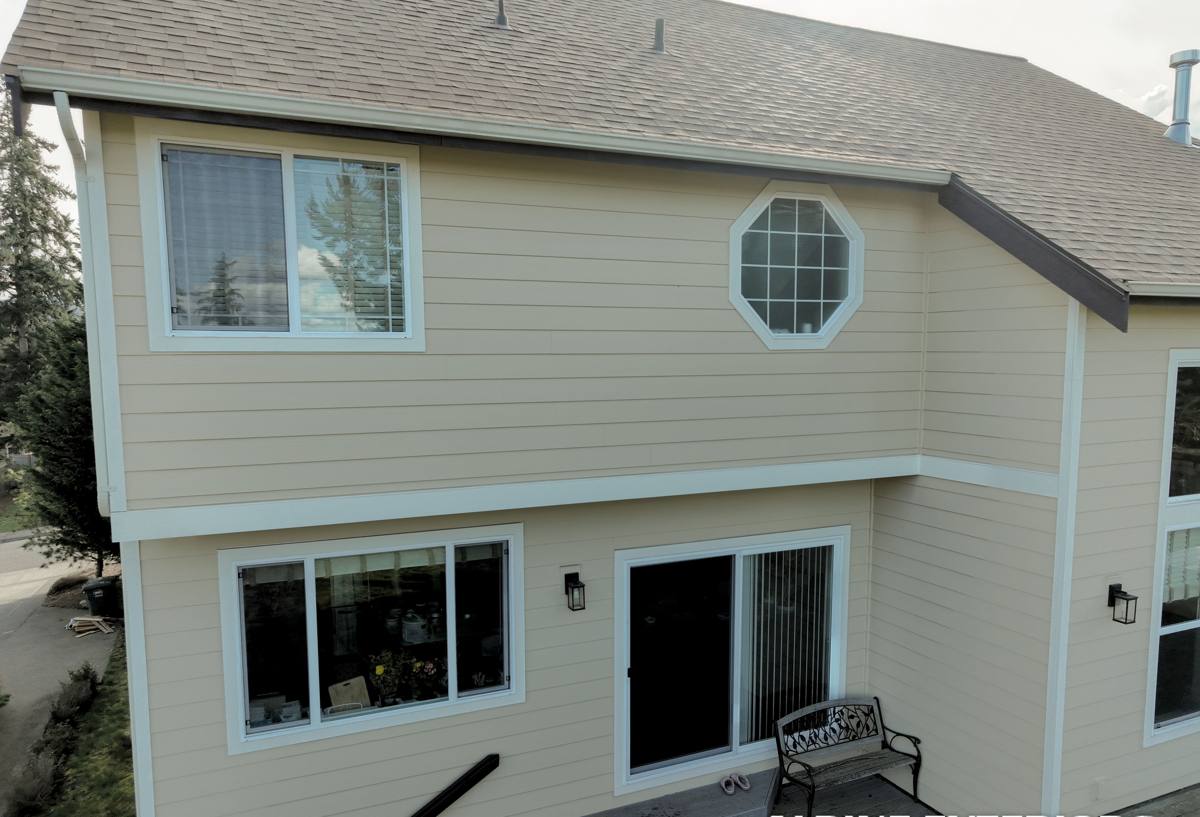
What Crow Valley's Climate Actually Does to Siding
Salt Air Doesn't Stay at the Beach
Airborne salt travels much farther inland than most homeowners assume, especially on an island this size. It settles into seams, fastener heads, and any place two pieces of siding meet. On untreated or poorly finished materials, that salt accelerates corrosion of fasteners and trim, and it works into porous surfaces where it holds moisture longer than plain rainwater would.
Driving Rain Finds the Weak Points
Orcas Island storms rarely come straight down. Wind-driven rain hits siding at an angle, which means it's constantly testing laps, butt joints, and every place siding meets a window, door, or trim board. A correctly installed system is built to shed that water, not just tolerate it — the difference between a house that stays dry behind the cladding and one that's slowly rotting from the inside is almost always in the flashing and lap details, not the siding material itself.
Moss Season Is Longer Here Than People Think
Crow Valley's tree cover and terrain create shade pockets that hold humidity well into what would otherwise be a drying season elsewhere on the island. That extended damp period is exactly what moss, algae, and mildew need to establish themselves on north-facing walls and anywhere airflow is restricted. Siding that can't shed moisture quickly becomes a long-term host for growth that stains the finish and, over years, works into the substrate itself.
Why We Install Only James Hardie Fiber Cement
We don't offer a menu of siding brands, and that's a deliberate choice, not a limitation of what we're capable of installing. We standardized on James Hardie fiber cement because it's the product we can stand behind after years of watching how different materials actually perform in this specific climate — not just on a spec sheet, but on real Orcas Island homes over real winters.
- Non-combustible core: fiber cement doesn't feed a fire the way wood-based sidings can, which matters on an island where emergency response times are longer than in a mainland city.
- ColorPlus factory finish: baked-on color resists the fading and chalking that field-applied paint struggles with under constant UV and salt exposure.
- HZ5 climate engineering: Hardie's HZ5 product line is engineered for exactly the freeze-thaw and moisture-cycling conditions the Pacific Northwest delivers.
- Moisture resistance: fiber cement doesn't swell, cup, or absorb water the way engineered wood products can when a seam fails or caulk gives out early.
- Transferable warranty: a real, honored warranty structure matters more on a home you might sell in ten years than a marketing claim does.
We get asked plenty of times why we don't also install LP SmartSide, vinyl, or cedar. The honest answer is maintenance burden and moisture behavior. Wood-based composite sidings depend heavily on caulking and paint film staying intact — once that seal breaks in a damp, shaded valley environment, the substrate is exposed to exactly the conditions it's least able to handle. Vinyl can work loose or crack in wind-driven rain events and doesn't hold paint if a homeowner ever wants to change the color. Cedar is a beautiful material, but it demands a maintenance schedule that most homeowners underestimate, especially in a climate where moss and mildew get a head start every year. None of these are "bad" products in every application — they're just not what we've chosen to put our name behind here.
What a Correct Crow Valley Siding Installation Involves
Assessment Before Anything Goes On the Wall
Every job starts with a look at what's underneath the existing siding — sheathing condition, existing moisture damage, and how the current system was flashed (or wasn't). Skipping this step is how new siding ends up covering an existing rot problem.
Weather-Resistive Barrier and Flashing
This is where most siding failures actually originate, not in the cladding itself. Proper window and door flashing, correctly lapped house wrap, and rainscreen or drainage strategy where appropriate all matter more in Crow Valley's damp, shaded pockets than they would on a drier, sunnier lot.
Fastening and Lap Details to Hardie Spec
James Hardie's installation instructions specify fastener type, spacing, and minimum lap and clearance dimensions for a reason — those details are what let the system shed wind-driven rain instead of trapping it. Installing Hardie siding "close enough" to spec is how homeowners end up with the moisture problems the product was designed to prevent.
Trim, Caulking, and Transitions
Corner boards, window trim, and any transition between materials are where water intrusion typically starts. These details need to be sealed and flashed correctly the first time — going back to fix them after the wall is closed up is far more expensive than doing it right during installation.
Our Process for Crow Valley Jobs
- On-site walkthrough: we look at sun exposure, tree cover, drainage patterns, and existing siding condition specific to your lot.
- Written estimate: scope, product line, color, and timeline laid out before any work starts.
- Substrate check: once old siding comes off, we confirm sheathing is sound before installing anything new.
- Barrier and flashing installation: the unglamorous work that determines whether the job lasts.
- Hardie installation to spec: correct fastening, lap, and clearance on every board.
- Final walkthrough: we go over the finished work with you before calling the job done.
Cost Factors for Crow Valley Siding Projects
| Factor | Why It Matters Here |
|---|---|
| Existing substrate condition | Shaded, moisture-prone lots are more likely to have hidden sheathing damage that needs repair before new siding goes on |
| Access and site terrain | Valley properties with slopes or dense tree cover can affect scaffolding and material staging |
| Product line and finish | HZ5 panel vs. lap siding and ColorPlus color selection affect material cost per square foot |
| Trim and flashing scope | Homes with more windows, dormers, or transitions require more detail work, which affects labor |
| Removal and disposal | Tear-off of old wood or composite siding adds labor and disposal cost versus new construction |
Every one of these varies by property, which is why we walk the site before giving a number rather than quoting off a phone call.
What to Check Before You Hire Anyone for This Work
- Do they carry current Washington contractor licensing and insurance, and will they show it without being asked twice?
- Do they install to the manufacturer's written specifications, or "however it's always been done"?
- Have they actually worked on Orcas Island before, or is this their first job dealing with ferry logistics and island material delivery?
- Do they explain flashing and moisture barrier details, or only talk about the siding color?
- Will they put the warranty terms in writing, including what's covered and for how long?
Why Local Experience on This Island Matters
Working on Orcas Island isn't the same as working on the mainland. Material deliveries depend on ferry schedules, weather windows for exterior work are narrower, and every crew that comes over needs to plan around both. A contractor who already works Crow Valley and the surrounding areas knows how the terrain, tree cover, and microclimate here behave differently from a waterfront lot ten minutes away — and plans the job accordingly instead of applying a one-size-fits-all approach built for a different climate entirely.
If you're considering new siding for a Crow Valley home, we're glad to come take a look and give you a straightforward, no-pressure estimate — just fill out the form below to get started.