 Orcas Island
 Building Decks That Actually Hold Up in Crow Valley
Crow Valley sits back from the open shoreline of Orcas Island, tucked among trees and open pasture in San Juan County — which sounds like it should mean an easier ride for outdoor structures than the exposed coastline gets. In some ways it does: less direct wind-driven salt spray. But the tree cover and low-lying, sheltered terrain trade one problem for another. Decks here spend more of the year shaded and damp than decks out in the open, and that combination is exactly what wood, hardware, and even some composite products struggle with over time. A deck built the same way you'd build one in a dry inland town doesn't last here. A deck built for a Crow Valley lot does.
This page is about that one job — custom deck construction and replacement for homes in and around Crow Valley — and what we've learned doing it on Orcas Island specifically.
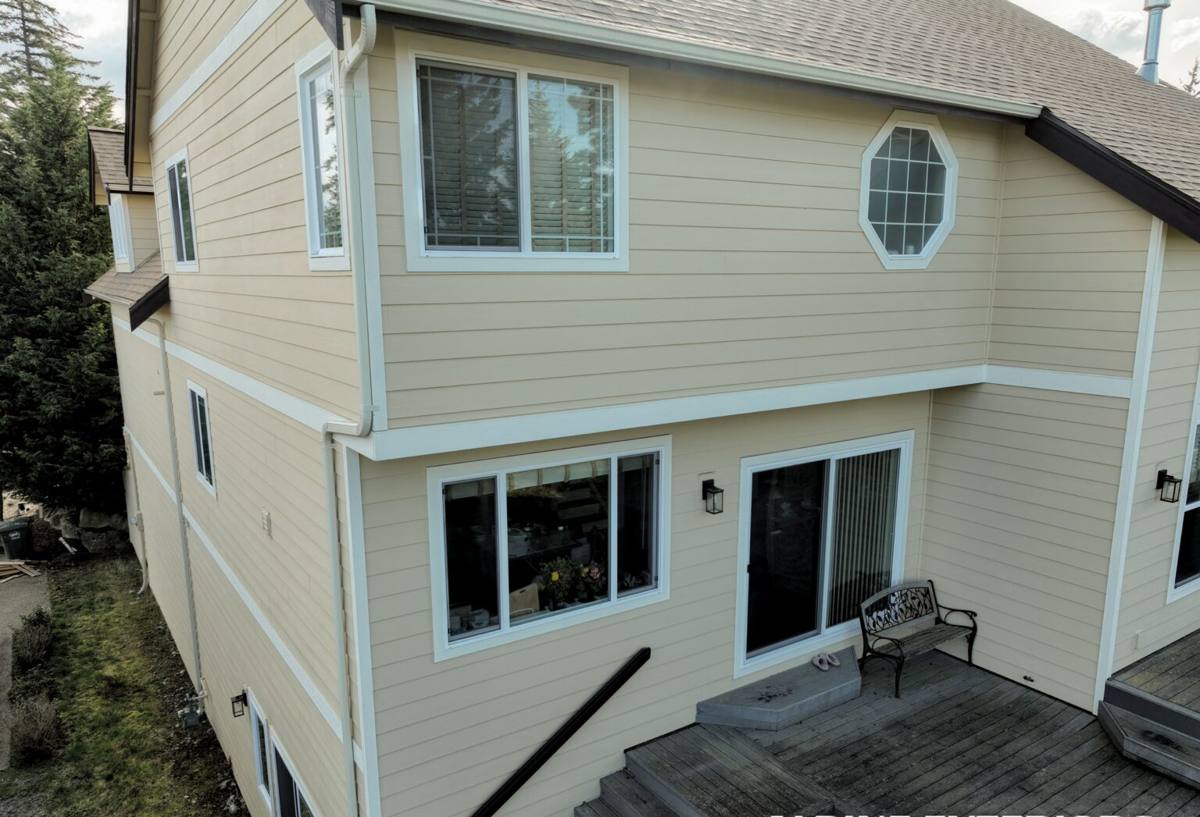
What the Valley's Climate Actually Does to a Deck
Three things drive almost every deck problem we see out here, and they compound each other:
- Shade and slow drying: Tree-covered lots and low ground mean less direct sun hitting the deck surface. Water sits longer after rain, dew lingers into the afternoon, and that extended damp window is prime moss and algae territory.
- Moss season is long: On much of Orcas Island, and especially in shaded valley pockets, moss can establish itself on decking, stair treads, and railings for the better part of the year, not just in deep winter. Moss holds moisture against the wood surface and turns walking surfaces slick.
- Salt-laden moisture still reaches inland: Even away from the immediate shoreline, marine air carries salt content that settles on metal fasteners, railing hardware, and connectors. It's less aggressive than a bluff-top deck, but over ten or fifteen years it's enough to corrode the wrong grade of screw or bracket.
None of this means a deck in Crow Valley can't last decades. It means the material choices, fastener grades, and drainage details have to be picked for this environment specifically, not pulled from a generic spec sheet.
Choosing Decking Material for a Shaded, Damp Site
There's no single "best" decking material — there's a best fit for a given lot, budget, and how much upkeep the owner actually wants to do. Here's how the common options hold up under Crow Valley conditions specifically:
| Material | Behavior in shade/moisture | Maintenance | Typical lifespan here |
|---|---|---|---|
| Pressure-treated fir/hemlock | Prone to moss and surface graying quickly in shade; needs airflow underneath | Annual cleaning, periodic sealing | 10–15 years before major repair |
| Cedar | Naturally moisture- and rot-resistant, but still grows moss in full shade without cleaning | Periodic cleaning and oil/stain | 15–20 years |
| Composite decking | Won't rot, but low-quality composites can stay damp on the surface and grow surface mold in constant shade | Occasional wash; no staining | 25+ years |
| PVC/capped composite | Best moisture rejection of the common options; performs well in shaded, damp footprints | Low — periodic wash | 25–30+ years |
| Tropical hardwood (ipe, etc.) | Extremely dense and durable, but installation-sensitive and expensive | Periodic oiling if color retention matters | 30+ years |
For a heavily shaded Crow Valley lot, we generally steer owners away from bare pressure-treated lumber as a final surface — it's the option that fights the moss problem the hardest and needs the most upkeep to stay safe underfoot. Composite and PVC decking cost more up front but remove a lot of that maintenance burden, which matters more here than on a sunnier, more exposed lot where a board dries out between rains.
Why We're Selective About Which Composite Lines We Install
Not all composite and capped-composite products handle sustained shade and moisture the same way. Some early-generation composites without a full polymer cap can absorb moisture at the core over years of shaded exposure, leading to swelling or surface staining that a capped board avoids. We install based on what performs well in exactly this kind of environment, and we're upfront when a lower-cost line is a poor match for a shaded, damp footprint rather than steering every job to the priciest option regardless of fit.
What's Underneath Matters More Than the Boards
Almost every deck failure we get called out to inspect on Orcas Island traces back to something under the decking, not the decking itself. For a Crow Valley build or rebuild, the structural details we won't skip include:
Ledger and House Connection
Where the deck attaches to the house is the single most common source of hidden rot, because it's the hardest spot for water to escape once it gets behind the siding or trim. Proper ledger flashing that sheds water outward — not caulk alone — is non-negotiable on a damp-climate build.
Joist Protection
Untreated joist tops sitting under decking in a shaded yard will hold moisture indefinitely. Joist tape or a comparable flashing barrier on top of every joist keeps water from wicking into the framing lumber from above, which is where we see the earliest structural rot in older Orcas Island decks.
Footings and Post Bases
Valley soil that stays damp longer through the year needs footings set to the correct depth and post bases that keep wood off concrete and standing water — a detail that's often shortcut on older or DIY decks we're asked to replace.
Airflow Underneath
A low-clearance deck over damp valley ground with no cross-ventilation is one of the fastest paths to a moss- and mildew-prone structure. Where grading allows, we build in clearance and, where it doesn't, we adjust decking spacing and skirting to keep air moving.
Fasteners and Hardware for This Environment
Marine-grade or stainless fasteners cost more than standard exterior screws, but on a shaded, moisture-heavy Crow Valley lot they're the difference between a railing that's solid in year twelve and one that's working loose because a bargain-grade screw corroded inside the post. The same logic applies to joist hangers, post caps, and any structural connector — we spec hardware rated for coastal/marine exposure on every deck we build on Orcas Island, inland valley or not, because salt-bearing air reaches further than people assume.
Our Process, Start to Finish
- On-site walk and assessment: We look at sun exposure, drainage, existing structure (if this is a replacement), and how the specific spot on the lot handles moisture through the year.
- Design and material selection: We talk through decking material, railing style, and layout against your budget and how much maintenance you actually want to do long-term.
- Permitting: Deck work on Orcas Island typically requires a permit through San Juan County depending on size, height, and attachment to the structure — we handle that process rather than leaving it to the homeowner.
- Demolition (if replacing): Old decking and, where needed, framing is removed and hauled off; we inspect the ledger and framing underneath before anything new goes in.
- Structural work: Footings, framing, ledger flashing, and joist protection go in first — this is the part that determines whether the deck lasts.
- Decking, railing, and finish work: Boards, railings, stairs, and any lighting or trim are installed to spec.
- Final walkthrough: We go over care and cleaning specific to the material you chose and the shade level of your particular site.
Living With a Deck in a Moss-Prone Valley
Even the right materials and construction still need some seasonal attention in a shaded, damp environment. A simple annual routine keeps most Crow Valley decks from ever developing a moss or slip problem:
- Sweep debris and fallen leaves/needles off the deck regularly — trapped organic matter is what moss and mildew feed on first
- Rinse or gently wash the surface at least once a year, more often on heavily shaded sections
- Check railings and stair treads for slickness after long wet stretches, especially where tree cover blocks sun the longest
- Keep gutters and downspouts near the deck clear so runoff isn't dumping extra water onto or under the structure
- Re-oil or re-stain wood decking on the manufacturer's recommended schedule — don't wait until it's visibly gray
- Have fasteners and railing connections checked every few years, particularly on older builds with standard-grade hardware
Cost Factors on a Crow Valley Deck Project
Every deck is priced on its own specifics, but the variables that move the number most on valley lots are consistent:
| Factor | Why it affects cost here |
|---|---|
| Decking material | Composite and PVC cost more per square foot than treated lumber but reduce long-term upkeep in shaded conditions |
| Site access | Wooded, sloped valley lots can require more labor to move materials and equipment than a flat, open site |
| Structural condition (replacements) | Rot found in the ledger or framing during demo adds repair scope that a straightforward rebuild doesn't have |
| Footing depth and soil conditions | Damp valley soil sometimes requires deeper or additional footings for a stable structure |
| Railing style and hardware grade | Marine-grade fasteners and higher-end railing systems add cost but reduce corrosion issues over time |
We give straightforward, honest ranges during the estimate rather than a number that changes once work starts — the assessment visit is where those site-specific factors get identified.
Why Local Experience on Orcas Island Matters
A contractor who mostly builds decks in drier inland regions and occasionally takes an island job doesn't have the same feel for how a shaded Crow Valley lot behaves through a wet Pacific Northwest winter, or which fastener grade actually holds up against San Juan County's marine air over a decade. We work this island regularly, which means we've already seen how different decking and hardware choices age on lots like yours — not in a showroom, but through actual moss seasons and driving rain. That's the difference between a deck that needs real attention in year eight and one that's still solid at twenty.
If you're planning a new deck or looking at replacing one that's showing its age, we're happy to walk the site with you and give a straightforward, no-pressure estimate — just fill out the form below to get started.