 Orcas Island
 Decks Around Cascade Lake Work Harder Than They Look Like They Should
A deck at Cascade Lake spends most of the year wet, shaded, or both. Between the tree cover that surrounds much of the lake, the moisture that sits in the air off the water, and the broader marine climate that defines San Juan County, a deck here is dealing with conditions that a deck in a drier inland town never sees. Add in the driving rain that comes through on winter storm systems and the salt-laden air that reaches every corner of Orcas Island, and you have a environment that is genuinely tough on outdoor building materials — wood especially.
None of that means a deck at Cascade Lake can't last. It means the material and the installation both have to be chosen with that climate in mind, not just picked off a lumber rack because it's what's on hand. That's the whole case for composite decking here: it's a material built to shrug off exactly the conditions this property line deals with year-round.
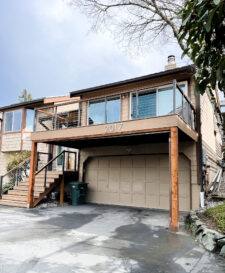
What Rain, Shade, and Moss Actually Do to a Deck Here
It helps to be specific about the damage mechanisms, because they're not all the same problem.
Driving Rain and Standing Moisture
Wind-driven rain off the water doesn't just fall straight down — it gets pushed sideways into board gaps, under railings, and into any joint that isn't sealed or shedding water on purpose. Traditional wood decking swells and contracts as it absorbs and releases that moisture, which is what eventually loosens fasteners, cups boards, and opens up hairline cracks where rot gets started.
Shade and a Long Moss Season
Homes tucked into the tree line around the lake get less direct sun and more standing shade than a deck out in the open. Less sun means slower drying after every rain, and slower drying is exactly what moss, algae, and mildew need to take hold. San Juan County's moss season runs long compared to drier parts of the state — realistically much of the fall through spring — and a deck surface that stays damp for that many months a year needs to either resist growth or be easy to clean without damaging the material.
Salt Air and Metal Fatigue
The marine air that moves across Orcas Island carries salt that accelerates corrosion on anything metal — fasteners, brackets, railing hardware, even the heads of exposed screws. On an older deck, that's often the first visible failure: rust streaks bleeding down through the boards long before the decking itself gives out.
Why Composite Decking Fits This Property Type Well
Composite decking is made from a blend of wood fiber and recycled plastic, usually with a protective cap layer on modern boards. That combination is designed to solve the specific problems above:
- It doesn't absorb water the way solid wood does, so it isn't swelling and shrinking through every wet-dry cycle.
- Capped boards resist moss and mildew staining far better than bare wood, and what does grow on the surface generally rinses off rather than embedding in the grain.
- It doesn't need annual staining or sealing to hold up — a real advantage on a property where the deck may only get attention from the owner a few times a year.
- It won't splinter, crack, or rot from the inside the way wood eventually does once moisture gets past the surface.
That said, composite isn't magic, and it isn't maintenance-free — just maintenance-different. The boards still need proper drainage underneath, the fasteners and framing still need to be chosen for a wet climate, and the installation still has to account for expansion and contraction with temperature. A composite deck installed the same way you'd frame a standard wood deck will disappoint the homeowner regardless of how good the boards themselves are.
Composite vs. Other Decking Materials for This Climate
| Material | How it handles rain and lake humidity | Moss/algae resistance | Upkeep |
|---|---|---|---|
| Pressure-treated wood | Absorbs and releases moisture constantly; prone to cupping and splitting over time | Low — bare wood grain holds moss and mildew | Annual cleaning, staining, or sealing |
| Cedar | Naturally more rot-resistant than pine, but still absorbs water and moves seasonally | Moderate, fades and grays without maintenance | Regular sealing to hold color and resist rot |
| Capped composite | Doesn't absorb water into the core; stable through wet-dry cycles | High — cap layer sheds surface growth | Occasional wash-down, no staining or sealing |
| PVC decking | Fully water-resistant, very stable | High | Low, but different appearance and feel than composite |
Composite is our default recommendation for most Cascade Lake homes because it strikes the right balance between low upkeep, natural wood-like appearance, and long-term performance in a wet, shaded setting — without the higher cost and different look of full PVC systems.
What a Correct Composite Installation Actually Involves
The board itself is only part of the equation. The parts of the job that don't show — the framing, the fasteners, the airflow underneath — are what determine whether a composite deck performs for its full warranty life or starts having problems in five years.
Framing and Ledger Attachment
The substructure needs to be built to handle sustained moisture, not just occasional exposure. That means correctly flashed ledger boards where the deck meets the house, joist tape or a comparable moisture barrier on the framing, and hardware rated for wet, coastal conditions rather than standard interior-grade fasteners.
Drainage and Airflow Underneath
A deck built low to the ground or over damp soil near the lake needs real airflow underneath it, or moisture just sits there and works on the framing from below even while the composite boards on top look fine. That can mean proper joist spacing, ventilation gaps, or in some cases a drainage system if the space underneath will be enclosed or used as a patio.
Fastening System
Hidden fastener clips are standard on most modern composite boards and are worth using — they avoid the exposed screw heads that streak with rust from salt air over time, and they let the boards expand and contract without splitting at the fastener point.
Expansion Gaps
Composite still moves with temperature, just less dramatically than wood. Gaps between boards, around posts, and at the edges of the deck have to be set correctly at install so the whole surface doesn't buckle on a hot August afternoon or gap open when it cools back down.
How the Project Works, Start to Finish
- On-site assessment: We look at the existing deck or the build site, check the framing condition if there's an existing structure, and talk through what's actually causing problems if this is a replacement.
- Material selection: We walk through board profiles, colors, and price tiers based on how much sun or shade the space gets and how the homeowner actually uses the deck.
- Structural work: Framing repairs or new substructure, moisture barriers, and drainage get handled before a single composite board goes down.
- Installation: Boards go down with a hidden fastener system, correct spacing, and attention to how water will move off the surface.
- Finish details: Railings, stairs, fascia boards, and any trim get installed and checked for the same fastener and moisture standards as the deck surface.
- Final walkthrough: We go over care basics with the homeowner and make sure everything is sound before we call it done.
Living With a Composite Deck at Cascade Lake
Composite is low-maintenance, not no-maintenance. A few habits go a long way in this specific climate:
- Rinse or lightly brush the surface a couple of times a year, more often in shaded spots where moss builds up faster.
- Keep gutters and downspouts near the deck clear so runoff isn't dumping extra water onto the same section of boards every storm.
- Sweep off fallen needles and leaf debris regularly — left to sit, they hold moisture against the board surface and can leave tannin stains.
- Check railing hardware and fastener caps periodically for any early rust from salt air exposure, especially on the side of the deck facing open water or wind.
- Trim back overhanging branches where reasonable to let more light and airflow reach shaded sections.
What Affects the Cost
| Factor | Why it matters |
|---|---|
| Board tier | Entry-level capped composite costs less than premium multi-tone or PVC-composite hybrid boards |
| Substructure condition | An existing frame with rot or inadequate drainage adds repair work before decking can go down |
| Deck size and layout | Stairs, multiple levels, and custom railing add labor beyond a simple rectangular deck |
| Site access | Waterfront and wooded lots around the lake sometimes mean material has to be moved by hand over distance |
| Delivery logistics | Material coming to Orcas Island has to be scheduled around ferry runs, which affects lead time more than final price |
We give straightforward, itemized estimates rather than a single lump figure, so a homeowner can see what's driving the number and where there's room to adjust the scope if needed.
Why It Matters That We Already Work This Lake
A crew that hasn't worked around Cascade Lake before is learning the site conditions on the homeowner's dime — figuring out on the fly how much shade a lot actually gets through the seasons, how material and crews get to the island and out to the property, and how much drainage a particular spot really needs. We've built and repaired decks in this exact setting enough times to skip that learning curve. We know what a lake-adjacent, tree-shaded lot in San Juan County does to a deck over the years, and we build for that reality from day one rather than discovering it later in a warranty call.
If you're planning a new deck at Cascade Lake or replacing one that's showing its age, we're glad to come take a look and put together a free, no-pressure estimate — just fill out the form below.