 Orcas Island
 Building a Deck That Can Actually Handle Cascade Lake
A deck around Cascade Lake lives a harder life than a deck in a dry, open subdivision. Between the tree cover, the humidity that sits low around the water, and the long stretch of gray months San Juan County gets every year, a deck here is under near-constant moisture stress. Add in the salt-laden air that blows across all of Orcas Island off the surrounding saltwater, and you've got a structure that's fighting corrosion, rot, and moss all at once, all year. A deck built to a generic spec sheet will show its age fast in this spot. One built for these specific conditions won't.
This page covers what we actually pay attention to when we build or replace a deck for a home in the Cascade Lake area — the site conditions, the material trade-offs, the structural details that matter more here than they would somewhere drier, and what our process looks like from the first look at your lot to the last coat of finish.
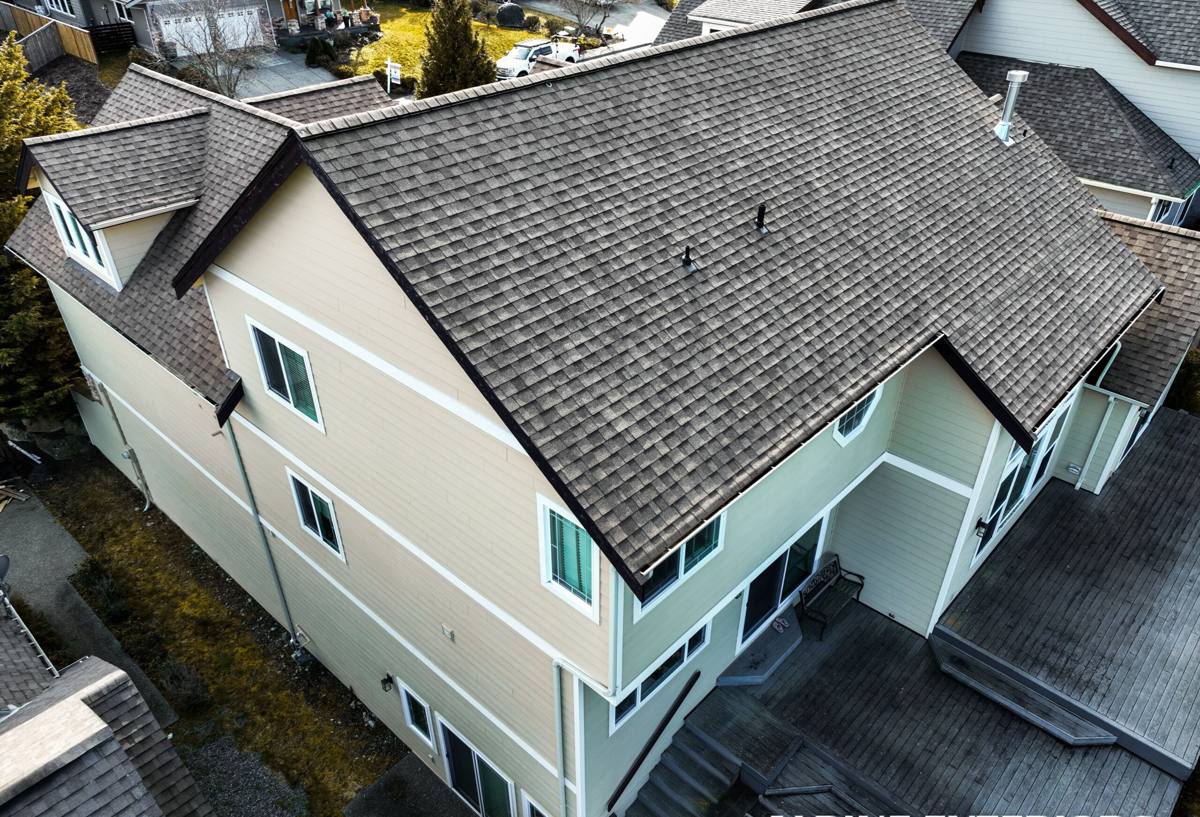
What Makes a Cascade Lake Lot Different
Not every deck problem is the same everywhere on the island. What we see repeatedly around Cascade Lake comes down to a few overlapping conditions:
- Tree canopy shade. Homes tucked into the trees near the lake, some backing toward the forest of Moran State Park, get a lot less direct sun and wind than an open lot. That means decking stays damp longer after rain or morning dew, which is exactly what moss and algae need to take hold.
- Ground and air moisture together. Being close to open water raises ambient humidity right at ground level, where framing and footings live. Wood and hardware near the lake dry out slower than the same materials on a hillside lot a mile away.
- Marine air corrosion. Cascade Lake itself is fresh water, but the air moving across the whole island carries salt off the surrounding Sound. Standard fasteners and hardware corrode faster here than the box label assumes, even set back from any shoreline.
- Uneven, often rocky soil. Glacial-till soil is common across Orcas Island and doesn't behave consistently lot to lot — footings that work fine next door can hit ledge rock or soft fill on your property.
None of this makes a deck impossible to build well around Cascade Lake. It just means the build has to account for these conditions from the footings up, not just at the surface.
Choosing Decking Material for a Shaded, Damp Site
The decking surface is the most visible decision, and it's also the one most affected by shade and moisture. There's no single "best" material — it depends on how much sun your specific spot gets, how much upkeep you want to do, and your budget.
| Material | Moss/Algae Resistance | Maintenance | Typical Lifespan | Best Fit |
|---|---|---|---|---|
| Pressure-treated wood | Low — needs regular cleaning in shade | Annual cleaning, periodic sealing | 10–15 years with upkeep | Budget-conscious builds, sunnier spots |
| Cedar | Moderate — natural oils slow growth some | Cleaning plus refinishing every few years | 15–20 years with upkeep | Homeowners who want a natural look and will maintain it |
| Composite/PVC decking | Higher, but not immune — surface film still needs washing | Periodic washing, no sealing/staining | 25+ years | Heavily shaded lots, low-maintenance preference |
One honest note on composite: it resists rot better than wood, but in a deeply shaded, damp spot it can still grow a slick algae film on the surface if it's never washed. We don't sell composite as a "install it and forget it" fix for a shade problem — it still needs a rinse and scrub a couple of times a year in a spot like this. What it does eliminate is the rot and splinter risk you'd otherwise be managing on a wood deck in the same location.
What We Steer Clients Away From
We're cautious about untreated softwoods or bargain-grade pressure-treated lumber for decking surfaces this close to the water. It's not that the material is defective — it's that in a low-sun, high-humidity spot, thin or inconsistently treated boards simply don't hold up to our standard for a project we're willing to warranty. We'd rather spec a slightly better board up front than have a client re-decking in eight years.
Framing, Footings, and Fasteners: The Parts You Don't See
The decking gets the attention, but the framing underneath it is what determines whether the deck is still solid in fifteen years. A few things we treat as non-negotiable on a Cascade Lake build:
- Stainless or high-grade coated fasteners throughout, not just at the ledger. Marine-influenced air corrodes standard galvanized hardware faster than most homeowners expect, and a corroded fastener two feet underground is a problem you don't see until something fails.
- Proper ledger flashing where the deck ties into the house, so water is directed away from the band joist instead of wicking into it. This is the single most common failure point we find on older decks in damp, shaded settings.
- Footing depth and bearing checked on site, not assumed from a plan set. Given how much soil conditions vary lot to lot on Orcas Island, we confirm bearing at each footing location rather than treat the whole property as uniform.
- Joist spacing and airflow underneath the deck tightened up in low-sun areas, so the structure has a chance to dry out between rain events instead of staying damp indefinitely.
Permits and Shoreline Considerations
San Juan County has its own permitting thresholds for decks based on size, height above grade, and proximity to water, and lots near Cascade Lake can also fall under additional shoreline-related review depending on exact location. We don't guess at this — we check the specifics for your parcel before we finalize a design, and if a permit or additional review is needed, we handle that step as part of the project rather than leaving it for you to sort out separately. If your lot turns out not to need one, that's one less thing to manage; either way, you'll know before we start digging.
What a Cascade Lake Deck Project Costs
Every deck is priced on its own specifics, but the factors that move the number most in this area are fairly consistent. This isn't a quote — it's what to expect to discuss when we walk your site.
| Factor | Why It Matters Here |
|---|---|
| Footing type and count | Rocky or uneven glacial soil can mean more footings, deeper digging, or a different footing method than a flat, open lot |
| Decking material | Composite costs more up front but less in upkeep; wood costs less up front but needs ongoing maintenance in shade |
| Height above grade | Taller decks need engineered railings and stairs, which adds material and labor |
| Site access | Tree-lined, tighter lots near the lake can slow material staging and require more hand-carrying versus machine access |
| Permit/review requirements | Parcels close to the water may need additional review time built into the schedule |
Our Process
We keep the process straightforward, and it doesn't change based on how big the job is — just how much time each step takes.
- Site walk. We look at sun exposure, soil, existing structure (if replacing a deck), and how the house ties in.
- Design and material discussion. We talk through decking options honestly, including what each one will actually require from you in year five and year ten, not just what it looks like on day one.
- Permit check. We confirm what San Juan County requires for your specific parcel before committing to a schedule.
- Footings and framing. Built to the soil conditions we find on site, with corrosion-resistant hardware throughout.
- Decking, railing, and finish. Installed with the drainage and airflow details that matter for a shaded, damp lot.
- Walkthrough. We go over basic care for whatever material you chose, so there are no surprises about upkeep down the road.
Keeping Moss and Algae From Taking Over
Even a well-built deck in the Cascade Lake area needs some seasonal attention — the climate doesn't let anything skip maintenance entirely. This is the short version of what we tell every client after a build:
- Sweep debris (needles, leaves, seed pods) off the deck regularly — trapped organic matter holds moisture and feeds moss growth.
- Wash the surface at least once or twice a year, more often in heavily shaded spots, with a deck cleaner appropriate to your material.
- Check gaps between boards periodically and clear out any buildup that's blocking airflow underneath.
- For wood decks, re-seal or re-stain on the schedule appropriate to that product — don't wait until it's visibly gray and dry.
- Trim back overhanging branches where possible to get a bit more sun and air movement across the deck surface.
- Address any soft or discolored boards right away rather than waiting for a full season — caught early, it's a board replacement; caught late, it can be a framing repair.
Why It Matters to Hire a Crew That Already Works Cascade Lake
A contractor who mostly builds decks on dry, open, mainland lots is going to default to mainland assumptions — standard fastener grade, standard footing depth, standard decking spec. None of those defaults are wrong in general; they're just not tuned to a shaded, humid, marine-air lot near Cascade Lake. A crew that already works this specific area knows which fastener grade actually holds up here, has a working sense of how the soil behaves lot to lot, and has already been through the county's permit process enough times to know what to check before the design is finalized rather than after. There's also a practical logistics side to building on Orcas Island that mainland contractors don't always plan for — getting the right material out here on the right ferry schedule, and not underestimating how long that adds to a project timeline if it's not planned for up front.
If you're planning a new deck or replacing one that's showing its age around Cascade Lake, we're happy to walk the site with you and talk through what it actually needs — no pressure, no upsell, just a straight look at your lot and a free estimate based on what we see.