 Orcas Island
 Windows Around Cascade Lake Take a Different Kind of Beating
Cascade Lake sits in a pocket of Orcas Island where moisture is a constant presence — lake humidity on one side, salt-laden air drifting up from the surrounding San Juan County waterways on the other. Add in the driving rain that comes through in fall and winter storms, plus the long stretch of gray, damp months that let moss and algae take hold on anything that stays wet too long, and you have a climate that is genuinely hard on window assemblies. It's not dramatic weather — it's persistent weather, and persistent moisture is exactly what finds the weak points in an aging window system.
Homes in this area often show window wear well before homes doing the same job inland. Wood sashes swell and stick. Aluminum frames pit and corrode faster than they would in a drier climate. Seals that are rated for twenty years in a mild inland zone can start failing in twelve or fifteen here. None of that is a knock on the original installers — it's just what salt air, standing moisture, and a short drying season do to building materials over time.
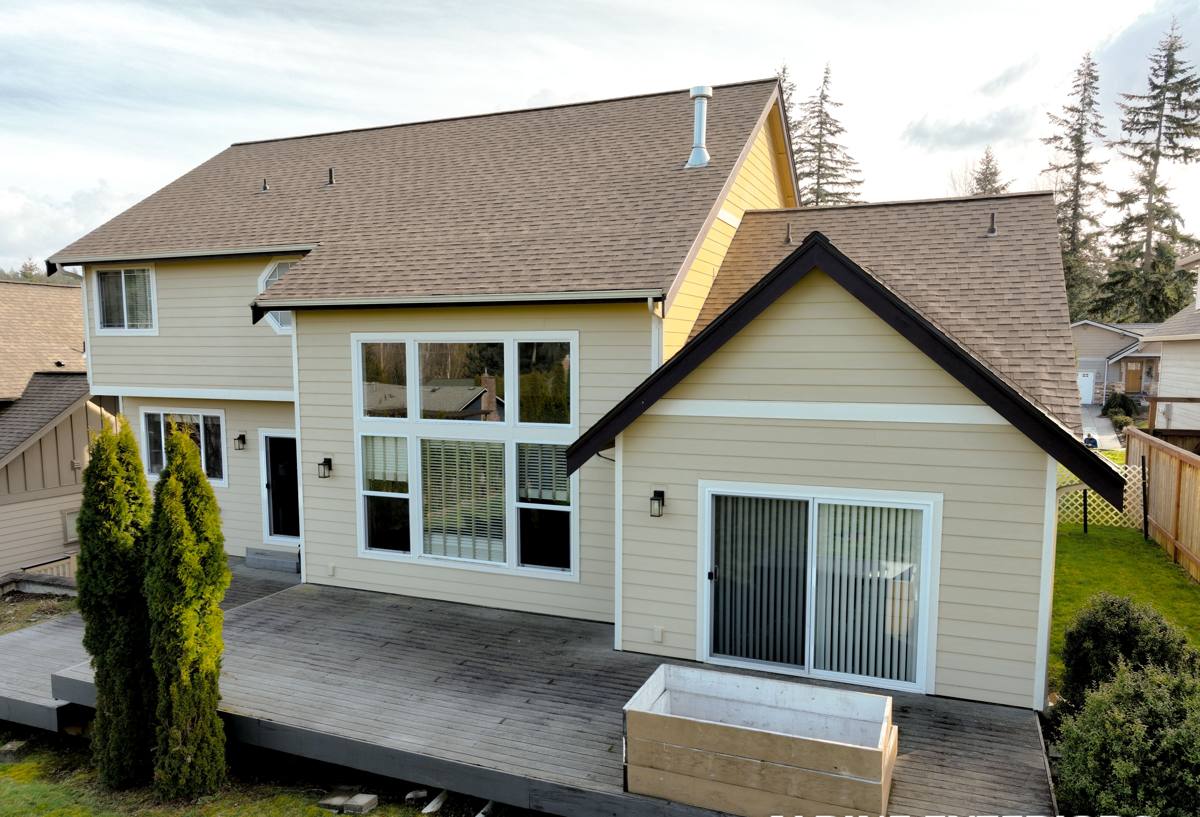
Signs a Cascade Lake Home Needs Window Replacement, Not Just Repair
Not every window problem calls for full replacement. But there are a handful of signs that tell us repair would just be delaying the inevitable:
- Fogging or a visible film between panes — the seal has failed and the insulating gas is gone for good
- Soft or discolored wood at the sill or lower corners of the frame — a sign moisture has been sitting there, not just passing through
- Windows that won't stay open, won't latch fully, or have visibly sagged in the frame
- Drafts you can feel by hand on a windy day, even with the window latched shut
- Visible corrosion, chalking, or pitting on metal frames and hardware
- Moss or dark streaking building up on the sill or exterior trim faster than it used to
If you're only seeing one of these on one window, a repair or targeted reseal might be worth trying first. If you're seeing several of them across multiple windows, that's usually a sign the whole window system — not just the glass — has reached the end of its useful life in this climate.
What a Correct Window Replacement Job Actually Involves
Moisture Management Comes First
The window itself is only part of the job. The bigger factor in how long a replacement lasts here is how well the opening is prepared and flashed before the new unit ever goes in. That means stripping back to sound framing, checking for hidden rot or moisture damage from the old window, and building a flashing sequence that sheds water down and out rather than trapping it behind the siding. On a site exposed to driving rain off the water, a rushed flashing job is the single most common reason a "brand new" window starts leaking within a couple of years.
Frame Material Matters More Here Than Elsewhere
We pay close attention to how a given frame material handles salt-laden, damp air over the long run — not just how it looks on day one. Some materials are simply lower-maintenance in this environment than others, and we'll walk through those trade-offs honestly rather than pushing whatever is easiest for us to install.
Glass Package and Orientation
Cascade Lake homes get a mix of exposures — some units facing open water and wind, others more sheltered by trees or terrain. We factor that into the glass package and hardware recommendation rather than defaulting to one spec for every opening on the house.
Comparing Window Frame Options for This Climate
There's no single "best" window material for every home — it depends on your budget, your home's style, and how much upkeep you want to take on. Here's how the common options generally hold up in a salt-air, high-moisture, moss-prone environment like this one:
| Frame Material | Moisture & Salt Air Resistance | Maintenance Burden | Typical Trade-Off |
|---|---|---|---|
| Vinyl | Good — won't rot or corrode | Low | Less design flexibility on historic or custom homes |
| Fiberglass | Very good — stable and non-corrosive | Low to moderate | Higher upfront cost than vinyl |
| Aluminum | Fair — prone to pitting and corrosion near salt air over time | Moderate to high | Thin sightlines, but shorter service life here |
| Wood, unclad | Poor without diligent upkeep in this climate | High | Best natural appearance, most maintenance-sensitive |
| Wood, clad | Good if the cladding and flashing are done right | Low to moderate | Interior wood look with better exterior durability |
We're upfront when a material isn't a good fit for a particular exposure — for example, we're cautious about recommending unclad wood on a wall that takes direct wind-driven rain off the lake, not because the wood itself is bad, but because that combination asks a lot of ongoing maintenance from the homeowner to keep it performing.
Our Process for a Cascade Lake Window Replacement
1. On-Site Assessment
We look at each window opening individually rather than quoting the whole house off a single assumption. Exposure, existing framing condition, and how the current window has failed all factor into the recommendation.
2. Removal and Opening Prep
Old units come out carefully so we can inspect the framing underneath. Any soft or compromised wood gets addressed before anything new goes back in — installing a new window over a damaged opening just hides the problem for a while.
3. Flashing and Weatherproofing
This is the step that determines whether the job holds up through years of driving rain. We build the flashing and sealant sequence to shed water outward, with particular attention to sill pans and head flashing on exposures that take the most weather.
4. Installation and Finish
The new window is set, shimmed, and secured to spec, then trimmed out to match the surrounding siding and finish. We check operation — opening, closing, and locking — before we consider the job done.
5. Site Cleanup
Old windows, packaging, and debris leave with us. We don't leave a job site for the next weather system to deal with.
Mistakes We Commonly See From Rushed Installs
Because Orcas Island is ferry-served and somewhat harder to reach than a mainland job site, some homeowners have had window work done by crews trying to fit the job into one quick trip. That time pressure shows up later as:
- Flashing skipped or shortcut to save time, leading to hidden leaks behind the siding
- Caulk used to "solve" a gap that should have been properly flashed or shimmed
- Mismatched hardware or glass packages that don't account for which direction the window actually faces
- No follow-up if a problem shows up after the crew has left the island
None of these show up on inspection day. They show up eighteen months later, during the next hard storm, when the crew that installed the window is long gone.
What Affects the Cost of a Window Replacement Here
Every home and every opening is different, but the main cost factors we walk homeowners through are:
| Factor | Why It Matters |
|---|---|
| Frame material chosen | Vinyl, fiberglass, and clad-wood options carry different material costs |
| Condition of the existing opening | Hidden rot or framing damage adds repair scope before the new window goes in |
| Number and size of openings | Larger or custom-sized windows generally cost more than standard sizes |
| Exposure and access | Upper-story or hard-to-reach windows can add labor time |
| Glass package | Impact-rated or upgraded glazing options add cost but can add durability |
We don't quote in vague ranges pulled from a national average — every estimate is based on what we actually see at your home, because a Cascade Lake exposure and an inland exposure on the same island can call for genuinely different specs.
Why a Crew That Already Works Cascade Lake Matters
Working on Orcas Island regularly means we already understand the logistics that catch mainland crews off guard — ferry scheduling, material lead times, and the reality that a callback isn't a quick same-day fix if something needs attention later. It also means we've seen how different products and installation approaches actually hold up here over years, not just how they're rated on a spec sheet. That local track record shapes which materials we recommend and how carefully we handle the flashing details that matter most in a place with this much moisture and salt exposure.
Protecting Your New Windows After Installation
A correctly installed window still benefits from basic upkeep in this climate. We recommend homeowners:
- Rinse pollen, salt residue, and grime off frames and glass a couple times a year
- Clear moss or debris from sills and tracks before it holds moisture against the frame
- Check that weep holes (drainage points) on the exterior stay clear and unblocked
- Inspect exterior caulking annually and touch up before small gaps become bigger problems
- Operate each window a few times a season so hardware doesn't seize from disuse
None of this is complicated, but skipping it is how a well-installed window ends up needing attention years earlier than it should.
If your windows around Cascade Lake are drafty, fogged, sticking, or just past their prime, we're happy to take a look and give you a straight answer about whether repair or replacement makes sense. Use the form below to request a free, no-pressure estimate.