 Orcas Island
 Siding Built for West Sound's Exposure
West Sound sits along Orcas Island's western shoreline, and that position comes with a specific set of weather demands. Homes here take on salt-laden air off the water, driving rain that comes in sideways during winter storms, and a long, damp shoulder season that keeps exterior surfaces wet for days at a time. Add the shade from the island's dense conifer cover and you get near-ideal conditions for moss and algae growth on anything that holds moisture. Siding in this pocket of San Juan County isn't decorative — it's the first line of defense against a marine environment that never really lets up.
We install siding across the West Sound area specifically, not as a side stop on the way to somewhere else on the island. That matters because the right siding choice and installation detail for a west-facing, water-exposed home is different from what you'd spec for a sheltered inland lot, and a crew that works this stretch regularly knows which walls need the extra attention before they ever pull a tape measure.
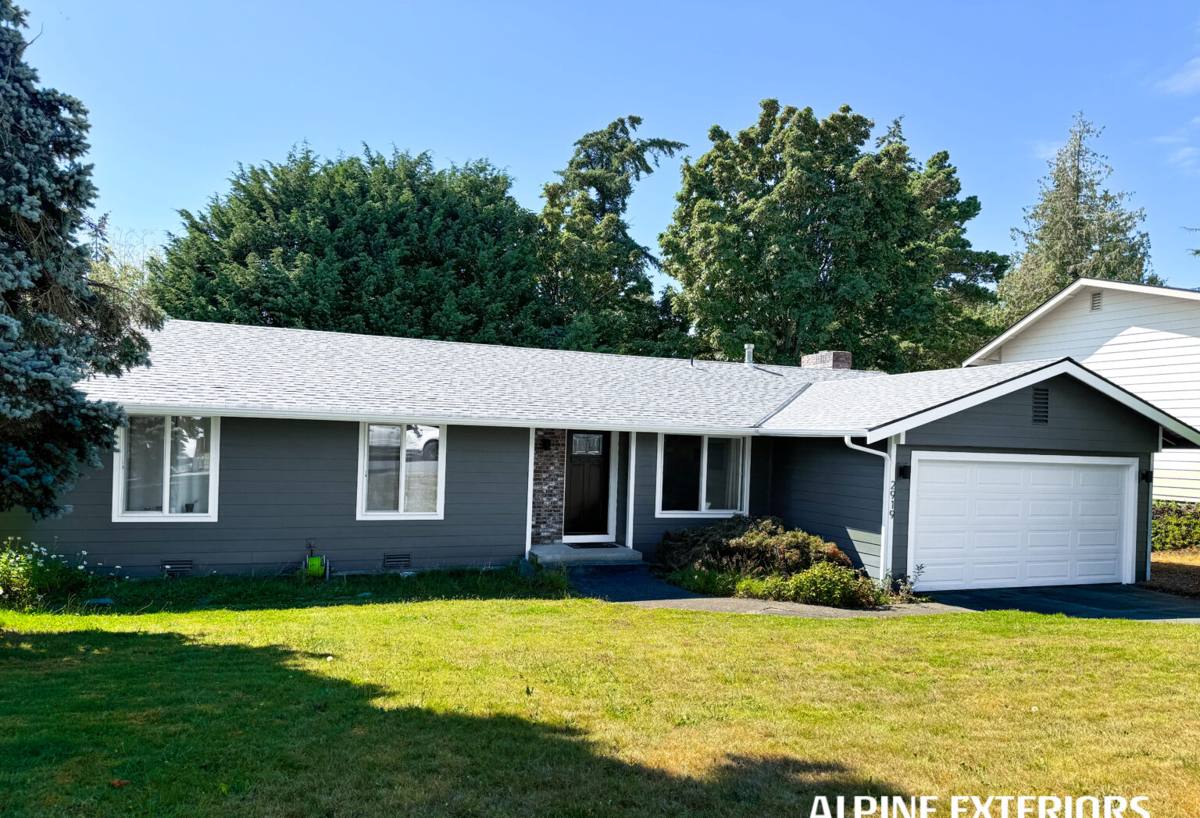
What Salt Air and Moss Season Do to Siding
It helps to understand the specific failure modes before talking about the fix.
Salt Air
Airborne salt is corrosive to exposed metal fasteners, flashing, and trim hardware, and it accelerates the breakdown of coatings that aren't rated for marine exposure. Paint film on wood or composite siding chalks and fades faster near the water. Over years, this shows up as rust streaking at nail heads, pitted or corroded trim accessories, and finishes that need repainting well ahead of their expected life.
Driving Rain
West-facing walls on Orcas Island catch wind-driven rain that pushes water horizontally against the siding, not just down it. That means lap joints, butt seams, and penetrations (hose bibs, vents, light fixtures) take on more water pressure than they would on a calmer site. Any gap in the water-management plan behind the siding — house wrap, flashing, caulking — gets tested harder and sooner here than in a typical inland install.
Moss Season
Shade, moisture, and mild temperatures are exactly what moss and algae need to establish. On porous or textured surfaces, spores take hold in the surface itself, not just on top of it, and yearly power-washing becomes a maintenance chore that never fully solves the problem. Siding that resists moisture absorption at the material level holds up far better than siding that just gets treated or sealed against it.
Why We Install James Hardie Fiber Cement — Not Alternatives
We only install James Hardie fiber cement siding. We don't install vinyl, LP SmartSide, Cemplank, Allura, primed spruce, or cedar, and on a site like West Sound the reasons are practical, not theoretical.
- Vinyl expands and contracts with temperature swings and can warp or pull loose in sustained wind-driven rain events; it also isn't paintable in most cases if the color fades or you want to change the look later.
- Wood-based products (LP SmartSide, primed spruce, cedar) are organic material at their core — even with engineered strand construction or factory priming, they're more vulnerable to moisture absorption, swelling, and rot in a climate that stays wet as long as this one does, and they typically need more frequent recoating in salt air.
- Other fiber cement brands (Cemplank, Allura) are legitimate products, but we've standardized on one manufacturer, one installation system, and one warranty structure so every job we do meets the same spec — that consistency is worth more to us than switching materials job to job.
James Hardie fiber cement is non-combustible, dimensionally stable, and doesn't absorb water the way wood-based sidings can — it's engineered specifically to hold its shape and finish in wet, humid climates. The factory-applied ColorPlus finish is baked on under controlled conditions, which gives it better fade and moisture resistance than field-applied paint, and it comes with a strong transferable warranty when installed to Hardie's specifications. For a site with West Sound's exposure, that combination is the difference between siding that needs attention every year and siding that quietly does its job for decades.
HardiePlank vs. Other Siding Materials for This Climate
| Factor | James Hardie Fiber Cement | Vinyl | Wood / Engineered Wood |
|---|---|---|---|
| Moisture absorption | Very low; engineered for wet climates | Non-absorbent but seams/gaps trap water | Higher; prone to swelling if compromised |
| Salt air resistance | Strong; factory finish holds up well | Moderate; can chalk and fade near water | Weaker; finish breaks down faster |
| Moss/algae resistance | Good; dense material resists spore establishment | Fair; smooth surface but seams collect debris | Poor; porous surface invites growth |
| Fire rating | Non-combustible | Combustible | Combustible |
| Repainting interval | Long — factory finish, not field paint | N/A (limited repaint options) | Shorter, especially in salt air |
What Correct Siding Installation Looks Like on This Site
The material is only part of the equation. On a West Sound home, the installation details behind the siding matter as much as the panels themselves.
Water Management First
Before any siding goes up, the wall needs a properly lapped weather-resistive barrier, correctly integrated flashing at every window, door, and penetration, and a drainage plane that lets any water that does get behind the siding find its way back out instead of sitting against the sheathing. This is the part of the job nobody sees once it's finished, and it's the part that determines whether the wall stays dry for the next thirty years.
Fastening and Clearances
James Hardie specifies exact nailing patterns, fastener types, and minimum clearances from grade, roofing, and other transitions. On a driving-rain site, we don't cut those clearances close — extra margin between siding and grade, decks, or roof lines gives water somewhere to go instead of wicking straight into the bottom edge of a board.
Joint and Seam Treatment
Butt joints and panel seams are where wind-driven rain finds its way in if they're not detailed correctly. Proper caulking, H-molding or shiplap joints per Hardie's install guide, and correct overlap on lap siding all reduce the number of entry points water has to work with.
Trim and Accessory Selection
Fasteners, flashing, and trim accessories exposed to salt air should be corrosion-resistant — stainless or coated hardware where it's called for, not standard-grade material that will streak or fail early this close to the water.
- House wrap lapped correctly, shingle-style, with no gaps at seams
- Flashing integrated at every window, door, and penetration before siding starts
- Manufacturer-specified nailing pattern and fastener type used throughout
- Minimum clearance maintained from grade, decks, and roof lines
- Butt joints and panel seams sealed per Hardie's installation guide
- Corrosion-resistant trim and fastener hardware on exposed elevations
- Final walkaround to check caulking, touch-up paint, and gaps before job close-out
Our Process for a West Sound Install
1. On-Site Assessment
We walk the property, check the current siding and sheathing condition, note which elevations take the most weather exposure, and look for existing moisture damage or trim issues that need addressing before new siding goes up.
2. Product and Color Selection
We help you choose the right Hardie product line and ColorPlus finish for your home, factoring in sun exposure, surrounding tree cover, and how the color will read against the island's landscape.
3. Tear-Off and Prep
Old siding comes off, sheathing is inspected and repaired as needed, and the weather barrier and flashing system go in correctly before a single piece of new siding is installed.
4. Installation to Spec
Panels go up following James Hardie's installation requirements — nailing pattern, clearances, joint treatment — with the extra margin this site's exposure calls for.
5. Final Inspection and Walkthrough
We check caulking, trim, touch-up paint, and clearances, then walk the finished job with you before we consider it done.
Why a Local West Sound Crew Matters
Siding installation guidance is written for general conditions, but every site interprets those specs a little differently. A crew that regularly works West Sound knows which elevations on a typical lot here take the worst of the driving rain, which spots see the most shade and moss buildup, and where the salt exposure is worse depending on how close the home sits to the water. That local pattern recognition doesn't replace following the manufacturer's install spec — it's what tells us where to add extra care within that spec. Scheduling and access on the island also work differently than on the mainland; a crew based here plans around ferry logistics and material delivery timing so your project doesn't stall waiting on a part that should have arrived days ago.
Signs Your West Sound Home May Need New Siding
A few things worth watching for, especially on west- and south-facing walls:
- Soft or spongy spots when you press on the siding, especially near the bottom edge
- Persistent moss or algae staining that comes back within months of cleaning
- Paint that's peeling, bubbling, or chalking faster than the rest of the house
- Visible gaps, warping, or separation at seams and joints
- Rust streaking around fasteners or trim hardware
Any one of these is worth a look before it turns into a sheathing or framing repair.
Get a Free Estimate for Your West Sound Home
If your siding is showing wear from salt air, driving rain, or a few too many moss seasons, we're happy to take a look and give you an honest read on what it needs. Reach out for a free, no-pressure estimate — we'll walk the property, answer your questions about James Hardie siding, and give you a clear picture of the work and cost involved using the form below.