 Orcas Island
 West Sound's Roofs Work Harder Than Most
West Sound sits on the sheltered west side of Orcas Island, but "sheltered" doesn't mean easy on a roof. Homes here deal with a combination that's harder on roofing than almost anywhere else in San Juan County: salt-laden air coming off the water, long stretches of driving rain in fall and winter, and heavy tree canopy that keeps large sections of roof shaded and damp for months at a time. That shade is great for a deck or a garden. It's rough on shingles, flashing, and fasteners.
Moss doesn't just sit there looking bad. It holds moisture against the roofing surface, lifts shingle edges as it grows, and works its way into seams over a few seasons. Combine that with wind-driven rain that finds every gap in flashing, and you get a specific pattern of failure that's common on Orcas Island but often missed by roofers who mostly work drier, less shaded properties on the mainland.
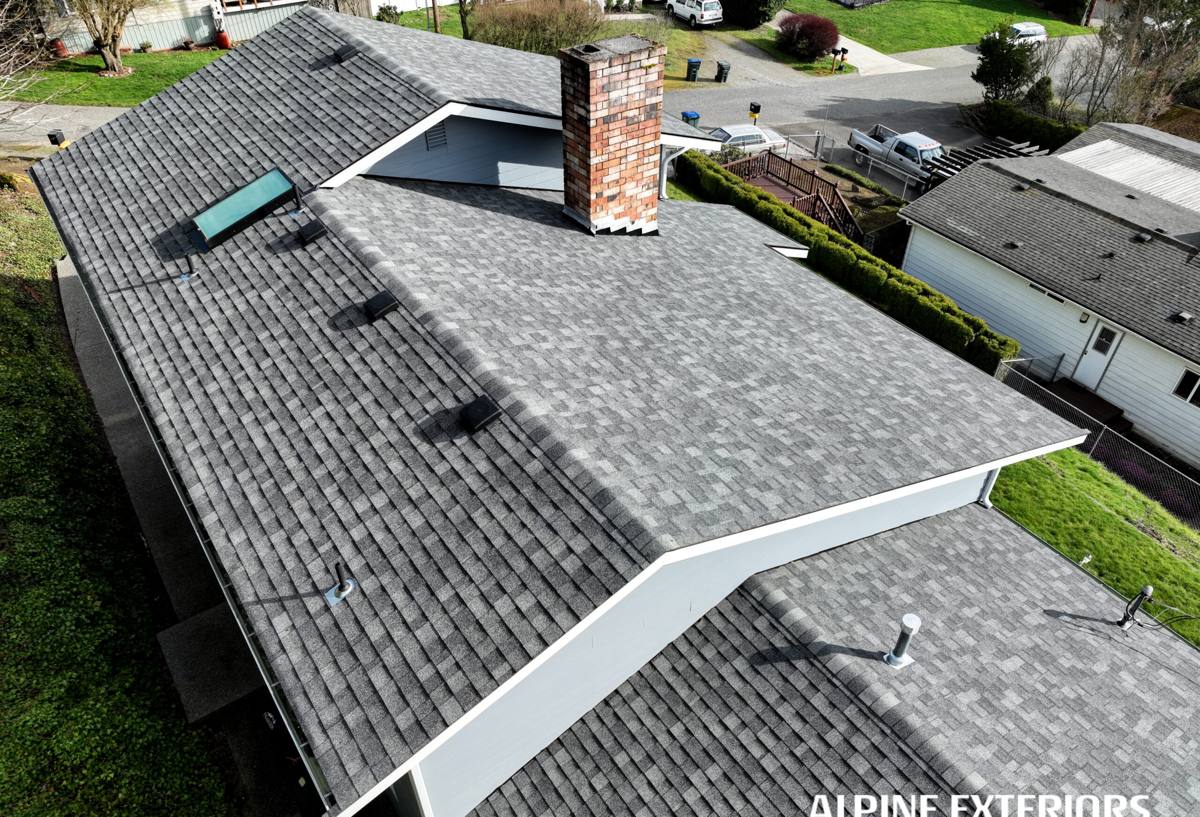
How to Tell a Repair Is Overdue
Most West Sound roof problems don't announce themselves with an obvious hole. They show up as small, easy-to-ignore signs first:
- Dark streaking or thick moss mats concentrated on north-facing or tree-shaded slopes
- Granules collecting in gutters or at the base of downspouts
- Soft or discolored ceiling patches after a heavy rain event, especially near chimneys, skylights, or where two roof planes meet
- Shingles that look cupped, curled at the edges, or noticeably lighter in color than the rest of the roof
- Rust staining or gaps around metal flashing at valleys, vents, and wall intersections
- Visible daylight or gaps in the attic where flashing meets the roof deck
Any one of these on its own might just mean routine maintenance. Two or three together, especially combined with moss buildup, usually means water has already found a way past the surface layer and into the underlayment or decking.
What an Honest Roof Repair Actually Involves
A repair that actually holds up in this climate is more than swapping a few shingles and calling it done. Here's what should happen every time:
1. Find the real source, not just the visible damage
Water travels. A stain on a ceiling ten feet from a leaky flashing detail is normal — water runs along rafters and sheathing before it drips somewhere visible. A repair that just patches the spot where the stain showed up, without tracing the water back to its actual entry point, tends to fail again within a season or two.
2. Check the decking underneath
Any area that's held moisture for a while needs the surrounding decking checked for soft spots or rot. Patching new shingles over compromised decking looks fine for a while and then fails all at once.
3. Match materials correctly
Shingle color and profile fade and change over time. A repair patch that's an exact match the day it's installed can look mismatched a year later, but more importantly, mixing incompatible underlayment or flashing metals can cause galvanic corrosion — a real issue in a salt-air environment where dissimilar metals speed each other's breakdown.
4. Address the moss, not just the symptom
Cutting moss off the surface without treating the cause (usually shade, debris buildup, and standing moisture in valleys) means it comes right back. A proper repair includes clearing debris from valleys and low points and, where it makes sense, zinc or copper strip installation to slow regrowth.
Common West Sound Repair Situations
| What We Find | Usual Cause Here | What the Fix Involves |
|---|---|---|
| Leak at a valley or roof-to-wall intersection | Wind-driven rain forcing water past aging flashing | Remove and replace flashing with proper step and counter-flashing, not just caulk over the old piece |
| Soft decking near a chimney or skylight | Slow moisture intrusion from failed flashing seal over months or years | Cut back to sound decking, replace sheathing, reflash properly before re-shingling |
| Heavy moss mats on shaded slopes | Tree canopy limiting sun and airflow, debris trapping moisture | Careful moss removal, valley and gutter clearing, zinc/copper strip if appropriate |
| Granule loss and thinning shingles | Age plus repeated wet-dry cycling and salt air exposure | Localized shingle replacement now, or a conversation about remaining service life if it's widespread |
| Corroded fasteners or flashing | Salt air accelerating metal breakdown over years | Replace with corrosion-resistant fasteners and flashing rated for coastal exposure |
Materials: What Actually Holds Up in This Climate
Not every roofing material behaves the same way under salt air, shade, and constant moisture. Here's how the common options compare for repair work and long-term performance in a West Sound setting:
| Material | Moss Resistance | Salt Air Behavior | Repair Considerations |
|---|---|---|---|
| Asphalt shingle | Moderate — depends on shade and maintenance | Holds up well; fasteners and flashing are the weak point | Easiest to patch locally; color matching gets harder as shingles age |
| Cedar shake | Lower without regular cleaning — organic material feeds moss | Can handle salt air but needs more upkeep in damp, shaded spots | Repairs require matching grain and thickness; more labor-intensive per patch |
| Metal roofing | High — smooth surface sheds moisture and resists moss growth | Needs corrosion-resistant coatings and fasteners near the water | Repairs are less common but require exact panel and fastener matching |
We're not going to tell you one product is bad — every material above has a place, and plenty of well-maintained roofs on Orcas Island prove it. What we will say honestly: whichever material is already on your roof, the repair should use fasteners, flashing, and underlayment rated for coastal, high-moisture conditions, not standard inland-grade materials. That's a maintenance and longevity decision, not a brand preference.
How Our Repair Process Works
- On-site inspection. We get on the roof (weather permitting) and in the attic if there's access, tracing any leak back to its actual source rather than guessing from ground level.
- Honest assessment. We tell you what's actually needed — a targeted repair, a larger section replacement, or in some cases, an honest conversation about whether the roof is past the point where repair makes sense.
- Written scope and price. You know what's being done and what it costs before anything starts.
- Repair work. Decking replaced if needed, proper flashing installed, matching shingles or panels set correctly, valleys and drainage paths cleared.
- Cleanup and walkthrough. Debris hauled off, and we show you what was done and why.
Why It Matters That We Already Work on Orcas Island
Roof repair on an island isn't like roof repair on the mainland, and it's worth being direct about why that matters when you're choosing who to hire.
- Materials and timing. A mainland contractor discovering mid-repair that they need a specific flashing profile or matching shingle bundle means a ferry run and a delay. A crew that already works San Juan County plans materials ahead of time.
- Weather windows. West Sound's rain patterns don't always match the forecast for Anacortes or Bellingham. Knowing the local weather rhythm means fewer half-finished repairs left exposed overnight.
- Familiarity with island construction. Homes here were often built or added onto over decades, sometimes without permits pulled for older work. A contractor who's seen a lot of West Sound roofs recognizes non-standard framing and flashing details faster.
- Response time. A crew already on the island can get eyes on an active leak faster than one that has to catch a ferry first.
None of this is a knock on outside contractors — it's just the practical reality of island work. A repair scheduled around ferry logistics and weather windows, by a crew that isn't learning San Juan County conditions on your roof, tends to go smoother and hold up longer.
What Drives Roof Repair Cost Here
| Factor | Why It Affects Cost |
|---|---|
| Roof pitch and access | Steeper slopes and limited ground access around trees or landscaping take more time and safety setup |
| Extent of decking damage | Sound decking under a leak keeps a repair small; rotted sheathing widens the scope |
| Material matching | Older or discontinued shingle lines can be harder to match than current product lines |
| Moss and debris removal | Heavy, long-neglected moss growth adds cleanup time before repair work can even start |
| Material and crew logistics | Ferry scheduling for specialty materials can affect timeline more than cost, but both matter for planning |
Straightforward flashing or shingle repairs are generally a modest, contained expense. Repairs involving decking replacement or widespread moss damage cost more simply because there's more work involved — not because of markup for being on an island. We'll always walk you through what's driving the number before we start.
Between Repairs: A Simple Maintenance Checklist
A lot of repair calls we get could have been smaller jobs — or avoided for another year or two — with basic seasonal upkeep:
- Clear needles and debris from valleys and gutters at least twice a year, more often under heavy tree cover
- Trim back branches that shade the roof or drop debris directly onto it
- Look for moss starting on shaded slopes before it forms thick mats
- Check attic spaces after major storms for new staining or dampness
- Have flashing around chimneys, skylights, and vents checked every couple of years, since these are the most common failure points
If you're already noticing moss, staining, or a soft spot and you're on Orcas Island's west side, it's worth getting it looked at before the next round of driving rain finds its way in. We're happy to come take a look, tell you honestly what we see, and put together a clear, no-pressure estimate — just fill out the form below to get started.