 Orcas Island
 West Sound Decks Take a Different Kind of Beating
West Sound sits close to the water and under a lot of tree cover, and that combination is hard on a deck. Salt-laden air moves in off the water and settles into end grain, fastener heads, and any spot where two pieces of wood meet. Driving rain off Puget Sound weather systems doesn't just fall straight down here — wind pushes it sideways, up under rail caps, and into joints that were never designed to shed water from that angle. Add San Juan County's long, wet moss season, and you have a recipe for decks that look fine from a distance but are quietly failing underneath.
Moss doesn't just look bad. It holds moisture against wood and composite surfaces for months at a time, well past the point where a dry deck would have shed that water and dried out. On a shaded West Sound lot, a deck can stay damp for weeks between sun breaks. That's the environment a deck replacement here actually has to be designed for — not a generic deck, but one built with this specific combination of salt, shade, and standing moisture in mind.
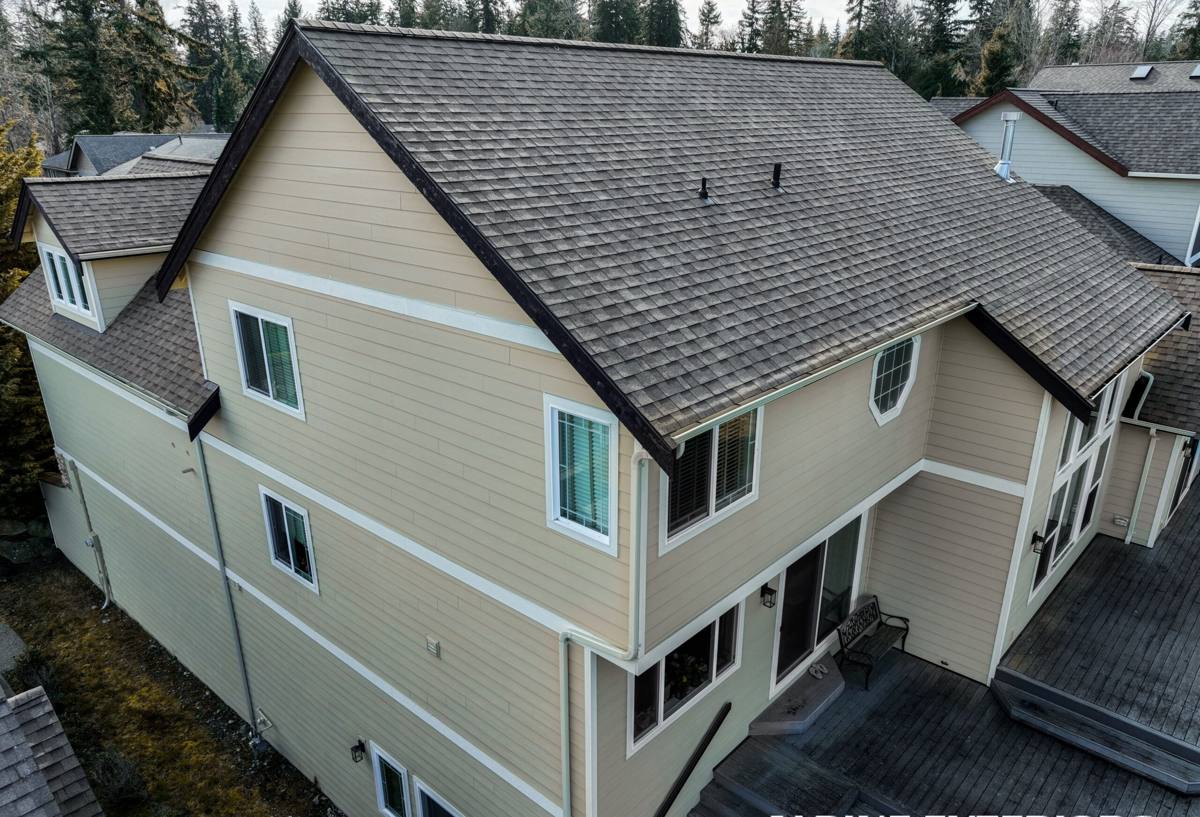
Signs a West Sound Deck Needs Replacing, Not Just Patching
Homeowners often call us about a soft board or a wobbly rail, and that's a fair place to start looking. But by the time surface problems show up, the structure underneath has often been absorbing damage for years. Here's what tells us a deck is past the point of spot repair:
- Soft or spongy spots anywhere on the decking, especially near the house or in shaded corners
- Rot or black staining at the ledger board where the deck meets the house
- Posts or footings that have shifted, settled, or show visible rot at the base
- Persistent moss or algae growth that comes back within weeks of cleaning
- Rust streaks running down from fasteners or metal connectors
- Rail posts that flex noticeably when pushed
- A deck more than 20 years old that has never had the framing inspected
Any one of these on its own might be repairable. Two or three together usually mean the deck's structural life is ending, and patching the surface just delays a bigger, more expensive failure.
What a Correct Deck Replacement Actually Involves
A deck replacement isn't just swapping old boards for new ones. Done right, it's a full look at everything from the house connection down to the footings, because that's where most West Sound deck failures actually start.
The Ledger Connection
The ledger board — where the deck attaches to the house — is the single most common failure point we find on this island. If it wasn't flashed correctly when the deck was first built, water has likely been getting behind it for years, rotting both the ledger and the house framing behind it. We treat this connection as the most critical part of the whole project, not an afterthought.
Framing and Joists
Joists, beams, and posts get inspected for rot, checking, and fastener corrosion. In a marine climate, standard steel hardware corrodes faster than most people expect. We look at whether the original connectors were even rated for exterior or coastal use, because a lot of older decks weren't built with that in mind.
Footings
Footings that are too shallow, undersized, or sitting in ground that holds water are a slow-motion problem — they shift a little every wet season until the whole structure is out of level. Replacement is the right time to correct footing depth and drainage around the base of each post.
Decking and Rails
Only after the structure underneath is sound does the visible decking and railing get addressed — material choice, fastening method, and rail design that actually sheds water instead of trapping it.
Choosing Decking Material for Salt Air and Moss Season
There's no single "best" decking material — there's a best material for a given lot, budget, and how much upkeep the homeowner actually wants to do. Here's how the common options hold up under West Sound conditions specifically:
| Material | Performance in Salt Air & Shade | Moss Resistance | Maintenance |
|---|---|---|---|
| Pressure-treated fir/pine | Good if properly sealed and re-coated regularly | Low — needs regular cleaning | High — annual inspection and refinishing |
| Cedar | Naturally rot-resistant, ages well with upkeep | Moderate — still needs cleaning in shaded areas | Moderate — periodic oil or stain |
| Composite decking | Very good — doesn't absorb moisture like wood | Moderate to good, depending on surface texture | Low — occasional washing |
| Tropical hardwoods (e.g. ipe) | Excellent — very dense, naturally durable | Good, but surface can still get slick with algae | Low to moderate — periodic oiling for color |
We don't push one brand or material as the automatic right answer. Composite has real advantages for low-maintenance owners on shaded lots, but it comes at a higher upfront cost and, on some textured profiles, can still develop a slick surface where moss spores collect if it never dries out fully. Wood species like cedar cost less up front and look great, but they ask more of the homeowner in terms of yearly upkeep. We'll walk through the honest trade-offs for your specific lot rather than default to whatever's easiest to install.
Drainage and Flashing Details That Actually Matter Here
Most deck failures we see on Orcas Island trace back to water that had nowhere to go. In a climate with this much rainfall and shade, drainage detailing isn't optional trim work — it's core to how long the deck lasts.
On a proper replacement, that means flashing installed above the ledger board and integrated with the house's existing weather barrier, not just caulked over top of it. It means gaps between decking boards sized correctly so water drains through instead of pooling on the surface. It means rail post bases and any built-in bench or planter structures are detailed so they don't create a shelf where water and moss debris sit against the wood. None of this is visible once the deck is finished, which is exactly why it's worth asking a contractor about before work starts.
Moss and Algae: Prevention Built In, Not Bolted On
You can't eliminate moss on a shaded West Sound property, but you can build a deck that resists it far better than one that wasn't designed with that in mind. Board spacing, airflow underneath the deck, and selecting a decking surface texture that doesn't hold fine debris all make a measurable difference. We also recommend keeping nearby branches trimmed back where possible, since reduced sun exposure is the single biggest driver of moss growth on any deck surface. That's a homeowner maintenance step, but it works hand in hand with how the deck itself is built.
Our Process, Start to Finish
1. On-Site Assessment
We walk the existing deck with you, check the ledger, probe the framing for soft spots, and look at footing condition. This tells us whether it's a true replacement or whether targeted repair could still make sense.
2. Honest Scope and Estimate
You get a clear estimate that separates structural work from surface material costs, so you can see where the money is going and make informed choices about material tier.
3. Permitting
Deck work in San Juan County often requires a permit depending on size, height, and location relative to setbacks or shoreline jurisdiction. We handle that process rather than leaving it on your plate.
4. Demolition and Structural Rebuild
Old decking, rail, and any compromised framing come out. Ledger flashing, joists, and footings get corrected or replaced to current standards before anything new goes back on.
5. Decking, Rail, and Finish Work
Your chosen material goes down with fastening and spacing suited to this climate, followed by rail installation and any final trim or finish coating.
6. Final Walkthrough
We go over the finished deck with you, explain any maintenance the material requires, and make sure you know what to watch for going forward.
Permits and Code Considerations in San Juan County
Because much of West Sound sits close to shoreline areas, deck projects can fall under additional review depending on proximity to the water, height above grade, and total footprint. Rules can also differ for decks attached to a house versus freestanding structures. We check this at the assessment stage so there are no surprises mid-project, and we manage the permit application and inspections rather than expecting the homeowner to navigate county requirements alone.
Cost Factors Worth Understanding Before You Budget
Deck replacement cost on Orcas Island varies a lot based on a handful of factors, more than on square footage alone:
| Factor | Why It Moves the Price |
|---|---|
| Framing condition | Rotted joists, beams, or footings add rebuild cost beyond surface materials |
| Decking material | Composite and hardwood cost more upfront than treated lumber or cedar |
| Height and access | Elevated decks need more substructure and can complicate material delivery |
| Rail style | Cable, glass, or custom rail systems cost more than standard baluster rail |
| Permit scope | Shoreline-adjacent or larger decks may require more extensive permitting |
We'd rather walk you through these factors on-site than quote a number that doesn't reflect your actual deck's condition.
Why a Crew That Already Works West Sound Makes a Difference
Building or replacing a deck in West Sound isn't the same job as doing it somewhere dry and open. A crew that hasn't worked this specific stretch of coastline can miss things — under-flashing a ledger because that's standard practice inland, choosing hardware that isn't rated for salt exposure, or not accounting for how much shade actually affects material choice on a given lot. We've done this work up and down Orcas Island long enough to know which details matter here and which are just extra cost. That local knowledge shows up in decisions you won't see on the surface but will notice in how the deck holds up ten years from now.
If your deck is showing its age, or you're not sure whether it needs repair or full replacement, we're happy to take a look. Fill out the form below for a free, no-pressure estimate — we'll tell you honestly what your deck needs, not just what's easiest to sell.