 Orcas Island
 Why West Beach Decks Wear Out Faster Than You'd Expect
West Beach sits exposed to the marine weather that moves through the San Juan Islands off the water — wind-driven rain, near-constant humidity, and salt-laden air that settles on every horizontal surface. A deck here is doing a harder job than the same deck would do twenty miles inland. Salt air accelerates corrosion in fasteners and hardware, moisture gets pushed sideways into joints and end grain by driving rain instead of just falling straight down, and the shaded, damp stretches of the year on Orcas Island let moss and algae take hold on decking boards, stair treads, and anything that doesn't get direct sun. None of that means a deck is doomed — it means it needs to be built and repaired with those conditions in mind, not treated like a generic backyard structure.
We see the same failure patterns repeat across West Beach properties because the exposure is consistent from lot to lot: whatever direction catches the weather off the water tends to show the worst wear first, while more sheltered sides of the same deck can look almost fine. A repair plan that only looks at the boards you can see from the yard misses that pattern.
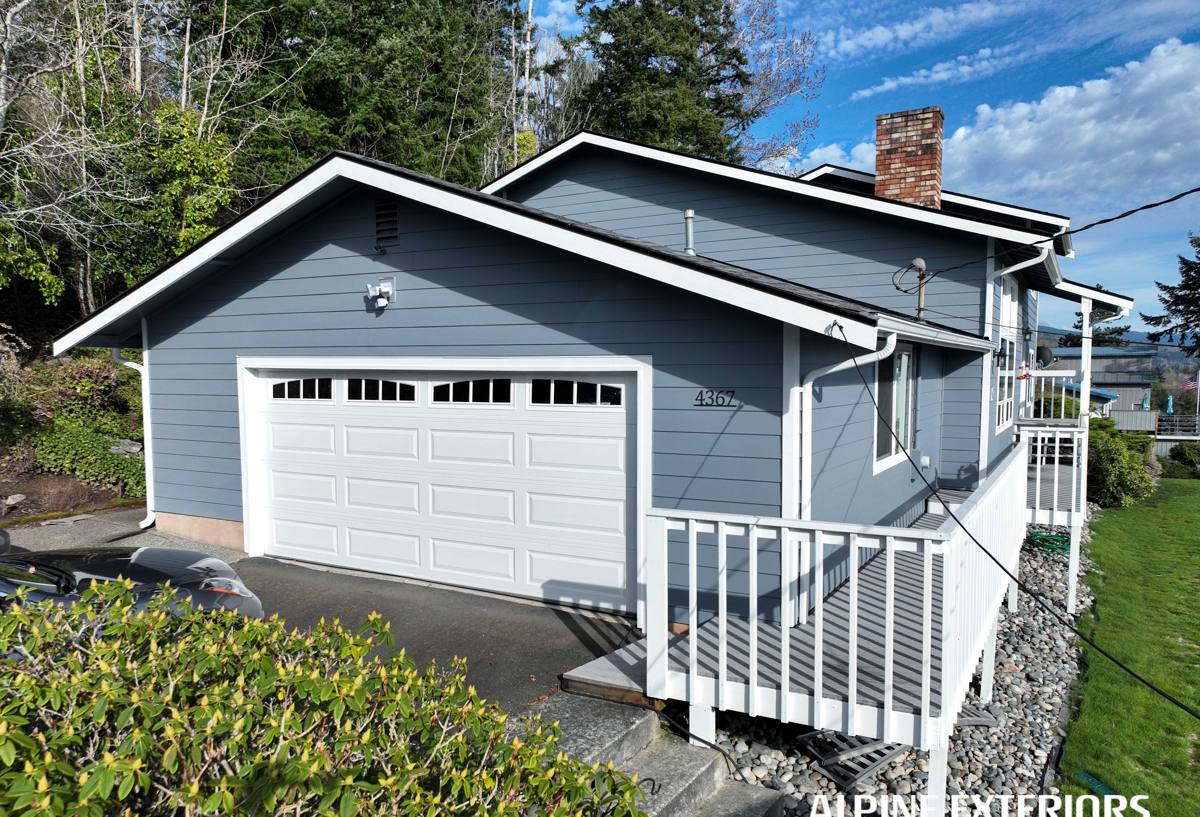
The Damage We Actually Find in This Neighborhood
Rot at the Ledger Board and Framing
The ledger board — where the deck attaches to the house — is the single most common failure point we open up on San Juan County decks. Flashing that was installed correctly ten or fifteen years ago can still fail as caulk shrinks and gaps open, letting water track behind the band board and into the rim joist. This is almost never visible from outside; it shows up as soft wood, dark staining, or give underfoot when we pull the skirt board or probe with an awl.
Fastener and Hardware Corrosion
Salt air is hard on metal. Nails, screws, and joist hangers that aren't rated for coastal exposure can rust, streak the decking with corrosion stains, and lose holding strength years before the wood around them fails. On older decks we often find a mix of fastener types from past patch jobs, which is its own weak point — dissimilar metals in contact with each other corrode faster.
Moss, Algae, and Surface Decay
Shaded sections of decking — under eaves, behind rails, on the north or east side of the house — stay damp longer through the wet months and grow moss and algae readily. Left alone, that surface growth holds moisture against the wood and speeds up graying, splintering, and eventually rot in the board itself, not just a cosmetic film on top.
Railing and Post Base Failure
Where a rail post meets the deck surface or a concrete footing, water collects at the base and works down into the end grain. This is a safety issue, not just an appearance one — a post that looks solid at eye level can be soft and unreliable at the base.
Composite and Board Delamination
Older composite decking, especially early-generation capped or uncapped boards, can delaminate or swell at cut ends and fastener holes when moisture gets in repeatedly. This shows up as flaking, bubbling, or a soft, spongy feel at the board edges.
Repair or Replace: How We Sort That Out
Not every deck problem calls for a full rebuild, and not every deck is worth patching. We base the call on where the damage is and how it affects the structure, not just on the age of the deck.
| Situation | Usual Approach | Why |
|---|---|---|
| Surface graying, moss, isolated soft boards | Board-level repair and cleaning | Framing is sound; only the wearing surface needs attention |
| Soft or rusted ledger flashing | Targeted ledger and flashing repair | Fixing the water entry point stops repeat damage without a full teardown |
| Rot in multiple joists or the rim joist | Partial or full framing replacement | Structural members can't be safely patched around active rot |
| Rail posts soft at the base, loose connections | Post and railing rebuild | This is a fall-safety issue, not cosmetic |
| Deck is 20+ years old with rot in several areas | Full rebuild on existing footings, if sound | Piecemeal repairs on an aging deck rarely hold up long-term and cost more over time |
We'll always tell you honestly when a repair is a reasonable short-to-medium-term fix versus when you're better off putting that money toward a rebuild. A deck that's structurally sound but cosmetically tired is a very different job than one with rot working through the frame.
What a Correct Repair Actually Involves
A repair that only replaces the boards you can see is a repair that fails again in a few years. Here's what we check and address on every West Beach deck repair, not just the obvious spots:
- Full structural probe — checking ledger, rim joist, joists, beams, and post bases with an awl or moisture meter, not just a visual walk-through.
- Flashing inspection at the ledger — this is where hidden water damage almost always originates, and it's the one thing that has to be right or the repair won't last.
- Fastener and hardware upgrade — replacing corroded fasteners and hangers with stainless steel or coated hardware rated for coastal, high-moisture exposure, not standard interior-grade hardware.
- Board-by-board assessment — sound boards are kept, soft or delaminating ones are replaced, rather than defaulting to a full re-deck when it isn't needed.
- Drainage and airflow check — gaps between boards, ventilation under the deck, and grading nearby all affect how fast the structure dries out after rain.
- Railing integrity — every post and connection point gets tested by hand, not just eyeballed.
Materials: What Holds Up Here and What We're Cautious About
Material choice matters more on a deck exposed to salt air and driving rain than it does further inland. We're upfront about trade-offs rather than pushing one product as a cure-all.
| Material | Strengths in This Climate | What to Watch |
|---|---|---|
| Pressure-treated lumber | Affordable, widely available, holds up structurally when properly flashed and fastened | Needs regular sealing and cleaning to fight moss and graying; end cuts need field treatment |
| Cedar | Naturally rot-resistant, ages well, common look for island homes | Softer wood — more prone to surface wear and needs periodic finish maintenance |
| Capped composite decking | Low maintenance, resists moss staining better than wood | Higher upfront cost; quality varies a lot by brand and generation — we're selective about which composites we install and stand behind |
| Stainless or coated fasteners/hardware | Resist salt-air corrosion far longer than standard fasteners | Costs more per piece, but replacing a whole deck surface because of rusted hardware costs a lot more |
We don't install every composite product on the market. Some early or budget composite lines have had documented issues with moisture absorption at cut edges and fastener holes, which is a real maintenance and warranty headache down the road — so we stick to lines with a track record and cap systems that actually shed water, and we'll walk you through why if you're deciding between wood and composite for a repair or rebuild.
Our Repair Process
The process is straightforward, and we keep it that way on purpose:
- On-site inspection — we walk the whole deck, probe suspect areas, and check the ledger and post bases before quoting anything.
- Written estimate — a clear scope of what's being repaired, what materials and hardware we're using, and what it costs, with no vague allowances.
- Repair work — framing and flashing first if that's part of the job, then decking, railings, and hardware.
- Cleanup and haul-away — old material and debris removed, site left clean.
- Walkthrough — we go over what was done and what maintenance will keep it in shape.
Maintenance That Actually Matters on a Salt-Air Deck
A repaired deck still needs upkeep suited to this environment. This isn't a generic "reseal every couple years" list — it's what actually addresses moss, salt, and driving rain:
- Sweep debris and standing organic matter off boards regularly — trapped leaves and needles hold moisture and feed moss growth.
- Rinse salt residue off decking and railings periodically, especially after storms with onshore wind.
- Treat moss and algae early with an appropriate cleaner rather than letting it establish — it's far easier to remove a light film than an entrenched growth.
- Check and re-seal wood decking on a schedule suited to sun exposure — shaded sections often need attention more often than sunny ones, not less.
- Inspect fasteners and hardware yearly for rust streaking or looseness, particularly at rail posts and stair connections.
- Keep an eye on the ledger area at the house wall for staining, gaps in caulking, or soft trim — catching it early avoids a bigger structural repair later.
Why Hire a Crew That Already Works This Part of the Island
Getting materials, crews, and equipment to Orcas Island takes planning that mainland contractors often don't account for — ferry schedules, lead time on material orders, and the reality that a "quick callback" isn't quick if a crew has to plan around boat departures. A contractor who already works West Beach and the surrounding San Juan County area builds that logistics reality into the schedule from the start, instead of it becoming your problem halfway through a project.
Just as important is familiarity with how this specific exposure behaves. A crew that's opened up a dozen ledger boards along this stretch of coastline knows where to look for hidden rot before it's obvious, which fastener specs actually hold up here, and which decking products have a real track record in salt air rather than a marketing claim. That local pattern recognition is the difference between a repair that lasts and one that resurfaces in three years.
Timing Your Repair Around the Island's Seasons
Deck repair work is easiest to schedule and execute during the drier stretch of the year, when framing and flashing repairs aren't fighting active rain. That said, urgent structural issues — a soft ledger, a failing rail post — shouldn't wait for ideal weather; those get addressed as soon as reasonably possible regardless of season. For non-urgent cosmetic or maintenance-level repairs, planning ahead of the wet months means the deck is ready and sealed before the long moss season sets in again, rather than trying to catch up on damage after the fact.
If you're noticing soft spots, rust streaks, moss buildup, or a deck that just doesn't feel as solid as it used to, we're happy to come take a look. A free, no-pressure estimate gets you a straight answer on what's actually going on and what it would take to fix it — use the form below to get started.