 Orcas Island
 West Beach Sits Right in the Weather's Path
West Beach faces open water on the western edge of Orcas Island, which means it takes the weather straight on — salt-laden wind, driving rain off the Strait, and long stretches of shade and moisture that keep everything damp longer than homes just a mile or two inland. Windows here work harder than windows almost anywhere else on the island, and the frame, glass, and installation details that would be perfectly fine in a sheltered spot can fail early when they're facing this kind of exposure day after day.
Custom windows aren't just about matching an odd-sized opening or getting a specific look, though that matters too. In a marine climate like San Juan County's, "custom" also means specifying the right materials, seals, and flashing details for the specific exposure a given wall or elevation actually sees. A window on the water-facing side of a West Beach home needs a different spec than one tucked under a covered porch on the leeward side, even on the same house.
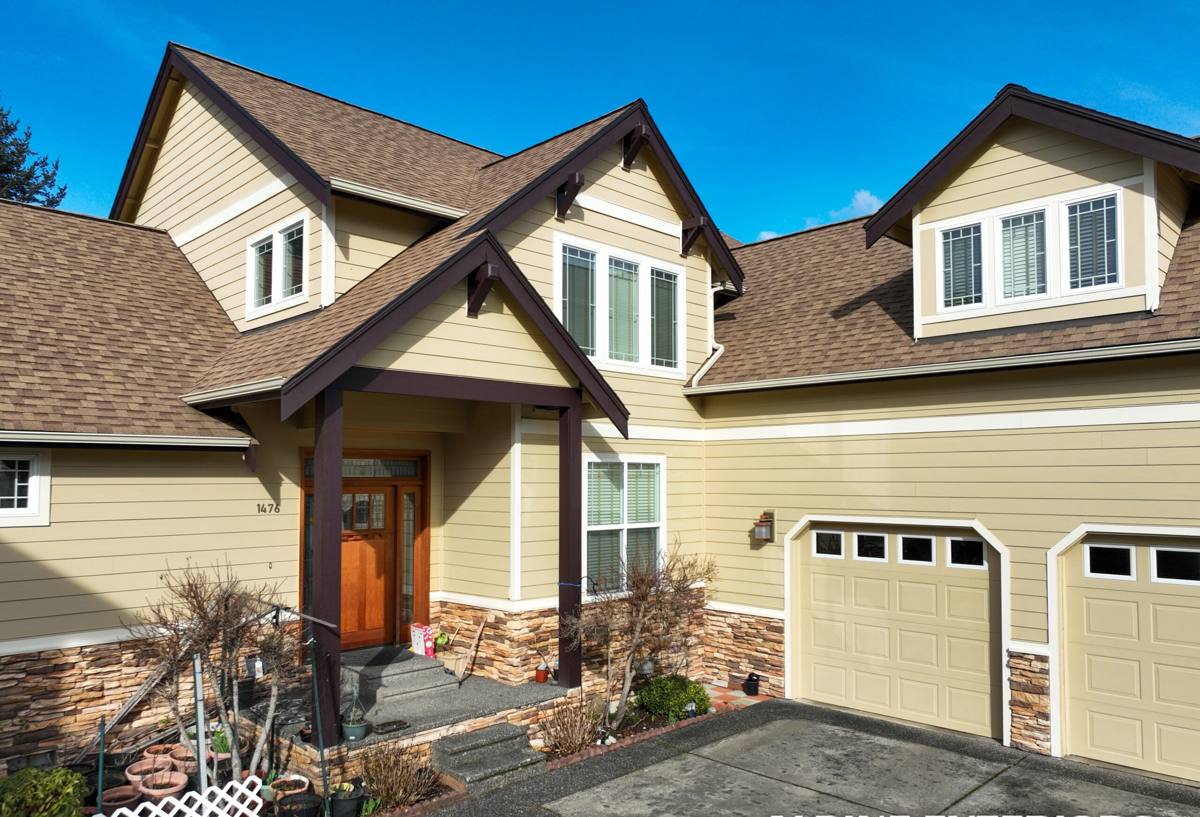
What the Climate Actually Does to Windows
Salt Air and Hardware Fatigue
Airborne salt is corrosive, and it doesn't need direct ocean spray to do damage — it travels on the wind and settles on everything, including window hardware, screen frames, and metal fasteners. Over years, this shows up as pitted or seized locks and cranks, corroded screen clips, and staining on frames that weren't finished with a marine-grade coating. Aluminum-clad windows without adequate protective finishes are especially prone to this on exposed elevations.
Driving Rain and Water Intrusion
West-facing storms don't just fall on a window, they push against it. Wind-driven rain finds any gap in flashing, sealant, or trim and forces water sideways and upward, not just down. A window that's watertight in a light rain can still leak in a real Orcas Island storm if the sill pan, flashing tape, and drainage path weren't installed correctly. This is one of the most common causes of hidden rot we find behind older windows on exposed walls.
Moss, Shade, and Slow-Drying Wood
Much of Orcas Island, West Beach included, holds moisture in the air and in the tree canopy well into what would be "dry season" elsewhere. Wood trim and sills that don't get direct sun for much of the day stay damp longer, and that's exactly the environment moss and rot organisms need. Untreated or poorly sealed wood window components in shaded spots are often the first thing to fail, even when the window unit itself is still sound.
What "Custom" Means for This Neighborhood
A custom window job on West Beach usually involves one or more of the following:
- Non-standard openings in older homes, where off-the-shelf replacement sizes don't fit without reframing
- Matching sightlines and grid patterns across additions or mixed-era construction
- Upgrading glazing and frame material on the weather-exposed side while keeping cost reasonable on sheltered elevations
- Specifying corrosion-resistant hardware and marine-appropriate finishes for water-facing walls
- Working around view corridors, where the frame-to-glass ratio and mullion placement matter as much as the water resistance
None of this is exotic, but it does require someone measuring, specifying, and installing with the actual site conditions in mind rather than a one-size-fits-all approach.
Choosing Frame Material for This Exposure
There's no single "best" window material for every house — it depends on budget, how exposed the wall is, and how much upkeep you want to take on. Here's how the common options generally hold up in a marine, high-rain environment like West Beach:
| Frame Material | Salt Air Resistance | Moisture Behavior | Maintenance |
|---|---|---|---|
| Vinyl | Good — doesn't corrode | Handles rain well; low water absorption | Low — occasional cleaning |
| Fiberglass | Very good — stable and corrosion-resistant | Excellent dimensional stability in wet-dry cycles | Low |
| Wood, unclad | Poor without diligent upkeep | Absorbs moisture; needs sealing/painting | High — regular repainting and sealing |
| Wood-clad (vinyl or fiberglass exterior) | Good on the exterior face | Good if flashing details are correct | Moderate — interior wood still needs care |
| Aluminum | Fair — needs a quality protective finish | Conducts cold and can show condensation | Moderate |
We don't push wood-frame windows on directly exposed, water-facing walls unless the homeowner understands and wants the maintenance commitment that goes with them. It's not that wood is a bad material — it's that on an exposed West Beach elevation, the upkeep schedule needed to keep it sound is more than most people want to sign up for. Fiberglass and vinyl-clad options give a similar look with a lot less long-term maintenance burden, which is why we lead with those for the weather-facing sides of a home out here.
The Installation Details That Actually Determine Whether Windows Leak
The window unit itself is only part of the story — most leaks we're called out to fix trace back to installation details, not product defects. On a West Beach job we pay particular attention to:
- Sill pan flashing — a sloped, sealed pan under the window that directs any water that does get past the frame back outside instead of into the wall
- Flashing tape sequencing — layered so water always sheds downward and outward over each layer, shingle-style, never trapped behind an upper layer
- Housewrap integration — tying the window flashing correctly into the existing weather-resistive barrier so there's no gap for wind-driven rain to exploit
- Sealant selection — using exterior sealants rated for UV and salt exposure, not a general-purpose caulk that will crack and shrink within a couple of seasons
- Proper shimming and squaring — a window that's out of square stresses the seals and hardware from day one, which shows up as premature failure years before it should
Get these details right and a well-chosen window will perform for decades in this climate. Skip or rush them and even a premium window can leak within a few years — which is a hard lesson a number of island homeowners have already learned the expensive way.
Our Process
For a West Beach custom window project, the process generally runs:
- On-site assessment — we look at existing framing, current window condition, exposure on each elevation, and any signs of past water intrusion before recommending anything
- Measurement and specification — exact openings, frame material recommendations by elevation, glazing options, and hardware selection
- Written estimate — a clear breakdown by window and by task, no vague lump sums
- Removal and prep — careful removal of old units, inspection of the framing and sheathing underneath for hidden rot before it gets covered back up
- Installation — flashing, sill pans, and sealant applied in the correct sequence, unit set square and shimmed, interior and exterior trim finished to match the home
- Final walkthrough — operation check on every window, and a look at how water will actually shed around each one
Signs Your Current Windows Are Losing the Battle
Because West Beach exposure accelerates wear, it's worth checking your windows more often than you might elsewhere on the island. Watch for:
- Soft or discolored wood trim around the frame, especially on shaded or water-facing walls
- Moss or dark streaking building up on sills or lower trim
- Hardware that's stiff, corroded, or won't lock cleanly
- Fogging or moisture between panes on double- or triple-glazed units, which means the seal has failed
- Drafts or whistling during wind events
- Peeling or bubbling paint/finish near the frame, which often points to trapped moisture underneath
Catching these early usually means a repair or targeted replacement instead of discovering rotted framing behind the wall.
Living With Windows in a Marine Climate
Even the right window benefits from a little seasonal attention out here. A rinse of salt film off frames and glass a few times a year, clearing moss and debris from sills and tracks, and checking that weep holes on the exterior aren't clogged all go a long way toward getting the full service life out of a window investment. We're happy to walk homeowners through a simple maintenance routine specific to their home's exposure when we finish a job.
Why a Crew That Already Works West Beach Matters
General window installation knowledge is common. Knowing which elevations on a West Beach home actually need the upgraded flashing detail, which frame materials hold up under this specific combination of salt air and shade, and where moisture problems tend to hide in this area's older housing stock — that comes from working these homes directly, not from a generic training manual. It affects what we recommend, how we sequence the flashing, and where we spend the extra time versus where a standard approach is genuinely fine.
If you're weighing a window project for a West Beach home, we're glad to come take a look, walk the exposure on each side of the house, and put together a straightforward, no-pressure estimate using the form below.