 Orcas Island
 Storm Damage Roof Repair Built for the Obstruction Pass Area
Homes along the Obstruction Pass side of Orcas Island sit in a spot where weather, water, and heavy tree cover all work on a roof at once. Winter storms roll in off the water with driving, wind-blown rain that finds every weak seam. Salt air off the surrounding water slowly corrodes exposed metal fasteners and flashing. And the tall second-growth fir and cedar that shade so many properties out here drop needles, cones, and branches that pack into valleys and gutters, holding moisture against the roof deck long after the rain has stopped. That combination is why storm damage on Obstruction Pass rarely looks like a single dramatic event — it's usually the result of one storm finding a weakness that a previous one started.
We repair storm-damaged roofs for homes in this area on a regular basis, and we've learned that a fast, correct repair after a storm matters more here than in drier, more sheltered parts of San Juan County. A roof that's left with a small leak through a wet Orcas Island winter can turn into rotted decking and interior damage well before the next dry season gives you a chance to notice.
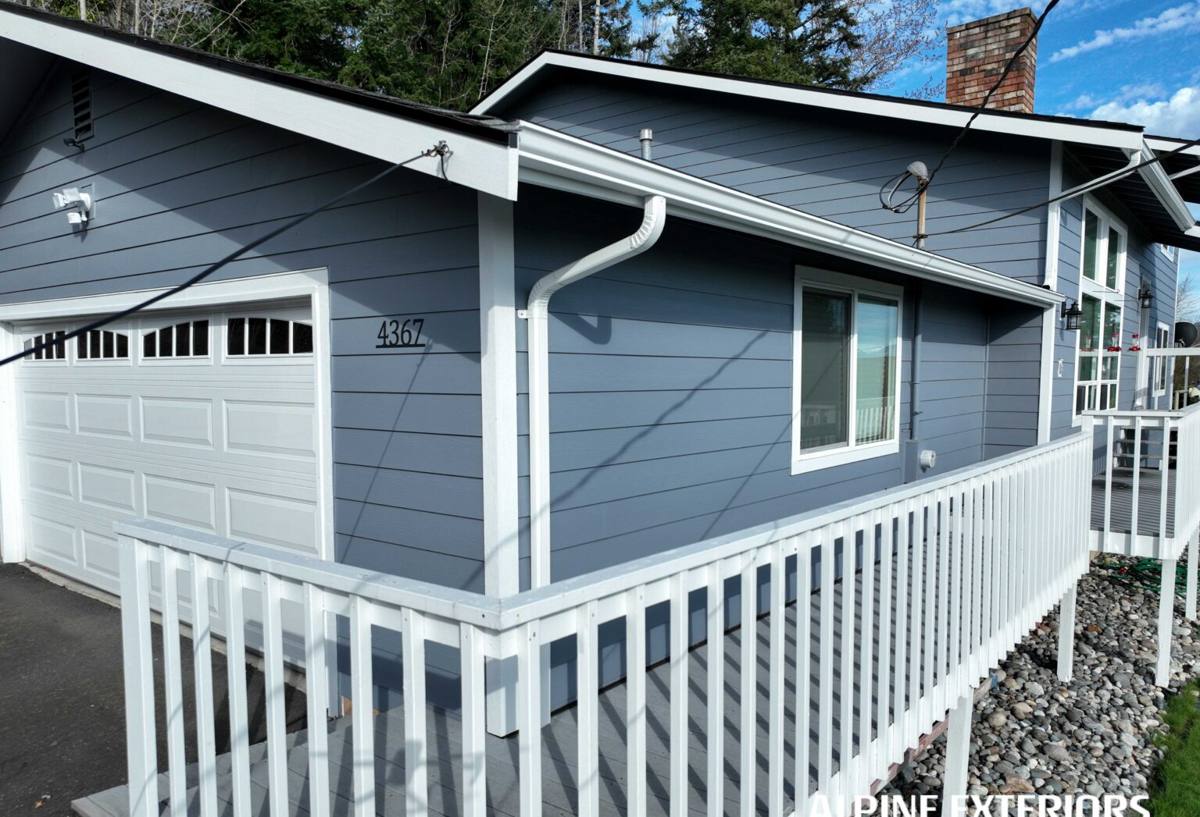
What "Storm Damage" Actually Looks Like Here
Storm damage isn't always a hole you can see from the ground. On the roofs we inspect after a windstorm or heavy rain event in the Obstruction Pass area, the damage usually falls into a few categories:
- Wind-lifted or torn shingles — edges and ridge lines take the brunt of gusts funneling through the trees and off the water.
- Flashing failure — around chimneys, skylights, and roof-to-wall transitions, where wind-driven rain gets pushed sideways under normal water paths.
- Impact damage — branches and debris from the surrounding forest canopy, which is denser here than in more open parts of the island.
- Saturated or rotted decking — from slow leaks that went unnoticed under moss or needle buildup for one or more wet seasons.
- Gutter and downspout damage — overwhelmed by needle and debris load during heavy rain, causing water to back up under the roof edge.
The tricky part is that the first four of these can all stem from the same storm, but only some of them are visible without getting on the roof. That's why we always do a full inspection rather than just patching the one thing a homeowner happened to notice from the yard.
Our Process After a Storm
1. Emergency Assessment and Temporary Protection
If a roof is actively leaking or has open damage, our first priority is stopping water intrusion — not selling a full repair. That usually means a properly installed tarp or temporary patch that can hold through the next round of weather while we plan the permanent fix. On a wooded, waterfront-adjacent property, we pay close attention to securing tarps against wind funneling through the tree line, since a poorly anchored tarp can do almost as much damage as the original leak.
2. Full Roof Inspection
Once the immediate risk is handled, we get on the roof (weather permitting) and check the whole system, not just the damaged section: shingles or roofing material, flashing at every penetration, ridge and hip lines, gutters, and the visible underside of the decking from the attic where accessible. Storm damage often has a secondary, less obvious cause — a flashing detail that was marginal before the storm and finally failed under wind-driven rain.
3. Honest Scope and Written Estimate
We tell you plainly whether this is a spot repair, a partial re-roof of the affected slope, or something that points to a full replacement being the smarter long-term move. We don't pad scope, and we don't downplay it either — on a marine climate roof, deferring a repair that should be full-slope work often costs more in the long run.
4. The Repair Itself
Repairs are matched to existing materials where possible, with attention to flashing details and fastener choice suited to salt-air exposure. We re-check adjacent areas of the roof for related wear before we close the job out, since a storm that damaged one section has usually stressed the whole roof.
5. Documentation for Insurance
We provide photos and a written description of the damage and repair, which most insurance carriers want to see for storm-related claims. We're glad to talk through this with your adjuster, but we work for you, not the insurance company — our assessment reflects what the roof actually needs.
Repair Options and What Drives the Cost
Not every storm-damaged roof needs the same level of work. The table below outlines the general categories we see and the main factors that push a job from one category to the next.
| Repair Type | Typical Situation | Main Cost Factors |
|---|---|---|
| Spot repair | Isolated wind damage, a handful of shingles, or one flashing detail | Roof pitch, material match, access |
| Flashing/detail repair | Leak at chimney, skylight, or wall transition without broader shingle damage | Complexity of the detail, whether siding or trim must be opened up |
| Partial slope re-roof | Concentrated wind or impact damage across one section, or decking found to be soft underneath | Decking replacement, underlayment, material availability |
| Full re-roof | Storm damage on a roof already near the end of its service life | Total roof area, tear-off, disposal, material choice |
Broad, honest ranges: a straightforward spot or flashing repair is often a modest single-day job, while a partial slope re-roof or full re-roof is a materially larger investment. We'll give you a specific number only after we've actually looked at the roof — anything else is a guess, and we don't like giving those.
Why Moss and Tree Debris Matter So Much Out Here
San Juan County's long, wet moss season is hard on every roof in the region, but the effect is more pronounced on properties like those near Obstruction Pass that sit under heavier tree cover. Moss holds moisture against roofing material, works its way under shingle edges, and lifts granules and fasteners over time — all of which weakens a roof's ability to shed wind-driven rain during a storm. A roof that's been carrying moss and needle buildup for a season or two is simply more vulnerable when a storm hits, because the storm is exploiting damage that was already partway there.
This is also why we recommend gutter and roof-surface maintenance as part of storm recovery, not as an upsell. A repair that goes back onto a roof still loaded with organic debris is a repair that will be tested again by the next heavy rain.
Why It Matters to Hire a Crew That Already Works This Part of Orcas Island
Obstruction Pass isn't a drive-through neighborhood — it's a specific pocket of the island with its own access considerations, tree cover, and exposure. A crew that already works this area knows:
- Which roof details tend to fail first in this specific wind and rain pattern.
- How to stage materials and equipment on properties with narrower or wooded driveways.
- The realities of getting materials to the island — ferry schedules and lead times affect how fast a full repair can be scheduled, and we plan around that rather than letting it surprise a homeowner.
- San Juan County permitting requirements for larger repairs or re-roofs, so a partial slope job doesn't stall out on paperwork.
A contractor unfamiliar with island logistics can turn a two-day repair into a two-week wait for the right materials to arrive. That's not a risk worth taking on a roof that's already been compromised by a storm.
Signs You Likely Have Storm Damage
After any significant wind or rain event, it's worth walking the property and checking for these signs before the next storm arrives:
- Shingles or roofing pieces in the yard or caught in trees nearby
- Visible curling, cracking, or missing shingles, especially along ridges and edges
- New or worsening ceiling stains, especially near chimneys, skylights, or exterior walls
- Sagging or soft-feeling spots when walking the attic (if safely accessible)
- Gutters pulled loose, clogged, or overflowing during rain
- Daylight visible through the roof deck from inside the attic
- A musty smell in upper rooms or closets after a storm
Any one of these is worth a call. Several together usually mean it's time for a full inspection rather than a wait-and-see approach.
What Happens If Storm Damage Goes Unaddressed
The biggest risk on an Orcas Island roof isn't the initial storm damage itself — it's what a wet San Juan County winter does to that damage over the following months. A small opening that would take a few hours to repair right after a storm can allow enough water intrusion over a season to compromise decking, insulation, and interior finishes. At that point, a repair that could have been simple turns into a much larger project, and often a more expensive insurance claim. Addressing storm damage promptly, even if it's just a temporary tarp while you schedule a full repair, is almost always the cheaper path.
Get a Straightforward Look at Your Roof
If a recent storm has left you with a leak, missing shingles, or just a nagging feeling that something's not right up there, we're happy to come take a look. There's no cost and no pressure to book an estimate — just an honest read on what your roof actually needs, from a crew that works this part of Orcas Island regularly. Fill out the form below to get started.