 Orcas Island
 Mountain Lake's Microclimate Puts Extra Stress on Siding
Homes around Mountain Lake sit inside the forested interior of Orcas Island, mostly under a canopy of conifers within Moran State Park's surroundings. That tree cover is part of what makes the area beautiful, but it also changes how siding ages compared to an open, sun-exposed lot. Shade holds moisture against exterior walls longer after rain. Needles, pollen, and organic debris collect in siding laps and trim joints. Combined with the marine air that moves across all of San Juan County, the result is a siding environment that stays damp more of the year than most homeowners expect.
Add in the driving rain that comes off Pacific storm systems in fall and winter, and you have three forces working against a home's exterior at once: salt-bearing humidity, standing moisture from shade, and repeated wind-driven wetting. Siding that isn't built or installed for that combination fails faster here than it would on the mainland.
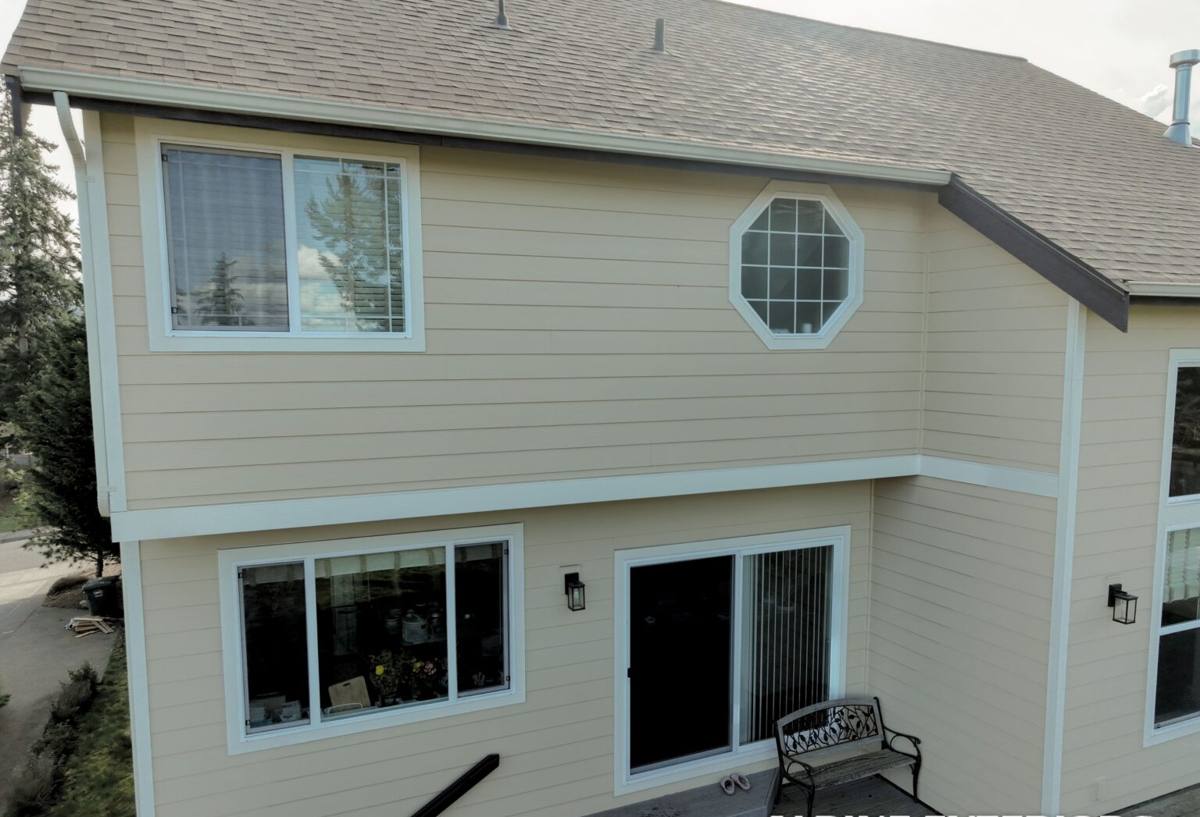
What the Damage Looks Like Before It Becomes Obvious
Moss and Mildew Growth
Moss doesn't need standing water to take hold — it needs shade, moisture, and time, and Mountain Lake's tree cover provides all three for most of the year. On wood-based products, moss holds moisture directly against the surface, which accelerates rot underneath even when the siding still looks intact from a distance.
Moisture Intrusion at the Sheathing
The bigger risk isn't the siding surface — it's what's happening behind it. Water that gets past failed caulking, warped boards, or poor flashing details can sit against the wall sheathing for weeks in a shaded, damp lot. By the time stains or soft spots show up inside, the damage has usually been progressing for a season or more.
Fading and Coating Failure
Salt air breaks down paint film and factory finishes faster than inland conditions. Once a coating chalks or cracks, the substrate underneath is exposed to the exact moisture cycle described above, and deterioration speeds up.
Signs It's Time to Replace, Not Patch
A lot of siding problems on Orcas Island get patched for years before someone calls a contractor. If you're seeing more than one or two of the following, patching is usually a short-term fix on a longer-term problem:
- Persistent moss or dark streaking that returns within weeks of cleaning
- Boards that feel soft, spongy, or crumble at the edges when pressed
- Paint that's chalking, peeling, or needing recoating more often than every few years
- Visible cupping, warping, or gaps opening between boards
- Caulk joints that crack or separate repeatedly at the same locations
- Interior signs — musty smell, staining, or soft drywall — near exterior walls
- Siding that's original to a home built more than 20-25 years ago
What a Correct Siding Replacement Involves
Tear-Off and Sheathing Inspection
Replacement starts with full removal of the old siding, not installation over it. That's the only way to actually see the sheathing, framing, and any hidden moisture damage that's been building behind the old material — which, in a shaded, damp lot like Mountain Lake, is more common than homeowners assume. Any soft or compromised sheathing gets repaired before anything new goes up.
Weather-Resistive Barrier and Flashing
A correctly detailed weather-resistive barrier, with properly lapped and sealed flashing at every window, door, and penetration, is what actually keeps water out — the siding itself is the second line of defense, not the first. This is the step that's most often shortcut on lower-bid jobs, and it's the one that causes the most expensive failures years later.
Ventilation and Drainage Behind the Siding
In a climate that stays damp as long as this one does, siding needs a way to dry out. A proper rainscreen gap or drainage plane lets bulk water drain and lets residual moisture evaporate instead of sitting against the back of the siding indefinitely.
Fastening and Finish
Fastener spacing, type, and placement matter more with fiber cement than with most other products — manufacturer installation instructions specify exact nailing patterns and clearances for a reason. Done correctly, the finished wall should shed water, resist wind-driven rain, and hold its factory finish for decades rather than years.
Why We Install Only James Hardie Fiber Cement
We don't install vinyl, LP SmartSide, Cemplank, Allura, primed spruce, or cedar. That's a deliberate standard, not a lack of options. In a climate that combines salt air, prolonged shade, and heavy seasonal moisture, the products we've chosen not to install each carry a real trade-off — moisture sensitivity in engineered wood products, seam and expansion issues in vinyl under UV and temperature swings, or the ongoing maintenance burden of solid wood siding that needs regular refinishing to hold up in a moss-prone environment.
James Hardie fiber cement is engineered specifically for this kind of exposure. It's non-combustible, doesn't support rot or insect damage the way wood-based products can, and its HZ5 product line is formulated for the wetter, colder climate zones the Pacific Northwest falls into. The factory-applied ColorPlus finish is baked on under controlled conditions rather than field-painted, which means better adhesion and more consistent resistance to fading from UV and salt exposure than a site-applied coating. Hardie also backs the product with a strong, transferable limited warranty — meaningful for a market like Orcas Island where homes change hands and buyers want documented exterior condition.
How Hardie Compares to Other Siding Options for This Climate
| Factor | James Hardie Fiber Cement | Vinyl | Cedar / Wood | LP SmartSide |
|---|---|---|---|---|
| Moisture and rot resistance | Excellent — cement-based, doesn't rot | Good on its own, but seams and moisture behind panels are a common failure point | Requires regular sealing/refinishing to resist rot | Engineered wood core is moisture-sensitive if any coating fails |
| Moss and mildew resistance | Resists surface growth better than wood; cleans easily | Resists growth but can trap moisture behind panels | Prone to moss retention in shaded, damp settings | Similar wood-based vulnerability to sustained moisture |
| Salt air / coastal exposure | Strong — factory finish holds up well to UV and salt | Can become brittle and discolor over time | Finish breaks down faster; more frequent recoating needed | Coating maintenance is critical near salt air |
| Fire resistance | Non-combustible | Combustible | Combustible | Combustible |
| Maintenance | Low — occasional wash, repaint on a long cycle | Low, but damage often means full panel replacement | High — regular staining/sealing required | Moderate — coating integrity must be maintained |
| Typical warranty | Strong, transferable limited warranty | Varies widely by manufacturer | Manufacturer warranty rarely covers moisture damage | Warranty often tied to strict maintenance requirements |
Our Process for Mountain Lake Projects
Working around Mountain Lake comes with logistics that don't apply to every job on the island. Driveways and lots are often tucked into tree cover with limited staging space, so material delivery and dumpster placement get planned before the crew shows up, not figured out on day one. We also time tear-off around the wettest stretches of the year where possible — pulling siding off a wall we can't get weather-wrapped and closed in the same day isn't something we do in a climate this damp.
Because these lots tend to be shaded and heavily vegetated, we're careful about protecting root zones, drainage paths, and understory plantings during tear-off and disposal — a job site near forest and water gets treated differently than a job site on an open, sunny lot.
Cost Factors for a Mountain Lake Siding Replacement
Every home is different, but the line items that actually move the price on a project like this are consistent:
| Cost Factor | Why It Matters |
|---|---|
| Site access | Tight, tree-lined driveways slow material staging and disposal |
| Sheathing condition | Hidden moisture damage found at tear-off adds repair scope |
| Trim and detail complexity | Gables, dormers, and multiple roof planes add labor and flashing work |
| Siding profile and color | Wider planks or premium ColorPlus colors run higher than standard options |
| Home size and wall area | The most direct driver of material and labor cost |
| Weather window | Off-season scheduling can affect timeline more than price, but rushing a job in a wet stretch risks callbacks |
Why Hiring a Crew That Already Works This Area Matters
A contractor who hasn't worked on Orcas Island before has to relearn the same lessons every island crew already knows: ferry scheduling affects material delivery and crew availability, San Juan County permitting has its own timeline, and a job that would take three weather-flexible days on the mainland needs a tighter, more disciplined schedule here because a missed window can mean waiting out a multi-day storm with an open wall. A crew that already works Mountain Lake and the surrounding communities has already solved these problems and builds them into the schedule from the start, instead of discovering them mid-project.
If your Mountain Lake home's siding is showing moss, soft spots, or finish failure, we're happy to take a look and give you a straight assessment of what it needs. Reach out for a free, no-pressure estimate using the form below.