 Orcas Island
 Windows Built for North Beach's Weather, Not Just the Showroom
North Beach sits close enough to the water that salt air is part of daily life, and that changes what a window has to survive. It's not just about keeping heat in during a San Juan County winter — it's about a window unit that can take repeated exposure to salt-laden wind, driving rain that comes in sideways off the water, and long stretches of gray, damp weather where a home's exterior rarely gets a chance to fully dry out. A window that would be perfectly fine in a drier inland climate can start failing early here if it wasn't installed with this specific exposure in mind.
We install and replace windows across Orcas Island, and North Beach homes get a specific version of our process because of where they sit. This page walks through what that actually means in practice — not marketing language, just what we look at, what we install, and why.
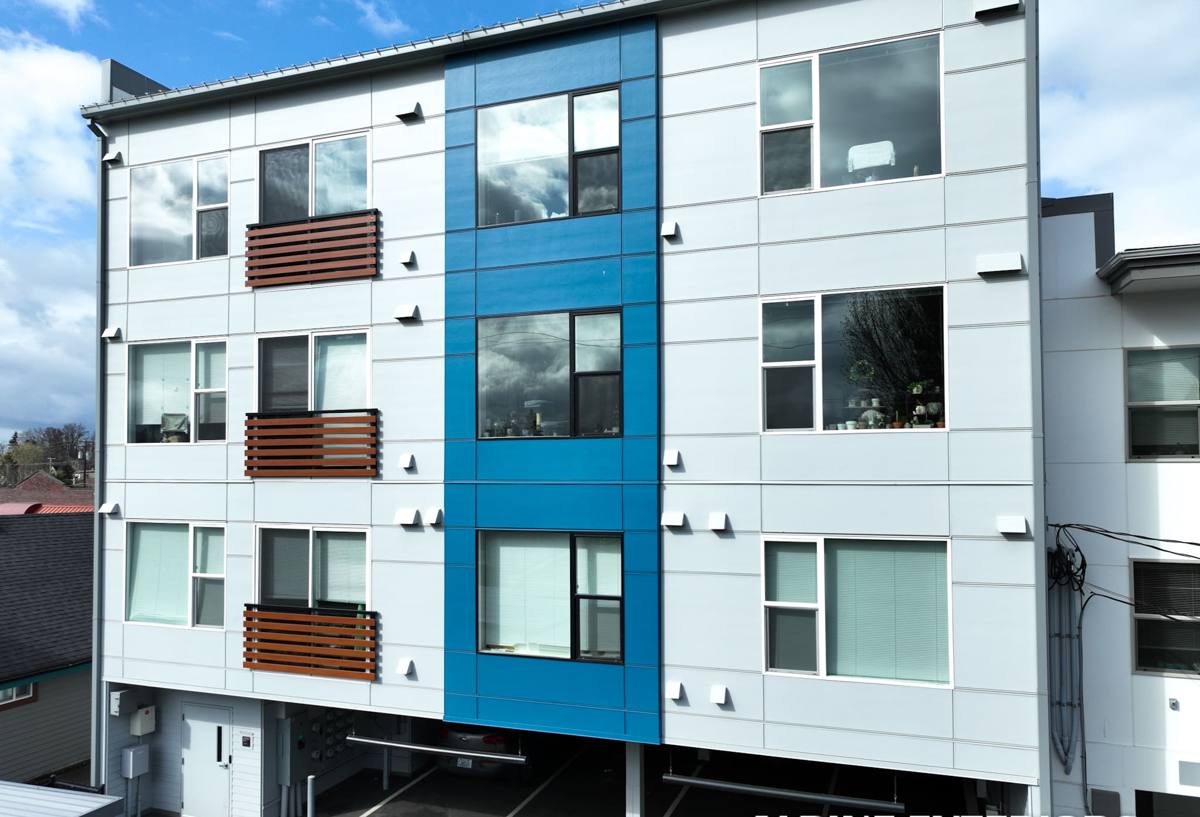
What North Beach's Climate Does to Windows Over Time
A few things happen consistently to window installations in this part of the Pacific Northwest coast, and they're worth understanding before you decide what to replace and with what:
- Salt air accelerates corrosion on hardware, hinges, and unprotected metal components — cheaper aluminum and low-grade vinyl hardware wear out faster here than the same product would inland.
- Driving rain finds gaps that would never leak in calmer weather. Wind-driven rain doesn't just fall on a window, it pushes against it, testing seals and flashing details that a sheltered inland home never has to deal with.
- Moss and organic growth take hold anywhere moisture sits and doesn't dry — sills, bottom corners, and trim details that trap water are where we most often find rot when we pull old windows out.
- Long damp seasons mean any small failure in the seal or flashing has months, not days, to turn into water intrusion, hidden rot, or mold before anyone notices from the inside.
None of this means windows can't last a long time on Orcas Island. It means the installation details that get treated as optional in a drier climate are not optional here.
Signs a North Beach Home Needs Window Attention
Homeowners usually call us for one of a few reasons. If any of these sound familiar, it's worth having someone look before winter storms make it worse:
- Fogging or condensation between panes on double-pane windows — the seal has failed and the insulating gas is gone
- Visible soft or discolored wood at the sill or bottom corners of the frame
- Drafts you can feel near the window even when it's fully closed and latched
- Windows that are difficult to open, close, or lock — often a sign the frame has shifted or swollen
- Paint or finish that's bubbling, peeling, or chalking faster than the rest of the exterior
- A musty smell near a window that doesn't go away with cleaning
Some of these are cosmetic and can wait. Soft wood and persistent moisture are not — they tend to spread into the surrounding wall framing if left alone through another wet season.
What a Correct Window Installation Actually Involves
The window unit itself is only part of the job. Most window failures we're called out to fix trace back to installation shortcuts, not a bad product. In a location like North Beach, where wind-driven rain is a regular event rather than an occasional storm, these details matter more than usual:
Flashing and Water Management
Every window opening needs a flashing sequence that directs water down and out, never inward — sill pan flashing at the bottom, properly lapped side and head flashing, and integration with the home's existing water-resistive barrier (house wrap or building paper). Skipping or rushing this step is the single most common cause of hidden rot we find behind old windows.
Sealing and Insulation
The gap between the window frame and the rough opening needs to be sealed and insulated correctly — not just caulked shut, which can trap moisture, but sealed with materials and techniques that manage both air movement and any incidental moisture that gets past the outer defenses.
Fastening and Structural Fit
The window needs to be plumb, level, and square in the opening, fastened per the manufacturer's specifications. A window installed slightly out of square will bind, leak, or fail its seals early — even if every other step was done well.
Interior and Exterior Trim
Trim isn't just cosmetic. Proper exterior trim detail sheds water away from the wall assembly; interior trim needs to accommodate any settling or minor movement without cracking the seal.
Frame Material Comparison for a Coastal Environment
We install several frame materials, and the right choice depends on budget, the home's style, and how much maintenance a homeowner wants to take on. Here's how the common options hold up specifically in a salt-air, high-moisture setting:
| Frame Material | Salt Air / Corrosion Resistance | Maintenance Needs | Typical Fit |
|---|---|---|---|
| Vinyl | Good — won't corrode, though hardware quality varies by manufacturer | Low — no repainting, occasional cleaning | Budget-conscious replacements, rental or secondary homes |
| Fiberglass | Very good — dimensionally stable, resists the expansion/contraction cycles humidity causes | Low — factory finish holds up well over time | Homeowners wanting durability without high upkeep |
| Wood (clad exterior) | Depends heavily on the cladding quality and detailing at joints | Higher — any exposed wood or failed cladding seams need prompt attention | Historic or traditional-style homes where wood interior look matters |
| Aluminum | Weaker — prone to corrosion and thermal transfer in this climate unless thermally broken | Moderate — needs monitoring for pitting and hardware wear | We generally steer away from it here except in specific commercial or thermally-broken applications |
We're upfront when a material isn't a good match for a North Beach exposure — it's a maintenance and moisture-behavior conversation, not a sales pitch for the most expensive option.
Our Installation Process
Every job follows the same sequence, whether it's one window or a whole-house replacement:
- On-site assessment — we look at existing window condition, surrounding wall material, sun and wind exposure for that specific opening, and any signs of past water intrusion.
- Measurement and product selection — exact rough opening measurements, and a frank conversation about which frame material and glass package fits the budget and the exposure.
- Removal — old windows come out carefully so we can inspect the rough opening and framing underneath before anything new goes in. This is often where hidden rot from old installations gets found.
- Repair as needed — any soft framing, failed sheathing, or compromised water barrier gets addressed before the new window goes in. Installing a new window over a damaged opening just hides the problem.
- Flashing and installation — sill pan, side and head flashing, correct fastening, and insulation of the gap around the frame.
- Sealing and trim — exterior sealant and trim work that sheds water, interior trim finished to match the home.
- Final check — operation, seal, and squareness confirmed before we consider the job done.
What Drives Cost on a North Beach Job
Every job is different, but these are the factors that most often move a quote up or down:
| Factor | Why It Matters |
|---|---|
| Frame material chosen | Vinyl, fiberglass, and clad-wood carry different upfront costs and long-term maintenance trade-offs |
| Condition of the rough opening | Hidden rot or water damage found during removal adds repair time before the new window can go in |
| Number and size of openings | Larger openings and multi-window jobs have different labor and material needs than single replacements |
| Access and site conditions | Second-story windows, tight lots, or difficult access on some North Beach properties affect labor time |
| Glass package | Standard double-pane versus upgraded low-E or impact-resistant glass changes material cost |
We give a written estimate after the on-site assessment, not a phone-quote guess — too many of these variables only show up once we can see the actual opening.
Why Local Experience on Orcas Island Matters Here
A window installer who mostly works drier inland climates may never think twice about sill pan flashing or trim sequencing, because in that environment a small gap in the details rarely causes a visible problem for years. On North Beach, that same shortcut can show up as a soft sill or a moldy corner in a single wet season.
Working across Orcas Island and San Juan County day in and day out means we've seen how different exposures on the same island behave — which walls take the worst of the wind-driven rain, which sides collect moss and stay damp longest, and which older installation habits (common in homes built or renovated decades ago) tend to cause trouble now. That's the kind of judgment that only comes from doing this work in this specific environment repeatedly, not from a general contracting background applied to a coastal job.
A Practical Checklist Before You Hire Anyone
Whoever you choose for a window job on North Beach, it's worth confirming these points up front:
- They inspect the rough opening and framing condition, not just the window unit itself
- They can explain their flashing and water-management approach in plain language
- They give a written estimate after seeing the site, not a rough number over the phone
- They stand behind both the product warranty and their own installation workmanship
- They're willing to walk you through frame material trade-offs honestly, including maintenance demands
- They have experience specifically with coastal or high-moisture installations, not just general remodeling
Caring for New Windows After Installation
A correctly installed window on North Beach still benefits from basic seasonal attention. Rinse salt residue off frames and glass periodically, especially after storms — salt buildup left to sit is what accelerates hardware corrosion and finish breakdown. Keep an eye on caulk lines and exterior sealant for cracking, particularly after a hard winter, and clear any moss or debris that collects on sills or in track channels before it holds moisture against the frame. None of this is heavy maintenance, but skipping it entirely shortens the life of even a well-installed window in this climate.
Get a Free, No-Pressure Estimate
If you're dealing with drafty, foggy, or failing windows on your North Beach property, or planning ahead for a replacement before the next wet season sets in, we're happy to come take a look. There's no pressure and no obligation — just an honest assessment of what your home actually needs and a written estimate you can think over. Use the form below to get started.