 Orcas Island
 Why North Beach Siding Wears Differently Than Siding Inland
North Beach sits close enough to open water that homes there deal with a combination most inland San Juan County properties don't: salt-laden air, wind-driven rain that hits siding sideways instead of straight down, and long stretches of shade under fir and cedar canopy that never really dry out between storms. Any one of those factors will age a wall system faster than average. Together, they compound. Salt air accelerates corrosion on fasteners and hardware, driving rain forces water past joints and laps that would stay dry in a calmer spot, and shaded, damp conditions feed the moss and algae growth that Orcas Island is known for through much of the fall, winter, and spring.
That's why siding repair on this part of the island isn't just "patch the bad board and move on." A repair that doesn't account for how water is actually reaching the wall will fail again, often in the same spot, within a season or two.
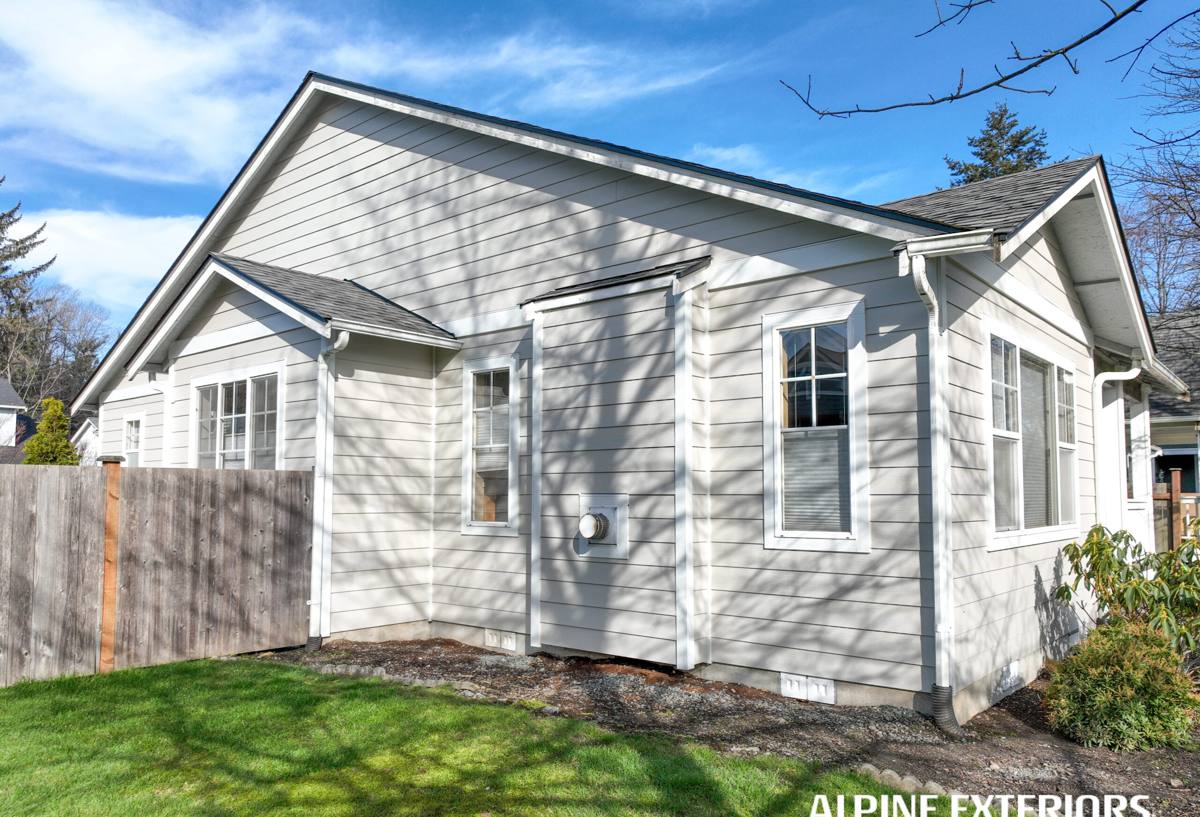
Signs Your Siding Needs Repair
Most siding problems in this area show up gradually, and homeowners often assume a little staining or a soft spot is cosmetic. It usually isn't. Here's what we look for on North Beach homes specifically:
- Cracked, split, or delaminating boards, especially on the north- and west-facing walls that take the brunt of wind-driven rain
- Soft or spongy spots when pressed, which usually mean moisture has already gotten behind the siding
- Dark streaking below seams, trim, or window heads — a sign water is tracking down the wall instead of shedding off it
- Moss or algae buildup that stays green and damp year-round rather than drying out in summer
- Bubbling, peeling, or chalky paint film, which points to trapped moisture pushing out from underneath
- Gaps opening up at trim boards, corner boards, or butt joints
- Popped or backed-out fasteners, often corroded, along lap edges
- Visible buckling or waviness in a wall section that used to look flat
Any one of these on its own might be a minor fix. Several together, especially in the same area of the house, usually mean water has been getting behind the siding for a while and the repair needs to go deeper than the visible board.
What a Correct Repair Actually Involves
Checking What's Behind the Siding
Before we patch anything, we pull back the damaged section far enough to see the weather-resistive barrier and flashing underneath. On a lot of North Beach homes, especially older ones, this is where we find the real problem: a nail-on flashing detail that was never sealed correctly, a house wrap seam that's come apart, or years of trapped moisture that have already started affecting the sheathing. Replacing the visible siding without checking this layer is the single most common reason siding repairs fail within a year or two on this stretch of coastline.
Matching Material, Profile, and Finish
A repair patch that doesn't match the surrounding siding in profile, reveal, and finish will telegraph itself immediately and often creates a new water path at the seam. We match exposure width and butt joint spacing to the existing wall, and where color match matters, we work with factory-finished product rather than field-painted patches, which weather unevenly and fade at a different rate than the rest of the wall.
Fasteners and Hardware
Given the salt air here, fastener choice matters more than it does on a comparable repair a few miles inland. We use corrosion-resistant fasteners rated for coastal exposure, not standard hardware that will rust and stain the siding face within a few years — which is often exactly what caused the popped-fastener damage we're repairing in the first place.
Repair or Replace? How We Make the Call
| Factor | Leans Toward Repair | Leans Toward Replacement |
|---|---|---|
| Extent of damage | Isolated to one or two wall sections | Spread across multiple elevations |
| Moisture behind siding | WRB and sheathing intact and dry | Sheathing shows rot or sustained wetting |
| Age of existing siding | Well within expected service life | Near or past its practical lifespan |
| Original material | Fiber cement, matchable and sound | Failing material (cedar, primed wood, deteriorated vinyl) |
| Cost over time | Repair cost is a fraction of full replacement | Repeated repairs are adding up close to replacement cost |
We'll always tell you honestly which side of this table your house falls on. A lot of North Beach homes we look at genuinely just need a targeted repair; we're not in the business of upselling a full re-side when a section repair will hold up fine.
Why Every Repair We Do Is James Hardie Fiber Cement
This is a standard we hold across all our work, not just full replacements: we repair and replace with James Hardie fiber cement siding, and we don't install or patch with vinyl, LP SmartSide, primed wood, or cedar. In an environment like North Beach, that's a practical decision, not a brand preference.
Fiber cement doesn't rot, and it isn't a food source for the moss and algae that thrive in this area's damp, shaded conditions the way untreated wood-based products can be. Hardie's HZ product lines are engineered specifically for the wet, freeze-thaw-adjacent climate of the Pacific Northwest, and the ColorPlus factory finish holds color and resists the fading and chalking that salt air and UV accelerate on field-painted siding. It's also non-combustible, which matters given how many wildfire-season advisories this region has seen in recent years. When we do have to replace a section rather than repair it, using the same engineered material system means the new section performs the same way the rest of your wall does — not a patchwork of different materials aging at different rates.
If your home currently has vinyl, LP SmartSide, or cedar siding and you're dealing with recurring damage in the same spot, we'll be straightforward with you about that trade-off and talk through what a transition to fiber cement would look like, section by section, rather than pushing a full-house replacement you don't need yet.
Our Process for North Beach Repair Calls
Working on Orcas Island means planning around ferry schedules and weather windows in a way that mainland crews often don't account for. We batch North Beach visits so we're not making a special trip for a single small repair, which keeps costs reasonable, and we plan siding work around the drier stretches of the year when possible — though storm damage doesn't wait for good weather, and we do respond to urgent repairs (a blown-off panel, storm-cracked boards, active water intrusion) outside that window.
On-site, the process is the same discipline every time: assess the damage, check behind it, address the water path first, then replace or patch with matched material and correctly installed flashing and fasteners. We don't consider a repair finished until the underlying cause — not just the visible symptom — has been addressed.
Keeping Repaired Siding From Failing Again
A good repair buys you years, but a few habits make a real difference in how long it lasts in this climate:
- Keep gutters and downspouts clear so water isn't overflowing onto the wall below
- Trim back branches and vegetation that keep a wall section shaded and damp longer than it needs to be
- Have moss and algae treated before it builds up thick enough to hold moisture against the siding
- Walk the exterior once or twice a year and check caulking at trim, window, and door joints for cracking or gaps
- Address small issues — a hairline crack, a loose fastener — before the next wet season, not after
What Affects Repair Cost
| Factor | Why It Matters |
|---|---|
| Amount of siding affected | A single board vs. a full wall section changes labor and material scope |
| Condition behind the siding | Sheathing or framing repair adds cost beyond the siding itself |
| Access | Second-story or tree-obstructed walls take longer to work safely |
| Material match | Matching an older profile or discontinued color can add sourcing time |
| Trip scheduling | Batching with other island visits can reduce mobilization cost |
We give straightforward, itemized estimates before any work starts — no surprise add-ons once the crew is on site.
Why Hire a Crew That Already Works North Beach
Siding repair on Orcas Island isn't quite the same trade as siding repair on the mainland. A crew that hasn't worked this particular microclimate can misdiagnose a moss problem as cosmetic, use standard hardware that corrodes within a couple of years in the salt air, or miss a flashing detail that's fine in a drier location but fails here. We already know what North Beach exposure does to a wall system over time, which means less guesswork, a more accurate first diagnosis, and a repair that's built for the conditions it actually has to survive — not generic conditions from a manual written somewhere else.
If you're seeing damage, staining, or moss buildup on your siding and want an honest read on whether it needs a repair or something more, we're happy to take a look. Reach out for a free, no-pressure estimate using the form below.