 Orcas Island
 Building New on Orcas Island's West Side
West Beach sits exposed to weather that most window installers never have to think hard about. Homes here take wind off the water, salt-laden air that eats at metal and finishes faster than inland properties, and a wet season that can stretch for months. If you're framing a new home or a major addition in this part of Orcas Island, the windows you choose and how they're installed will do more to determine your long-term comfort and maintenance load than almost any other single decision in the build.
New-construction window work is different from a retrofit or replacement job. With new construction, we're working with the framing crew from the rough opening stage forward — flashing, sealing, and setting windows before siding goes on, not cutting into finished walls later. Done right, this is the best possible time to get water management correct for the life of the house. Done wrong, it's the stage where a lot of future leaks get built in and hidden behind trim.
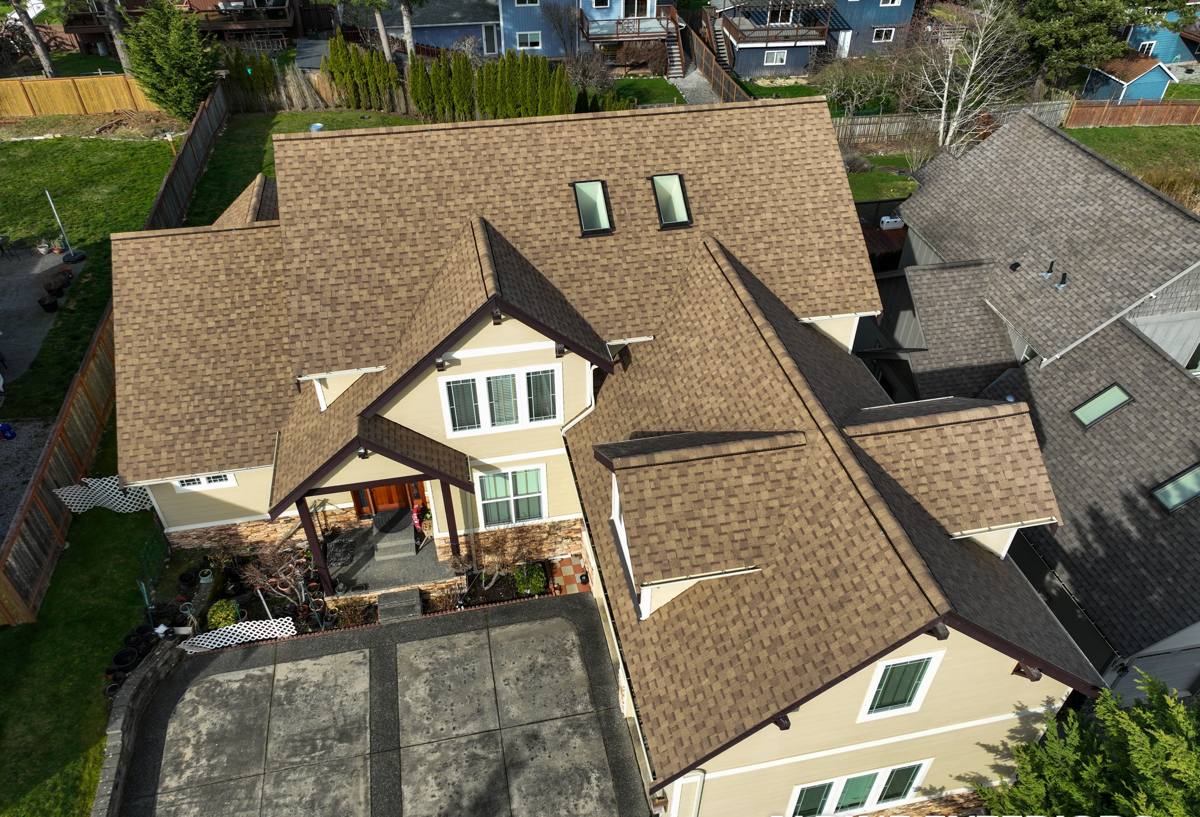
What West Beach's Climate Actually Demands
San Juan County's marine climate is milder than a lot of Washington, but "milder" doesn't mean easier on materials. West-facing exposures on Orcas Island catch prevailing weather directly, and that combination of salt air, driving rain, and a long moss season creates specific demands on new window installations:
Salt Air and Corrosion
Airborne salt accelerates corrosion on unprotected metal fasteners, hardware, and some window frame materials. Cheap or mismatched fasteners around a window opening can start showing rust streaks within a couple of seasons on an exposed West Beach elevation. We spec corrosion-resistant fastening and hardware for coastal-exposed openings as standard practice, not an upsell.
Driving Rain and Wind-Driven Water
Rain that comes in sideways behaves differently than rain that falls straight down. It gets pushed up under sills, behind trim, and through any gap in the water-resistive barrier that a calmer climate might tolerate. New-construction window installation is your one real chance to build a shingle-lap flashing system — where every layer overlaps the one below it, so water is always directed outward and down — before the wall is closed up.
Moss and Prolonged Moisture
A long wet season means surfaces around window openings stay damp longer than in drier climates, which is exactly the condition moss and mildew need to establish. Moss on nearby trim and siding holds moisture against the wall assembly, and if it creeps toward a window's edge it can compromise sealant lines over time. Window and trim details that shed water quickly and don't have flat, moisture-trapping ledges are worth prioritizing at the design stage.
What a Correct New-Construction Window Install Involves
There's a right order of operations for setting windows in new framing, and skipping steps is how houses end up with hidden rot five or ten years down the road. Our process on Orcas Island builds follows this sequence:
- Rough opening check — verifying the opening is square, level, and sized correctly before the window ever arrives on site.
- Water-resistive barrier integration — housewrap or building paper is lapped correctly around the opening before flashing goes in, not patched around it afterward.
- Sill pan flashing — a sloped, sealed pan at the bottom of the opening so any water that gets past the window has somewhere to go besides your framing.
- Window setting and shimming — the unit is set plumb, level, and square, and shimmed at the manufacturer's specified points so the frame isn't stressed and hardware operates smoothly for years.
- Side and head flashing — integrated in proper shingle-lap order with the water-resistive barrier above.
- Sealant and backer rod — used at the right joints, with the right sealant chemistry for the substrate, not as a substitute for proper flashing.
- Interior air sealing — closing the gap between frame and framing on the interior side, which matters as much for energy performance as the exterior work does for water.
Every one of those steps is buildable-in on new construction in a way that's much harder to retrofit later. That's the real advantage of getting the window contractor involved during framing rather than after.
Choosing Window Products for a Coastal Orcas Island Site
We install a range of window lines and don't push one manufacturer as the only right answer — the right product depends on your budget, your home's design, and how exposed the specific elevation is. That said, for West Beach sites we walk clients through a few practical trade-offs:
| Factor | What to Consider on an Exposed Coastal Site |
|---|---|
| Frame material | Vinyl, fiberglass, and clad-wood all perform differently in salt air and humidity; fiberglass and quality vinyl generally shrug off corrosion concerns that raw metal or unprotected wood face. |
| Hardware finish | Look for hardware rated for coastal or marine-grade exposure; standard interior-grade hardware can pit or stain faster on a west-facing wall. |
| Glazing package | Double or triple pane with a good low-E coating helps with both energy performance and condensation control during the wet months. |
| Sill design | Sloped, low-profile sills shed water faster and give moss and algae less flat surface to colonize. |
| Warranty structure | Ask specifically whether coastal/marine exposure is excluded or limited — some manufacturer warranties carve out reduced coverage near saltwater, and it's better to know that before you buy than after a claim. |
We're happy to walk through specific product lines and their coastal warranty language during your estimate. This is a case where reading the fine print before purchase saves a headache later, and we'd rather flag it upfront than have a client find out the hard way.
Why Local, West Beach-Familiar Experience Matters
Anyone can install a window in dry weather in a shop. Installing one correctly on an active West Beach jobsite — timing the work around actual driving-rain days, understanding which elevations need extra flashing attention, knowing how the county's wet-season timeline affects scheduling — is a different skill built from doing it repeatedly in this exact environment.
We've done exterior work across Orcas Island and San Juan County long enough to know which details matter most on this side of the island specifically. That's not marketing — it's the difference between a crew that treats every job like a generic install and one that adjusts flashing details, fastener specs, and sequencing based on what actually holds up here.
Our Process on a New-Construction Job
For West Beach new builds and additions, our involvement typically looks like this:
- Early coordination with your builder or general contractor to confirm rough opening sizes and window schedule before framing locks in
- An on-site walk of window locations to flag any elevation that needs extra attention for wind or rain exposure
- Ordering and receiving window units, with an inspection for shipping damage before installation day
- Flashing and installation following the sequence above, elevation by elevation
- A final walkthrough with photos of the flashing work before siding closes it up — because once siding is on, that flashing is invisible for the life of the house
- A clear written scope covering what's included, what's excluded, and how change orders (like a swapped window size mid-build) are handled
Timing Considerations
Wherever possible, we try to schedule window-setting work around the driest stretches available, since setting units and completing flashing during active rain is harder to do well and harder to inspect. On a new-construction timeline this usually means coordinating closely with your framer so windows go in as soon as the structure is ready, without unnecessary delay that leaves the opening exposed longer than it needs to be.
Cost Factors to Budget For
New-construction window pricing depends on more than the unit cost alone. Rough budget drivers for a West Beach project include:
| Factor | Why It Moves the Price |
|---|---|
| Number and size of openings | More glass and larger units mean more material and labor, straightforwardly. |
| Product tier | Entry-level vinyl vs. fiberglass or clad-wood carries a real price spread, and coastal-rated hardware adds a modest premium. |
| Elevation exposure | West- and southwest-facing openings on an exposed lot may warrant upgraded flashing details or sealants, which adds labor time. |
| Site access | Second-story or hard-to-reach openings take longer to flash and set correctly than ground-level units. |
| Coordination complexity | Jobs where we're working tightly with a framing crew's schedule versus a standalone install can affect labor efficiency. |
We give straightforward, itemized estimates rather than a single lump number, so you can see what's driving the cost and where there's room to adjust if your budget is tight.
Common Mistakes We See on Coastal New Builds
A few issues come up often enough on exposed Orcas Island sites that they're worth calling out directly:
- Skipping sill pan flashing to save time — it's the cheapest insurance against a rotted sill five years later.
- Using standard fasteners instead of corrosion-resistant hardware on west-facing openings, leading to rust staining and eventual hardware failure.
- Sealing without flashing — caulk is not a substitute for proper shingle-lap water management; it's a supplement to it.
- Ignoring warranty exclusions for coastal exposure until a claim is denied.
- Rushing installation during a rain window instead of waiting for a drier stretch, which makes it harder to confirm flashing is properly seated and sealed.
None of these are exotic problems — they're avoidable with a crew that's paying attention to the specific conditions on your site.
Get a Free Estimate for Your West Beach Build
If you're planning new construction or a major addition on the west side of Orcas Island, we're glad to walk your site plans or framing and talk through what your window openings will need for this climate. There's no pressure and no cost to get our take — just a straightforward look at your project and a written estimate you can use to plan your build.