 Orcas Island
 Roofing on Shaw Island: What the Climate Actually Demands
Shaw Island sits in the heart of San Juan County, and like the rest of the archipelago it gets a climate that's deceptively hard on a roof. The winters aren't brutal by Pacific Northwest standards, but the combination of salt-laden marine air, wind-driven rain off the Sound, and a moss season that can run eight months or more adds up to steady, cumulative wear that a lot of mainland roofing products and installation habits aren't built for.
Salt air corrodes exposed metal faster than inland air does — fasteners, flashing, and vent components take the brunt of it. Driving rain doesn't just fall straight down; wind pushes it sideways and up under shingle tabs, ridge caps, and flashing laps that would be fine in a calmer climate. And the shade, humidity, and mild temperatures that make the islands beautiful are exactly the conditions moss and moss-adjacent growth thrive in. A roof here isn't judged on how it looks the day it's installed — it's judged on how it performs after five winters of that combination.
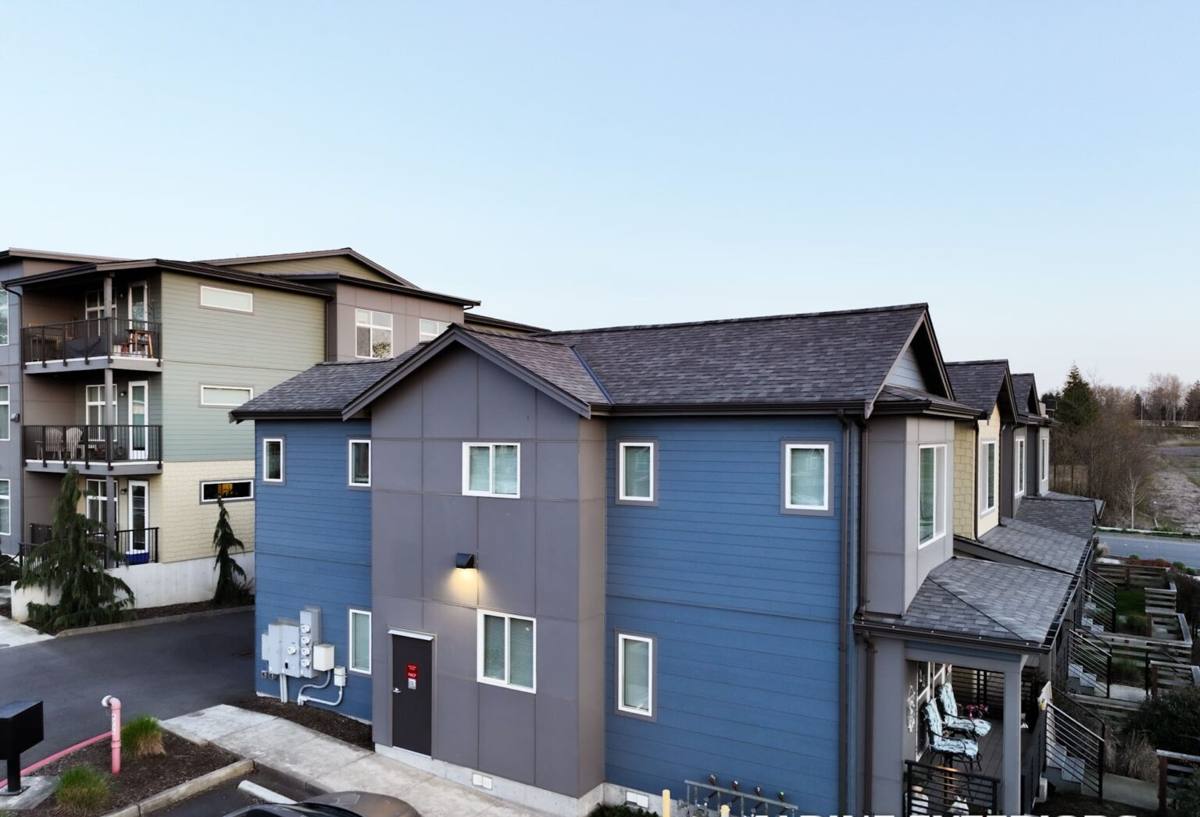
Signs a Shaw Island Roof Needs Replacement, Not Another Repair
Not every roofing problem calls for a full tear-off. But on an island where access and scheduling take real planning, it pays to know when repair stops making sense.
- Granule loss heavy enough that you're finding grit in gutters and downspouts every season
- Shingles that are cupping, curling, or cracking across large sections rather than isolated spots
- Moss or algae growth that keeps returning within a year of cleaning, especially on north-facing or shaded slopes
- Soft or spongy decking felt underfoot during walk-throughs, a sign moisture has reached the sheathing
- Daylight visible through the attic roof deck, or staining on rafters and insulation
- A roof past 20-25 years old (asphalt) with multiple repair visits already behind it
- Flashing around chimneys, skylights, or valleys that's been patched more than once
If you're seeing two or more of these at once, a new roof is almost always the more honest recommendation than another round of patching — repeated repairs on an aging roof usually cost more over a few years than one correct replacement.
What a Correct New Roof Installation Actually Involves
Tear-Off and Deck Inspection
We don't install over existing layers. A full tear-off lets us see the actual roof deck — plywood or plank sheathing that's been sitting under whatever was up there for decades. Any soft, delaminated, or water-stained sections get replaced before anything new goes down. Skipping this step is one of the most common ways a new roof fails early, and it's not visible from the ground, which is exactly why it matters to ask about it.
Underlayment
Given the amount of driving rain Shaw Island sees, we treat underlayment as a real second line of defense, not a formality. That means synthetic underlayment across the field and self-adhered ice-and-water membrane at the vulnerable points — eaves, valleys, and around any roof penetrations — where wind-driven water is most likely to work its way underneath.
Flashing and Penetrations
Chimneys, skylights, plumbing vents, and valleys are where most roof leaks actually start, not in the open field of shingles. Correct step flashing, counter-flashing, and properly sealed penetrations matter more here than almost anywhere else in the job, especially with the salt content in the air accelerating corrosion on lower-grade metal.
Ventilation
A roof deck that can't breathe traps moisture, which shortens shingle life and feeds exactly the kind of growth this climate already encourages. Balanced intake and exhaust ventilation is part of a correct installation, not an upsell.
Ridge, Field, and Final Details
Proper nailing pattern and placement (not staples, not overdriven or underdriven nails), correct exposure per course, and ridge cap installed to shed wind-driven rain rather than just sit decoratively on top.
Roofing Material Options for Island Homes
There's no single "best" roofing material for every Shaw Island home — it depends on the roof's exposure, the home's style, and how much long-term maintenance you want to take on. Here's how the common options compare against this specific climate.
| Material | Salt Air Resistance | Moss Resistance | Maintenance | Typical Lifespan |
|---|---|---|---|---|
| Architectural asphalt shingle | Good with quality fasteners/flashing | Moderate — benefits from periodic cleaning | Low to moderate | 25-30 years |
| Standing seam metal | Very good with marine-grade coatings | Very good — sheds moss naturally | Low | 40-50+ years |
| Synthetic/composite shake | Good | Moderate | Moderate | 30-40 years |
| Cedar shake (natural) | Fair — needs regular treatment | Poor without diligent upkeep | High | 20-30 years with upkeep |
Asphalt architectural shingle remains the most common choice on the island for good reason — it's a proven, cost-effective performer when installed correctly with the right underlayment and flashing detail. Standing seam metal has become more popular on newer builds and full replacements where the owner wants to largely stop thinking about moss and long-term maintenance. Natural cedar shake looks the part of a Pacific Northwest island home, but we're straightforward with clients about the maintenance commitment it requires in a climate this damp — it's a legitimate choice, just one that needs an owner willing to keep up with it.
Our Process for Shaw Island Roof Replacements
Working on Shaw Island means planning around ferry schedules, barge logistics for materials and dumpster/debris removal, and weather windows that close faster than on the mainland. We build all of that into the estimate and timeline up front rather than discovering it mid-project.
- On-site assessment — we walk the roof and attic, check the deck condition where accessible, and document the actual scope before quoting
- Written estimate — material options, scope, and a realistic timeline that accounts for ferry and weather logistics
- Permitting — we handle San Juan County permit requirements as part of the project, not as a separate hassle for you
- Material staging — materials are ordered and staged in advance so the crew isn't waiting on a barge mid-tear-off with an open roof
- Tear-off and deck repair — old roofing removed, deck inspected and repaired as needed, typically completed and dried in the same day on smaller roofs
- Installation — underlayment, flashing, ventilation, and field roofing installed to the standard described above
- Final walk-through — we review the finished roof with you and clean the site before we leave
Ventilation and Moisture: The Half of the Job You Don't See
A lot of roofing quotes focus entirely on the shingle and skip the parts that determine whether that shingle lasts its full rated life. In a climate with as much ambient moisture as San Juan County, attic ventilation directly affects how long a roof performs before moss, algae, or premature shingle aging shows up. Balanced ventilation also helps regulate attic temperature, which reduces ice-adjacent stress at the eaves during colder snaps and cuts down on condensation that can damage insulation and framing from the inside, unrelated to any leak at all.
Moss Prevention and Long-Term Roof Care
No roofing material on Shaw Island is entirely moss-proof — the climate is simply too favorable for it. But correct installation reduces how fast and how badly it takes hold:
- Proper slope and drainage so water isn't sitting on the roof surface longer than necessary
- Metal flashing details (like copper or zinc strips) at ridges on shaded roofs, which naturally discourage moss growth as they weather
- Keeping overhanging branches trimmed back to cut down on shade and debris buildup
- Gutters cleared regularly so water isn't backing up under the roof edge
- A light annual inspection to catch moss early, before it starts lifting shingle edges
We're happy to talk through moss-resistant details for your specific roof during the estimate — it's a bigger factor in material and design choices here than in most parts of the state.
Cost Factors for a Shaw Island Roof Replacement
We don't quote specific prices without seeing the roof, but the factors that move cost up or down are consistent from project to project.
| Factor | Effect on Cost |
|---|---|
| Roof size and number of planes/valleys | More complexity means more labor and material per square |
| Deck condition | Rotted or soft sheathing found during tear-off adds material and labor |
| Material choice | Asphalt is typically the most affordable; metal and cedar cost more upfront |
| Roof pitch and access | Steep or hard-to-access roofs require more safety setup and time |
| Ferry/barge logistics | Material and equipment transport is built into island project timelines |
| Existing layers | Multiple old roofing layers mean more tear-off labor and disposal |
Why Hire a Crew That Already Works Shaw Island
Roofing logistics on the islands are genuinely different from a mainland job, and it shows in how a project actually goes. A crew unfamiliar with island work can underestimate ferry scheduling, material staging, and weather timing — all of which can turn a planned three-day tear-off into an open roof sitting through an unexpected rain event. We already know the barge schedules, the county permitting process, and how to stage a project so the roof isn't exposed longer than it needs to be. That local familiarity is part of what protects your home during the project, not just after it.
If you're weighing repair versus replacement, or just want a straight answer on what your roof actually needs, we're glad to take a look. Reach out for a free, no-pressure estimate using the form below.