 Orcas Island
 Storm Damage Roof Repair Built for San Juan Island's Marine Climate
San Juan Island sits out in the Salish Sea, which means every roof on it takes weather that inland Washington homes never see. Southeasterly winter storms bring driving rain sideways into roof edges and valleys. Salt-laden air corrodes metal faster than almost anywhere else in the state. And the long, wet moss season packs organic growth under shingle tabs and shakes, holding moisture against the roof deck for months at a time. Storm damage here rarely shows up as a single dramatic event — more often it's wind that lifts a section of shingles just enough to let water in, and by the time a stain shows up on a ceiling, the damage has been working on the deck underneath for weeks.
A storm damage repair on San Juan Island has to account for all of that, not just patch what's visibly broken. That's the standard we hold ourselves to on every roof we touch here.
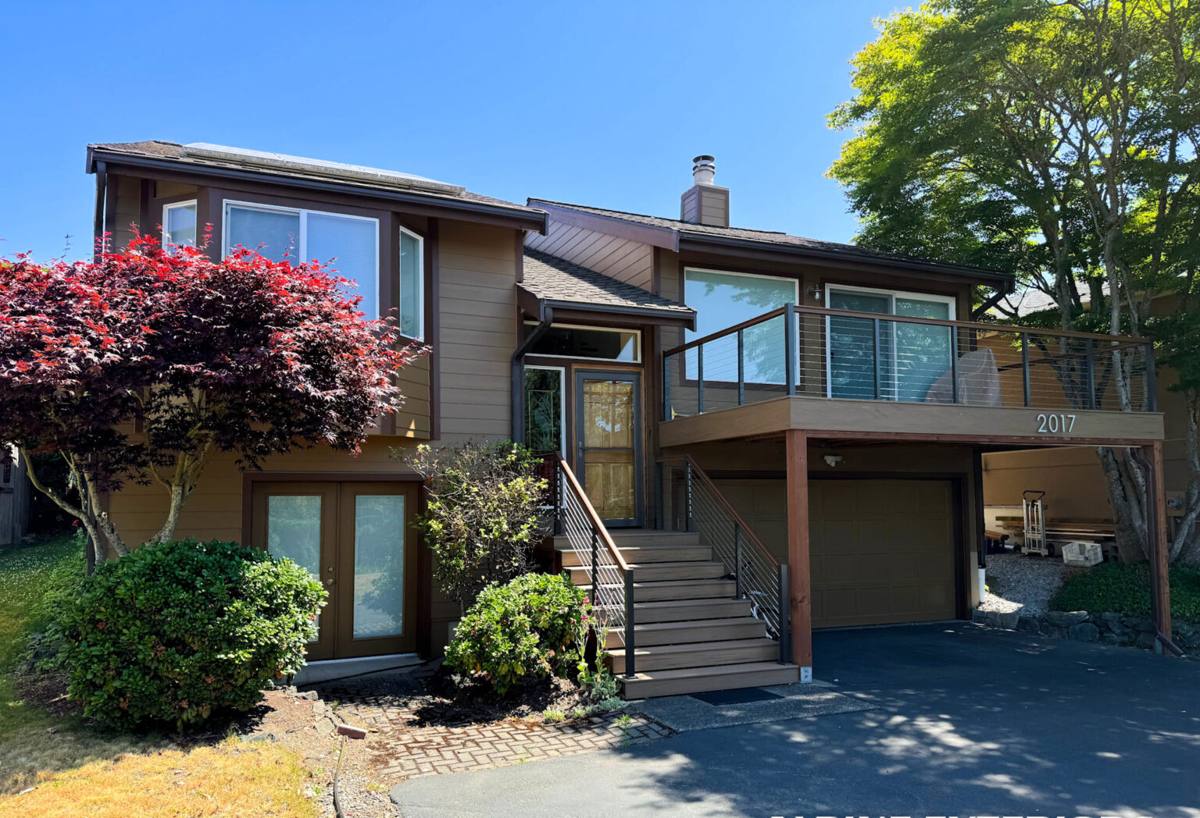
What Local Storms Actually Do to a Roof
Understanding the failure pattern matters, because it changes what "repair" needs to mean.
Wind Uplift and Lifted Edges
Strong gusts off the water get under the leading edge of shingles or shakes, especially at ridges, rakes, and any roof plane facing open water or a clearing. Once a fastener line breaks loose, that section flexes every time the wind picks up again, widening the gap.
Driving Rain and Wind-Driven Water
Rain here doesn't fall straight down during a storm — it comes in at an angle, which pushes water uphill under shingle laps, around chimney flashing, and into valleys that were never designed to handle water moving sideways. This is the single biggest cause of hidden leaks after a storm.
Salt Air and Fastener Corrosion
Exposed nail heads, flashing seams, and metal drip edge corrode faster this close to salt water. A fastener that would last decades inland can start rusting and losing grip years earlier out here, which is often the real reason a section of roofing came loose in a storm that an inland roof would have shrugged off.
Moss and Trapped Moisture
San Juan Island's long, mild, wet stretch of the year is ideal moss weather. Moss doesn't just look bad — it holds water against shingles and decking, works its way under tabs, and lifts material enough that the next storm finishes the job. A lot of "storm damage" we find is really moss damage that a storm exposed.
Signs Your Roof Took Storm Damage
Some damage is obvious. Most of it isn't. Here's what to look for from the ground and inside the house before calling anyone out:
- Shingles or shake pieces in the yard or gutters after a windstorm
- Visibly lifted, curled, or missing shingle tabs, especially near ridges and edges
- Dented, creased, or separated metal flashing around chimneys, skylights, or roof-to-wall joints
- Water stains on ceilings or upper walls that appear or grow after a storm
- A musty smell in an attic or top-floor closet
- Granules collecting in gutters or at downspout outlets
- Sagging or soft-feeling spots when walking an attic (never walk a roof deck that feels unstable)
- Daylight visible through the roof deck from inside the attic
If you see any of these after a storm, the priority is stopping ongoing water entry, not necessarily a full repair on day one. A temporary cover can buy time to do the permanent fix correctly.
What a Correct Storm Damage Repair Involves
A repair that only replaces the shingles you can see from the driveway is a repair that fails again in the next storm. Here's what we check and address on every storm repair:
Deck Inspection, Not Just Surface Patching
Once the damaged roofing is pulled back, we check the decking underneath for soft spots, delamination, or rot. Roofing over a compromised deck just hides the problem until it's bigger and more expensive.
Underlayment Condition
If the underlayment under the damaged section is torn, degraded, or was already thin or outdated, it gets replaced as part of the repair — not left in place just because the shingles on top are new.
Flashing and Transition Points
Most leaks trace back to flashing, not open field shingles. Chimney flashing, valley metal, and roof-to-wall step flashing all get inspected and resealed or replaced where the storm compromised them, since salt air accelerates corrosion at exactly these joints.
Matching Materials Honestly
We'll match the existing roofing as closely as the market allows for a patch repair, but we're upfront when an exact match isn't available — sun-faded or discontinued shingle lines are common on older San Juan Island roofs, and we'd rather tell you that up front than surprise you with a visible seam later.
Repair or Replace? What Actually Drives That Decision
Not every storm-damaged roof needs full replacement, and not every roof is a good candidate for another round of patching. These are the factors that actually matter:
| Factor | Leans Toward Repair | Leans Toward Replacement |
|---|---|---|
| Roof age | Under roughly two-thirds of expected material lifespan | At or past expected lifespan for the material |
| Extent of damage | Isolated to one section or slope | Spread across multiple slopes or the whole roof |
| Decking condition | Solid, dry decking under the damaged area | Soft, rotted, or repeatedly wet decking |
| Moss/algae history | Light, recently treated | Heavy, long-term growth affecting multiple areas |
| Prior repair history | First or second repair on this roof | Multiple past patches, especially in different spots |
| Material availability | Close match still available | Discontinued or badly weathered material, mismatch would be obvious |
We'll give you a straight answer on which side of this table your roof falls on, including when a repair is genuinely the right call and a full replacement would be spending money you don't need to spend yet.
Materials That Actually Hold Up Out Here
The Salish Sea's salt air and moisture load punish some roofing components faster than others. Our standard for repairs and replacements on San Juan Island roofs reflects that:
Fasteners and Flashing Metal
We use corrosion-resistant fasteners and flashing appropriate for a marine environment rather than the cheaper standard-grade hardware that's fine for drier, inland climates. It costs a little more up front and holds a lot longer here.
Underlayment
Synthetic underlayment with strong water-shedding performance is our standard for repairs in this climate, given how often wind-driven rain pushes water under the primary roofing layer.
Ventilation
Poor attic ventilation traps moisture that feeds moss growth and accelerates deck rot from the underside. Where a repair uncovers a ventilation problem, we'll flag it — fixing the visible damage without addressing airflow just means we'll see you again after the next storm.
Our Storm Damage Repair Process
- Assessment: A ground-level and, where safe, on-roof inspection to identify every point of entry, not just the obvious one.
- Temporary protection: If the roof is actively leaking, we'll get it covered and dry before scheduling the full repair, so a delay in materials or weather doesn't mean more interior damage.
- Documentation: Clear notes and photos of the damage, which are helpful if you're filing an insurance claim.
- Repair scope: A written plan covering what's being replaced, what's being inspected underneath, and why — no surprise scope creep once we're up there.
- The repair itself: Deck check, underlayment, flashing, and matched roofing material installed to the same standard as new work, not a shortcut version.
- Cleanup and final check: Debris removal and a final walk-through so you know exactly what was done.
Insurance, Timing, and San Juan County Logistics
Storm repairs on the islands come with a couple of practical wrinkles that inland San Juan County contractors don't deal with. Materials and equipment often need to come over by ferry or barge, so scheduling has to account for sailing times, not just crew availability. Weather windows matter too — a repair started right before another front rolls in isn't a repair worth starting. We plan around both.
If you're filing an insurance claim for storm damage, documentation of the damage and the repair scope helps your claim move faster. We provide that as a standard part of the job, not an upsell.
Why It Matters That We Already Work San Juan Island
A crew that only occasionally comes out to the islands has to relearn the local conditions every time — which slopes take the worst of the southeast wind, which neighborhoods hold moss longest, what the ferry schedule allows for a same-week emergency tarp. A crew that already works San Juan Island and Orcas Island regularly doesn't lose time to that learning curve. We know the difference between damage that's purely storm-driven and damage that a storm just exposed after years of moss and salt-air wear, and that distinction changes what an honest repair actually looks like.
If your roof took a hit in the last storm — or you're not sure whether what you're seeing is storm damage or just age — we're happy to come take a look. The estimate is free, there's no pressure to sign anything on the spot, and you'll get a straight answer about what actually needs fixing. Reach out using the form below to get started.