 Orcas Island
 Why Rosario's Shoreline Setting Is Hard on Siding
Rosario sits close to the water on Orcas Island's shoreline, and that proximity comes with a specific set of exterior problems that homes further inland don't deal with in the same combination. Salt-laden air moves off the water and settles on every exterior surface, wind-driven rain gets pushed sideways into wall assemblies during winter storms, and the deep shade from mature evergreens keeps moisture sitting on north- and east-facing walls long after a storm passes. Any one of these on its own is manageable. Together, over years, they're what actually determines whether a home's siding lasts two decades or needs replacement at year twelve.
Salt air is corrosive to exposed fasteners and metal trim, and it accelerates the breakdown of paint films and lower-grade composite siding faster than manufacturers' published test data usually accounts for, since that data rarely reflects marine exposure. Add San Juan County's long, wet shoulder seasons — moss and algae don't need much encouragement here — and you get siding that looks tired well before it's structurally failed, plus siding that's failing structurally in ways that aren't visible from the ground.
How This Shows Up on Rosario Homes Specifically
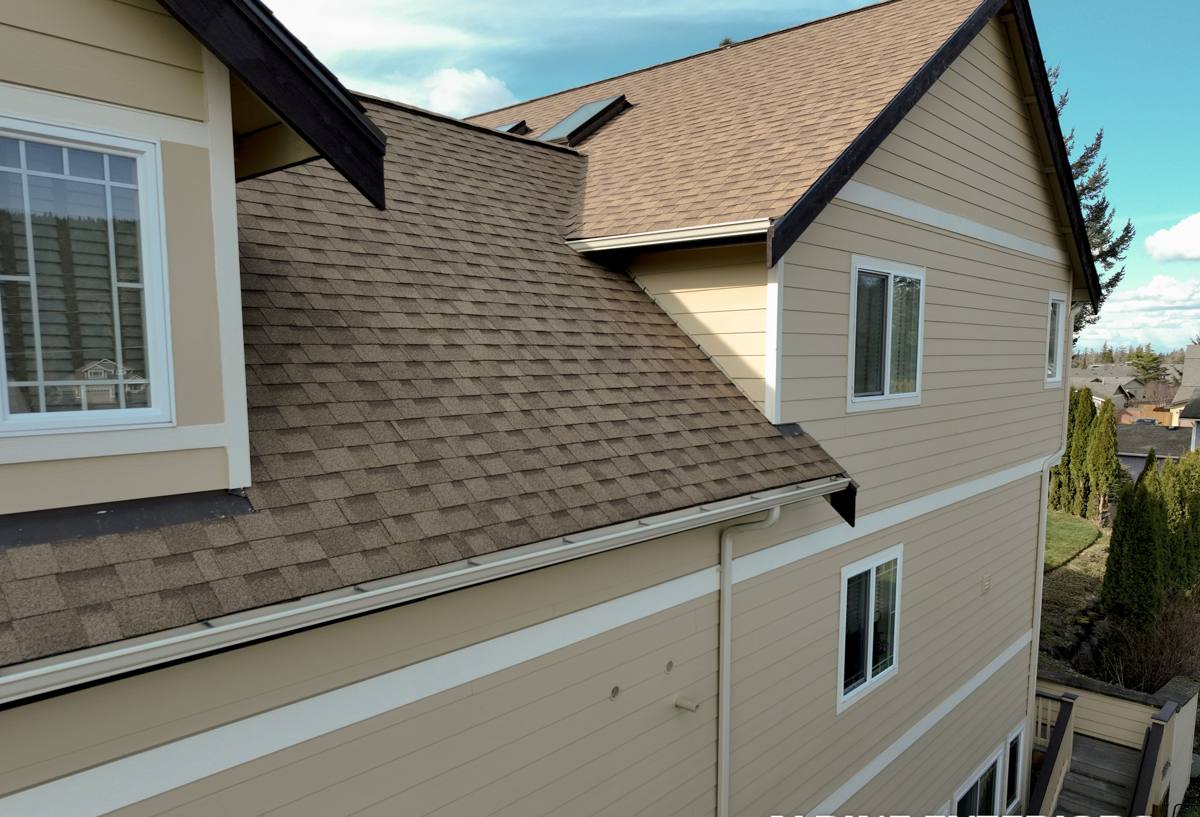
We see a recurring pattern on homes in this area: the water-facing and shaded walls fail first and fail worse, while the sunnier, more sheltered walls on the same house can look nearly fine. This uneven wear is a strong signal of climate-driven failure rather than simple age, and it's a detail a lot of general contractors miss because they inspect a house as one unit instead of wall by wall.
Common signs it's time to look seriously at replacement
- Soft or spongy spots when you press on siding, especially near the bottom courses and around window sills
- Paint that's bubbling, peeling, or chalking heavily on one or two walls but not the others
- Persistent moss, algae, or black streaking that returns within weeks of cleaning
- Visible gaps, warping, or cupping in board seams
- Rust staining below fasteners or trim, a common sign of corrosion in salt-exposed hardware
- Musty smell or visible staining on interior walls that share an exterior wall with siding problems
Any one of these alone might just mean a cleaning or a caulking touch-up. Several together, especially on the same wall, usually mean moisture has been getting behind the siding for a while.
What a Correct Siding Replacement Actually Involves
Siding replacement done right is not a materials swap — it's a rebuild of the entire wall's moisture management system, and that's especially true on a site with Rosario's exposure. Skipping any of the following steps is how a brand-new siding job ends up failing again in five years instead of thirty.
Tear-off and inspection
Full removal of the old siding lets us actually see the sheathing, framing, and existing house wrap underneath. This is the point where hidden rot, soft sheathing, or old moisture damage gets found and dealt with — patching over it under new siding just buries the problem again.
Weather-resistive barrier and flashing
A correctly lapped weather-resistive barrier, properly integrated window and door flashing, and rainscreen or drainage gap detailing where called for are what actually keep wind-driven rain from reaching the sheathing. On a site exposed the way Rosario is, we treat this step as non-negotiable rather than optional upgrade.
Material installation to manufacturer spec
Correct fastener type and spacing, proper clearance from grade and roof lines, and correct field-cut sealing all matter more in a marine, high-moisture climate than they do in a dry inland one. Installed loosely or with the wrong fasteners, even a good product will underperform.
Trim, caulking, and paint detailing
The finish details — factory-finished trim, correctly caulked joints, and touch-up painting on cut edges — are what keep water from finding its way in at the seams, which is where most siding failures actually start.
Why We Install Only James Hardie Fiber Cement
We don't install vinyl, LP SmartSide, primed spruce, cedar, or other fiber cement brands, and that's a deliberate standard, not a lack of options. In a climate like Rosario's, the material choice matters as much as the installation.
Vinyl expands, contracts, and can warp or crack in the temperature swings and wind exposure typical of Puget Sound waterfront properties, and it doesn't hold up well to the direct impact wind-driven debris can bring during winter storms. Wood-based products — cedar, primed spruce, and OSB-based composites like LP SmartSide — depend on an intact factory or field-applied coating to keep moisture out; once that coating is compromised by salt air, UV, or moss growth, the substrate underneath is organic material that can swell, rot, or delaminate. These aren't manufacturing defects — they're the physics of those materials in a wet, salt-exposed environment, and it's why we don't put them on homes in this area.
James Hardie fiber cement is non-combustible and dimensionally stable, meaning it doesn't expand and contract the way wood or vinyl does, and it doesn't have an organic substrate that can rot from the inside out. Hardie's ColorPlus factory finish is baked on under controlled conditions and backed by its own finish warranty, which matters in a place where field-painted surfaces get hit hard by sun, salt, and moisture cycling. Hardie's HZ5 product line is engineered specifically for climates with significant moisture exposure, which describes Orcas Island's shoreline communities well. The company backs the product with a strong transferable limited warranty, which carries real value if the home is ever sold.
Comparing what happens to common siding materials over time in this climate
| Material | Behavior in salt air / driving rain | Moss & algae resistance | Typical maintenance burden |
|---|---|---|---|
| Vinyl siding | Can warp, crack, or fade under UV and wind-driven impact | Low — surface holds moisture and organic growth | Low upfront, but limited repair options once damaged |
| Cedar / primed spruce | Prone to swelling, checking, and rot once coating fails | Low without regular treatment | High — repainting and sealing on a recurring cycle |
| LP SmartSide (engineered wood) | Coating failure can expose OSB substrate to moisture | Moderate, depends on coating condition | Moderate — coating inspection and touch-up needed |
| James Hardie fiber cement | Dimensionally stable; non-combustible; resists moisture-driven warping | Higher — factory finish resists staining and growth | Low — periodic cleaning, minimal repainting |
Our Process for Rosario Projects
Working on Orcas Island means accounting for ferry scheduling, weather windows, and material logistics that a mainland contractor doesn't have to think about — and it changes how a job should be planned, not just how long it takes.
- On-site assessment: We walk every wall of the home, not just the visibly damaged ones, checking for moisture intrusion, soft sheathing, and flashing issues that aren't obvious from the ground.
- Scope and material plan: We identify the right Hardie product line and profile for the home's exposure and style, and plan material delivery around ferry and weather timing so the job isn't sitting exposed mid-project.
- Tear-off and structural repair: Old siding comes off, damaged sheathing or framing gets repaired, and we document what we find before closing the wall back up.
- Weather barrier and flashing installation: This is the step that determines whether the new siding actually outperforms the old — done correctly, it's the difference-maker.
- Hardie installation to spec: Installed per manufacturer fastening and clearance requirements, adjusted for this site's wind and moisture exposure.
- Final detailing and walkthrough: Trim, caulking, and touch-up work get finished, and we walk the finished job with the homeowner before calling it done.
What Drives the Cost of a Rosario Siding Replacement
Every home is different, but the same handful of factors move the price up or down on most Orcas Island projects. We give straight ranges in person after seeing the actual site — broad national averages don't mean much for a waterfront home with unusual access or extensive water damage behind the old siding.
| Cost factor | Why it matters here |
|---|---|
| Extent of hidden moisture damage | Rot repair to sheathing or framing adds cost that isn't visible until tear-off starts |
| Wall exposure and complexity | Waterfront-facing walls, multiple stories, and cut-up rooflines take longer to flash and finish correctly |
| Access and logistics | Ferry scheduling and site access on the island affect material delivery and crew planning |
| Product line and profile | HZ5 boards, trim profiles, and color selection all factor into material cost |
| Existing barrier condition | Reusable weather-resistive barrier versus full replacement changes labor scope |
Why It Matters That Your Crew Already Works This Area
A contractor who's already worked Orcas Island's waterfront communities knows to check specific things a mainland crew might not think to look for — how far salt spray typically reaches up a wall, which orientations hold moss the longest, and how local wind patterns push rain into wall assemblies during winter storms. That local knowledge shows up in better flashing decisions and fewer callbacks, not just faster scheduling.
What to ask any contractor bidding a siding job here
- Have you installed siding on other homes in this area, and do you understand the exposure differences wall to wall?
- Will you inspect and document sheathing condition during tear-off before closing the wall?
- What weather-resistive barrier and flashing details will you use, specifically?
- Is the product manufacturer-warrantied, and is that warranty transferable if the home sells?
- How do you plan around ferry schedules and weather windows for material delivery?
Caring for Hardie Siding After Installation
Correctly installed Hardie siding is low-maintenance, not no-maintenance. A rinse-down once or twice a year knocks back salt residue and slows moss and algae before they take hold, and it's worth checking caulked joints and trim annually, especially after a hard winter storm season. Beyond that, there's little to do — no repainting cycle, no sealant reapplication, and no rot to monitor the way there would be with a wood-based product.
Get a Straight Answer About Your Home
If your Rosario home is showing any of the wear signs above, or you're just planning ahead for a project you know is coming, we're glad to take a look and tell you honestly what we see — no pressure, no upsell. Use the form below to request a free estimate.