 Orcas Island
 Decking Built for Rosario's Conditions, Not Just Rosario's View
Rosario sits close to the water, and that proximity is exactly what makes deck-building here different from a inland build. Salt-laden air moves through fasteners and framing connectors faster than it does even a few miles inland. Driving rain off the Strait pushes moisture sideways under railings and against ledger boards. And the long, damp shoulder seasons that San Juan County gets every fall through spring give moss, algae, and lichen months of standing moisture to work with on any deck surface that doesn't drain and dry properly. A deck built to a generic spec sheet will survive here for a while. A deck built for these specific conditions will still look and perform the way it should a decade later.
This page is about one job in one place: composite decking for homes in and around Rosario. Not a general decking overview — what actually matters when you're building or replacing a deck a few minutes from saltwater on Orcas Island.
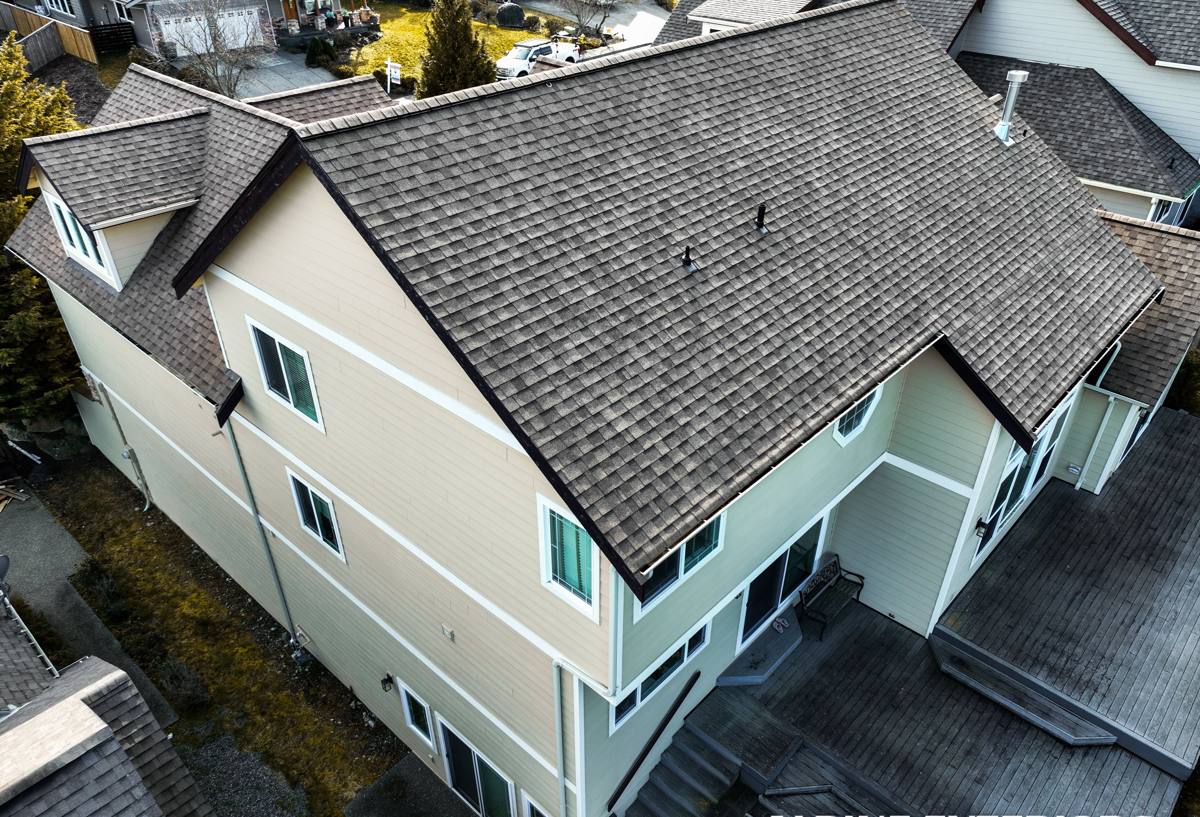
Why Composite Makes Sense for a Rosario Deck
Composite decking isn't automatically the right call for every property, but for homes exposed to salt air and heavy seasonal rain, it solves problems that wood decking struggles with long-term:
- It doesn't absorb moisture into the board itself the way wood does, so it's far less prone to the swelling, cupping, and splintering that salt-air moisture cycling causes in cedar or pressure-treated lumber.
- Capped composite boards resist the gray, blotchy weathering that untreated wood shows within a couple of seasons near the water.
- It won't need refinishing, sanding, or re-staining — a real advantage on a property you may only visit part of the year, where a maintenance window can be hard to schedule around ferry trips and weather.
- Modern composite has come a long way on slip resistance and heat, which matters on an open deck that catches direct sun part of the day and standing rain the rest.
None of that means composite is maintenance-free — it isn't — but it shifts the maintenance burden from structural repair to simple surface care, which is a much better trade for a marine-climate property.
What a Correct Composite Installation Actually Involves
Most composite deck problems we get called out to fix on Orcas Island aren't failures of the decking material — they're failures of the framing, spacing, or fastening underneath it. Composite behaves differently from wood in ways that matter during installation:
Framing and Joist Spacing
Composite boards need tighter joist spacing than solid wood decking to avoid deflection and bounce over time, and that spacing needs to tighten further for angled or picture-frame layouts. Manufacturer spec sheets vary by product line, and skipping that step is one of the most common corner-cutting mistakes we see in composite decks that start to feel spongy within a few years.
Gapping for Expansion and Drainage
Composite expands and contracts with temperature more than wood does, and it needs consistent board-to-board gapping to allow for that movement and to let water drain through rather than pool on the surface. In a climate where it rains as often as it does here, poor gapping means standing water — and standing water is exactly what feeds moss and algae growth on the surface.
Fastening
Hidden fastener clip systems are common with composite, but the clips and screws themselves need to be rated for coastal/marine exposure. Standard-grade hardware corrodes faster in salt air, and a corroded clip loosens the board it's holding — which is how you end up with squeaks, movement, or a board working itself loose over a few winters.
Ventilation Underneath
Composite decks built low to the ground or over enclosed space need real airflow underneath. Without it, moisture gets trapped under the deck surface and in the framing bays, which accelerates corrosion on fasteners and connectors even though the decking above looks fine.
Board Options and What Actually Drives the Cost
Composite decking isn't one product — it's a range of construction types with real differences in price, appearance, and how they hold up near saltwater. Here's how the main categories compare for a Rosario application:
| Board Type | Moisture Behavior | Typical Cost Range (installed) | Best Fit |
|---|---|---|---|
| Uncapped composite | More prone to surface moisture absorption and mold/mildew staining over time | Lower end of composite pricing | Budget-conscious builds, less direct salt exposure |
| Capped composite | Protective outer shell resists moisture, staining, and UV fading much better | Mid-range | Most Rosario homes — the standard we recommend near the water |
| PVC-based decking | Fully synthetic core, virtually no moisture absorption | Higher end | Waterfront or high-exposure decks, low-maintenance priority |
Beyond the board itself, the real cost drivers on most Rosario decking jobs are the substructure work — how much of the existing framing needs replacing, ledger board condition, footing access on sloped lots, and railing choice. We'll walk through actual numbers for your specific deck during the estimate rather than quoting off a generic range that may not reflect your site.
Moisture Management: The Part That Determines Longevity
The decking surface gets all the attention, but what happens underneath and behind it is what determines whether a deck lasts 10 years or 25. On a Rosario property, we pay particular attention to:
- Ledger board flashing — where the deck attaches to the house is the single most common point of hidden water intrusion. Proper flashing here matters more in a driving-rain climate than almost anywhere else on the structure.
- Joist tape — a self-adhering membrane over the top of each joist that keeps standing water off the wood framing itself, which slows rot at the fastener points where composite clips are screwed in.
- Footing and post base protection — post bases sitting in ground that stays wet for months at a time need proper standoff and drainage, not just a metal bracket set flush to grade.
- Rail post attachment — a common weak point on older decks, especially where blocking wasn't sized correctly for the load and moisture has had years to work into the connection.
Our Process
We keep the process straightforward and specific to your site rather than running a one-size-fits-all script:
- On-site assessment — we look at existing framing (if it's a replacement), ledger condition, drainage patterns, sun/rain exposure, and access for materials and equipment.
- Board and layout recommendation — based on your exposure level, budget, and how the deck will actually be used, not just what's trending.
- Written estimate — clear line items for demo (if applicable), framing work, decking, railing, and any drainage or flashing upgrades needed.
- Build — proper joist spacing and ventilation, marine-rated fasteners, correct gapping, and flashing detail done before a single board goes down.
- Walkthrough — we go over basic care specific to your board choice and exposure before we consider the job done.
Living With a Composite Deck in a Moss-Prone Climate
Composite is low-maintenance, not no-maintenance — especially with the moss and algae pressure this region gets. A little regular care goes a long way:
- Sweep off organic debris (needles, leaves, moss spores) regularly, especially in shaded areas that stay damp longer.
- Rinse the surface periodically with plain water to keep salt residue and grime from building up in the board texture.
- Use a soft-bristle brush and a composite-safe cleaner for any moss or algae film rather than a pressure washer on high setting, which can damage the cap layer over time.
- Keep gutters and nearby drainage clear so water isn't sheeting extra volume onto the deck surface.
- Check railing posts and fastener points once a year for any looseness — catching it early is a small fix; catching it late isn't.
Why It Matters That We Already Work in Rosario
A crew that mostly builds decks in drier, inland conditions doesn't always think about ledger flashing or fastener grade the same way — because they haven't had to. Working regularly on Orcas Island and around Rosario specifically means we've seen how salt air and long wet seasons actually affect a deck over years, not just how it looks on installation day. That shapes framing spacing, hardware selection, and drainage detail on every job, not as an upsell but because it's what holds up here.
It also means straightforward logistics — material delivery, scheduling around ferry and weather windows, and knowing the practical realities of building on San Juan County properties, from sloped waterfront lots to tighter in-town parcels.
If you're planning a new composite deck or replacing an aging one in Rosario, we're glad to take a look and give you a straightforward, no-pressure estimate — just fill out the form below.