 Orcas Island
 Storm Damage Roof Repair Built for Orcas Island Conditions
A roof on Orcas Island earns its keep. Between the wind that funnels through the San Juan Islands off the Strait of Juan de Fuca, the driving rain that comes sideways off the water, and the salt air that never really stops working on metal and wood, roofs here take a different kind of beating than roofs on the mainland. When a storm rolls through and knocks something loose — a lifted shingle, a bent flashing seam, a limb through the field of the roof — the repair has to account for all of that, not just patch the visible hole.
This page covers what storm damage roof repair looks like specifically for homes in and around Orcas, what a correct repair involves, and why it matters to hire a crew that already knows the island's weather and its logistics, not one that's crossing the water for the first time.
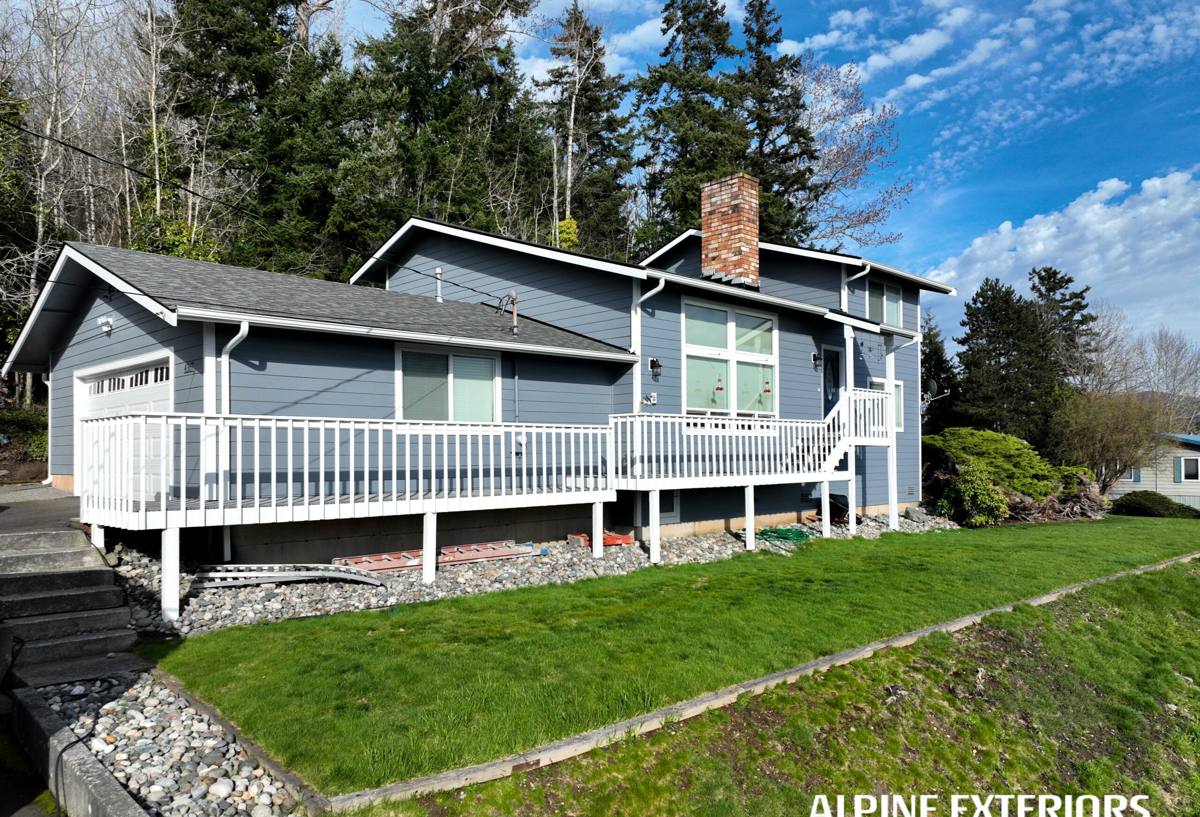
What Orcas Island Storms Actually Do to a Roof
Wind and Driving Rain
Fall and winter storms in San Juan County often bring sustained wind with gusts well above what the roof was designed to shed water in. Wind doesn't just tear things off — it drives rain sideways and up under shingle tabs, ridge caps, and flashing laps that are built to handle water moving straight down. That's how a storm creates a leak two or three rooms away from where the wind damage actually happened.
Salt Air and Corrosion
Being surrounded by saltwater means every exposed fastener, flashing edge, and piece of metal trim is under slow chemical attack, storm or no storm. A storm often finishes off a fastener or flashing seam that salt air had already been weakening for years — which is why storm damage on Orcas frequently turns out to be worse than it looks from the ground.
Falling Limbs and Debris
Much of Orcas Island is wooded, and high wind brings down limbs, sometimes whole tops of trees, onto roofs that are otherwise in good shape. Limb strikes can crack shingles, dent metal panels, or punch straight through decking, and the damage isn't always obvious from below — a cracked shingle mat or a hairline split in a metal panel seam can leak for months before it shows up as a stain on the ceiling.
Moss and Trapped Moisture
Orcas Island's moss season runs long — realistically most of the year in shaded, north-facing sections of a roof. Storm damage that opens even a small gap gives moss and moisture a place to get started, and once moss is established under a lifted shingle or around a damaged flashing point, it holds water against the roof deck and accelerates rot. A repair that doesn't address the moss angle isn't really finished.
Signs Your Roof Took Storm Damage
Not all storm damage announces itself with a leak right away. After any significant wind or rain event, it's worth checking for:
- Shingles that are lifted, curled, creased, or missing entirely
- Granules collecting in gutters or at downspout outlets
- Bent, lifted, or separated flashing around chimneys, skylights, and roof-to-wall junctions
- New dents, dings, or seam separation on metal roofing
- Sagging or soft spots when walked (or visually, if you're not getting on the roof yourself)
- Fresh moss growth or dark, damp patches that weren't there before the storm
- Water stains on interior ceilings or walls, especially near exterior corners
- Debris — needles, branches, bark — packed into valleys or against the ridge
If you see two or more of these after a storm, it's worth having someone look before the next system rolls through.
What a Correct Storm Repair Actually Involves
Matching the Existing Roof
A patch that doesn't match the surrounding roofing — in material, profile, or age — tends to fail at its own edges first, because it's a new seam sitting next to old, weathered material. On asphalt shingle roofs we try to match the existing shingle line as closely as possible; on standing seam and other metal roofing, which is common on the island for its wind and moss resistance, panel and seam matching matters even more, since a mismatched panel is both visible and a likely leak point.
Flashing and Underlayment, Not Just Shingles
Most storm leaks on Orcas trace back to flashing — around chimneys, skylights, dormers, and wall intersections — not to the field shingles themselves. A repair that only replaces damaged shingles without checking the flashing and underlayment underneath is treating the symptom. We pull back enough of the surrounding roofing to inspect the deck, underlayment, and flashing for hidden moisture damage before closing anything back up.
Fasteners and Metal That Can Take the Salt Air
Given the corrosion environment here, we use fasteners and flashing metals suited to a marine climate rather than whatever is cheapest at a mainland supply house. It costs a little more up front and saves a callback in a few years when standard-grade hardware starts rusting through.
Emergency Tarping: Why Timing Matters More on an Island
After a major storm, the first priority isn't the permanent repair — it's stopping water from getting into the house. On the mainland, a homeowner has a large pool of contractors to call for same-day tarping. On Orcas, that pool is smaller, and it's tied to ferry schedules, weather windows for the crossing, and how many other properties got hit in the same storm. A contractor based on or already working the island can get a tarp on faster than one that has to catch a boat, load a truck, and wait out a sailing wait — and every hour a damaged roof sits open, the water and moisture damage underneath gets worse and more expensive to repair.
Repair or Replace? Cost Factors to Weigh
Not every storm-damaged roof needs full replacement, but some do — especially if the storm exposed pre-existing wear from age or long-term moss and moisture damage. Here's how we walk homeowners through that decision:
| Factor | Leans Toward Repair | Leans Toward Replacement |
|---|---|---|
| Age of roof | Under roughly half its expected service life | Nearing or past expected lifespan for its material |
| Extent of damage | Isolated to one section or a few penetrations | Spread across multiple slopes or the whole field |
| Underlying deck condition | Deck is sound once opened up | Deck shows rot, soft spots, or widespread moisture damage |
| Moss/moisture history | Minor, surface-level growth | Long-term trapped moisture found under shingles or panels |
| Material availability | Matching material still obtainable | Discontinued profile or color, patch would visibly mismatch |
We'll always tell you honestly which side of that table your roof falls on rather than defaulting to the more expensive answer.
How We Handle a Storm Repair Call
- Phone or on-site assessment as soon as we can get to your property, with emergency tarping first if there's active water intrusion
- Full roof inspection, not just the obviously damaged area, since wind and salt air damage often extends beyond what's visible from the ground
- A written scope and honest repair-versus-replace recommendation, with photos of anything found once we're up there
- Repair using materials matched to your existing roof and hardware rated for the island's salt air exposure
- Final walkthrough so you know exactly what was done and what to watch for going forward
Working With Your Insurance Company
Most storm damage claims move faster when there's clear documentation from the start — dated photos of the damage, a written scope of repair, and an itemized estimate. We provide that documentation as a matter of course, which helps homeowners avoid the back-and-forth that comes from an adjuster working off incomplete information. We're not a public adjuster and don't represent your insurance company or you in a claim dispute, but we'll give you the paperwork a claim actually needs.
Why It Matters to Hire a Crew That Already Works Orcas Island
A roofing crew that already works San Juan County understands things a mainland crew has to learn on the job: how wind behaves differently on exposed bluff lots versus tree-sheltered interior lots, which fastener and flashing grades actually hold up against the salt air, and how long moss has usually been quietly doing damage before a storm finally exposes it. That local knowledge shows up in fewer callbacks and repairs that are built for the next storm, not just patched for the one that already happened.
If a recent storm left your roof with missing shingles, damaged flashing, or a leak you can't quite trace, we're glad to take a look. Fill out the form below for a free, no-pressure estimate — we'll tell you honestly what we find and what it actually needs.