 Orcas Island
 Why Roofs in Olga Wear Differently Than Roofs Inland
Olga sits close to the water on Orcas Island, and that location shapes almost everything about how a roof ages here. Homes get a steady mix of salt-laden air off the surrounding marine waters, long stretches of driving rain that comes in sideways off the water, and heavy tree cover that keeps roofs shaded, damp, and slow to dry. None of those things individually would be a big deal. Together, over years, they wear down flashing, fasteners, and shingle mat faster than a roof of the same age would wear in a drier, sunnier part of the state.
We repair roofs on Orcas Island year-round, and the pattern in Olga is consistent: it's rarely one catastrophic failure. It's small, slow damage that gets ignored until it shows up as a stain on a bedroom ceiling.
Salt Air and Metal Fatigue
Metal on a roof — nails, flashing, valley metal, drip edge, gutter hardware — corrodes faster near saltwater. Galvanized fasteners that would last decades inland can start rusting and backing out of shingles in a fraction of that time near the shoreline. Once a nail head lifts or a flashing seam starts to pit, water finds a path in, and it usually shows up somewhere well away from where the actual failure is.
Moss, Shade, and Trapped Moisture
San Juan County's tree cover is part of what makes Olga a beautiful place to live, but shaded, north-facing roof sections stay damp long after the rest of the roof has dried out. That's exactly the environment moss and algae need to establish. Moss doesn't just sit on top of shingles — it works its rhizoids under the shingle tabs, lifts them slightly, and holds water against the roof deck. Left alone through a few wet seasons, that's how a cosmetic moss patch turns into a soft spot in the decking underneath.
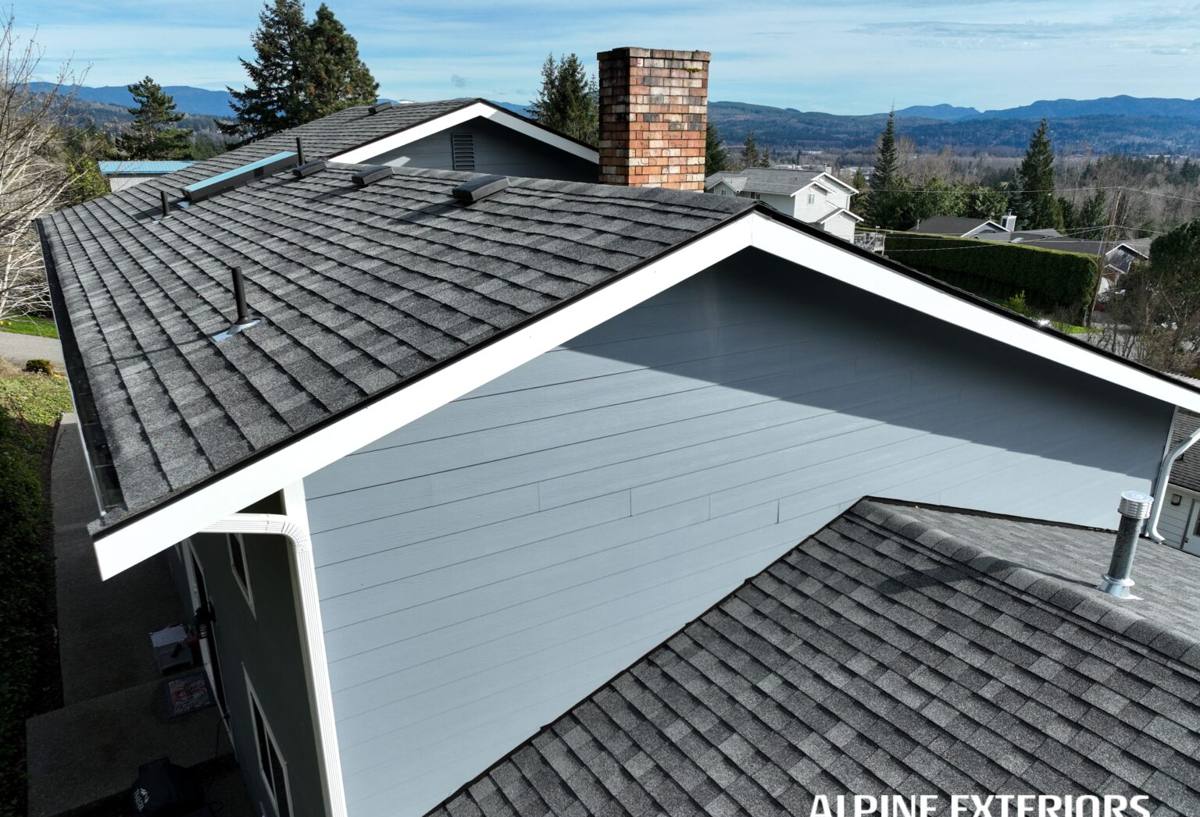
Common Roof Problems We See in Olga Homes
Most of the repair calls we get on this end of the island fall into a short list of recurring issues. Recognizing them early is the difference between a patch and a much bigger job.
- Lifted or cupped shingle tabs from wind-driven rain and moss growth working underneath the shingle edge.
- Flashing failure at chimneys, skylights, and roof-to-wall transitions, where sealant has dried out and metal has started to corrode.
- Clogged or overflowing gutters from fir needles and leaf litter, which back water up under the lowest course of shingles.
- Soft or stained roof decking under moss-heavy areas that have been holding moisture for more than one season.
- Nail pops and fastener corrosion that create small, hard-to-spot entry points for water.
- Ridge cap deterioration from being the highest, most wind- and rain-exposed part of the roof.
What a Correct Roof Repair Actually Involves
Diagnosis Before Patching
A repair that only addresses the spot where water is showing up inside the house often misses the real problem, which is usually several feet away — water travels along the underlayment or decking before it drips. A correct repair starts with getting on the roof, tracing the leak path from the interior stain back to its actual entry point, and checking the surrounding shingles, flashing, and decking condition before any material goes down. Patching drywall without fixing the roof just hides the problem until the next storm.
Materials That Hold Up Here
For a repair to actually last through another wet season, the materials matter as much as the workmanship. We match existing shingle type and color as closely as possible, but we don't cut corners on the parts that fail first in this climate:
- Corrosion-resistant fasteners — stainless steel or heavy-coated — anywhere near the shoreline or in persistently damp, shaded roof sections.
- New underlayment at any opened section, not just re-used material from the old repair.
- Properly lapped and sealed flashing at penetrations, rather than relying on caulk or roofing cement as the primary seal.
- Algae-resistant shingle products where a section is being replaced outright, to slow re-growth in shaded areas.
Our Roof Repair Process for Olga Homes
We keep the process straightforward because homeowners deserve to know exactly what's happening on their roof and why.
- Inspection and leak tracing. We walk the roof, check the attic or interior where accessible, and trace the actual water path rather than guessing from the stain location.
- Moss, debris, and growth removal. We clear moss and organic buildup from the repair area and surrounding roof sections using methods that don't grind granules off the shingle surface.
- Removing and inspecting the damaged section. This is where we find out whether the decking underneath is sound or has gone soft — something you can't always tell from the surface.
- Repairing decking, underlayment, and flashing as needed. We only replace what's actually compromised, but we don't skip a rotted section to save time.
- Reinstalling matched roofing material with corrosion-appropriate fasteners and properly sealed flashing details.
- Cleanup and a final walk-through so you know exactly what was found and what was done.
Repair vs. Replacement: How We Decide
Not every roof problem in Olga needs a full replacement, and not every leak can be responsibly patched. We look at the whole roof's condition, not just the spot that's leaking, before recommending either path.
| Factor | Favors Repair | Favors Replacement |
|---|---|---|
| Age of roofing material | Well within its expected service life | At or past the end of its typical lifespan |
| Extent of moss/algae damage | Isolated to one or two shaded sections | Widespread across most of the roof |
| Decking condition | Solid, no soft spots found | Soft, delaminated, or repeatedly repaired in the same area |
| Flashing condition | Sound, just needs resealing or minor fastener work | Corroded, undersized, or failing at multiple penetrations |
| Number of prior repairs | First or second repair in that area | Same spot has been patched multiple times already |
Roof Repair Cost Factors in Olga
We won't quote a number without seeing the roof, but these are the main things that move the price of a repair up or down in this area. Being on Orcas Island itself is a real factor — material and equipment logistics here are different than on the mainland.
| Cost Factor | Why It Matters |
|---|---|
| Roof pitch and access | Steeper roofs and limited ladder or lift access take more time and safety setup. |
| Extent of decking damage | Hidden rot found once shingles come off adds material and labor beyond the original scope. |
| Roofing material type | Cedar shake, metal, and composite shingle each require different tools, fasteners, and skill. |
| Amount of moss/growth removal needed | Heavy buildup takes real time to clear safely without damaging the roof surface. |
| Material and ferry logistics | Getting the right matching materials to the island on schedule can affect timing more than it affects price, but rush orders cost more. |
Preventing the Next Leak: Off-Season Roof Care
Between storms, a little attention goes a long way toward keeping a repaired roof from needing another visit next winter. This is the same list we walk homeowners through after a repair:
- Clear gutters and downspouts at least twice a year — more often if the roof sits under fir or cedar trees.
- Have shaded, moss-prone sections checked before the wet season sets in, not after a leak shows up.
- Trim back branches that keep a section of roof in constant shade or that drop debris directly onto it.
- Look at flashing around chimneys and skylights from the ground with binoculars for obvious gaps or rust streaks.
- Address small leaks the season they appear — a contained repair now is almost always cheaper than a decking replacement later.
Why Hire a Crew That Already Works Olga and Orcas Island
Roofing on an island isn't the same as roofing on the mainland, and it shows up in small but real ways: getting the right matching shingle bundle or flashing stock onto the island without a multi-day delay, knowing which roof sections in this specific microclimate tend to hold moisture longest, and being able to schedule a repair around ferry timing instead of losing a day to it. A crew that already works this area has already solved those logistics — you're not paying for someone to learn them on your roof.
We also know San Juan County's general permitting expectations for roofing work, which matters if a repair turns out to need more than a simple patch. Straightforward repairs typically don't require a permit, but anything involving structural decking replacement is worth a quick check with the county before work starts, and we'll flag that for you if it applies.
Get an Honest Look at Your Roof
If you're seeing a stain on a ceiling, moss creeping up a shaded slope, or lifted shingles after a windy stretch, it's worth getting eyes on it before another wet season sets in. We offer free, no-pressure estimates for roof repair in Olga and the surrounding Orcas Island area — fill out the form below and we'll take a look.