 Orcas Island
 Why West Sound Roofs Wear Differently Than Mainland Roofs
Homes along West Sound sit in a different weather pattern than most of the mainland Pacific Northwest gets. You've got onshore wind carrying salt off the water, long stretches of low-angle rain that drives sideways under eaves, and shaded, damp roof planes that stay wet for days after a storm passes. San Juan County's marine climate doesn't hit a roof with any single dramatic event — it wears on materials steadily, season after season, in ways that don't always show up until a roof is ten or fifteen years in.
A roof that would hold up fine in a drier inland county can fail early out here if it wasn't specified and installed with West Sound conditions in mind. That's the whole case for metal roofing done right in this pocket of Orcas Island: it's not about chasing a trend, it's about matching the material and the installation to what the site actually throws at a roof year-round.
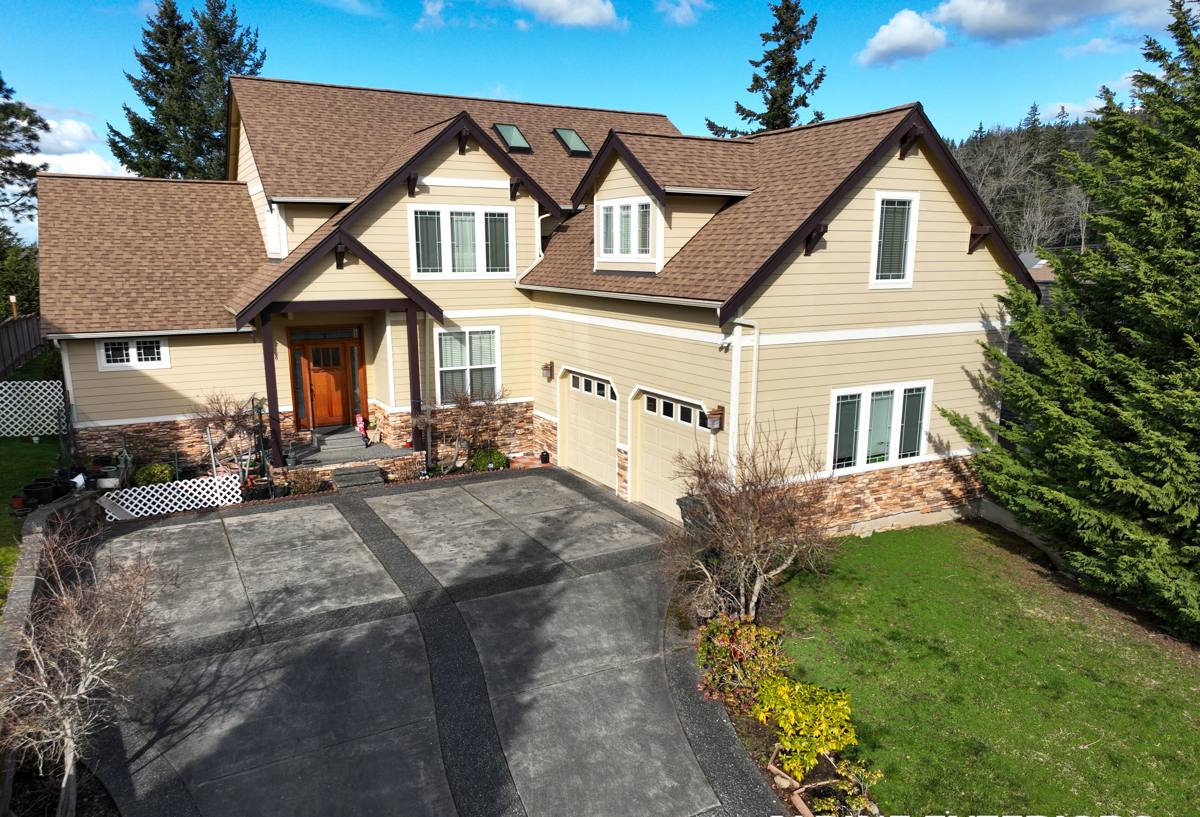
What Salt Air, Rain, and Moss Actually Do Over Time
Salt Air
Airborne salt is corrosive to unprotected or poorly coated metal, and it accelerates the breakdown of fasteners, flashing, and any exposed cut edges. It doesn't take direct waterfront exposure to matter — wind carries salt well inland, so even homes set back from the water get a steady, low-level dose. The practical effect is that not every metal roofing product or fastener spec sold in a big-box catalog is a good fit for a West Sound roof, even if it would be perfectly fine forty miles east.
Driving Rain
Wind-driven rain doesn't behave like a straight vertical downpour. It gets pushed under lap joints, around penetrations, and up under trim if those details weren't built with that in mind. On this side of Orcas Island, roofs need underlayment, flashing, and fastening details sized for rain that's coming at an angle, not just falling straight down.
Moss Season
San Juan County's wet season runs long, and shaded or north-facing roof planes can stay damp for extended stretches, which is exactly what moss needs to get established. On asphalt shingles, moss roots into the mat and lifts granules, shortening the roof's life. Metal doesn't give moss the same foothold — but a metal roof still needs the right slope, ventilation, and detailing to shed water fast enough that moss and lichen don't have the chance to camp out on it.
Why Metal Roofing Fits This Environment
Metal roofing isn't the only legitimate roofing choice for West Sound, but it holds up well against the specific stresses of this climate when it's the right system, correctly installed:
- Sheds wind-driven rain fast off a continuous surface instead of relying on thousands of individual overlapping tabs
- Doesn't provide the fibrous, granular surface moss and lichen root into the way asphalt shingles do
- Handles freeze-thaw cycling and heavy winter rain loads without the granule loss that shortens shingle life
- Available in coatings and finishes built for coastal and marine exposure, not just general-purpose use
- Long service life reduces how often a roof surface gets disturbed and re-flashed, which matters on a site where every penetration is a future leak point
None of that means metal is maintenance-free. It means the failure points move — from granule loss and moss damage to fastener condition, coating wear, and flashing details — and those are things a homeowner can actually plan for and check.
Choosing a System: Standing Seam vs. Exposed-Fastener Panel
Not all metal roofing is the same product wearing different colors. For West Sound homes, the choice between a standing seam system and an exposed-fastener panel system is the biggest decision point, and it's worth understanding honestly rather than defaulting to whichever is cheaper up front.
| Factor | Standing Seam | Exposed-Fastener Panel |
|---|---|---|
| How it's fastened | Concealed clips under raised seams — no fastener penetrations through the panel face | Screws driven through the panel face into the deck or purlins |
| Long-term weather-tightness | Fewer penetration points to fail over time | Depends on gasketed screws staying sound and re-tightened as needed |
| Typical upfront cost | Higher material and labor cost | Lower upfront cost |
| Maintenance over the roof's life | Minimal — mainly inspection | Fastener gaskets should be checked periodically and replaced as they age |
| Best fit | Primary roofs, exposed or wind-heavy sites, long-term ownership | Outbuildings, shops, budget-driven projects |
In a salt-air environment, exposed fasteners are the detail we watch most closely — every screw is a potential entry point for water once the gasket degrades, and that degradation happens faster near the water than it does inland. We're straightforward with clients: exposed-fastener panel roofing is a legitimate, cost-effective option for a shop or outbuilding, but for a primary home roof on this side of the island, standing seam is usually the better long-term investment.
What a Correct Metal Roof Installation Actually Involves
Metal roofing looks simple from the ground — panels going down look straightforward — but most of the work that determines whether it performs for decades happens in layers you never see once it's finished.
Underlayment
Given how much wind-driven rain this area gets, we don't treat underlayment as an afterthought. A high-temp, self-adhered synthetic underlayment at eaves, valleys, and penetrations gives the roof a real second line of defense if wind ever pushes water past the metal surface.
Flashing and Penetrations
Chimneys, vents, skylights, and wall intersections are where roofs actually leak — it's rarely the flat field of panels. Flashing has to be formed and lapped correctly for the specific panel profile, not just caulked and hoped for.
Fastening
Fastener spacing and type need to match the panel manufacturer's spec and the wind exposure of the specific roof plane, with corrosion-resistant hardware suited to a marine climate — not standard-grade fasteners that will start showing rust streaks within a few years.
Ventilation
A metal roof still needs proper attic or rafter ventilation underneath it. Poor ventilation traps moisture, which undermines the whole point of putting a moisture-resistant roof on in the first place.
Slope and Drainage
Panels need enough slope to actually shed water at the rate this climate delivers it, with valleys and transitions built to move water off the roof quickly rather than letting it pool or back up.
Our Process on West Sound Homes
- Site walk and roof assessment — we look at slope, exposure, existing decking condition, and how the specific site is affected by wind, shade, and salt exposure
- System recommendation — standing seam or panel, gauge, finish, and color, matched to the home and the budget, explained honestly
- Written estimate — clear scope, materials, and timeline before any work starts
- Tear-off and deck inspection — old roofing removed and the deck checked for rot or damage before anything new goes down
- Underlayment, flashing, and panel installation — done to the details above, not shortcuts
- Final walkthrough — we go over the finished roof and what maintenance, if any, it'll need going forward
Living With a Metal Roof in a Wet, Salty, Mossy Climate
A well-installed metal roof on Orcas Island needs far less upkeep than an asphalt roof, but "less" isn't "none." A little periodic attention keeps it performing for its full service life.
- Clear needles, leaves, and debris out of valleys and gutters, especially after fall storms
- Do a visual check after major windstorms for lifted panel edges or displaced flashing
- Keep overhanging branches trimmed back so debris and shade don't build up moss on nearby surfaces
- Check exposed fasteners periodically if the roof uses an exposed-fastener panel system
- Rinse off heavy salt or debris buildup on lower-slope or waterfront-facing sections when it's noticeable
- Have a professional take a look every few years, especially around chimneys, vents, and skylights
What Metal Roofing Costs on Orcas Island
Pricing depends on roof size, pitch, complexity, and system type, and we won't put a number on your project without seeing it. In general terms, standing seam runs at the higher end of residential roofing costs due to material and specialized labor, while exposed-fastener panel systems cost less but carry a different long-term maintenance profile. The factors that move the price most are:
| Factor | Effect on Cost |
|---|---|
| Roof pitch and complexity | Steeper, more cut-up roofs take more labor and material |
| Panel system chosen | Standing seam costs more than exposed-fastener panel |
| Number of penetrations | Each chimney, vent, and skylight adds flashing labor |
| Deck condition | Rot or damage found at tear-off adds repair cost |
| Access | Difficult site access can add to labor time |
Why a Crew That Already Works West Sound Matters
Metal roofing installed correctly in a marine climate is a different job than metal roofing installed in a dry inland county, even though the materials might look the same on a spec sheet. A crew that already works West Sound knows which fastener and coating specs hold up against this air, how local roof planes tend to hold moisture through moss season, and what wind-driven rain does to a poorly flashed penetration on this side of the island. That local pattern recognition is the difference between a roof that's fine on paper and one that actually performs here for decades.
If you're weighing metal roofing for a West Sound home, we're glad to take a look and talk through what makes sense for your roof, your budget, and this climate — no pressure, just a straight answer. Use the form below to request a free estimate.