 Orcas Island
 Siding Installation Built for Orcas Island, Not Just Western Washington
A lot of siding contractors treat every Puget Sound job the same way, whether the house sits in a Seattle subdivision or on a bluff above Orcas Island. That's a mistake. Orcas homes deal with a combination of salt-laden marine air, long stretches of driving rain off the Strait, and a moss season that can run most of the year in shaded, north-facing spots. Siding that performs fine in a drier inland climate can fail early here if it's the wrong product or installed without island-specific attention to moisture management.
This page covers what siding installation actually involves when the home is on Orcas Island in San Juan County — what the climate does to a building envelope, what correct installation looks like, and why we install exclusively James Hardie fiber cement siding rather than the vinyl, engineered wood, or unfinished wood products used elsewhere.
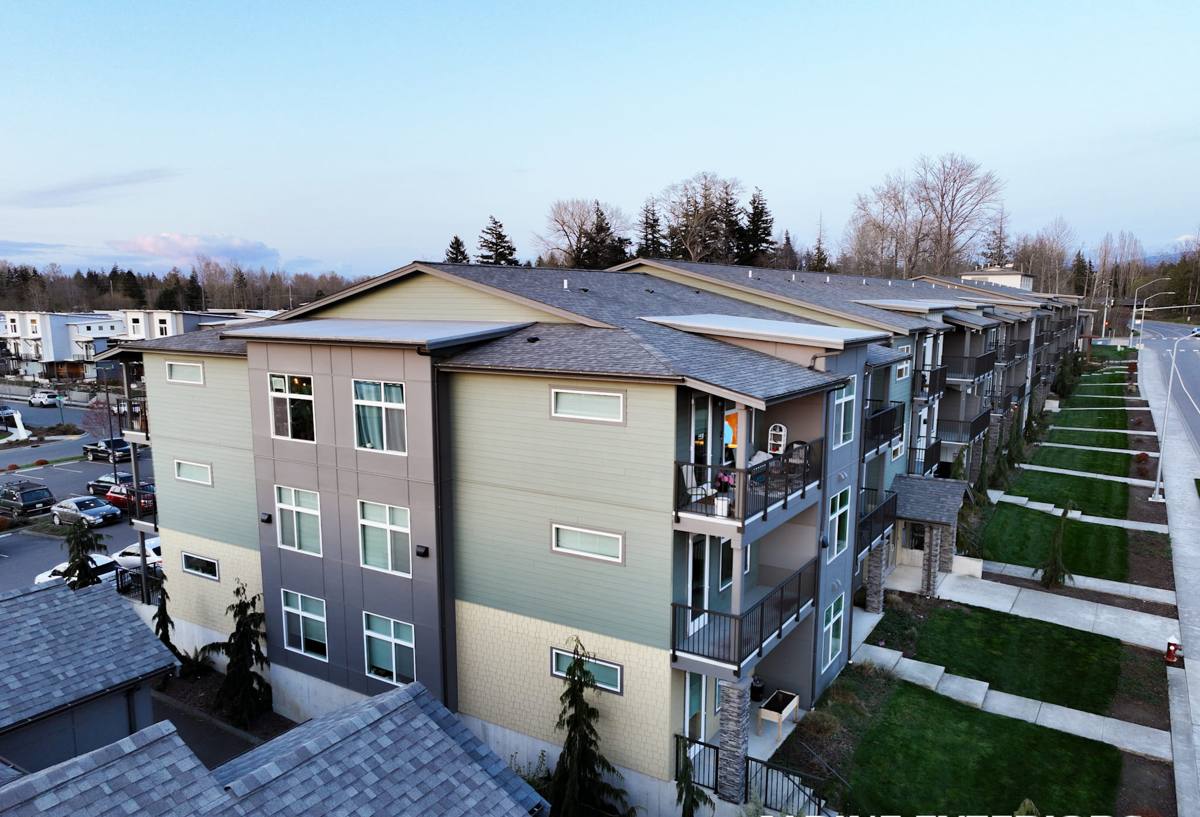
What San Juan County's Climate Does to Siding Over Time
Salt Air and Marine Exposure
Orcas Island sits surrounded by saltwater, and prevailing winds carry fine salt spray well inland from the shoreline. Salt is corrosive to exposed metal fasteners and trim, and it accelerates the breakdown of coatings that aren't formulated to resist it. Siding finishes that look fine in a lab or in a mainland showroom can chalk, fade, or lift at the edges faster in a marine environment.
Driving Rain and Wind-Driven Moisture
The Pacific storms that roll through the San Juans don't just drop rain — they push it sideways into siding, trim, and window flashing. Any gap in the weather-resistive barrier, any lap joint that wasn't sealed correctly, or any flashing detail that was skipped becomes a path for water to get behind the siding. Once moisture is trapped against sheathing on an island home, drying time is slower than on the mainland because humidity stays elevated for longer stretches.
Moss, Algae, and Shade
Orcas Island's tree cover and marine humidity create ideal conditions for moss and algae growth on north- and east-facing walls, especially near tree lines. Moss holds moisture against the siding surface far longer than open air would, which is exactly the condition that rots wood-based products and stresses paint films. A siding material's ability to resist moisture absorption in the field — not just repel bulk rain — matters as much here as anywhere in the Pacific Northwest.
Why We Install Only James Hardie Fiber Cement on Orcas Homes
We don't install vinyl, LP SmartSide, primed spruce, cedar, or other fiber cement brands. That's a deliberate standard, not a limitation of what we know how to install. James Hardie fiber cement is non-combustible, dimensionally stable in wet-dry cycling, and available in climate-engineered HZ product lines built for different moisture and temperature zones. Its ColorPlus factory finish is baked on under controlled conditions rather than field-applied, which matters directly for a marine climate — factory finishes hold up to salt air and UV exposure more consistently than paint applied on site in variable weather. It also carries a strong transferable warranty when installed to Hardie's written specifications, which is the other half of the equation: the product only performs as promised if the installation follows the spec exactly.
Other products aren't necessarily bad products. Vinyl is inexpensive and low-maintenance in the right climate but can warp under some conditions and doesn't offer the same fire resistance. Engineered wood siding performs well when kept dry but is more sensitive to sustained moisture exposure than fiber cement. Unfinished wood requires an ongoing maintenance commitment most homeowners underestimate. Given what Orcas Island's climate does to a building envelope over ten, twenty, and thirty years, fiber cement is the material we're willing to put our name on.
What Correct Siding Installation Actually Involves
Fiber cement siding is only as good as the installation behind it. A correct job on an Orcas home includes:
- A continuous weather-resistive barrier installed with proper shingle-lap overlap so water sheds outward at every seam
- Rainscreen or drainage gap furring where conditions call for it, so any moisture that does get behind the cladding can drain and dry rather than sit against the sheathing
- Correct fastener type, spacing, and penetration depth per the Hardie installation manual — under- or over-driven fasteners are one of the most common causes of early siding failure
- Proper flashing at every window, door, deck ledger, and roof-to-wall transition, since these are the highest-risk points for wind-driven rain intrusion
- Manufacturer-specified clearances from grade, roof lines, decks, and other siding terminations, so the bottom edge of the siding isn't sitting in standing water or snow
- Caulking and sealant only where Hardie's specifications call for it — over-caulking joints that are designed to move or drain can trap moisture instead of shedding it
Skipping any one of these steps can void the manufacturer's warranty and shorten the real-world life of the siding, even though the product itself is rated to last decades.
Our Process for Orcas Island Projects
Assessment and Planning
We start with a walk-around of the home to look at existing siding condition, moisture staining, trim and flashing details, and any areas where moss or algae growth signals a chronic wet spot. On an island property, we also look at sun and shade exposure by wall — north-facing walls under tree cover need different attention than south-facing walls exposed to open water and wind.
Material Staging
Because Orcas Island is ferry-access, we plan material delivery and staging in advance rather than making repeat trips for missing pieces. That means confirming the full material list, trim profile, and color before the crew starts, so the job runs continuously once it begins instead of stalling out waiting on a supply run.
Installation
Old siding and any compromised sheathing or building paper is removed and inspected before anything new goes on — installing fiber cement over a wet or already-damaged wall doesn't solve the underlying problem. From there we build out the weather barrier, flashing, and drainage details first, then install the Hardie siding, trim, and fascia to the manufacturer's fastening and clearance specifications.
Final Walkthrough
We walk the finished exterior with the homeowner, checking sightlines, seams, and trim details, and confirm what routine maintenance the specific product and finish will need going forward.
James Hardie Product Lines for a Marine, Wet-Winter Climate
Hardie engineers its HZ5 and HZ10 lines for different climate zones based on freeze-thaw cycling and moisture exposure. Orcas Island's marine, wet-winter conditions call for the product line matched to Pacific Northwest exposure rather than a generic national spec. The table below is a general comparison to help frame the conversation — the right choice for a specific home depends on its exposure, elevation, and existing wall assembly.
| Factor | What It Affects on an Orcas Home |
|---|---|
| Climate-engineered HZ line | Matches the product's moisture and freeze-thaw performance to Pacific Northwest marine conditions |
| ColorPlus factory finish | Consistent, baked-on color and UV/salt resistance not dependent on field paint conditions |
| Panel vs. lap profile | Affects seam count and detailing at corners, which matters more on wind-exposed elevations |
| Trim and fascia system | Needs to match the siding line's expansion characteristics for a consistent, long-term seal |
Cost Factors for Siding Installation on Orcas Island
Every home is different, so we don't quote a number until we've walked the property, but the main variables that drive cost on an island job are consistent enough to lay out honestly.
| Factor | Why It Matters |
|---|---|
| Existing wall condition | Rot or moisture damage found during tear-off adds repair scope beyond siding alone |
| Home size and wall complexity | More corners, dormers, and trim details mean more labor and material waste |
| Siding profile and finish | Lap width, panel style, and color selection affect material cost |
| Access and staging | Ferry logistics and site access can affect scheduling and delivery timing |
| Drainage and flashing upgrades | Adding rainscreen or upgrading flashing where the existing assembly is undersized |
Living with Fiber Cement Siding in a Moss-Prone Climate
Correctly installed James Hardie siding needs far less upkeep than wood, but it isn't zero-maintenance in a climate like Orcas Island's. A periodic soft wash to clear moss and algae buildup on shaded walls, a visual check of caulking at penetrations every year or two, and prompt attention to any gutter or downspout issues that direct extra water onto a wall will keep the siding and the warranty performing as intended for decades.
What to Look for in an Orcas Island Siding Contractor
- Experience specifically with James Hardie's installation manual and fastening requirements, not just "fiber cement in general"
- A clear explanation of the weather barrier and flashing plan before any siding goes up
- Familiarity with island logistics — ferry scheduling, material staging, and realistic project timelines
- Willingness to walk the property and point out existing moisture or moss issues rather than just quoting a swap-out
- A written scope that specifies product line, trim details, and warranty terms
If your Orcas Island home needs new siding or you're planning ahead for a project, we're happy to walk the property, look at your specific exposure and wall condition, and put together a free, no-pressure estimate using the form below.