 Orcas Island
 Why Orcas Island Roofs Wear Out Differently Than the Mainland
A roof on Orcas Island doesn't fail the same way a roof in Bellingham or Bellevue does. San Juan County sits in the marine layer of the Salish Sea, which means every roof here is dealing with three things at once, year-round: salt-laden air off the water, long stretches of driving rain that comes in sideways off winter storms, and shade from the fir and cedar canopy that keeps roof surfaces damp long after the rain has stopped. None of those three things is dramatic on its own. Together, over ten or fifteen years, they shorten the useful life of a roof that would have lasted longer somewhere drier and less coastal.
Salt air is corrosive to exposed metal — nails, flashing, drip edge, and fasteners take the brunt of it. Driving rain finds its way under shingles and flashing that would hold up fine in a straight-down rainstorm but fail when wind pushes water sideways and uphill under laps. And moss doesn't just sit there looking green — its root structure lifts shingle edges, holds moisture against the roof deck, and slowly works granules loose from asphalt shingles or wears at cedar shakes.
What This Means for Your Roof, Specifically
If your roof was installed with mainland assumptions — standard fastener coatings, minimal underlayment, no real moss strategy — it's aging faster than its warranty paperwork suggests. A correct replacement on Orcas Island isn't a different roof, it's the same roof built to a higher standard in the places that actually matter for this climate.
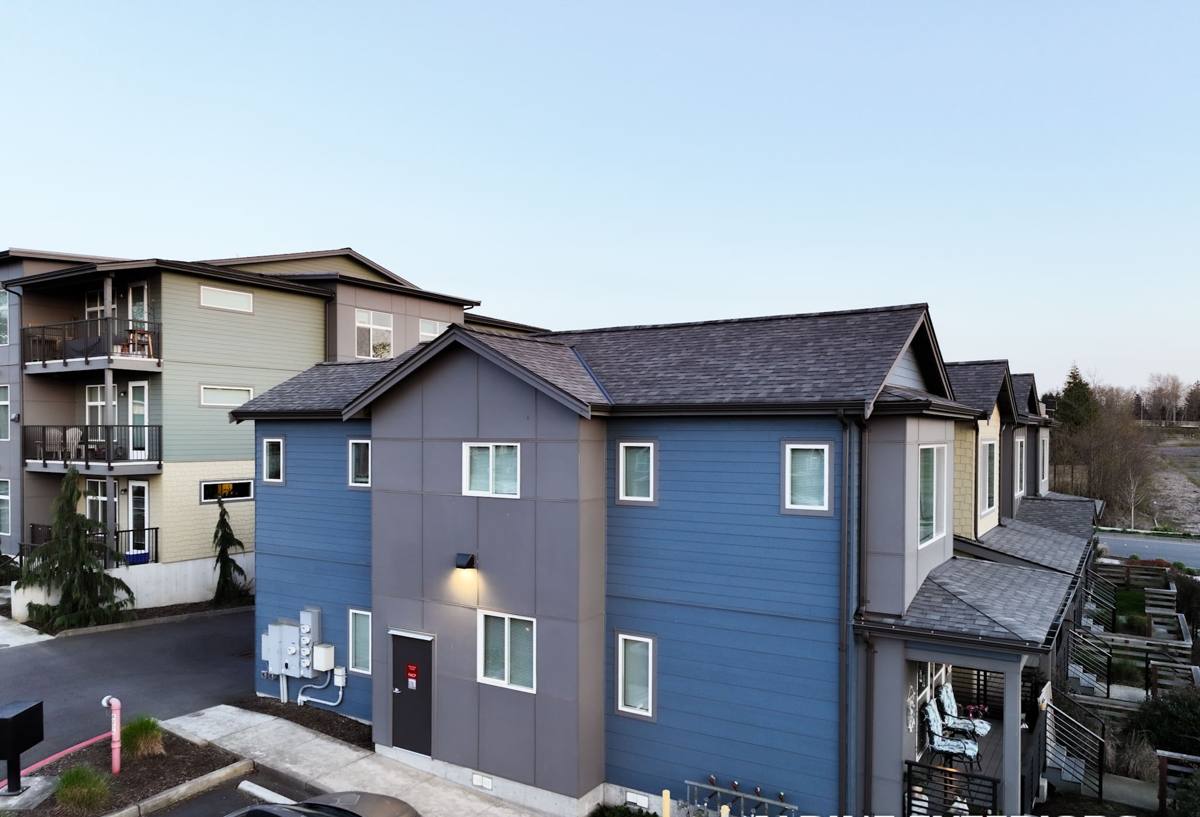
Signs an Orcas Island Roof Needs Replacing, Not Just Patching
Homeowners often ask us to look at a leak and end up learning the leak is a symptom, not the problem. Here's what tells us a roof is past the point where patching makes sense:
- Granule loss heavy enough that you're finding grit in gutters and at downspout outlets every season
- Moss or algae established on the north-facing or shaded slopes for more than one full season
- Shingles that are curling, cupping, or have lost their seal along the tab edges
- Rusted or corroded flashing around chimneys, skylights, and roof-to-wall transitions
- Soft spots or sag visible from the ground or felt when walked
- Daylight visible through the roof deck from inside the attic
- Repeated leaks in different spots each winter rather than the same spot every time
- A roof that's 18-25+ years old and has never been fully torn off and replaced
One or two of these on their own might mean a repair. Three or more, especially combined with age, usually means the underlying materials are failing across the whole roof, not just at the visible leak.
What a Correct Roof Replacement Involves Here
Full Tear-Off, Not Overlay
We don't recommend roofing over an existing layer on this island. Trapped moisture under a second layer is already a problem in drier climates; in a marine climate with this much ambient humidity, an overlay hides rot and mold instead of preventing it. A full tear-off lets us actually see the deck.
Deck Inspection and Repair
Once the old roofing is off, we check the sheathing for soft spots, delamination, and old water staining that points to a slow leak nobody noticed. Any bad decking gets replaced before anything new goes down — skipping this step is the single most common shortcut that leads to a roof failing early.
Underlayment Built for Wind-Driven Rain
Standard felt underlayment is not enough for a site exposed to driving coastal rain. We use synthetic underlayment rated for wind-driven moisture, with self-adhering ice-and-water shield at eaves, valleys, and around every penetration — the exact spots where sideways rain finds a way in.
Flashing That Won't Corrode
Every piece of flashing — step flashing, valley metal, chimney counterflashing, drip edge — gets specified in a material and coating that holds up to salt air, not just standard galvanized steel that will rust out well before the shingles wear out.
Ventilation That Fights Moss and Moisture
A roof that breathes properly dries out faster after rain and keeps the deck temperature more even, which slows moss colonization. We check intake and exhaust ventilation as part of every replacement, not as an upsell — it's part of doing the job right in this climate.
Choosing Materials: What Actually Holds Up on Orcas Island
There's no single "best" roofing material for every home here — it depends on your home's exposure, tree cover, and how much long-term maintenance you want to take on. Here's how the common options actually perform under salt air, driving rain, and moss pressure:
| Material | Moss & Algae Resistance | Salt Air / Corrosion Behavior | Maintenance Burden | Typical Lifespan Here |
|---|---|---|---|---|
| Architectural asphalt shingle | Good with algae-resistant granules; still needs periodic cleaning in shaded areas | Fasteners and flashing must be corrosion-rated; shingle body unaffected | Low to moderate | 20-25 years |
| Standing seam metal | Excellent — moss struggles to root on a smooth, steep, sealed surface | Needs a coastal-grade finish and stainless or coated fasteners to avoid premature corrosion | Low | 40-50+ years |
| Cedar shake | Poor without aggressive, ongoing maintenance — moss favors the porous, textured surface | Wood itself doesn't corrode, but fasteners and flashing still need corrosion protection | High — regular treatment and moss removal required | 15-20 years realistically in this climate |
We'll install cedar shake if that's what a homeowner wants for a specific architectural look, but we're upfront about the trade-off: in a shaded, moist, moss-prone climate like this one, cedar demands a maintenance schedule most homeowners underestimate going in. For most Orcas Island homes, we steer people toward architectural shingle or standing seam metal because they hold up with far less ongoing attention, not because cedar is a bad product — it's a high-maintenance one in this specific environment.
The Ferry Factor: Why a Crew That Already Works Orcas Matters
This is the part of an island roof job that mainland-based contractors consistently underestimate. Every truckload of materials, every dumpster, every crew member, and every piece of equipment has to cross on a schedule that isn't yours to control. A contractor who isn't set up for that reality will either pad your price heavily to cover the uncertainty, or they'll show up late and stretch your project out over weeks instead of days.
A crew that already works Orcas Island regularly has standing logistics worked out: material orders timed to specific sailings, relationships with island-based suppliers and haulers, and a realistic sense of how weather windows and ferry reservations interact. That translates directly into your project actually finishing on the timeline you were quoted, instead of sitting half-tarped because a delivery missed its boat.
It also matters for accountability after the job is done. If a flashing detail needs a second look next winter, you want a crew that's still going to be working nearby next month, not one that mobilized a special one-time trip to the island and has no reason to come back.
Our Roof Replacement Process
- On-site inspection and estimate — we walk the roof and attic, note deck condition, ventilation, and flashing problems, and give you a clear written scope.
- Material selection — we go over the honest trade-offs for your home's exposure and budget, not just a single default recommendation.
- Scheduling and logistics — materials and dumpsters are ordered and timed around ferry sailings before your start date, so the job isn't waiting on a delivery mid-project.
- Full tear-off — old roofing removed down to the deck, with daily cleanup and property protection.
- Deck repair as needed — any soft or damaged sheathing is replaced before new roofing goes down.
- Underlayment and flashing installation — ice-and-water shield at vulnerable areas, corrosion-rated flashing throughout.
- Roofing installation — installed to manufacturer spec and wind rating appropriate for coastal exposure.
- Final walkthrough — we go over the finished roof with you, including what maintenance to expect and when.
Living With Moss Season: What Happens After Installation
A new roof doesn't make moss season disappear — it changes how much it matters. Metal and algae-resistant shingles buy you years before moss becomes a real concern; any roof under heavy tree cover will still need periodic attention. A few habits go a long way regardless of material:
- Keep gutters and downspouts clear going into fall, before the heavy rains start
- Trim back overhanging branches where practical to reduce shade and debris on the roof
- Have shaded, north-facing slopes checked every couple of years for early moss growth
- Avoid pressure washing shingles — it strips granules and shortens shingle life; a soft wash or manual removal is safer
Permits and Local Considerations on Orcas Island
Most straightforward roof replacements in San Juan County fall under standard residential building permit requirements, and a like-for-like reroof is usually a fairly simple process. Properties in shoreline or critical-area overlays, or within certain island communities with their own architectural review, can have additional steps — roofing material and color are sometimes subject to community guidelines on Orcas. We handle the permit application as part of the job and will flag early if your property falls into a category that needs extra review, so there are no surprises once work is scheduled.
If your roof is showing its age, or you just want an honest read on whether repair or full replacement makes sense for your home, we're happy to come take a look. Fill out the form below for a free, no-pressure estimate.