 Orcas Island
 Siding on Orcas Island Plays by Different Rules
Orcas Island sits out in the San Juans, surrounded by saltwater on every side, and that changes what siding has to survive. It's not just rain — it's salt-laden air moving off Rosario Strait and the surrounding waterways, landing on exterior walls day after day. Add in the driving rain that comes with winter storms off the Strait of Juan de Fuca, plus a long, damp shoulder season where moss and algae get a real foothold on anything north-facing or shaded by fir and cedar canopy, and you've got a climate that's hard on siding in three different ways at once: corrosion, moisture intrusion, and biological growth.
A lot of siding products can handle one of those stresses reasonably well. Few handle all three for decades without breaking down. That's the standard we hold every Orcas Island job to, and it's why we install James Hardie fiber cement exclusively — nothing else we've evaluated holds up to San Juan County's specific combination of salt, rain, and shade the way Hardie does.
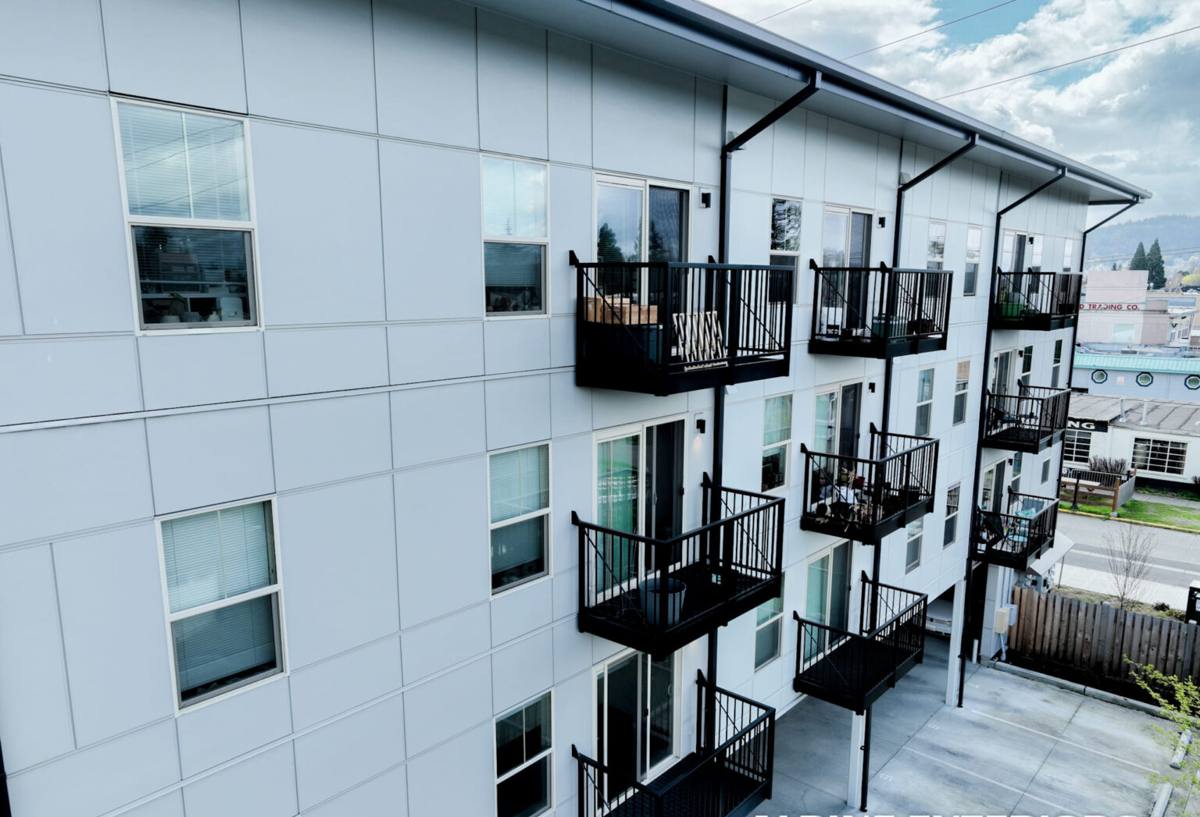
What Salt Air Actually Does to a House
Salt air is corrosive to metal fasteners, trim, and flashing, and it accelerates the breakdown of some siding materials' surface coatings. On an island like Orcas, homes closer to the water take the brunt of it, but even inland properties get enough salt-bearing wind to matter over a 15- or 20-year span. The practical effects show up as:
- Premature corrosion on exposed fasteners, hinges, and light fixtures mounted to or near siding
- Faster fading and chalking on painted wood or lower-grade composite siding
- Accelerated wear at butt joints and seams where coatings are thinnest
- Faster breakdown of caulk and sealant at trim transitions
James Hardie's ColorPlus finish is a factory-applied, baked-on finish engineered to resist fading and hold color integrity far longer than field-applied paint, which matters directly here — less repainting means fewer chances for the finish to fail and let moisture behind it. We also spec corrosion-resistant fasteners on every Orcas job, because the siding material is only half the equation; the hardware holding it up has to survive the same salt exposure.
Driving Rain and Water Management
Storms coming through the San Juans often bring rain sideways, not straight down. That means water gets pushed up under laps, into seams, and behind trim in ways that vertical rain never tests. Siding systems that rely on face-sealed joints or that swell and warp when they take on moisture are a bad match for this kind of weather pattern.
Correct installation matters as much as the product here. A Hardie plank system installed with proper lap spacing, correctly flashed windows and doors, and a functioning weather-resistant barrier behind it sheds driving rain the way it's designed to. Skip any one of those steps — under-lap the boards, skip kick-out flashing at roof-wall intersections, caulk a joint that should have been left to drain — and you've built a leak path that won't show itself until there's rot behind the wall.
Where Driving-Rain Failures Usually Start
- Window and door head flashing installed flat instead of sloped to shed water outward
- Missing or undersized kick-out flashing where a roof edge meets a sidewall
- Butt joints caulked solid instead of back-flashed, trapping moisture that gets in anyway
- Bottom starter courses set too close to grade or a deck surface, wicking splash-back
The Long Moss Season
Between the tree cover common on Orcas Island lots and the extended wet season, moss and algae growth on exterior surfaces is a fact of life here — especially on north- and west-facing walls that stay shaded and damp longest. Wood-based sidings are the most vulnerable, since moss and algae growth holds moisture against a surface that can absorb it, which is exactly the condition that leads to soft spots and rot over time.
Fiber cement doesn't feed that cycle the way wood does. It doesn't absorb moisture into its structure the way untreated or lightly primed wood products can, so a moss-covered wall isn't quietly rotting underneath the growth. That doesn't mean Hardie siding never needs a gentle wash — it will pick up surface growth like anything else exposed to Orcas's shaded, damp microclimates — but it means that growth is a cosmetic issue you clean, not a structural one you're racing against.
Why We Install Only James Hardie
We get asked why we don't offer vinyl, LP SmartSide, cedar, or primed spruce alongside Hardie. The honest answer is that each of those products has a real weak point that this specific climate finds and exploits:
| Material | Where it struggles on Orcas Island |
|---|---|
| Vinyl | Can warp or become brittle with UV and temperature swings; seams are a moisture entry point in driving rain |
| LP SmartSide (engineered wood) | Wood-based core is vulnerable to prolonged moisture exposure common in a long wet season |
| Cedar | Needs consistent refinishing to resist moisture and moss; high-maintenance in a climate that punishes any lapse |
| Primed spruce | Primer is a maintenance-dependent barrier, not a permanent one — failure point once coating wears thin |
| James Hardie fiber cement | Non-combustible, doesn't absorb moisture into a wood core, factory finish holds up to salt air and UV |
We're not saying those products are junk — plenty of them perform fine in drier, more sheltered climates. But on an island getting salt air, driving rain, and moss season all at once, the margin for a maintenance lapse is thin, and we'd rather build a wall system with less that can go wrong.
What a Correct Hardie Installation Involves Here
The material is only as good as the install. On Orcas Island jobs specifically, we pay close attention to:
- Weather-resistant barrier — a continuous, correctly lapped barrier behind the siding, sealed at every penetration
- Flashing details — sloped head flashing at windows and doors, kick-out flashing at roof-wall intersections, proper step flashing where siding meets chimneys or additions
- Fastener selection — corrosion-resistant fasteners rated for coastal exposure, driven per Hardie's spec for hold and clearance
- Clearances — minimum gaps from grade, decks, and roof lines so splash-back and standing moisture don't sit against the bottom edge of the siding
- Caulk discipline — sealing where sealant belongs and leaving drainage paths open where it doesn't
- HZ product selection — Hardie's HZ5 line is engineered for the wetter, cooler climate zones the Pacific Northwest falls into, which is what we spec for Orcas Island homes
Our Process on Orcas Island Jobs
Working on the island comes with its own logistics — ferry schedules, material staging, and weather windows that don't always cooperate with a mainland timeline. Because we already work Orcas Island regularly, we plan around that instead of discovering it mid-project.
- On-site assessment of your home's exposure — waterfront vs. inland, tree canopy, prevailing wind and rain direction
- Removal of existing siding and inspection of the sheathing underneath for hidden moisture or rot damage
- Repair of any compromised sheathing before new material goes up — never siding over a problem
- Installation of a continuous weather-resistant barrier and correct flashing at every penetration
- James Hardie HZ5 plank, panel, or shingle installation per manufacturer spec
- Final walkthrough covering caulk lines, trim, and touch-up before we call the job done
Why a Crew That Already Works Orcas Matters
A contractor who mainly works the mainland and occasionally takes an island job is learning ferry logistics, material lead times, and local weather patterns on your dime. A crew that already works Orcas Island regularly has that figured out — material gets staged and timed around ferry schedules, weather windows get planned around realistically, and the site experience with San Juan County permitting and inspection is already in place. That translates to fewer surprises and a tighter timeline for you.
Cost Factors for Orcas Island Hardie Projects
Every home is different, but a few factors consistently move the number on Orcas Island projects specifically:
| Factor | Why it matters here |
|---|---|
| Ferry and delivery logistics | Material scheduling has to account for ferry sailings, which affects timeline more than mainland jobs |
| Existing sheathing condition | Homes with a long history of moisture exposure sometimes need sheathing repair before siding goes on |
| Home exposure | Waterfront and wind-exposed homes may need more extensive flashing detail than sheltered inland lots |
| Siding profile chosen | Lap, shingle, and panel profiles differ in material and labor |
| Trim and detail work | Homes with more corners, windows, and roof-wall intersections require more flashing and finish work |
If you're planning a siding project on Orcas Island, we're glad to walk your home, point out what your specific exposure and existing siding condition mean for the job, and give you a straightforward, no-pressure estimate. There's a form below — reach out and we'll get it scheduled.