 Orcas Island
 Metal Roofing for a Home in Olga, Orcas Island
Olga sits on the quieter, tree-covered east side of Orcas Island, close enough to the water that salt air is a daily fact of life and shaded enough by fir and madrona canopy that roofs here rarely get a full day of sun to dry out between storms. That combination — marine air, driving rain off the Salish Sea, and a moss season that can run most of the year — is exactly the kind of climate metal roofing was built for, provided it goes on correctly. A poorly installed metal roof in a spot like this will find every weak point in the details within a few wet seasons. A correctly installed one is one of the lowest-maintenance choices a homeowner out here can make.
This page covers what a metal roof actually needs to hold up on a home in Olga, what separates a correct installation from a shortcut one, and how we run the job from first inspection to final walkthrough.
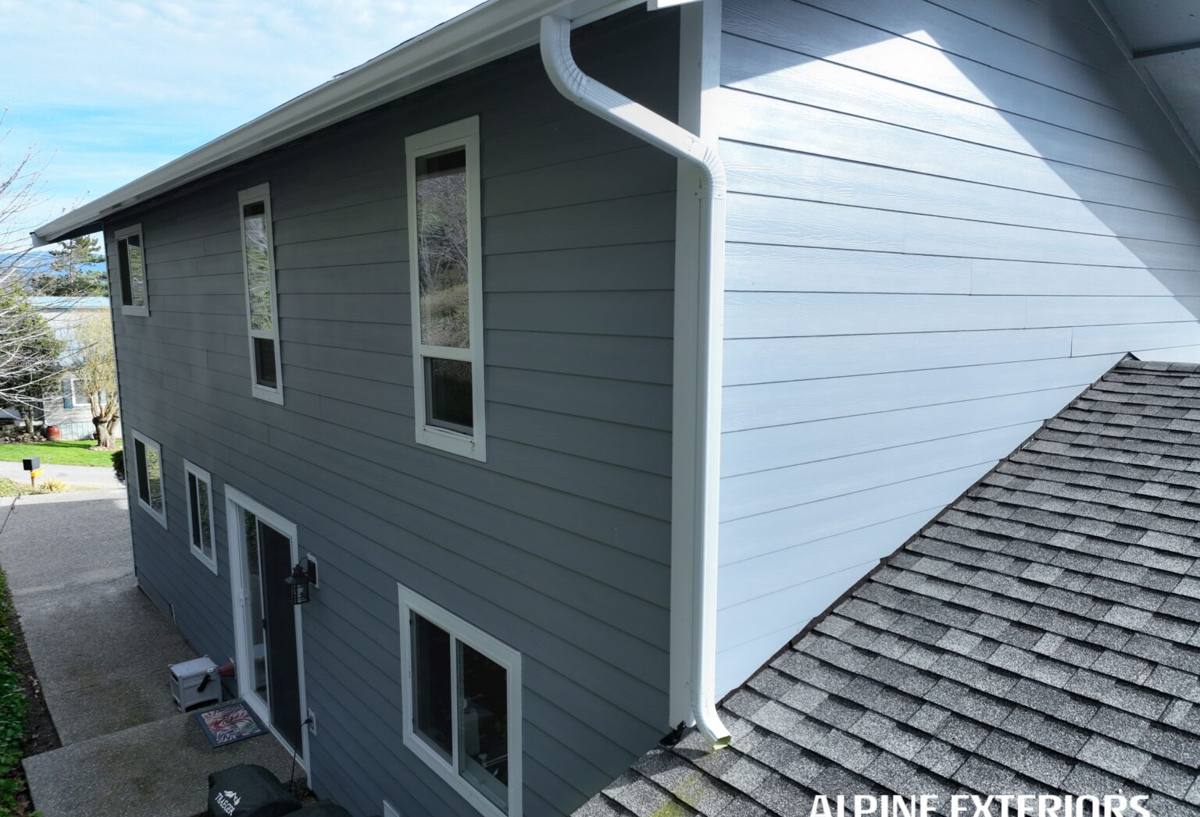
What Olga's Climate Does to a Roof
Salt Air Off the Water
Marine air moving across Orcas Island carries salt that settles on every exposed surface, and over years it accelerates corrosion on fasteners, flashing, and any metal that isn't specified for coastal exposure. On a metal roof, that means the panel finish and the fastener hardware both matter as much as the panel material itself — a good panel undermined by bargain-grade screws or exposed steel edges will show rust streaking well before the roof is due for it.
Wind-Driven Rain
Storms coming off the water rarely drop rain straight down. Wind pushes it sideways and forces it up under panel laps, around penetrations, and into any seam that wasn't detailed to shed water moving in more than one direction. Olga's exposure to weather rolling in off the Salish Sea makes this a routine condition rather than an occasional one, which is part of why panel type and seam design matter more here than on a sheltered inland roof.
A Moss Season That Doesn't Quit
Mild temperatures and near-constant dampness add up to a moss and algae season that can run most of the year on shaded or north-facing roof planes. Metal's smooth, non-porous surface resists moss far better than a shingle or shake roof does, but it isn't immune — moss and organic debris can still build up in valleys, at panel overlaps, and anywhere fastener heads or trim create a place for needles and grit to collect and hold moisture.
Tree Canopy and Needle Litter
A lot of properties in and around Olga sit under substantial fir and madrona cover, which is part of what makes the area quiet and shaded, but it also means a steady drop of needles, cones, and leaf litter onto the roof year-round. That debris collects fastest in valleys and behind chimneys or dormers, and if it's left to build up, it holds moisture against the panel finish and gives moss a foothold even on a metal surface that would otherwise shed it.
Standing Seam vs. Exposed-Fastener Panels
Not all metal roofing is built the same way, and the difference between panel systems matters more in a driving-rain climate than it does somewhere drier. The two most common options homeowners weigh are standing seam and exposed-fastener panels.
| Panel Type | How It's Fastened | Fit for Olga's Climate |
|---|---|---|
| Standing Seam | Concealed clips under raised, interlocking seams — no exposed screws through the panel face | Best resistance to wind-driven rain and long-term leaks; the stronger choice for exposed or heavily shaded lots |
| Exposed-Fastener (Screw-Down) | Screws with rubber washers driven directly through the panel face | Lower upfront cost, but washers degrade over time and each one becomes a potential leak point as gaskets age |
| Stone-Coated Steel | Interlocking steel panels with a granulated stone coating, fastened similarly to shingles | Shingle-like appearance with metal's durability; a reasonable middle option where a traditional look matters |
Standing seam costs more up front, but on a home exposed to steady wind-driven rain, the absence of face-penetrating fasteners removes the single most common failure point on a metal roof. Exposed-fastener panels aren't a bad product — they're a legitimate, lower-cost option — but the washers under every screw are a wear item, and on this stretch of coastline, gasket failure tends to show up sooner than the panel's own finish warranty would suggest.
What a Correct Metal Roof Install Involves
Underlayment
A high-temperature synthetic or self-adhered underlayment goes down across the full deck before any metal is installed, giving the roof a real secondary water barrier if wind-driven rain ever gets past a seam or penetration. This layer matters more under metal than under shingles, since metal panels can run hotter in direct sun and a lower-grade underlayment can degrade faster under that heat cycling.
Panel Material and Finish
Steel panels with a Galvalume or similar coated substrate, finished with a PVDF (often sold under the Kynar 500 name) paint system, are the professional standard for a coastal climate like this. That finish resists chalking, fading, and salt-driven corrosion far longer than a cheaper polyester coating, and it's the detail that separates a roof that still looks new after fifteen years from one that's streaking and dulling after five.
Fastening and Flashing
Every fastener and flashing detail needs to be rated for coastal exposure, not just standard-grade galvanized hardware. Valleys, chimney and vent penetrations, and the transitions where a roof plane meets a wall are where the overwhelming majority of metal roof leaks actually start, and they need to be built as part of the panel system with proper laps and sealant, not caulked over after the fact as an afterthought.
Handling Dissimilar Metals
Galvanic corrosion happens when two different metals stay in contact with moisture between them, and it's an easy detail to miss. Copper gutters or flashing set directly against a steel roof, or the wrong fastener alloy driven into the wrong panel, can quietly corrode a roof from a contact point outward. Getting the metal pairings right at every flashing and fastener detail is part of what a correct install accounts for from the start.
Cost Factors Worth Understanding
Two metal roofing bids for the same house can look wildly different, and the gap is almost always real scope rather than one contractor padding the number. Understanding what drives cost makes it far easier to compare estimates that don't look alike on paper.
| Factor | What It Affects |
|---|---|
| Panel system (standing seam vs. exposed-fastener) | Upfront cost and long-term leak risk at fastener points |
| Steel gauge and coating | Dent resistance, corrosion resistance, and how long the finish holds up against salt air |
| Underlayment grade | Backup protection against wind-driven rain that gets past a seam |
| Flashing scope | How thoroughly valleys, penetrations, and wall transitions are addressed |
| Roof complexity and pitch | Labor time, panel cuts and waste, and staging or access requirements |
| Tear-off vs. install over existing roof | Whether hidden deck damage gets found and repaired before panels go on |
A written estimate that breaks these line items out separately tells you far more than a single lump-sum number. It's worth asking any contractor to walk through exactly what panel system, gauge, and finish are included before comparing two bids side by side.
How Our Process Works
- In-person inspection: We walk the roof and attic ourselves and document the deck condition, existing flashing, and any tree exposure or shading that affects the plan, rather than estimating from a photo.
- Written estimate: You get a clear, itemized bid covering panel system, gauge and finish, underlayment, flashing, and cleanup — not a single vague line item.
- Material staging and scheduling: Metal panels are often fabricated to length for the job, and getting materials to Olga means factoring in ferry access alongside the weather window, so we plan delivery and crew scheduling with real margin rather than an optimistic best case.
- Tear-off and deck repair: Existing roofing comes off, and any deck damage we find gets repaired before any underlayment or panel goes down.
- Underlayment, flashing, and panel installation: Each layer goes on to manufacturer specification, with extra attention at valleys, penetrations, and wall transitions where leaks actually start.
- Final walkthrough and cleanup: We review the finished roof with you in person and do a full site sweep before we call the job done.
Why Hiring a Crew That Already Works Olga Matters
A crew that regularly works roofs in and around Olga has already seen how salt air corrodes underspecified hardware, how wind-driven rain finds its way through a poorly detailed seam, and how much needle and moss buildup a shaded, tree-covered lot generates compared to an open one. That's practical knowledge that shows up in small decisions throughout a job — decisions a crew unfamiliar with this specific part of the island might not think to make.
It also matters once the job is done. A workmanship warranty is only as good as the contractor standing behind it years later, and getting a crew back out to Olga for a warranty question or a follow-up means working around ferry schedules, not a same-day mainland service call. A contractor with an established, ongoing presence on the island is one you can actually reach.
A Practical Checklist Before You Choose a Metal Roofing Contractor
- Do they specify panel system, gauge, and finish in writing, not just "metal roof"?
- Is flashing work at valleys, penetrations, and wall transitions explicitly written into the bid?
- Do they account for dissimilar-metal contact points, like copper gutters against a steel roof?
- Do they carry current Washington contractor licensing, liability insurance, and workers' compensation?
- Can they point to recent, real metal roofing work on Orcas Island or elsewhere in San Juan County?
- Does the bid separate the manufacturer's material and finish warranty from the contractor's own workmanship warranty?
Signs Your Roof May Be Ready for a Metal Replacement
Homeowners in Olga usually come to us in one of two situations: an aging shingle roof that's due for replacement, or an existing metal roof that's showing its age. A few signs worth acting on before the next stretch of heavy weather:
- Rust streaking at fastener heads or panel edges, which signals the coating has broken down at those points
- Moss or dark buildup collecting in valleys or at panel overlaps despite metal's generally moss-resistant surface
- Loose or lifting panels along ridges or edges after a windstorm
- Visible gasket wear or cracking around exposed fasteners on a screw-down panel roof
- Water staining on interior ceilings or in the attic, particularly near valleys or roof penetrations
If any of that sounds familiar, it's worth having the roof looked at before the next round of fall storms rather than waiting for a leak to make the decision for you.
If you'd like an honest, no-pressure look at your roof in Olga and a written estimate you can compare against anything else you've received, we're glad to come take a look. Use the form below to request a free estimate.