 Orcas Island
 Why Windows Wear Out Faster in Obstruction Pass
Obstruction Pass sits on the southeast shoulder of Orcas Island, close enough to the water that salt-laden air is a daily fact of life, and shaded enough by second-growth fir and cedar that moisture lingers long after a storm has passed. That combination is hard on windows in ways that inland San Juan County homes rarely deal with. Salt air corrodes untreated metal hardware and fasteners. Driving rain off the water finds any gap in flashing or sealant and works it wider over time. And the long, damp moss season here — often stretching from fall through spring — keeps humidity high around window frames, sills, and trim for months at a stretch.
None of this means windows fail overnight. It means they fail quietly, a little at a time, until a homeowner notices fogged glass, a sticky sash, or soft wood at the sill and realizes the problem has been building for years. Understanding how the local climate actually attacks a window is the first step toward replacing one correctly instead of just swapping in something new that will struggle the same way.
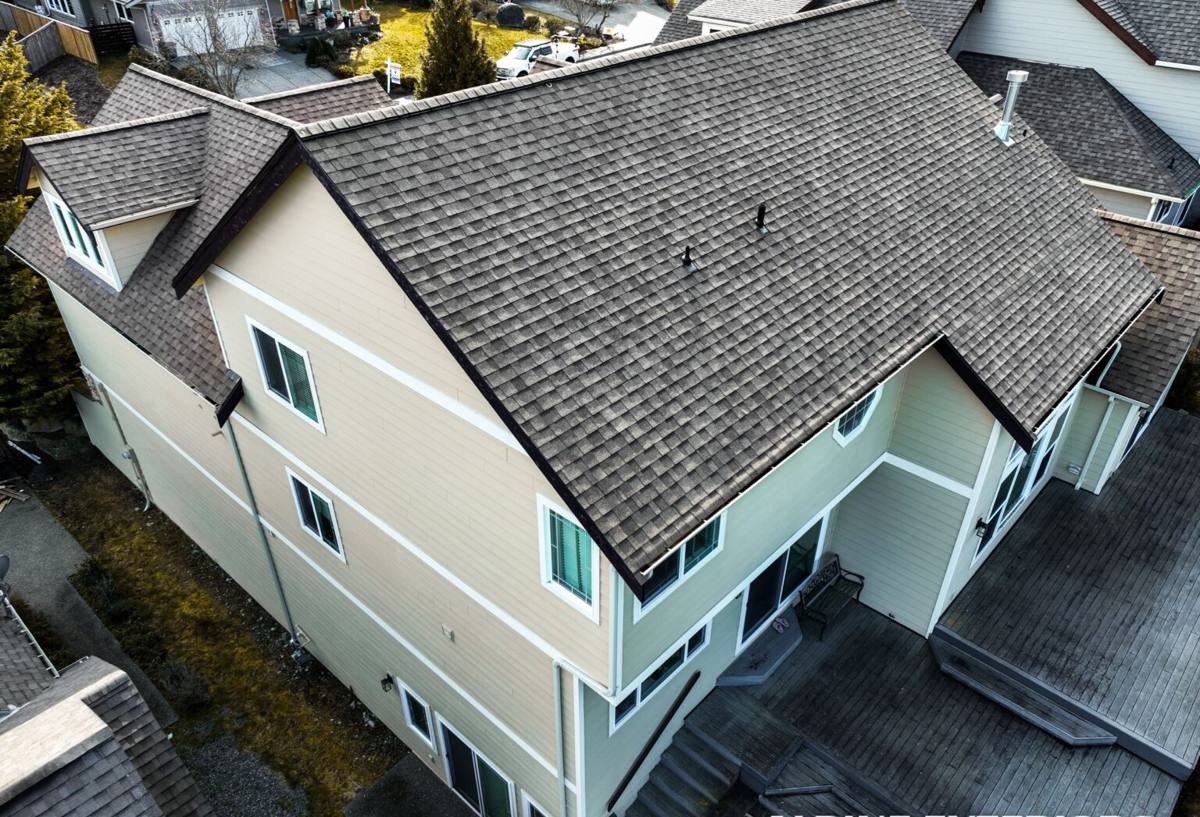
How Salt Air, Rain, and Moss Season Actually Damage Windows
Salt Air and Hardware
Salt in the air settles on everything, including window hardware, screen frames, and exposed fasteners. Over years, it accelerates corrosion on anything that isn't rated for marine or coastal exposure — cheaper hinges, cranks, and locks pit and seize well before the glass or frame shows any wear. This is one reason we pay close attention to hardware specs, not just the window unit itself, when we quote a replacement in this area.
Driving Rain and Flashing
Wind-driven rain off the water doesn't fall straight down — it hits siding and window openings at an angle, which puts real pressure on flashing details that a calmer inland climate wouldn't test. A window that's caulked in place but not properly flashed can look fine for a season or two before water starts tracking behind the trim and into the wall cavity, usually with no visible sign until the damage is already done.
Moss Season and Sustained Moisture
Shaded, tree-covered lots hold moisture longer than open ones. Wood sills and trim that stay damp for extended stretches are where we most often find soft spots, paint failure, and early rot — usually starting at the bottom corners of the frame, where water naturally collects and drains slowest.
Signs a Window in Obstruction Pass Needs Replacing, Not Just Repair
Not every window problem calls for full replacement. But in a coastal, high-moisture setting like this one, certain signs tell us the window has moved past the point where caulk and weatherstripping can fix it.
- Fogging or condensation between panes on double- or triple-glazed units — the seal has failed and can't be restored
- Soft, spongy, or visibly rotted wood at the sill or lower frame corners
- Windows that are difficult to open, close, or lock, especially after damp weather
- Visible daylight, drafts, or whistling sounds around the frame during windstorms
- Corroded or pitted hardware that no longer functions smoothly
- Paint or finish that keeps failing on the frame no matter how often it's touched up
- A noticeable rise in heating costs with no other explanation
If you're seeing one or two of these, a repair may still be worthwhile. If you're seeing several on the same window, or the same issues keep recurring after repair, replacement is usually the more honest recommendation — and the more cost-effective one over time.
What a Correct Window Replacement Involves Here
A window replacement is only as good as the details around the window, not just the window unit itself. In a marine climate like Orcas Island's, we treat the following as non-negotiable parts of the job, not upgrades:
- Full removal of the old unit and inspection of the framing and sheathing underneath for hidden rot before anything new goes in
- Repair or replacement of any damaged framing, sheathing, or sill material found during that inspection — never installing a new window over a compromised opening
- Correct flashing sequencing (weather-resistive barrier, flashing tape, and sill pan working together) so wind-driven rain sheds outward instead of tracking inward
- Marine-grade or corrosion-resistant fasteners and hardware where budget allows, given the salt exposure in this area
- Proper shimming and squaring so the sash operates smoothly for years, not just on install day
- Quality interior and exterior sealant applied to manufacturer spec, not just "enough to look finished"
Skipping any of these steps is how a window looks fine for a year or two and then starts failing at the framing level — a much more expensive problem than the original one.
Choosing the Right Window Material for This Climate
Material choice matters more here than in a drier, inland climate. We walk homeowners through the honest trade-offs rather than pushing whatever is easiest to install.
| Material | How It Handles Salt Air & Moisture | Maintenance | Notes |
|---|---|---|---|
| Vinyl | Doesn't corrode; performs well in salt air | Low | Good value; frame color and size options can be more limited |
| Fiberglass | Very stable in temperature and moisture swings; strong coastal performer | Low | Higher upfront cost; holds paint well if a custom color is wanted |
| Aluminum-clad wood | Good exterior protection if the cladding and seams are done right | Moderate | Interior wood warmth with exterior durability; installation sensitivity is higher |
| Solid wood | Most vulnerable to sustained moisture and moss-season dampness without diligent upkeep | High | We're candid with clients that this is a real ongoing commitment in this microclimate, not a knock on the material itself |
We don't tell homeowners there's only one "right" answer. A well-maintained wood window can last decades, and a poorly installed vinyl one can fail in five years. What matters most is matching the material to how much upkeep a homeowner actually wants to do, and making sure the installation itself is done to the standard the climate demands.
Our Window Replacement Process
- On-site assessment — we look at every window being considered, check for hidden moisture damage, and discuss which units genuinely need replacement versus repair
- Honest, itemized estimate — material options, hardware upgrades, and labor scope explained plainly, with no pressure to upsell beyond what the house needs
- Material ordering — for island jobs, we build realistic lead times into the schedule, since custom sizes and specific finishes typically ship from the mainland
- Removal and framing inspection — old units come out, framing is checked and repaired as needed before anything new is installed
- Installation — proper flashing, sealing, shimming, and hardware installation, done to manufacturer spec
- Final walkthrough — every replaced window is opened, closed, and checked for a clean, weathertight fit before we call the job done
Scheduling and Logistics for Island Homes
Working in Obstruction Pass and elsewhere on Orcas Island means planning around ferry schedules and mainland supply lines, not just weather windows. Custom window orders take longer to arrive here than they would in a mainland town, so we build that into the project timeline upfront rather than surprising a homeowner with a delay mid-job. We also plan installation days around the wetter stretches of the year when possible, since a dry install window matters more here than in a drier climate — getting flashing and sealant to cure properly is part of doing the job right the first time.
Why Local Experience in Obstruction Pass Matters
A crew that only occasionally works in San Juan County will treat a window replacement here the same way they'd treat one in a dry inland town — and that's exactly how flashing details get shortcut and salt-air hardware gets overlooked. Working regularly in this specific microclimate means we've seen how these homes actually age: where moisture collects on a shaded, tree-covered lot, how salt air shortens the life of standard hardware, and which installation shortcuts show up as problems two or three years down the road instead of right away. That local pattern recognition is worth more than any brand name on the window itself.
What Affects the Cost of a Window Replacement
| Factor | Why It Matters |
|---|---|
| Number and size of windows | More units and larger openings mean more material and labor |
| Material choice | Vinyl, fiberglass, aluminum-clad, and solid wood carry different price points and lifespans |
| Hidden framing damage | Rot found during removal adds repair time before the new window can go in |
| Hardware grade | Marine-grade or corrosion-resistant hardware costs more but lasts longer in salt air |
| Access and site conditions | Tree cover, elevation changes, and staging space affect labor time |
| Shipping and lead time | Custom sizes or finishes ordered for island delivery may carry longer lead times, not necessarily higher unit cost |
We won't quote a firm number without seeing the windows in person, but we're always upfront about which of these factors are driving the cost on a given job, so there are no surprises once the work starts.
Get a Free, No-Pressure Estimate
If your windows in Obstruction Pass are fogging, sticking, drafting, or showing soft spots at the sill, it's worth having a local crew take a look before the damage spreads into the surrounding framing. We'll give you an honest read on what needs replacing, what can wait, and what it will actually cost — no pressure, no upsell. Use the form below to request a free estimate.