 Orcas Island
 Why Obstruction Pass Puts Ordinary Siding to the Test
Obstruction Pass sits on the water, wrapped in fir and cedar, and that combination is exactly what makes siding fail early here. Homes on this stretch of Orcas Island deal with three things at once: salt-laden air off the pass, wind-driven rain that comes in sideways off the water, and heavy tree cover that keeps north and shaded walls damp long after the rest of the island has dried out. Most siding products are engineered for an average climate. This corner of San Juan County is not average, and the siding you choose needs to be picked and installed with that in mind.
Salt Air and Corrosion
Proximity to saltwater accelerates corrosion of fasteners, flashing, and any metal trim components, and it degrades paint films faster than an inland install ever sees. Salt residue also holds moisture against a wall surface longer than plain rainwater does, which matters more than people expect — it's not just about what the siding is made of, it's about what's fastening it and finishing it.
Driving Rain and Wind-Driven Moisture
Obstruction Pass is exposed to wind coming straight off the water, and that wind pushes rain sideways into wall assemblies rather than letting it run straight down and off. Sideways rain finds gaps that vertical rain never would — poorly lapped seams, undersized clearances, caulk used where flashing should have been. A siding job that would hold up fine in a sheltered inland yard can leak within a few seasons out here if it wasn't built for wind-driven exposure.
Deep Shade and a Long Moss Season
Tree canopy on this end of the island keeps a lot of walls in shade for most of the day, which means those surfaces stay wet longer after every rain and fog event. That's the setup moss and algae need to take hold, and once organic growth is established on a wall it holds moisture against the surface even more, which is a cycle that accelerates rot on wood-based products and paint failure on almost everything else.
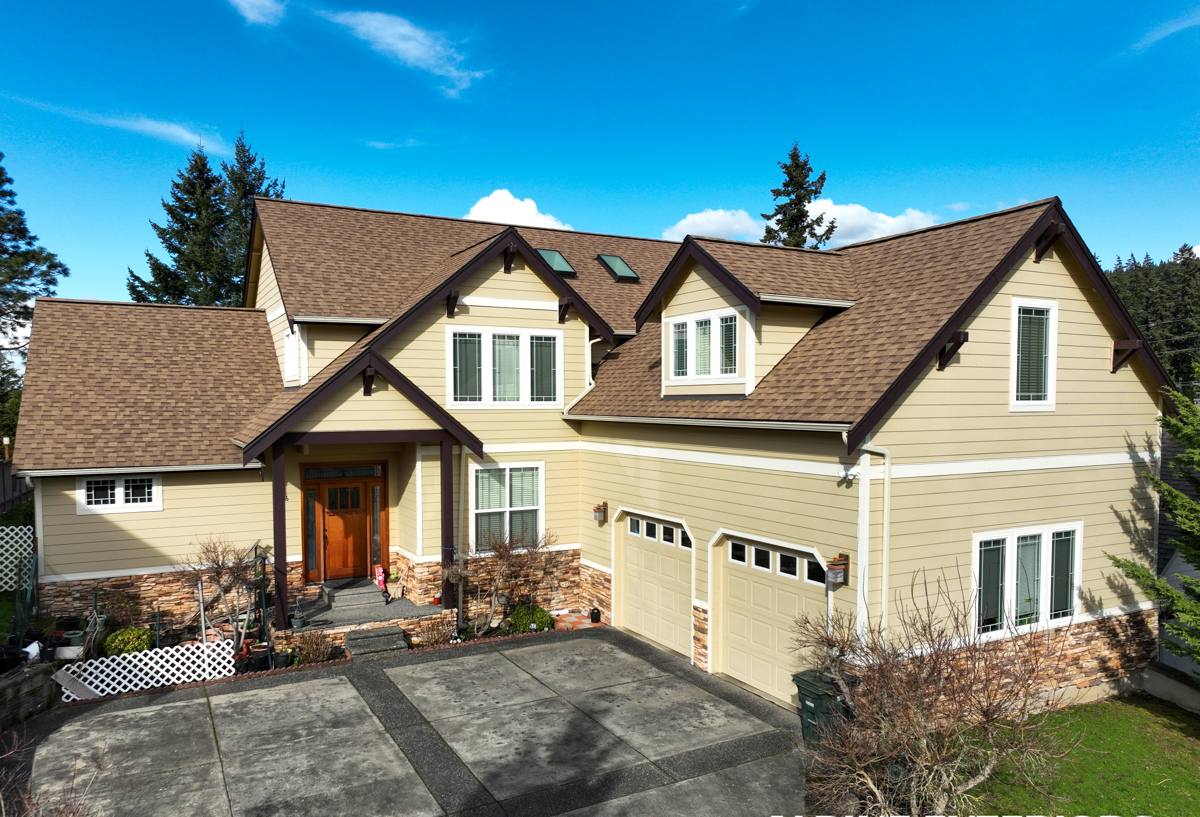
What a Correct Siding Installation Involves Here
None of this is exotic — it's careful, ordinary building science applied consistently, which is where a lot of siding jobs quietly fall short.
Water Management Behind the Siding
The siding itself is the least important layer for keeping a wall dry. What matters more is the water-resistive barrier underneath it, the flashing at every window, door, and penetration, and a drainage gap that lets any moisture that does get behind the cladding find its way back out instead of sitting against the sheathing. In a driving-rain environment like Obstruction Pass, skipping or shortcutting this layer is the single biggest cause of hidden rot we see.
Fastening and Clearances
Fastener spacing, embedment depth, and the gap left at the bottom of the wall and around trim all affect how the assembly handles wind load and moisture. Too tight a clearance at grade or at a deck ledger and you're guaranteeing standing water against the bottom courses. Corrosion-resistant fasteners matter more here than almost anywhere else on the island, given the salt exposure.
Trim, Caulking, and Flashing Details
Caulk is a maintenance item, not a waterproofing strategy. Anywhere a joint is expected to move or is exposed to standing water, it needs to be flashed, not just sealed. This is where rushed installs cut corners because it's slower work, and it's exactly the work that determines whether a wall stays dry through a wet Pacific Northwest winter.
Why We Only Install James Hardie Fiber Cement
We don't install vinyl, LP SmartSide, Cemplank, Allura, primed spruce, or cedar, and that's a deliberate standard, not an accident of what we happen to stock. Each of those products has real strengths — cedar looks the way a lot of homeowners want a Pacific Northwest home to look, vinyl is inexpensive, engineered wood products install fast. But every one of them asks something of the climate at Obstruction Pass that we don't think is a fair trade for a homeowner making a decision that's supposed to last decades.
Cedar and other wood siding need ongoing sealing and repainting to resist moisture, and in a shaded, salt-exposed, high-moisture environment that maintenance schedule gets shorter, not longer. Vinyl can warp, fade, and crack from UV and temperature swings, and it doesn't offer the impact resistance or fire resistance homeowners increasingly want in this region. Engineered wood products are moisture-sensitive at the core — if water gets past the surface, the substrate itself is what's compromised, and that's a hard thing to guarantee against in wind-driven rain.
James Hardie fiber cement is non-combustible, doesn't rot, and holds its ColorPlus factory finish far longer than field-applied paint on wood or vinyl's baked-in color. It's also engineered in specific product lines (the HZ system) matched to climate zones, so the version installed on a shaded, salt-exposed wall on Orcas Island is the right formulation for that exposure. Installed correctly, it's the product we're willing to put our name behind out here.
How the Materials Compare for This Specific Exposure
| Material | Salt Air / Moisture Exposure | Shade & Moss Tolerance | Ongoing Maintenance |
|---|---|---|---|
| Cedar / wood siding | Absorbs moisture, needs consistent sealing | Prone to moss and rot in shaded areas without upkeep | Re-sealing/painting on a recurring cycle |
| Vinyl siding | Doesn't rot, but can warp and fade with UV and temperature swings | Moss grows on the surface; limited resistance to impact | Low, but limited lifespan and repair options |
| LP SmartSide (engineered wood) | Wood-strand core is moisture-sensitive if the surface is breached | Vulnerable if moisture reaches the substrate | Inspection of seams and edges recommended |
| James Hardie fiber cement | Non-combustible, dimensionally stable, engineered HZ lines for climate | Resists moisture absorption; factory finish resists organic growth staining | Occasional wash; no re-painting on ColorPlus finish for the warranty term |
Our Process for an Obstruction Pass Installation
Site Assessment
We walk the property and look specifically at sun exposure, tree cover, wind exposure toward the water, and the current condition of the wall assembly — not just the old siding, but what's underneath it once we open it up.
Prep and Removal
Old siding comes off, and we inspect sheathing and framing for existing moisture damage before anything new goes up. This is the point where hidden problems from a prior install, if there are any, get found and addressed rather than covered over.
Installation Sequence
Water-resistive barrier, flashing at every penetration, drainage gap, then the Hardie siding itself, fastened to spec with corrosion-resistant fasteners appropriate for a salt-air environment. Sequence matters — each layer has to be right before the next one goes on.
Final Detailing and Cleanup
Trim, caulking at movement joints only, touch-up on any field-cut edges, and a full site cleanup. We walk the finished job with the homeowner before we consider it done.
What to Expect for Maintenance After Installation
Correctly installed Hardie siding is low-maintenance, not no-maintenance. In a shaded, moisture-heavy setting like Obstruction Pass, an occasional rinse to keep organic growth from establishing on the surface is worth doing, along with a periodic visual check of caulking at trim joints and any spots where a tree limb or structure sits close to a wall. None of this is a burden compared to what wood or vinyl asks of a homeowner in this same environment — it's the difference between upkeep and repair.
Why Hiring a Crew That Already Works This Area Matters
Orcas Island logistics are their own factor in a siding project. Material has to be ordered and staged in advance of the ferry schedule, and a crew that already routes jobs through the San Juan Islands knows how to plan around that instead of losing days to it. More importantly, a crew that has already worked on the Obstruction Pass side of the island has seen how sun, wind, and shade actually behave on specific lots here — which walls take the worst of the weather, which ones stay damp longest, where moss tends to establish first. That's the kind of judgment that only comes from doing the work in this exact place, not from a general knowledge of Pacific Northwest siding.
Questions to Ask Before Hiring a Siding Contractor on Orcas Island
- Are they licensed and insured to work in Washington, and can they show proof without hesitation?
- Do they have experience specifically with island logistics — material staging, ferry scheduling, weather windows?
- Will they show you the water-resistive barrier and flashing details before the siding goes up, not just after?
- What fastener and clearance specs do they follow, and are those specs appropriate for a salt-air, high-wind site?
- What's covered under the manufacturer's warranty versus the installer's workmanship warranty, and for how long?
If you're weighing a siding replacement on Obstruction Pass, we're glad to walk the property, look at what your walls are actually dealing with, and give you a straight answer on what it would take to do the job right. There's no pressure and no cost to get an estimate — just fill out the form below and we'll set up a time to come take a look.