 Orcas Island
 Why North Beach Homes Wear Out Siding Faster Than You'd Expect
North Beach sits close enough to the water that salt-laden air is a constant, low-grade attack on anything nailed to the outside of a house. Add San Juan County's long wet season, driving rain that comes in sideways off the water during winter storms, and the shade cover from Douglas fir and madrone that keeps north- and east-facing walls damp for days after a rain, and you have a set of conditions that punishes the wrong siding choice quickly. We've pulled failed siding off homes in this neighborhood that was barely a decade old — not because the homeowner did anything wrong, but because the product wasn't built for this specific combination of salt, moisture, and shade.
This page is about one thing: installing siding correctly on a North Beach home, with the materials and methods that actually hold up here. It isn't a general "why replace your siding" page — it's what we've learned installing on this stretch of the island specifically.
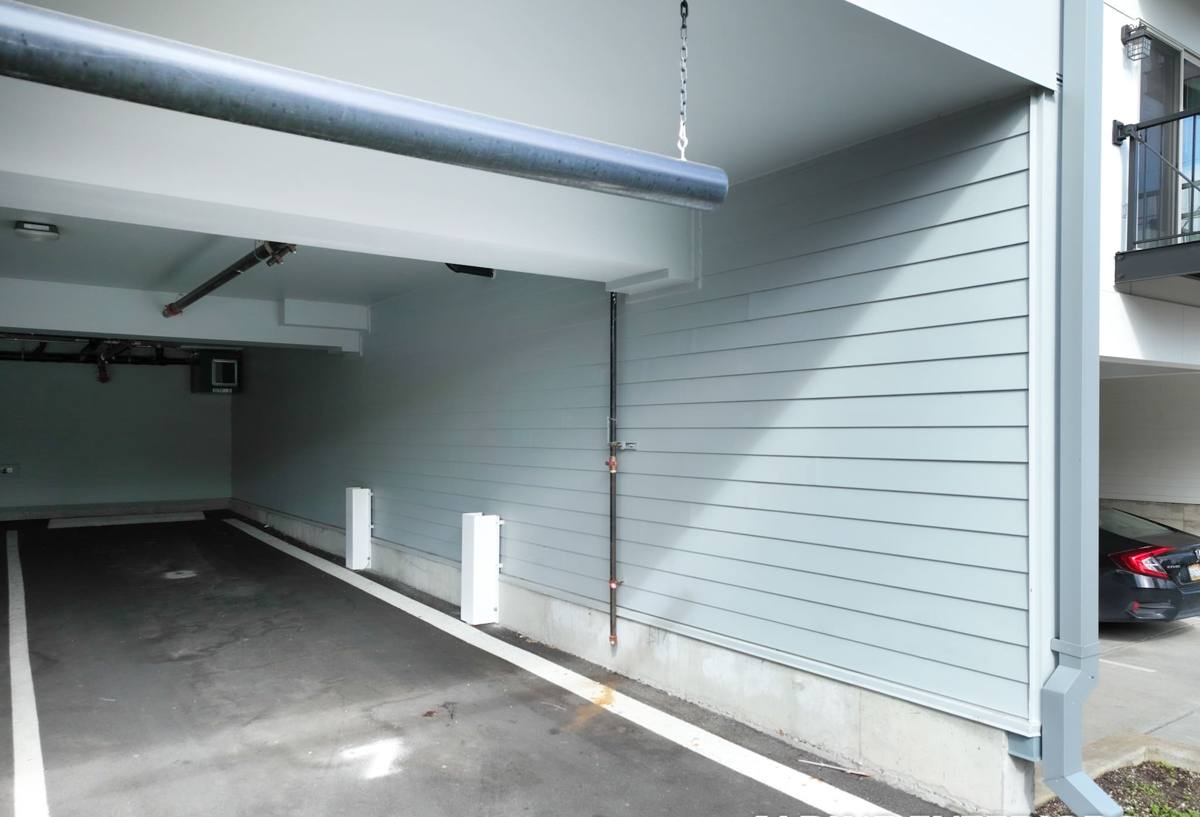
What Salt Air and Moss Season Actually Do to Siding
Salt Air
Airborne salt doesn't just sit on the surface — it works into fasteners, trim seams, and any exposed cut edge. On metal fasteners that aren't corrosion-resistant, that means rust streaks and eventually failed fastener holds. On wood-based products, salt accelerates moisture uptake at every joint, which is where rot starts.
Driving Rain
Orcas Island storms don't always arrive as gentle vertical rain. When wind drives rain horizontally into a wall, water gets forced past overlaps and into places it wouldn't reach in calmer weather. Siding that relies on paint film alone, rather than a manufactured, factory-cured finish, is the first to let that water in at the seams.
Moss and Prolonged Dampness
Tree cover and marine humidity mean some walls at North Beach properties stay damp far longer after a rain than a home in a drier, more exposed location would. Moss and algae growth on siding isn't just cosmetic — sustained dampness under organic growth softens wood-based substrates over time and holds moisture against the wall longer than bare siding would.
Why We Install Only James Hardie Fiber Cement
We don't install vinyl, LP SmartSide, primed spruce, cedar, or other fiber cement brands — not because those products don't have a place somewhere, but because we've made a professional call about what performs on Orcas Island's coastline. Fiber cement is non-combustible, dimensionally stable, and doesn't rely on paint alone for its color — Hardie's ColorPlus finish is baked on at the factory and holds up to UV and salt exposure far longer than a field-applied coat. Hardie also engineers specific product lines (their HZ5 designation, for example) for regions with more moisture exposure, which matters directly for a site like North Beach.
Vinyl siding can warp and fade in coastal exposure and its seams are a known path for wind-driven water. Wood products — cedar, primed spruce — look good on day one but need a maintenance commitment (recoating, caulking, moisture monitoring) that most homeowners underestimate, and that commitment gets harder to keep up with the wetter and shadier the site is. Other fiber cement brands may perform reasonably, but we've standardized on one product line so we can guarantee installation quality, warranty coverage, and color consistency across every job we do — including the transferable warranty that follows the house, not just the original owner.
What Correct Installation Looks Like on This Site
Fiber cement siding is only as good as its installation. A rushed or generic install defeats the point of choosing a premium, climate-engineered product. On a North Beach home, here's what we're paying attention to that a crew unfamiliar with the area might miss:
- Rainscreen or drainage gap behind the siding so any water that gets past the cladding has somewhere to go besides the sheathing
- Correct fastener spacing and corrosion-resistant fasteners rated for coastal/marine exposure, not general-purpose nails
- Factory-cut and factory-primed edges kept intact wherever possible, with field cuts sealed per manufacturer spec
- Flashing details at windows, doors, and roof-to-wall intersections sized for wind-driven rain, not just vertical rainfall
- Proper clearance between the siding's bottom edge and grade, decks, or roof lines to avoid wicking moisture from standing water or splashback
- Caulking only where the manufacturer specifies it — over-caulking traps moisture just as badly as under-caulking lets it in
Any one of these done wrong shortens the life of even the best siding on the market. This is where a crew's experience on this specific coastline — not just fiber cement in general — pays off.
Our Process for a North Beach Installation
1. On-Site Assessment
We walk the exterior, check which walls take the most weather (usually the ones facing open water or prevailing wind), look at existing moisture damage, and check current drainage and grading around the foundation.
2. Substrate Check
Before any new siding goes up, we check what's underneath. Sheathing that's already taken on moisture damage from a prior siding failure needs to be addressed first — installing new siding over a compromised substrate just hides the problem.
3. Weather Barrier and Drainage Plane
We install or verify a proper weather-resistive barrier and drainage gap suited to the wall's actual exposure, giving more attention to walls that face prevailing wind and rain.
4. Hardie Installation to Manufacturer Spec
Panels, fasteners, and flashing go in according to James Hardie's published installation instructions for this climate zone — this is also what keeps the manufacturer's warranty valid, since Hardie's warranty terms assume spec-correct installation.
5. Final Walkthrough
We check seams, trim, and flashing details before calling the job done, and go over basic care with the homeowner — what moss growth to expect near shaded corners and how to deal with it without damaging the finish.
Cost Factors Specific to This Job
Every North Beach property is different, but a few factors move the price on almost every siding installation we quote in this neighborhood:
| Factor | Why It Matters Here |
|---|---|
| Wall exposure | Sides facing open water or prevailing wind need more robust flashing and drainage detail than sheltered walls |
| Existing substrate condition | Moisture-damaged sheathing found during tear-off adds repair scope before new siding goes on |
| Access and site terrain | Sloped or wooded lots common on the island can slow staging and material handling |
| Trim and detail complexity | Homes with more corners, dormers, or window trim need more precise flashing work |
| Removal and disposal | Old siding — especially anything with moisture or moss damage — adds tear-off and haul-away time |
We give a firm number after walking the property, not a phone estimate — too much of the cost depends on what's actually happening at the wall and under the old siding.
Why a Local Crew Matters for This Job
A siding crew that mostly works inland or in drier parts of Washington will default to standard details that work fine there and fall short here. Knowing which walls on an Orcas Island property take the worst of the weather, how far moss and algae typically creep up a shaded wall, and how San Juan County's marine layer affects drying time between coats or steps isn't something you get from a manufacturer's install manual alone — it comes from doing this work on this island, repeatedly, and seeing what holds up and what doesn't a few years later.
We also know the practical side of working here: ferry-dependent material delivery schedules, weather windows for tear-off and dry-in, and permitting through San Juan County. None of that is glamorous, but it's the difference between a project that stays on schedule and one that gets stalled waiting on a barge.
Signs a North Beach Home Needs New Siding Now
- Visible moss or algae buildup that returns quickly after cleaning
- Soft spots, bubbling, or discoloration near the base of walls or below windows
- Paint that's failing faster than the usual repaint cycle, especially on water-facing walls
- Warping, cupping, or separation at panel seams
- Rust staining running down from fasteners or trim
- A musty smell or visible moisture inside on an exterior wall
Any of these on their own might just mean a repair. Several together, especially on the walls that take the worst weather, usually mean it's time to talk about full replacement before the substrate underneath is compromised too.
If you're seeing any of these signs on a North Beach property, or you're simply due for a siding replacement and want it done with a product and a process built for this coastline, we're happy to walk the property and give you a straightforward, no-pressure estimate — just fill out the form below.