 Orcas Island
 Why Roofs Wear Faster on Orcas Island
A roof in Orcas has to deal with conditions that inland Washington homes never see. Salt-laden air moves off the water and settles on every exposed surface, accelerating corrosion on fasteners, flashing, and any metal component that isn't rated for a marine environment. Add in driving rain that comes sideways during winter storms, and you get water intrusion at points that would stay dry on a calmer site — exposed nail heads, hip and ridge caps, and valleys that don't have enough underlayment overlap. Then there's moss. San Juan County's damp, shaded, tree-covered lots create a long moss season that can run nearly nine months out of the year on north-facing slopes.
None of this means an Orcas Island roof has to fail early. It means the installation has to account for these three factors from the first shingle to the last. A roof built to a generic mainland spec, without attention to salt exposure, wind-driven rain, and moss growth, will show problems years before it should.
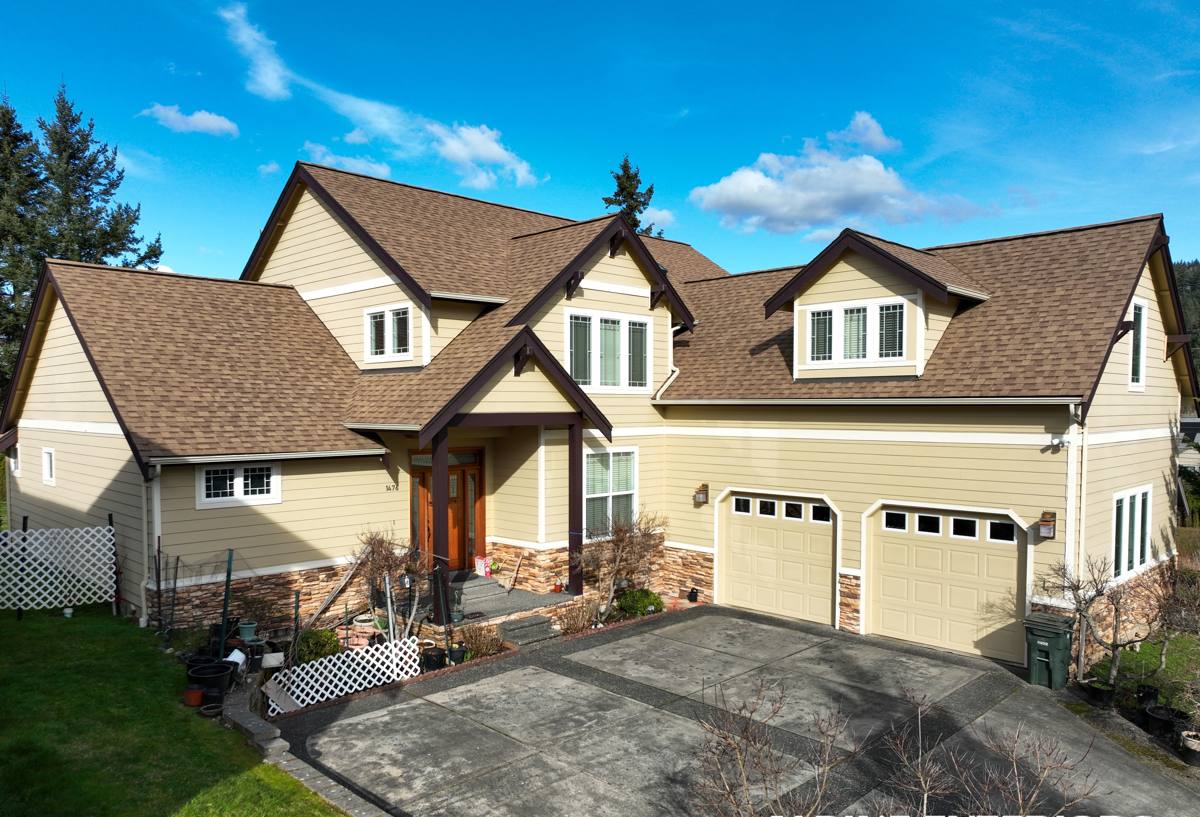
Signs Your Orcas Home Needs a New Roof, Not Another Repair
Homeowners often ask us to patch a leak, and sometimes a patch is the right call. But there's a point where repeated repairs cost more over time than one correct installation. Here's what tells us a full replacement is the honest recommendation:
- Granule loss heavy enough that you can see bare, shiny patches on asphalt shingles
- Moss or algae mats thick enough to be lifting shingle edges, not just staining the surface
- Soft or spongy spots when walked on, which usually means the decking underneath has taken on moisture
- Water stains or active drips inside the attic or on ceilings, especially after wind-driven storms
- Shingles that are curling, cupping, or cracking, or any that have gone missing after a windstorm
- A roof at or past its manufacturer-rated lifespan, particularly if it was installed without upgraded underlayment
- Flashing around chimneys, skylights, or vent pipes that's rusted, lifted, or was never properly stepped in
If two or three of these apply at once, patch work usually just delays the same decision by a season or two, and it does so while more of the decking gets exposed to moisture.
What a Correct Installation Involves in This Climate
Tear-Off and Decking Inspection
We remove the old roofing down to the decking rather than layering over it. That's the only way to actually see what the salt air and rain have done underneath — soft plywood, rusted-through nails, or rot around old flashing points don't show up until the old material is off. Any damaged decking gets replaced before anything new goes down, because a new roof over a compromised deck just hides the same problem for another few years.
Underlayment and Flashing
Given the volume of wind-driven rain the island gets, we don't treat underlayment as an afterthought. Ice-and-water shield goes at eaves, valleys, and around every penetration — chimneys, skylights, vent stacks — because those are the spots where driving rain finds a way in. Flashing gets stepped and sealed properly at every wall intersection, not just caulked over the top, which is a common shortcut that fails within a couple of winters in a marine climate.
Ventilation
A roof deck that can't breathe traps moisture, and trapped moisture under a shaded, damp roof is exactly what feeds moss and rot. We check intake and exhaust ventilation as part of every installation and correct it when the existing setup is undersized or blocked, which is common on older Orcas Island homes that were built before current ventilation standards.
Roofing Material Options for Orcas Island Homes
There's no single "best" material for every home here — it depends on your roof's pitch, how much shade and moss exposure it gets, and your maintenance tolerance. Here's how the common options compare for this specific climate:
| Material | Moss & Algae Resistance | Salt-Air Durability | Typical Lifespan | Maintenance |
|---|---|---|---|---|
| Architectural asphalt shingle | Moderate; algae-resistant granules help but need occasional cleaning | Good with corrosion-resistant fasteners | 25-30 years | Periodic moss removal on shaded slopes |
| Standing-seam metal | High; steep, smooth panels shed moss buildup | Very good with marine-grade coatings | 40-50+ years | Low; occasional fastener and seam check |
| Cedar shake | Low without regular treatment; moisture-retentive by nature | Moderate; needs upkeep near salt air | 20-30 years with maintenance | High; requires regular cleaning and treatment |
| Synthetic/composite shake | High; won't absorb moisture like wood | Good | 30-50 years | Low to moderate |
We'll walk through these trade-offs with you directly rather than push one product. A shaded, low-pitch roof under a lot of tree cover is a different conversation than an open, sunnier roofline, even on the same street.
Why We're Selective About Certain Products
Some materials that perform fine in drier inland climates don't hold up the same way here. Untreated cedar, for example, can look great going in but retains moisture longer in our damp, shaded conditions, which shortens its practical life and increases the maintenance burden on the homeowner. We're upfront about that trade-off before you buy, rather than after.
What Affects the Cost of a New Roof Here
Every estimate is specific to the house, but these are the factors that consistently move the number up or down on Orcas Island projects:
| Factor | Why It Matters Locally |
|---|---|
| Roof size and pitch | Steeper roofs take longer and require more fall-protection setup |
| Number of tear-off layers | Older homes sometimes have more than one layer of roofing to remove |
| Decking condition | Rot or soft decking found during tear-off adds replacement material and labor |
| Material choice | Metal and composite products cost more upfront than asphalt but need less upkeep |
| Delivery logistics | Materials and disposal both cross by ferry, which affects scheduling and lead time |
| Site access | Tree cover, driveway length, and staging space affect crew setup time |
| Flashing complexity | Chimneys, skylights, and multiple roof planes each add detail work |
Broadly, a straightforward asphalt shingle replacement on an average-size home runs in the low-to-mid five figures, with metal or complex rooflines pushing higher. We'll give you a firm, written number after we've actually looked at the roof — not a phone estimate.
Our Installation Process
- On-site inspection: we walk the roof and attic, check decking, ventilation, and flashing, and photograph problem areas
- Material and scope review: we go over material options and a written scope so you know exactly what's included
- Scheduling: we plan around weather windows and factor in ferry-dependent material delivery so there are no surprise delays mid-project
- Tear-off: full removal down to the decking, with any rotted or soft sections replaced
- Underlayment: ice-and-water membrane at eaves, valleys, and penetrations, synthetic underlayment across the field
- Flashing and ventilation: proper step flashing at walls and chimneys, and ventilation corrected where needed
- Roofing installation: shingles, metal, or shakes installed to manufacturer spec, with attention to fastener corrosion resistance
- Cleanup: full site cleanup including a magnetic sweep for stray nails and debris hauled off the island properly
- Final walkthrough: we go over the finished roof with you before calling the job done
Moss, Algae, and Long-Term Roof Care
Even a correctly installed roof needs some seasonal attention here. Moss doesn't just sit on the surface — its root structure works into shingle granules and, left long enough, into the shingle mat itself, which is why the long moss season on Orcas Island shortens roof life more than almost any other single factor we see. Keeping gutters clear so water isn't sitting against the eave, trimming back overhanging branches that keep a section of roof shaded and damp, and having moss physically removed (not just chemically treated) every year or two on north-facing slopes will meaningfully extend the life of a new roof.
We can point you toward zinc or copper strip options installed at the ridge during a new roof project, which release trace amounts of metal ions with rainfall to slow moss regrowth on shaded sections — a preventative step that's far cheaper during installation than added later.
Why a Crew That Already Works Orcas Island Matters
Roofing logistics on an island aren't the same as on the mainland. Material orders, dumpster or debris hauling, and crew scheduling all have to work around ferry sailings, and a contractor unfamiliar with that reality can turn a three-day job into a week of delays waiting on a delivery that missed its boat. We already schedule around this, so it's built into your timeline from the start rather than discovered partway through.
There's also a practical side to permitting and inspection scheduling through San Juan County that goes more smoothly when a crew has already been through it on other Orcas Island homes. And because we're already working in the area, warranty callbacks or a post-storm check aren't a special trip — they're part of how we operate here.
Get an Honest Look at Your Roof
If your roof is showing moss buildup, granule loss, or you've had a leak after the last storm, it's worth having someone look at it before winter rain finds every weak spot on its own schedule. We offer a free, no-pressure estimate — we'll tell you honestly whether you need a full replacement or if a repair will hold, using the form below to get started.