 Orcas Island
 Roofing on San Juan County's Water Line
Friday Harbor sits close to the water, and that changes what a roof has to survive year after year. Salt-laden air off the harbor accelerates corrosion on fasteners, flashing, and any metal component that isn't rated for a marine environment. Winter storms bring driving rain sideways off Haro Strait and San Juan Channel, which means water finds every weak seam, nail pop, and undersized flashing detail a lesser install left behind. And because so many island roofs sit under fir, cedar, and madrona canopy, moss and moisture-loving growth get a long season to work into shingle mat and roof deck alike.
A roof built for inland Washington doesn't automatically hold up here. Friday Harbor homes need a system chosen and installed with San Juan County's specific combination of salt exposure, wind-driven rain, and shade-fed moss in mind. That's the standard we build to, and it's the standard we'll walk you through below.
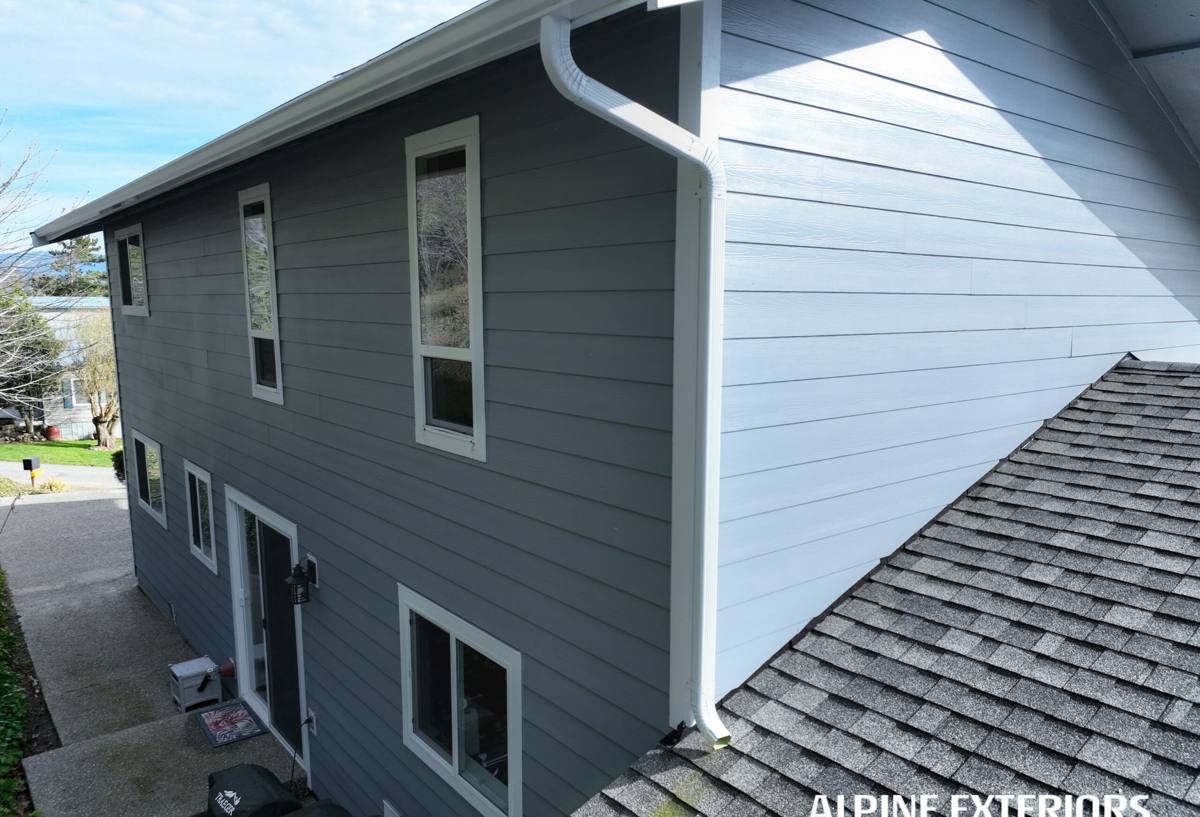
What Friday Harbor's Climate Actually Does to a Roof
Salt Air and Metal Fatigue
Any exposed metal on a roof — nail heads, drip edge, flashing, vent caps, ridge caps — is a candidate for corrosion near the water. Standard electro-galvanized fasteners can start showing rust streaks within a few years in a harbor-adjacent property. That streaking isn't just cosmetic; once a fastener starts corroding, its holding power degrades, and a roof is only as good as the connections holding it down in a windstorm.
Driving Rain and Wind-Driven Water
San Juan County storms often bring rain at an angle, not straight down. That matters because a roof designed only to shed vertical water can still let moisture push sideways up under shingle tabs, around chimney flashing, or into valleys that weren't detailed for lateral pressure. Most leaks we're called out to inspect on older Friday Harbor roofs trace back to a flashing detail, not the field shingles themselves.
Moss, Shade, and a Long Wet Season
Between fall and late spring, a shaded roof slope here can stay damp for weeks at a stretch. Moss and algae take hold in that environment, and once established, moss roots work under shingle edges and lift them, which is exactly the opening wind-driven rain needs. A roof surface that resists moss anchoring, paired with sensible tree clearance, buys a homeowner years of extra service life.
What a Correct New Roof Installation Involves
A "new roof" is really a system of layered decisions, and skipping any one of them is where premature failures start. Here's what we consider non-negotiable on a Friday Harbor install:
Tear-Off and Deck Inspection
We don't install a new roof over an old one. A full tear-off lets us see the actual roof deck — plywood or plank sheathing — and identify any soft, rotted, or delaminated sections before they're hidden under a new surface for another 20-plus years. Given the moisture exposure here, deck rot around old flashing points or under moss-affected areas is common enough that we plan for some deck replacement rather than treating it as a surprise change order.
Underlayment Chosen for Wet Exposure
Underlayment is the roof's backup line of defense, and in a climate where wind-driven rain is routine, we don't treat it as an afterthought. Synthetic underlayment with proper lap and fastening patterns, plus self-adhered ice-and-water membrane at eaves, valleys, and penetrations, gives the roof a second layer of protection if wind ever drives water past the primary surface.
Flashing Details
Chimneys, skylights, sidewalls, and valleys are where most leaks originate, not the open field of the roof. Correct step flashing, counterflashing, and valley metal — installed with corrosion-resistant fasteners appropriate for a salt-air environment — is where a careful install earns its keep over the life of the roof.
Ventilation
A roof deck that can't breathe traps moisture from the inside, which accelerates rot from underneath regardless of how good the surface material is. Balanced intake and exhaust ventilation matters everywhere, but it matters more in a climate that's already damp for a large part of the year.
Choosing a Roofing Material for Friday Harbor
There's no single "best" roofing material for every house — it depends on the home's style, budget, roof pitch, and how much maintenance the owner wants to take on. Here's how the common options stack up against San Juan County's specific conditions:
| Material | Salt Air Behavior | Moss Resistance | Maintenance |
|---|---|---|---|
| Architectural asphalt shingle | Good with corrosion-resistant fasteners and flashing | Moderate; algae-resistant granules help | Low to moderate |
| Standing seam metal | Excellent when specified in a marine-rated finish | Very good; smooth surface sheds moss more easily | Low |
| Cedar shake | Fair; needs regular treatment near salt exposure | Poor without diligent upkeep; holds moisture | High |
| Composite/synthetic shake or slate | Good; engineered for consistent weather resistance | Good | Low |
We install metal and architectural asphalt most often on Friday Harbor homes because both hold up well against salt exposure and moss when the fastener and flashing details are done right. Cedar shake has real curb appeal and a long island tradition behind it, but we're upfront that it asks for more upkeep in a shaded, damp environment — that's a maintenance trade-off we'll walk through honestly rather than push a product because it looks good on day one.
Our Process, Start to Finish
- On-site inspection. We walk the roof and attic, check the deck condition where visible, and note flashing points, ventilation, and any moss or moisture patterns already showing.
- Written estimate. A clear scope with material choice, tear-off, deck repair allowance, flashing plan, and ventilation — no vague line items.
- Material staging. Because we're ordering materials to an island jobsite, we confirm full material delivery before we schedule a start date, so your roof isn't sitting open waiting on a supply run.
- Tear-off and deck repair. Old roofing comes off, the deck gets inspected and repaired as needed, and debris is hauled off-site.
- Underlayment, flashing, and field installation. Installed in the sequence that actually sheds water correctly, not just the fastest sequence.
- Final walkthrough. We review the finished roof with you, including ventilation and any maintenance notes specific to your property's sun and tree exposure.
Timeline and Island Logistics
Getting crews, equipment, and a full material order onto San Juan Island takes more advance planning than a mainland job — ferry scheduling and freight timing are real constraints, not minor details. We build that into the estimate up front so a start date is a real commitment, not a guess that slips once materials or crew scheduling collide with ferry availability. Most straightforward residential re-roofs run a few days once materials and crew are on-site; steep, complex, or multi-structure properties take longer, and we'll give you a realistic range before work begins, not after.
What Drives Roofing Costs in Friday Harbor
| Cost Factor | Why It Matters Here |
|---|---|
| Roof pitch and access | Steep roofs and limited driveway access slow crew movement and material staging |
| Deck condition | Moisture-related rot found during tear-off adds material and labor to replace sheathing |
| Material choice | Metal and composite materials cost more upfront but reduce long-term maintenance |
| Flashing complexity | Chimneys, skylights, and multiple roof planes each add detail work that protects against leaks |
| Ferry and freight logistics | Material delivery to the island adds scheduling lead time, factored into project timing |
We give broad, honest ranges during the estimate once we've actually seen your roof — we won't quote a number over the phone before we've walked the site, because pitch, access, and deck condition change the real cost more than most homeowners expect.
Protecting Your New Roof After Installation
A well-installed roof still benefits from a bit of ongoing attention, especially in a climate that stays damp for months at a time. A simple annual habit goes a long way:
- Clear overhanging branches enough to let sun and air reach shaded roof sections
- Have gutters cleaned before the fall rains so water isn't backing up under eave edges
- Do a visual check after major windstorms for lifted shingles or displaced flashing
- Address any moss growth early, before it has a chance to root under shingle edges
- Keep an eye on attic ventilation — condensation on the underside of the deck is an early warning sign
None of this requires a contractor visit every year, but catching a small issue early is a lot cheaper than repairing water damage after it's spread.
Why a Local Crew Matters for This Job
Roofing is one trade where local experience actually changes outcomes, not just convenience. A crew that regularly works Friday Harbor and the rest of San Juan County already knows which fastener specs hold up against salt exposure, which flashing details fail first in wind-driven rain, and how tree cover on a given lot affects moss risk. We also already understand the logistics of getting materials and equipment to the island reliably, so your project timeline is based on real experience with these conditions, not a mainland assumption applied to an island job.
If you're planning a new roof in Friday Harbor, we're happy to walk your property, look at what your current roof is telling us, and put together a clear, no-pressure estimate. There's a form below — reach out and we'll get a time on the calendar.