 Orcas Island
 Mountain Lake's Climate Is Rougher on Siding Than It Looks
Homes around Mountain Lake sit up in the forested, higher-elevation part of Orcas Island, and that setting cuts both ways. The tree cover and elevation buy some shelter from the harshest coastal wind, but they also mean more shade, more standing moisture, and slower drying after every rain. Add in the salt-laden air that moves across San Juan County even away from the immediate shoreline, and you've got a siding environment that punishes anything that isn't built to shed water and resist organic growth.
The pattern we see on Mountain Lake homes is consistent: north- and east-facing walls that stay damp longer, moss and algae establishing on shaded siding within a few seasons, and driving rain during fall and winter storms working its way behind poorly flashed trim and laps. None of this is exotic — it's just the normal cost of being in the Pacific Northwest's wet belt, on an island, in the woods. Siding here needs to be chosen and installed with that reality in mind, not treated like it's going on a house in a dry inland climate.
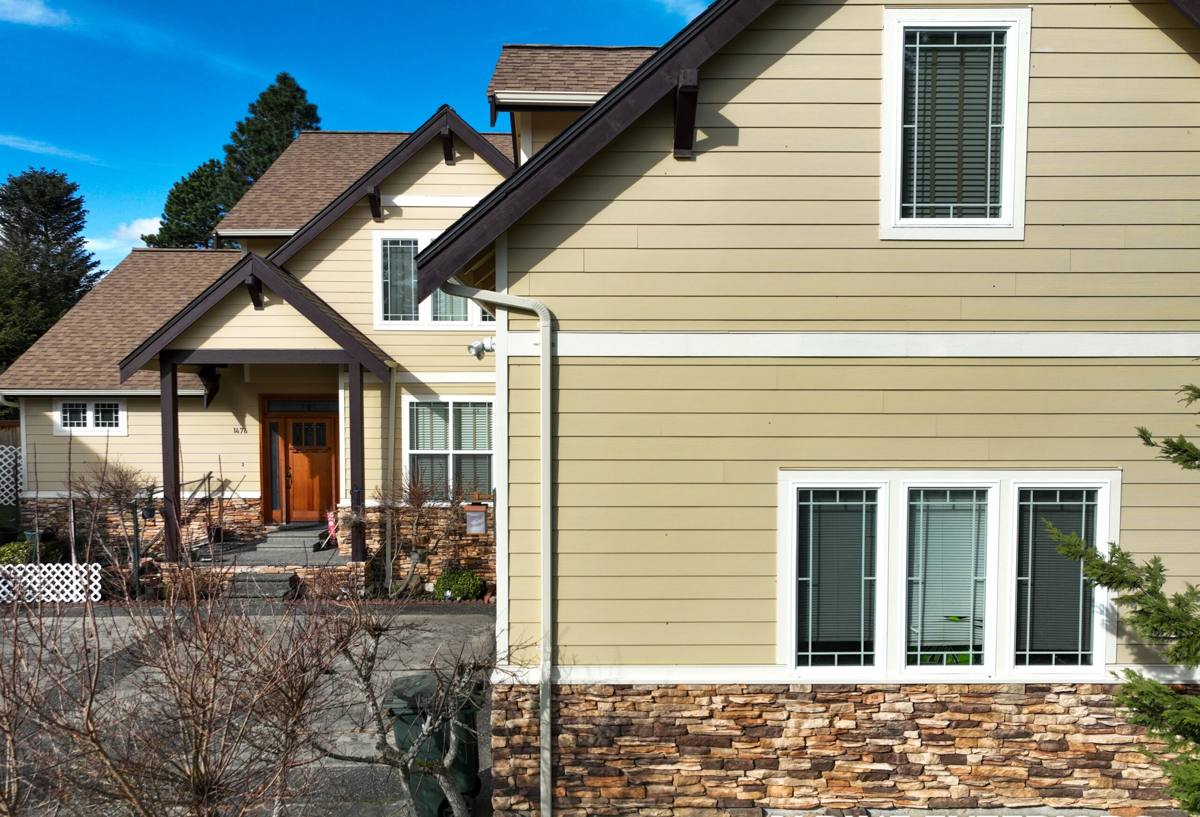
Why We Install Only James Hardie on Orcas Island Homes
We standardized on James Hardie fiber cement and stopped installing vinyl, LP SmartSide, and other alternatives because Mountain Lake's climate exposes their weak points fast. Vinyl gets brittle and can warp with temperature swings and doesn't hold paint if you ever want to change the color. Engineered wood products depend entirely on an intact factory coating to keep moisture out — any breach at a cut edge or fastener hole, and the wood substrate underneath is vulnerable to swelling and rot, which is a real risk in a climate this wet. Fiber cement doesn't have that failure mode because there's no wood fiber for moisture to get into.
Built for This Climate: The HZ5 Formulation
James Hardie doesn't make one siding formula for the whole country. Homes in wet, freeze-prone climates like the Pacific Northwest get the HZ5 engineered formulation, built specifically to handle repeated moisture cycling and cooler temperatures without cracking or delaminating. That's the version we install on every Orcas Island job, Mountain Lake included — it's not an upgrade option, it's the correct baseline for this county.
ColorPlus Factory Finish vs. Field-Painted Siding
Moss and algae get a foothold anywhere there's a rough, porous, or already-failing surface for spores to grip. James Hardie's ColorPlus finish is baked on at the factory under controlled conditions, which gives a harder, more uniform surface than siding painted on site — and it comes with its own finish warranty separate from the substrate warranty. It doesn't make a shaded wall immune to moss, but it gives moss less to hold onto and makes the eventual wash-down easier and less damaging to the finish than scrubbing bare wood or a field-applied coat.
What a Correct James Hardie Installation Involves
Fiber cement siding is only as good as the water management behind it. Most of the siding failures we get called out to inspect on the island trace back to installation shortcuts, not the material itself.
Flashing and Water Management First
Every horizontal transition, window, door, and roof-to-wall intersection needs proper flashing and house wrap integration before the first plank goes up. On a shaded, moisture-heavy site like Mountain Lake, this step matters more than the siding brand — get it wrong and water gets trapped behind the cladding regardless of what's on the outside.
Fastening, Gapping, and Caulking to Spec
James Hardie publishes clear fastening patterns, minimum clearances from grade and roofing, and gapping requirements at butt joints and trim. Skipping these — nailing too tight, closing up expansion gaps, or caulking joints that are supposed to stay open — is what causes buckling, cracked caulk lines, and premature paint failure. We install to Hardie's published specs because that's also what keeps the manufacturer's warranty intact.
Trim, Corners, and Siding Profile Choices
Lap siding, board-and-batten, and panel systems all handle wind-driven rain differently, and the right choice depends on wall exposure, roof overhang, and how much direct weather a given elevation of the house actually takes. On a wooded, uneven-exposure site like a Mountain Lake lot, we'll often recommend different overhang and flashing details on the more exposed sides of the same house rather than treating all four walls identically.
Our Process, Start to Finish
- Site walk and exposure assessment — we look at tree cover, shaded walls, drainage patterns, and existing moisture damage before quoting anything.
- Written estimate — siding profile, color, trim package, and a clear scope of what's included, with no vague allowances.
- Material staging — because everything for an Orcas Island job comes over by ferry, we plan delivery windows around weather and boat schedules so a job isn't left half-clad during a storm.
- Tear-off and substrate check — old siding comes off, sheathing gets inspected for rot or damage before anything new goes on.
- House wrap and flashing — water management details get installed and inspected before siding starts.
- Hardie installation — fastened, gapped, and caulked to manufacturer spec.
- Final walk-through — we go over the finished job with you before calling it done.
What a Mountain Lake Siding Job Typically Costs
Every home is different, but the factors that move the price on a Mountain Lake job are fairly consistent. This isn't a quote — it's what actually drives the number up or down.
| Factor | Why It Matters Here |
|---|---|
| Wall exposure and shading | Heavily shaded, moisture-prone walls may need extra flashing detail and drainage planes |
| Existing substrate condition | Rot found under old siding means repair work before new siding can go on |
| Siding profile and trim complexity | Lap vs. panel, corner detail, and trim board count all affect labor hours |
| Access and ferry logistics | Material delivery and crew scheduling around ferry timing on remote lots |
| Tear-off vs. new construction | Removing and disposing of old siding adds labor that new-build jobs skip |
| ColorPlus color and finish selection | Standard vs. premium color palettes carry different material pricing |
Living with Hardie Siding in a Moss-Prone, Salt-Air Environment
Fiber cement is low-maintenance, not no-maintenance. In a climate that stays wet as much of the year as San Juan County does, a little routine care goes a long way toward protecting both the finish and the warranty.
- Rinse shaded and north-facing walls with a garden hose once or twice a year to keep moss and algae from establishing — avoid pressure washers, which can force water behind laps and damage the finish
- Keep gutters, downspouts, and roof valleys clear so runoff isn't dumping directly onto siding sections
- Trim back branches and brush that keep a wall shaded and damp longer than it needs to be
- Inspect caulk joints at trim and penetrations annually and re-caulk where it's cracked or pulled away
- Touch up any chips or fastener damage promptly with manufacturer-matched product to prevent moisture entry
- Walk the exterior after major fall and winter storms to check for loose trim, debris buildup, or standing water at the base of walls
Why Hiring a Crew That Already Works This Island Matters
Siding work on Orcas Island isn't the same logistics problem as siding work on the mainland. Every board, fastener, and roll of house wrap has to come over by ferry, which means a crew that hasn't planned for that can end up with a job stalled mid-tear-off waiting on materials — leaving your house exposed to the next round of driving rain. A crew that already works the island builds ferry schedules, weather windows, and material lead times into the plan from day one.
There's also a knowledge factor that's specific to places like Mountain Lake. A contractor who's only worked shoreline properties may not think twice about the extra shade and slower drying times that come with a wooded, inland-lake setting, and may spec the same flashing and gapping details they'd use on an open, sun-exposed wall. Knowing which walls on an island home actually need the extra attention — and which don't — comes from having done the work here before, not from a generalized checklist.
Signs Your Current Siding Is Already Losing the Battle
If you're not sure whether your home's current siding still has years left in it, these are the warning signs we look for first on Mountain Lake homes.
- Soft or spongy spots when you press on the siding, especially near the bottom courses
- Moss or algae that keeps coming back within months of being cleaned off
- Paint that's peeling, bubbling, or chalking heavily on shaded walls
- Visible gaps, cracked caulk, or warped boards at trim and corners
- Musty smells or interior wall staining that suggests moisture is already getting through
If you're seeing any of that, it's worth having someone take a real look before the next wet season rather than after. We're happy to walk your property and give you a straight, no-pressure estimate on what a correctly installed James Hardie system would take for your home near Mountain Lake — no obligation, just an honest look at what you're working with.