 Orcas Island
 Roofing Built for Lopez Village's Marine Climate
A roof in Lopez Village works harder than a roof almost anywhere else in Washington. It sits under near-constant marine air, takes wind-driven rain off the water for months at a time, and spends a good chunk of the year shaded and damp enough to grow moss on anything that isn't actively shedding water. None of that is unusual for San Juan County — it's just the tradeoff of island living — but it does mean a roof installed with mainland assumptions tends to underperform out here. Fasteners corrode faster in salt-laden air. Algae and moss get a head start wherever tree cover blocks sun and airflow. And driving rain finds every weak seam, valley, or under-flashed penetration a lot sooner than it would in a drier inland town.
None of this means island homes need exotic materials or unusual construction. It means the details that are optional elsewhere — proper ventilation, corrosion-resistant fasteners, correctly lapped underlayment, ice-and-water shield at vulnerable points — are not optional here. A new roof done right in Lopez Village is built assuming wet, salty, moss-friendly conditions from day one, not retrofitted to handle them later.
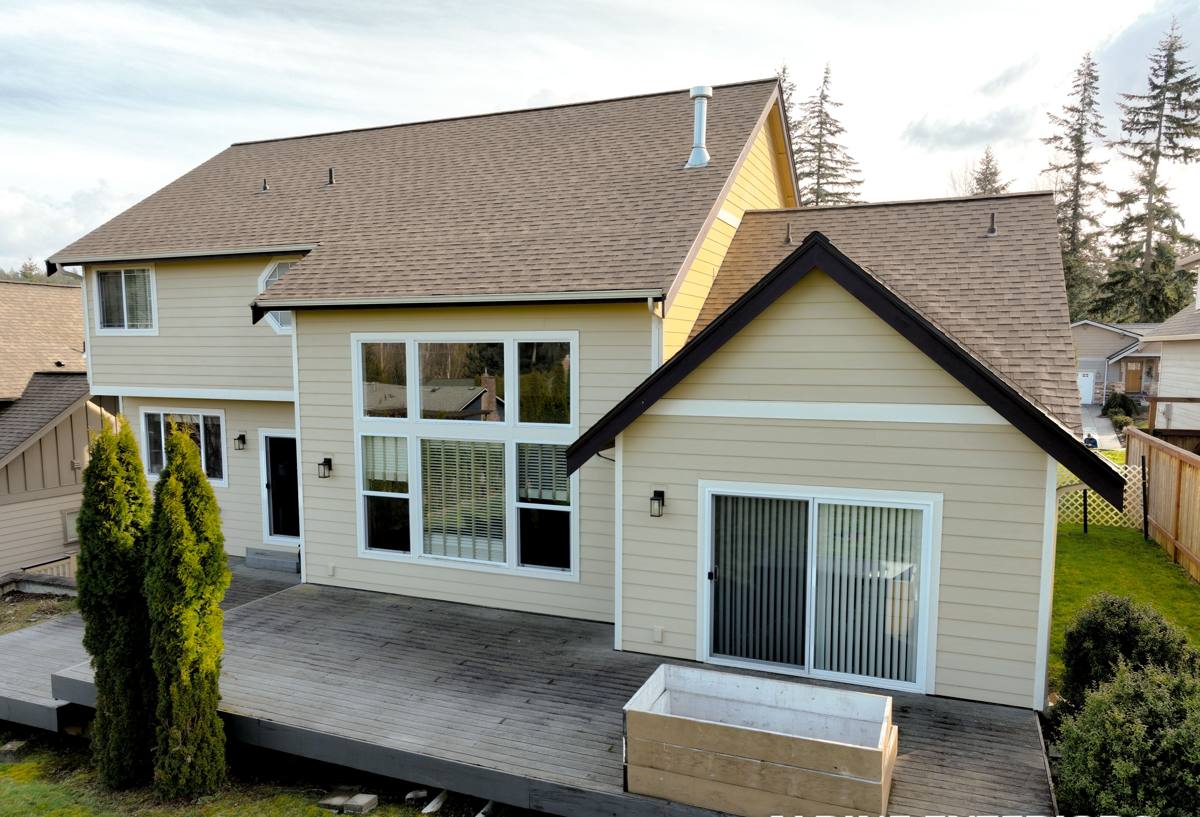
How to Tell You Need a Full Replacement, Not Another Repair
Most homeowners call us after a leak, but a leak doesn't always mean the whole roof is done. Here's how we tell the difference:
- Shingles that are cupping, cracking, or losing granules across large sections rather than one isolated area
- Soft or spongy decking felt underfoot in the attic, which usually means moisture has been getting through for a while
- Repeated leaks in different spots each year, rather than the same flashing detail failing again
- Heavy, persistent moss or algae growth that keeps returning within a season or two of cleaning
- A roof that's already at or past its expected service life for its material and exposure
- Visible sagging along the ridge or roof plane, which points to structural or decking issues beneath the surface
If a roof shows one or two of these, a targeted repair or a partial section replacement may still make sense. If it shows several at once, patching becomes a short-term fix on a roof that's already telling you it's near the end. We'll always give you a straight answer on which category your roof falls into — we don't have any reason to sell a full replacement to someone who only needs a repair.
What a Correct Installation Actually Involves
The material on top gets all the attention, but the parts that determine whether a roof lasts in this climate are mostly underneath it.
Tear-Off and Deck Inspection
We remove the old roofing down to the deck rather than layering over it. That's the only way to actually see what's happening underneath — soft spots, rot around old penetrations, or decking that's absorbed years of moisture. Any compromised sheathing gets replaced before anything new goes down; installing a new roof over a bad deck just guarantees a shorter lifespan.
Underlayment and Ice-and-Water Protection
Underlayment is the roof's real waterproofing layer — the visible material on top is largely wind and impact protection and appearance. In a driving-rain climate, we pay particular attention to eaves, valleys, and any low-slope transitions, using self-adhering ice-and-water shield in the areas most likely to see wind-driven water pushed backward under the surface layer.
Flashing and Penetrations
Chimneys, vent pipes, skylights, and roof-to-wall transitions are where the overwhelming majority of leaks start — not the open field of the roof. Correct step flashing, counter-flashing, and pipe boots, properly lapped with the underlayment rather than just caulked over it, are what actually keep water out at these points long-term.
Ventilation
A roof that can't breathe traps moisture in the attic, which speeds up decking rot from the inside and helps condensation form under the roofing material itself. Balanced intake and exhaust ventilation matters everywhere, but it matters more here, where ambient humidity is already high for much of the year.
Material Options for Island Homes
There's no single "best" roofing material for Lopez Village — the right choice depends on budget, roof pitch, tree cover, and how much upkeep you want to take on. Here's how the common options compare for this climate specifically:
| Material | Typical Lifespan | Moss/Algae Resistance | Maintenance in This Climate |
|---|---|---|---|
| Architectural asphalt shingle (algae-resistant) | 25-30 years | Good with AR-rated granules | Periodic moss removal on shaded slopes |
| Standard 3-tab asphalt shingle | 15-20 years | Fair, more prone to staining | More frequent cleaning, shorter lifespan under moisture |
| Standing seam metal | 40-50+ years | Very good, sheds moss easily on a clean surface | Low; occasional debris clearing |
| Cedar shake | 20-30 years with upkeep | Requires active maintenance to resist moss | Regular treatment and cleaning needed in shaded, damp areas |
We install architectural asphalt and metal roofing most often on the island, largely because they hold up well against sustained moisture without demanding constant homeowner attention. Cedar shake has real appeal and a long history in this region, but it's honest to say it needs a more active maintenance relationship with moss and moisture than most homeowners want to keep up with once the novelty wears off — that's a maintenance-burden tradeoff, not a knock on the material itself. We'll walk through the real tradeoffs for your specific roof rather than push one option.
Our Installation Process, Step by Step
- On-site inspection and honest assessment of whether you need full replacement or repair
- Written estimate covering material options, scope, and timeline — no pressure to decide on the spot
- Material ordering and scheduling, with delivery timed around ferry logistics so nothing sits waiting
- Tear-off, deck inspection, and any necessary sheathing repair
- Underlayment, ice-and-water shield, and flashing installation at all penetrations and transitions
- Installation of the new roofing material per manufacturer spec
- Ventilation check and adjustment where needed
- Full site cleanup, including magnetic sweep for nails, and a final walkthrough with you
We try to give you a realistic timeline up front and stick to it. Weather windows matter more here than on the mainland — we schedule tear-offs around forecasted dry stretches whenever possible, because an exposed deck sitting under Puget Sound rain for days is exactly the kind of risk a good schedule avoids.
Living With Moss and Salt Air After Installation
A correctly installed roof still needs a little seasonal attention out here — that's just the reality of the climate, not a sign anything was done wrong. A short annual routine keeps a new roof performing the way it's supposed to:
- Clear overhanging branches and debris that keep sections of roof shaded and damp longer than the rest
- Remove moss growth gently before it establishes a root mat that lifts shingle edges
- Check and clear gutters so water isn't backing up under the roof edge during heavy rain
- Have flashing and penetrations visually checked every couple of years, since these are the first places any wear shows up
- Avoid pressure washing the roof surface directly — it can drive water under shingles and strip granules
None of this is a big time commitment, but skipping it entirely is how a well-installed roof ends up needing avoidable repairs five or six years in.
Why a Crew That Already Works Lopez Village Matters
Island projects have logistics that mainland contractors often underestimate. Materials, dumpsters, and equipment all move by ferry, and a crew unfamiliar with those schedules can turn a straightforward job into a stretched-out one — extra trips, delayed deliveries, days lost waiting on a sailing. We plan material orders and crew scheduling around ferry logistics as a matter of course, not as something we figure out mid-project.
There's also a familiarity factor that's harder to quantify but genuinely matters: knowing how exposed a given lot is to wind off the water, which neighborhoods sit under heavier tree cover and need extra moss-prevention attention, and how local permitting works in San Juan County. A crew that's done this work around Lopez Village repeatedly isn't guessing at any of it.
Permits, Timeline, and What to Expect
Most roof replacements in San Juan County require a permit, and we handle that process as part of the job rather than leaving it on you. Timeline for a typical single-family roof runs a few days of active work once materials are on-site and weather cooperates, though island scheduling around ferries and weather windows can add some buffer compared to a similar job on the mainland. We'll give you a realistic window during the estimate rather than an optimistic one that slips.
If you're weighing a new roof for a Lopez Village home, we're glad to come take a look, walk you through what your specific roof needs, and give you a straightforward estimate — no pressure, no upsell, just an honest read on your options. The form below is the easiest way to get that scheduled.