 Orcas Island
 Lopez Island's Climate Puts Real Demands on Siding
Lopez Island sits out in San Juan County the same as its neighbors, but the exposure a given home gets depends a lot on where it sits — open water frontage, a windward bluff, or a low, shaded lot tucked into fir and cedar. All of it adds up to the same three stresses over time: salt-laden air moving in off the water, driving rain that hits siding sideways during winter storms, and a long, damp moss season that keeps north-facing walls wet for weeks at a stretch. Add the ferry-dependent, sometimes slow-to-repair nature of island living, and you get a simple conclusion: siding here needs to be a material that shrugs off moisture and salt without needing constant attention, because "we'll get to it next trip over" isn't a real maintenance plan.
Wood-based products — cedar, primed spruce, engineered wood siding — take the brunt of this environment hardest. They absorb moisture at cut ends and fastener penetrations, and once moss and algae get a foothold on a shaded wall, the surface underneath stays wet longer than it should. Vinyl holds up to rain fine but becomes brittle in the cold snaps that come through the San Juans and doesn't stand up well to years of direct salt exposure near the shoreline. None of that means those products are junk — it means they ask a homeowner to keep up with maintenance on a schedule that's hard to keep on an island.
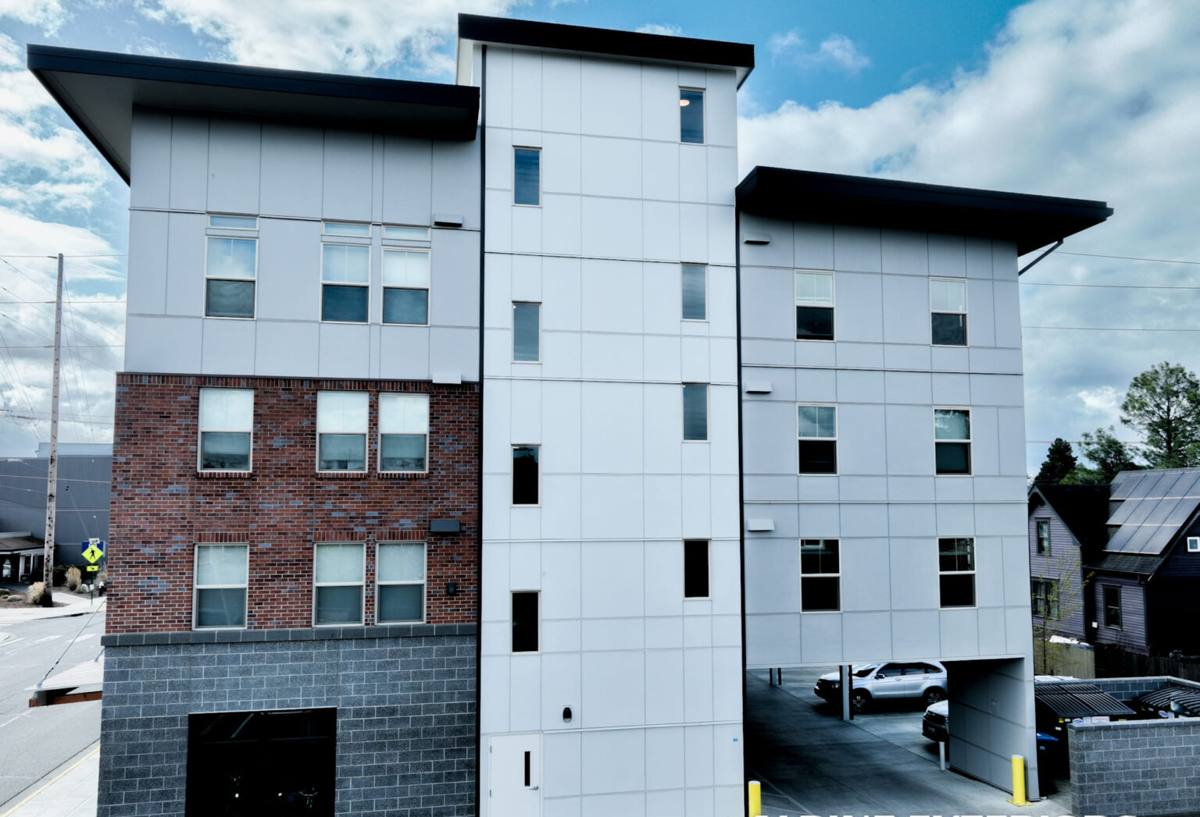
Why Fiber Cement Fits This Environment
Fiber cement is cement, sand, and cellulose fiber pressed and cured into a dense, stable board. It doesn't absorb water the way wood does, it doesn't become brittle in cold weather the way vinyl can, and it's non-combustible — a real consideration anywhere in the San Juans where wildfire risk and insurance underwriting have both gotten more attention in recent years. We install James Hardie fiber cement exclusively, in the HZ product lines engineered for the Pacific Northwest's wet, marine-influenced climate rather than a generic national spec.
The factory-applied ColorPlus finish matters more here than it would in a drier inland climate. A field-painted board is only as good as the paint job and the substrate underneath it; a factory finish is baked on under controlled conditions and backed by its own finish warranty, which means the color and the moisture barrier are consistent from board to board — something that's harder to guarantee when a crew is brushing or spraying color on-site in variable island weather.
What a Correct Fiber Cement Installation Involves
Fiber cement is a forgiving material in terms of durability, but it is not a forgiving material to install poorly — a rushed or under-specified install can trap moisture behind the board even though the board itself doesn't rot. Getting it right matters more on a Lopez Island lot exposed to driving rain than it does somewhere sheltered.
Clearances and Flashing
James Hardie's own installation instructions specify minimum clearances from grade, roof lines, decks, and other flat surfaces, plus flashing details at every window, door, and penetration. Skipping these clearances is one of the most common corner-cutting moves we see on re-sides, and it's exactly what lets wind-driven rain find its way behind the siding on an exposed wall.
Fastening and Joints
Fasteners have to land in framing at the spacing Hardie specifies, driven flush without overdriving — an overdriven nail crushes the board's edge and creates a weak point. Butt joints need to be caulked and, ideally, backed with flashing tape rather than caulk alone, since caulk is the first thing to fail under repeated wetting and drying cycles.
House Wrap and Rainscreen Detailing
Behind the siding, a properly lapped weather-resistive barrier and, where the wall assembly calls for it, a rainscreen gap give any moisture that does get past the cladding a way to drain and dry instead of sitting against the sheathing. On a wall that takes direct rain off the water, that detail is the difference between siding that lasts decades and one that hides a rot problem for years before it shows.
Our Process for Lopez Island Projects
Working on the islands means planning around ferry schedules and materials logistics in a way a mainland job doesn't require, so we build that into how we run a project rather than treating it as a surprise.
Assessment and Planning
We start with a walk-around of the existing siding and wall assembly, checking for hidden moisture damage around windows, at deck ledgers, and anywhere the current siding has failed. We also look at sun and wind exposure by elevation, since a north wall in Lopez Island's tree cover and a south or west wall facing open water don't need to be treated the same way in the detailing.
Material Staging and Scheduling
Because everything on-island comes over by ferry, we plan material deliveries and crew scheduling around actual sailing times rather than assuming same-day flexibility. That means a firmer schedule going in, but it avoids the stop-and-start delays that happen when a crew shows up short a bundle of siding.
Installation and Final Walkthrough
Installation follows Hardie's fastening, clearance, and joint specifications on every elevation, not just the ones visible from the road. Before we call a job finished, we walk the whole exterior with the homeowner, checking caulk lines, trim, and any areas where the old siding's damage required extra sheathing repair before the new siding went on.
James Hardie Compared to Other Siding Options
We get asked fairly often why we don't offer a lower-cost alternative alongside Hardie. The honest answer is in how these materials actually perform in a marine, high-moisture climate over the long run.
| Material | Moisture Behavior | Maintenance Needs | Fire Rating |
|---|---|---|---|
| James Hardie fiber cement | Doesn't absorb water; engineered for wet climates | Occasional wash; factory finish holds color for years | Non-combustible |
| Cedar / primed spruce | Absorbs moisture at cuts and fasteners; prone to rot without upkeep | Regular repainting, caulking, and moss removal | Combustible |
| Vinyl | Sheds rain but can trap moisture behind it; joints can let water in | Low, but brittle and cracks in cold or impact | Combustible, can warp near heat |
| LP SmartSide / engineered wood | Better than raw wood but still wood-based and moisture-sensitive at cut edges | Field-painted finish needs periodic maintenance | Combustible |
None of the alternatives are unusable products — they're simply a different set of trade-offs, and we've made a professional decision that Hardie's moisture performance and low-maintenance factory finish are worth standardizing on for every home we side, island properties included.
What Drives the Cost of a Lopez Island Siding Job
Every home is different, but the same handful of factors move the price up or down on most projects we quote in the San Juans.
| Cost Factor | Why It Matters |
|---|---|
| Existing wall condition | Hidden rot or sheathing damage found during tear-off adds repair scope before new siding goes on |
| Home size and elevation complexity | More corners, gables, and window trim mean more cutting, flashing, and labor time |
| Access and logistics | Ferry scheduling and site access affect how efficiently material and crew time can be staged |
| Siding profile and color | Lap width, shingle-style panels, and ColorPlus finish options are priced differently than a basic lap job |
| Trim and accessory work | Corner boards, window casing, and soffit work are often bundled into a full re-side |
We won't quote a number without seeing the home, but we can give a straightforward, honest estimate range once we've walked the property and understand what's under the existing siding.
Choosing a Crew That Already Works Lopez Island
A contractor unfamiliar with island logistics can turn a straightforward siding job into a scheduling headache — missed ferry slots, materials stuck on the mainland, or a crew that quotes mainland pricing without accounting for the extra planning island work requires. A few things worth checking before hiring anyone for a fiber cement job out here:
- Ask whether they're a certified or experienced James Hardie installer, not just someone who's "worked with it before"
- Ask how they plan material delivery and crew scheduling around ferry sailings
- Ask to see how they handle flashing and clearances at windows, decks, and roof lines — not just the finished look
- Ask what warranty coverage applies to both the product and the labor, and get it in writing
- Ask whether they've done other work in San Juan County recently, and what that told them about the specific exposure your lot gets
Hiring locally-experienced doesn't just save on logistics — it means the crew has already seen how a given elevation on the islands behaves in a wet winter, and builds that into the detailing instead of applying a one-size-fits-all approach.
Keeping Fiber Cement Siding Looking Right on an Island Property
Fiber cement asks very little of a homeowner compared to wood or repainted engineered siding, but "very little" isn't "nothing." A yearly rinse with a garden hose or low-pressure wash keeps salt residue and the start of moss growth from building up on shaded north walls, which is where Lopez Island's damp season shows up first. Keeping gutters clear and vegetation trimmed back from the siding helps air circulate and dry the wall faster after storms. Beyond that, an occasional visual check of caulk lines at trim and butt joints — recaulking if you see cracking — is really the extent of what the material asks for over its service life.
If you're planning a re-side or building new on Lopez Island and want a straightforward, no-pressure look at what your home actually needs, we're happy to come out, walk the property, and give you an honest estimate — no obligation, just a clear answer on what correct fiber cement siding for your specific lot would involve.