 Orcas Island
 Crow Valley's Siding Problem Isn't Like the Mainland's
Homes in Crow Valley deal with a combination of stresses that most siding products were never engineered for. You've got salt-laden air moving in off the surrounding water, long stretches of driving rain through fall and winter, and a moss and lichen season that can run most of the year on north-facing walls and anything shaded by fir and madrona. Add the freeze-thaw swings San Juan County gets in a hard winter, and you have an environment that finds every weak point in a siding system within a few years, not a few decades.
That's true whether your home sits closer to open water or back in the valley under tree cover — the moisture load is different in degree, not in kind. Salt air corrodes fasteners and trim. Rain finds every gap in flashing and caulk. Shade and humidity feed moss, algae, and mildew on anything porous enough to hold water against its surface. Siding on Orcas Island isn't decorative — it's the first and most important layer of weather protection the house has, and it needs to be chosen and installed with that job in mind.
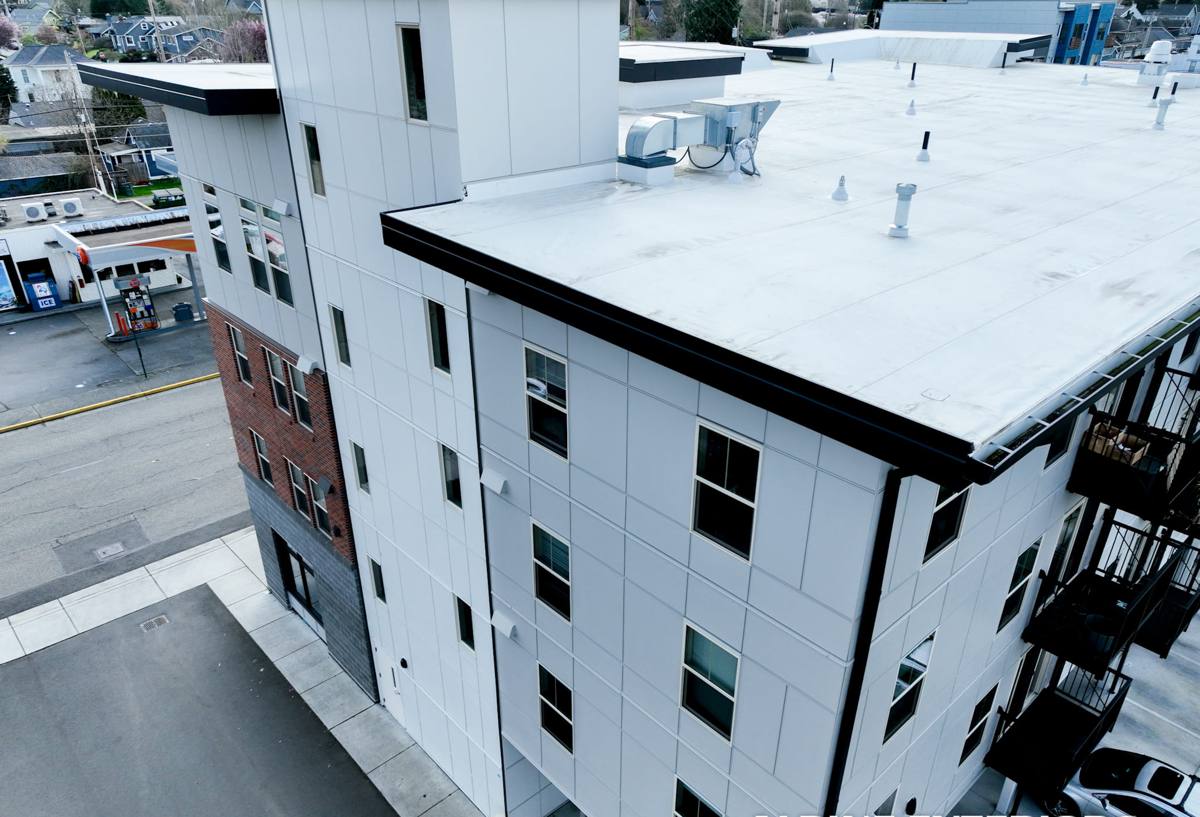
Why We Install James Hardie and Nothing Else Here
We standardized on James Hardie fiber cement siding for every home we side, including here in Crow Valley, for reasons that come directly from what this climate does to a house over time:
- Non-combustible: fiber cement doesn't feed a fire the way wood-based products can, which matters on an island where wildfire response times are longer than on the mainland.
- Engineered for wet climates: James Hardie makes climate-specific HZ product lines, and the Pacific Northwest formulation is built around exactly the kind of sustained moisture exposure Orcas Island sees.
- Factory-cured ColorPlus finish: the color and top coat are baked on in a controlled plant environment, not applied on a wet jobsite, so the finish holds up better against UV and salt exposure than field-applied paint.
- Dimensionally stable: fiber cement doesn't swell, cup, or split the way wood and wood-composite sidings can when they take on and release moisture season after season.
- A real, transferable warranty: backed by a manufacturer with decades of track record in wet coastal climates, not a regional or private-label warranty with narrower coverage.
We don't install LP SmartSide, vinyl, Cemplank, Allura, primed spruce, or cedar. Each of those has a legitimate place in the market, but none of them holds up as consistently against salt air, driving rain, and heavy moss exposure as James Hardie does — and we'd rather stand behind one product system we know inside out than spread ourselves across several we don't fully trust in this climate.
What a Correct Hardie Installation Actually Involves
James Hardie siding fails early almost exclusively because of installation mistakes, not product defects. The board itself is engineered to last; the water management around it is where the job is won or lost. On a Crow Valley home, that means:
Water Management First
A weather-resistive barrier goes on before a single board, with proper lapping and taping at every seam. Flashing goes over every window and door head, and behind every horizontal trim piece — not caulk alone. Housewrap seams and penetrations get sealed against the wind-driven rain this area sees regularly, not just light drizzle.
Clearances That Actually Get Followed
James Hardie specifies minimum clearances from grade, roofing, decks, and other horizontal surfaces for a reason: those gaps are what let a wall dry out between storms. On heavily landscaped or wooded lots, we've seen those clearances ignored by past installers, which traps moisture against the bottom of the siding and starts rot in the framing behind it long before the Hardie board itself shows any wear.
Fastening to Spec
Corrosion-resistant fasteners, correct spacing, and correct depth all matter more here than in a dry inland climate. Overdriven or underdriven nails, or fasteners that aren't rated for coastal exposure, are one of the most common causes of premature siding failure we find when we're called out to fix someone else's work.
Caulk and Trim Details
Joints get sealed with a high-quality, paintable, flexible sealant rated for exterior use, and butt joints are backed properly rather than just caulked over a gap. Trim details around windows, corners, and roof lines are where water intrudes first if they're rushed.
What We See Going Wrong on Existing Homes
When we're called out to look at siding problems on Orcas Island homes, a handful of patterns show up again and again:
- Moss and algae buildup on north- and shade-facing walls where the original siding was porous or where clearances from grade and landscaping were too tight to allow drying.
- Rot at the bottom courses of wood or wood-composite siding, usually traced back to inadequate flashing or clearance, not the siding age itself.
- Cracked or delaminating caulk joints from sun and salt exposure, letting water behind the siding well before the face material looks obviously worn.
- Corroded fasteners on older installations, leaving streaks and eventually loosening boards.
- Paint failure on field-finished siding, since a factory finish holds up longer than paint applied on-site and reapplied every several years.
Most of these are installation and water-management failures, not proof that siding in general can't survive here. It's proof that the details matter more on Orcas Island than they do in a drier, calmer climate.
Our Process on a Crow Valley Job
- On-site assessment: we walk the home, check for existing moisture damage, rot, and problem areas around windows, decks, and grade lines before quoting anything.
- Scope and product selection: we walk you through the right James Hardie line, plank profile, and ColorPlus color for your home and its exposure.
- Tear-off and substrate check: old siding comes off, and we inspect the sheathing and framing underneath for hidden rot before closing anything back up.
- Weather barrier and flashing: installed to manufacturer spec, with extra attention to window heads, roof-to-wall transitions, and any horizontal trim.
- Hardie installation: fastened, spaced, and clearanced to spec, with joints backed and sealed correctly.
- Final walkthrough: we go over the finished work with you, including care and maintenance guidance specific to your home's exposure.
Cost Factors on an Island Job
Pricing on any siding job depends on the size and complexity of the home, but a few factors specific to Orcas Island projects affect the estimate more than they would on the mainland:
| Factor | Why It Matters Here |
|---|---|
| Material and equipment freight | Everything moves by ferry; scheduling deliveries and crew time around the ferry schedule is part of every job plan. |
| Substrate condition | Homes with hidden rot from years of moisture exposure need sheathing or framing repair before new siding goes on, which is priced separately once it's found. |
| Site access and tree cover | Wooded or sloped lots common in Crow Valley can add setup time for scaffolding and material staging. |
| Trim and detail complexity | Homes with more window and roofline transitions need more flashing and trim labor, which affects both cost and installation time. |
| Product line and color | ColorPlus colors and specific HZ plank profiles vary modestly in material cost. |
Maintenance: What Hardie Actually Needs Here
One of the real advantages of James Hardie in this climate is how little it asks of you compared to wood or wood-composite siding — but "low maintenance" doesn't mean "no maintenance." A short annual routine keeps it performing the way it's designed to:
- Rinse the siding down once a year, especially on shaded or north-facing walls, to keep moss and algae from getting established.
- Walk the caulk joints around windows, doors, and trim yearly and have any cracked or separated sealant redone before it lets water behind the siding.
- Keep gutters clear so water isn't sheeting down the wall face during heavy rain.
- Trim back vegetation and branches that hold moisture against the siding or block airflow.
- Watch for any staining at fastener heads or trim joints — it's usually an early, cheap fix if caught before it spreads.
Why a Crew That Already Works Crow Valley Matters
Siding installation on Orcas Island isn't the same job as siding installation on the mainland, even with identical materials. Ferry scheduling affects how material deliveries and crew days get planned. Weather windows for tear-off and dry-in work are tighter here than in a drier inland climate, so sequencing matters more. San Juan County permitting and any HOA or design guidelines specific to the area need to be handled correctly the first time, not discovered halfway through a job. A crew that already works this island knows the ferry logistics, has a working relationship with local suppliers, and has seen firsthand what this exact combination of salt air, rain, and moss does to a wall over the following winters — not just in theory, but on other Orcas Island homes they've actually sided.
That local track record is also what lets us stand behind the work. We're not shipping a crew in for a one-off project and moving on; we're installing siding on homes in a community we keep coming back to.
Ready to Talk About Your Home
If your Crow Valley home has siding that's showing moss, cracked caulk, staining, or just age, we'll come take a look, tell you honestly what we find, and walk you through what a correct James Hardie installation would involve for your specific house. The estimate is free and there's no pressure — just a straight assessment from a crew that installs this product, and only this product, on homes in this climate.