 Orcas Island
 West Beach's Exposure Is Different Than Most of Orcas Island
West Beach faces open water and takes the weather straight on. Homes here deal with a steady flow of salt-laden air, wind-driven rain that hits siding at an angle instead of falling straight down, and long stretches of the year where surfaces simply don't dry out between storms. That combination is harder on exterior materials than the more sheltered, tree-covered lots found elsewhere on Orcas Island. If you've owned a home on this stretch of shoreline for more than a few years, you've probably already noticed how fast paint fades, how quickly north- and west-facing walls grow moss and algae, and how trim and fascia seem to need attention sooner than the manuals suggest.
Siding on a West Beach home isn't decorative — it's the first line of defense against a genuinely tough microclimate. Choosing the wrong product, or having the right product installed poorly, shows up as problems within a few seasons instead of a few decades.
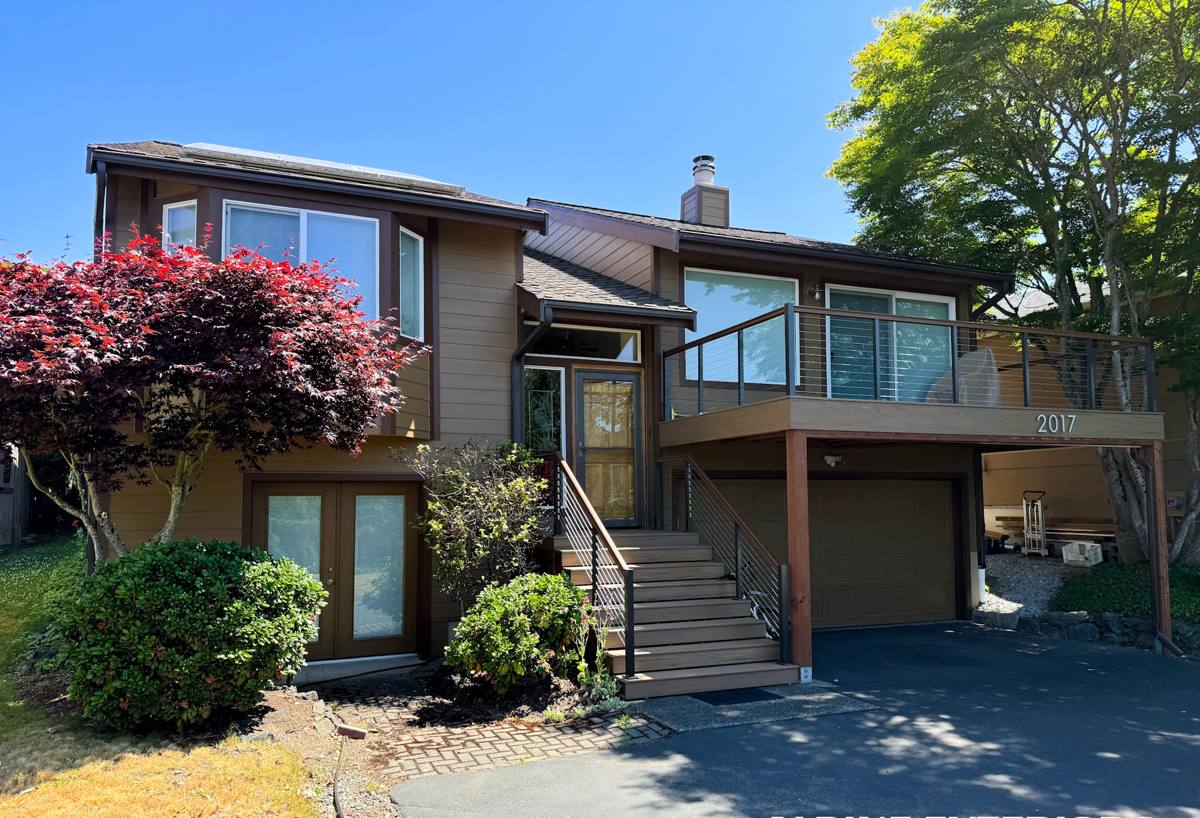
What West Beach Homes Actually Need From Their Siding
Before talking about products or installation, it helps to be specific about what this location demands, because "durable" isn't a specific enough standard.
Salt Air Resistance
Airborne salt accelerates corrosion on fasteners and metal flashing, and it degrades many paints and coatings faster than inland exposure would. Siding near San Juan County's shoreline needs a finish that's chemically stable against salt, not just weather-resistant in a generic sense.
Driving Rain Performance
Wind off the water pushes rain sideways and up under laps, seams, and trim edges that would stay dry on a calmer site. That means water management details — flashing, gapping, caulk joints, laps — matter more here than on a protected inland lot where gravity does most of the work.
Moss and Algae Tolerance
San Juan County's long wet season keeps shaded and north-facing walls damp for extended periods. Materials that hold moisture at the surface, or that have any wood content, give moss and algae something to root into. Siding needs a surface that sheds water and doesn't feed organic growth.
Dimensional Stability
Repeated wetting and drying cycles cause many materials to swell, shrink, cup, or crack over time. A siding product that moves very little with moisture holds paint lines, caulk joints, and butt seams tight for far longer.
Why We Only Install James Hardie Fiber Cement Here
We standardized on James Hardie fiber cement for every home we side, and West Beach is a good example of why. Fiber cement is a mix of cement, sand, and cellulose fiber — it has no wood content to feed rot or moss, it doesn't corrode, and it's non-combustible. James Hardie engineers specific product lines for different climate zones, and the HZ5 line is built for the wetter, harsher weather found in the Pacific Northwest, which is exactly the profile a West Beach home has to handle.
The factory-applied ColorPlus finish is the other piece that matters here. It's baked on in a controlled environment rather than field-painted, which gives it better adhesion and more consistent resistance to salt air and UV than a job-site paint job typically achieves. That matters on a site where a lesser finish would need repainting on a shortened cycle.
We get asked why we don't offer vinyl, LP SmartSide, cedar, or primed spruce as alternatives. Each of those has genuine strengths in the right setting, but none of them holds up as well as fiber cement against sustained salt air, driving rain, and constant moisture — vinyl can warp and its seams open under wind-driven water, engineered wood products are still wood-based and vulnerable to sustained moisture exposure, and natural wood siding requires a maintenance schedule most homeowners can't keep up with on an exposed shoreline lot. We'd rather install one product correctly and stand behind it than offer several and let a homeowner find out the hard way which one was the wrong call for their site.
What a Correct Installation Involves
Fiber cement's reputation depends entirely on installation quality. The material can outperform almost anything else on the market, or it can fail early — the difference is almost always in the details, not the product.
- Correct fastening pattern and fastener type — the wrong nail or spacing voids warranty coverage and invites water intrusion at every fastener head.
- Proper clearances from grade, roofing, and decks so splash-back and standing water don't sit against the bottom edge of the siding.
- Flashing integrated correctly at windows, doors, and any wall penetration — this is where driving rain finds its way in if it's skipped or rushed.
- Correct panel and lap gaps with the manufacturer-specified sealant, not caulk applied as an afterthought.
- A drainage plane and weather-resistive barrier behind the siding that actually moves incidental moisture back out.
- Field-cut edges primed or sealed so raw, unfinished cement isn't left exposed to the weather.
Skipping any one of these doesn't usually cause an obvious problem on day one. It shows up two, five, or ten years later as a soft spot, a stain, or a section that's failing while the rest of the wall is fine — and by then it's a repair job, not a punch-list item.
Our Process for West Beach Homes
1. On-Site Assessment
We walk the exterior and look specifically at exposure — which walls take the worst of the wind and rain, where moss and staining are already showing, and where existing flashing or trim is failing. West Beach homes often need different attention on the water-facing side than on the sheltered side, and the estimate reflects that instead of treating all four walls the same.
2. Removing the Old Siding and Checking What's Underneath
Once the old siding is off, we check the sheathing and framing for hidden moisture damage. This is common on homes that have been fighting water intrusion quietly for years, and it's much cheaper to address while the wall is already open than to find it later.
3. Weather Barrier and Flashing
We install or verify the water-resistive barrier and flashing at every penetration before a single piece of siding goes up. This step is the one most likely to be shortcut on a rushed job, and it's the one that determines how the wall performs in a real storm, not just on a dry inspection day.
4. Installing the Hardie Siding
Panels and fasteners go in to manufacturer spec, with attention to the gaps, laps, and clearances noted above. On a wind-exposed site, we don't treat these tolerances as flexible.
5. Trim, Caulking, and Final Detailing
Trim and caulk joints get finished with products rated for the exposure, and we do a final walk of every seam and penetration before calling the job done.
Cost Factors for a West Beach Fiber Cement Project
Every home is different, but the factors that move price on this stretch of shoreline are fairly consistent. We give firm numbers only after an on-site look, but this is what tends to matter most.
| Factor | Why It Matters at West Beach |
|---|---|
| Extent of hidden moisture damage | Homes with a history of water intrusion often need sheathing or framing repair before new siding goes on |
| Wall exposure and orientation | Water-facing walls may need additional flashing detail compared to sheltered walls |
| Trim and architectural detail | Corners, window casings, and fascia add labor beyond flat wall area |
| Access and site conditions | Waterfront lots can have limited staging space or steep grade that affects setup time |
| Existing siding removal | Full tear-off versus siding over an already-compromised wall changes scope |
Maintenance Through a Long Moss Season
Fiber cement doesn't need the upkeep that wood or engineered wood siding demands, but a shoreline home still benefits from a light routine. A rinse-down once or twice a year clears salt residue and slows moss and algae before they take hold, and it's worth checking caulk joints and trim annually since those are the components most likely to need attention before the siding field itself does. None of this is heavy maintenance — it's closer to what you'd do for windows or a deck — but skipping it entirely on an exposed site does shorten the interval before things need touching up.
What to Check Before Hiring Anyone for This Job
Fiber cement installation quality varies a lot between crews, and a wind-exposed shoreline home is not the place to find out the hard way. A few things worth asking any contractor bidding the job:
- Are they factory-certified or specifically trained on Hardie installation, not just siding installation in general?
- Will they detail the flashing and weather barrier plan in writing, not just the visible siding work?
- Do they have experience with wind- and rain-exposed sites specifically, not just typical inland installs?
- Is the warranty they're offering the manufacturer's transferable warranty, or just a shorter workmanship guarantee?
- Will they check for hidden moisture damage before quoting a final price, or is that an unpleasant surprise added later?
A crew that already works this part of San Juan County will have seen the specific failure patterns West Beach's exposure causes, and that experience shows up in the details of how they flash, gap, and finish the job — not just in the brand of siding on the truck.
Ready to Talk Through Your Home
If your siding is showing moss buildup, fading, soft spots, or open seams, it's worth having someone look before those small issues turn into a bigger repair. We'll walk your home, tell you honestly what we see, and put together a free, no-pressure estimate for James Hardie fiber cement siding built for West Beach's weather.