 Orcas Island
 Why Board & Batten Fits Eastsound's Coastal Character
Board and batten has a long history on the San Juan Islands, and it's easy to see why homeowners in Eastsound keep asking for it. The vertical lines read as classic Pacific Northwest — a look that sits comfortably next to weathered cedar, working waterfronts, and the wooded lots that surround the village. But the reason we recommend it isn't just aesthetics. Done correctly, a vertical board and batten profile sheds water differently than horizontal lap siding, and on a site exposed to salt air and driving rain off Rosario Strait or the harbor, that drainage behavior matters as much as the look.
This page is about one thing: board and batten siding, installed correctly, on homes in and around Eastsound. Not a general overview of siding options — the specific work of getting this profile right in a marine climate with a serious moss season.
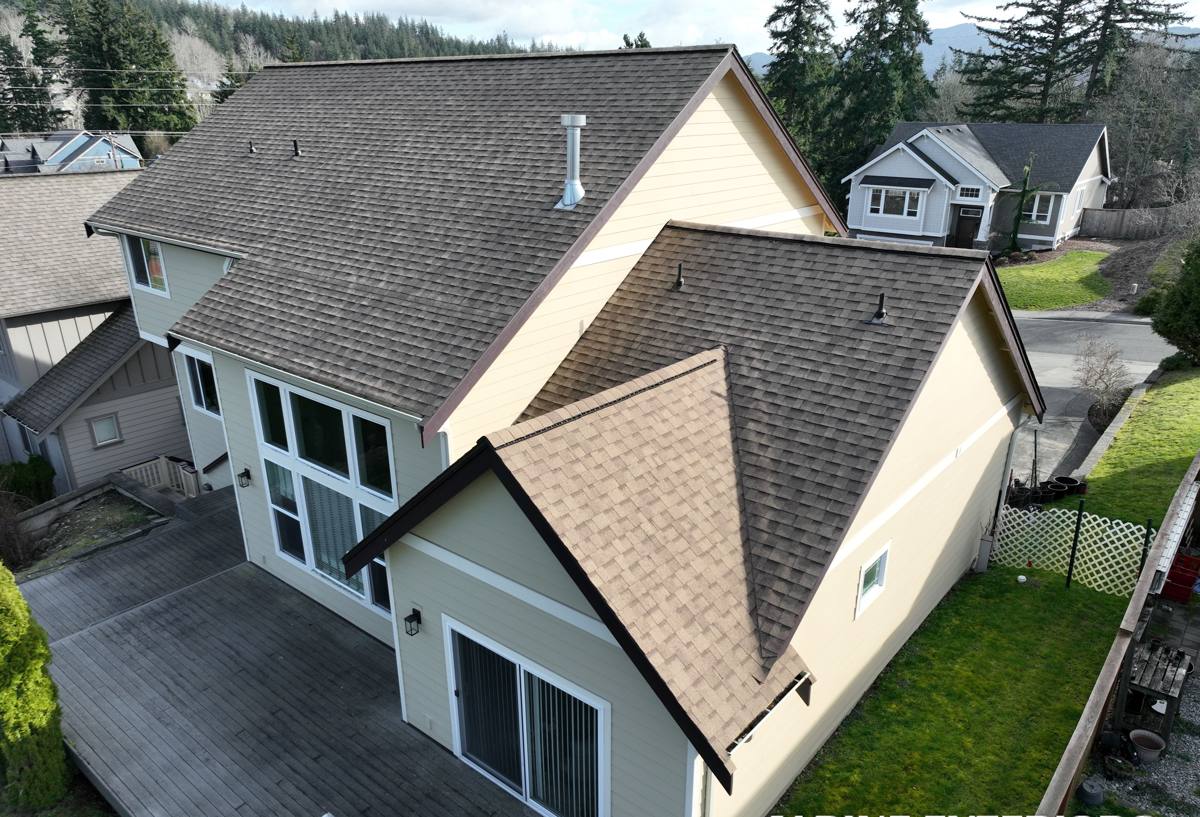
What Orcas Island's Climate Actually Does to Siding
Eastsound sits close enough to saltwater that airborne salt is a real factor in how exterior materials age. Combined with the driving rain that comes through in fall and winter storms, and the shaded, damp conditions that let moss and algae take hold on north-facing walls and anything under tree cover, siding here works harder than siding in a dry inland climate. Three things stand out:
Salt Air
Salt-laden air accelerates corrosion on fasteners, flashing, and any metal trim that isn't rated for coastal exposure. It also breaks down some paint systems faster than a factory-cured finish, which is one reason field-painted wood siding tends to need repainting more often on Orcas Island than the same product would inland.
Driving Rain
San Juan County storms often push rain sideways, not straight down. That means water gets forced into laps, seams, and butt joints that would stay dry in a calmer climate. A siding system that isn't detailed for wind-driven rain will eventually let moisture behind the cladding, even if it looks fine from the street.
A Long Moss Season
Shaded lots, tree cover, and persistent damp conditions give moss and algae months to establish themselves on any surface that holds moisture. Untreated wood and some composite products are especially vulnerable; the growth itself isn't just cosmetic — it holds water against the surface and can accelerate rot in wood-based products.
Why We Install Only James Hardie for Board & Batten
We don't install vinyl board and batten, LP SmartSide, Cemplank, Allura, primed spruce, or cedar board and batten. That's a deliberate standard, not a lack of options. Each of those products has real strengths — cedar looks beautiful when new, vinyl is inexpensive, engineered wood panels install quickly — but none of them hold up the way we want on a marine-climate island for the long haul.
Cedar and primed spruce are wood. Wood needs a maintained paint or stain film to keep moisture out, and in a climate with this much rain and shade, that film fails faster than most owners expect. Once water gets behind a compromised finish, rot follows, and board and batten's vertical battens create extra seams where that failure can start. Vinyl board and batten expands and contracts with temperature swings and can warp or crack under UV exposure over time; it also isn't fire-resistant, which matters more each wildfire season. LP SmartSide and similar engineered wood panels are wood-based and, like cedar, depend on an intact protective coating — any breach at a cut edge or fastener hole is a moisture entry point.
James Hardie fiber cement is what we put on homes instead. It's non-combustible, it doesn't rot, and it carries a factory-applied ColorPlus finish that's baked on rather than field-painted, which means better UV and moisture resistance than a coat applied on-site. Hardie's HZ5 product line is engineered specifically for climates like ours — cold, wet, and humid — and the company backs it with a strong transferable limited warranty. For a vertical board and batten application exposed to salt air and wind-driven rain, that combination of non-combustibility, factory finish, and climate-specific engineering is why we standardized on it.
What a Correct Board & Batten Installation Actually Involves
Board and batten looks simple from the street — vertical panels with battens covering the seams — but the installation details are where the siding either performs for decades or fails early. A rushed or undersized crew can hang board and batten that looks acceptable on day one and lets water in behind the cladding within a few winters.
The Rain Screen Gap
On a site with this much wind-driven rain, we install over a furring strip or drainage mat system that creates a gap between the back of the siding and the weather-resistive barrier. That gap lets any moisture that does get past the cladding drain and dry out instead of sitting against the wall assembly. Skipping this step is one of the most common shortcuts on lower-bid board and batten jobs.
Flashing and Moisture Management
Every window, door, and horizontal transition needs proper flashing integrated with the weather-resistive barrier — not caulk used as a substitute for flashing. Battens and panel joints get detailed so water sheds outward at every seam, and any penetration (vents, light fixtures, hose bibs) gets sealed and flashed individually.
Fastening Pattern
James Hardie specifies fastener type, spacing, and placement for each product line and climate zone. Correct fastening keeps panels secured through wind events without over-driving nails, which can crack fiber cement or compromise its water resistance at the fastener point.
| Installation Element | Why It Matters in Eastsound's Climate |
|---|---|
| Rain screen / furring gap | Lets wind-driven rain that gets behind the panel drain and dry instead of soaking the wall assembly |
| Flashing at all openings | Prevents water intrusion at windows, doors, and horizontal breaks where driving rain concentrates |
| Correct fastener spec and spacing | Holds panels through coastal wind without cracking the fiber cement or breaching its water resistance |
| Sealed, primed cut edges | Protects exposed fiber cement edges from moisture absorption, especially in a high-humidity, mossy environment |
| Corrosion-resistant trim and fasteners | Salt air accelerates corrosion on standard-grade metal; coastal-rated hardware lasts longer |
Our Process for Eastsound Board & Batten Projects
Every board and batten job we take on around Eastsound follows the same sequence, because skipping steps is how climate-related failures happen later.
- On-site assessment. We look at sun exposure, tree cover, prevailing wind and rain direction, and the condition of the existing wall assembly before quoting anything.
- Moisture and substrate check. If we're removing existing siding, we check the sheathing and framing underneath for hidden rot before closing anything back up.
- Weather-resistive barrier and rain screen installation. This is the layer that does the real work of keeping the wall dry, and we don't shortcut it.
- Flashing at every opening and transition. Integrated with the barrier, not layered on top with caulk as a fix.
- James Hardie board and batten installation to manufacturer spec. Correct fastener type, spacing, and panel gaps for our climate zone.
- Trim, caulking, and final detail work. Caulk is a finishing detail here, not a moisture barrier substitute.
- Final walkthrough. We go over the finished work with the homeowner before calling the job done.
Board & Batten Compared to Other Profiles for This Climate
Board and batten isn't automatically the right choice for every home — it depends on the structure's style and the owner's priorities. Here's how it stacks up against the alternatives most often considered on Orcas Island.
| Profile | Look | Climate Performance Notes |
|---|---|---|
| James Hardie board and batten | Vertical, clean modern-farmhouse or classic island look | Non-combustible, factory finish holds up well to salt air and UV when installed with proper rain screen and flashing |
| James Hardie lap siding | Traditional horizontal shadow lines | Also strong in this climate; often chosen for a more traditional look rather than a performance difference |
| Cedar board and batten | Warm, natural, ages to gray if unfinished | Needs a maintained finish; more vulnerable to moss and rot in shaded, damp conditions without regular upkeep |
| Vinyl board and batten | Similar profile at lower cost | Can warp or become brittle over time; not fire-resistant; seams and fasteners are more exposed to failure over decades |
Cost Factors to Expect
Board and batten typically costs somewhat more than lap siding in labor because of the extra battens and seams to detail, though material cost differences are usually modest. The bigger cost swing comes from substrate condition — if we find rot or moisture damage once the old siding comes off, repair work gets added before new siding goes on. A thorough on-site assessment before quoting is how we avoid surprises mid-project.
Living With Board & Batten in a Moss-Prone, Salt-Air Environment
James Hardie fiber cement doesn't need the maintenance wood siding does, but "low maintenance" isn't "no maintenance," especially with this much moss pressure and salt exposure. A simple annual routine keeps it performing the way it should:
- Rinse the exterior once or twice a year, focusing on shaded and north-facing walls where moss and algae take hold fastest
- Check caulking at trim, windows, and penetrations annually and re-caulk any cracked or separated joints before winter rains arrive
- Trim back vegetation and tree limbs that keep siding shaded and damp for extended periods
- Inspect fasteners and trim for early corrosion, especially on the sides of the home most exposed to wind off the water
- Address any moss growth promptly rather than letting it establish — the longer it sits, the more moisture it holds against the surface
- Touch up any chips or scratches in the ColorPlus finish to keep the fiber cement's protective layer intact
Why a Crew That Already Works Eastsound Matters
Board and batten installed to spec in a dry inland climate can get away with details that don't hold up here. A crew that already works Eastsound and the surrounding Orcas Island communities knows which walls take the worst of the wind-driven rain, how much moss pressure to expect on shaded lots, and how salt air affects fastener and flashing choices over time — because we've seen it firsthand on other island homes, not just read about it. That local experience shows up in the small decisions: where to add extra flashing attention, which fastener grade to spec, how to sequence work around island weather windows and ferry-dependent material deliveries.
It also matters for accountability. A contractor based on the island is the one who answers the phone if something needs a look five years down the road, not a mainland crew that packed up after the last panel went on.
Get a Free, No-Pressure Estimate
If you're weighing board and batten for a home in Eastsound, we're happy to walk the exterior with you, talk through what your specific site needs, and give you a straightforward estimate — no pressure, no sales script. Fill out the form below to get started.