 Orcas Island
 Why Eastsound Roofs Wear Differently Than Mainland Roofs
A roof in Eastsound doesn't fail the same way a roof in Bellingham or Mount Vernon fails. San Juan County sits out in the Salish Sea, and that location changes everything about how an asphalt shingle roof ages. Salt-laden air drifts in off the water and settles on every exposed metal surface — nail heads, flashing, valley metal, drip edge. Add driving rain that comes in sideways during winter fronts, and a long, damp moss season that can stretch from October into May, and you've got a roofing environment that's genuinely harder on materials than most of Washington State ever sees.
None of that means asphalt shingle roofing is a poor choice for Orcas Island — it's still the most practical, cost-effective option for the majority of homes here. It just means the installation details matter more than they would somewhere drier and less coastal. A roof that's installed the same way it would be in a landlocked subdivision won't hold up the same way out here.
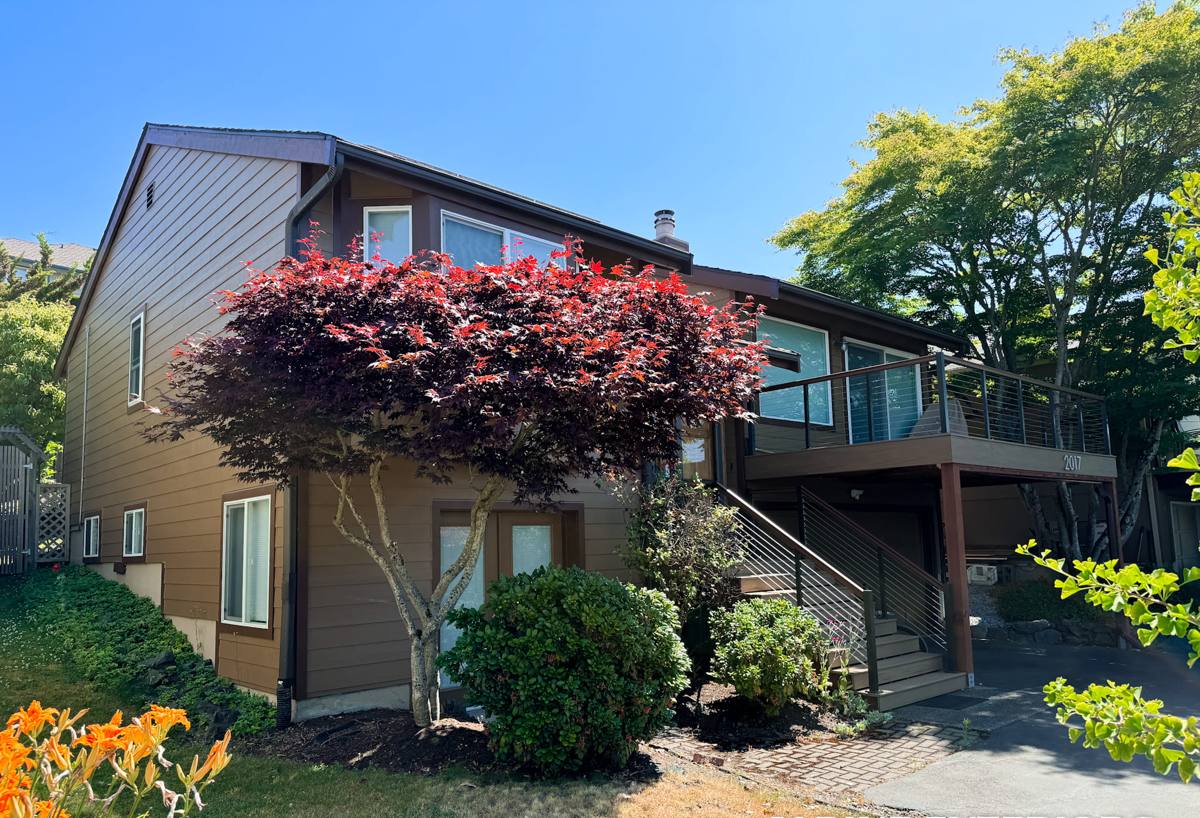
The Three Forces Working Against Your Roof
Salt Air and Corrosion
Salt air accelerates corrosion on anything galvanized or bare steel. Fasteners, flashing, and vent stacks that would last decades inland can start rusting and staining years earlier this close to the water, especially on homes with a clear line of sight to the shoreline. Once a fastener corrodes, the seal around it weakens, and that's how small leaks start.
Driving Rain
Storms coming off the strait don't just fall straight down — they drive rain sideways under shingle tabs, into valleys, and around chimneys and skylights at wind angles a standard installation doesn't always plan for. Underlayment coverage, valley detailing, and fastening pattern all need to account for wind-driven moisture, not just vertical rainfall.
Moss and Algae
Orcas Island's tree cover and mild, wet climate are close to ideal growing conditions for moss and algae. Shaded roof faces, especially north-facing slopes under fir or cedar canopy, can develop moss within a couple of years if nothing is done to discourage it. Moss holds moisture against the shingle surface, lifts tabs as it grows, and shortens the roof's usable life if it's left unmanaged.
What a Correctly Built Shingle Roof Needs Out Here
A shingle roof built for Eastsound's conditions isn't a different product — it's the same asphalt shingle system installed with a few specific priorities:
- Algae-resistant shingles (copper or zinc granules blended into the surface) on any roof with shade exposure or a north-facing slope
- Full synthetic underlayment coverage, not spot coverage, with extra ice-and-water membrane at eaves, valleys, and any low-slope transitions
- Corrosion-resistant flashing and fasteners at every penetration — chimneys, vents, skylights — rather than standard galvanized
- Balanced attic ventilation so moisture generated inside the house doesn't condense against the underside of the roof deck
- Wind-rated shingles with a sealant strip suited to sustained coastal gusts, not just the minimum code rating
Skip any one of these and the roof will still look fine on installation day — the problems show up two, five, or ten years later, usually as a leak that traces back to a corroded fastener or an underlayment gap nobody can see from the ground.
Choosing the Right Shingle Tier for Your Home
Not every Eastsound home needs the top-tier product, but every home benefits from understanding the real trade-offs between tiers before deciding.
| Shingle Type | Typical Lifespan | Wind Rating | Best Fit |
|---|---|---|---|
| 3-tab | 15–20 years | Lower | Budget reroofs, outbuildings, rentals |
| Architectural / laminate | 25–30 years | Moderate to high | Most primary residences on the island |
| Premium / designer laminate | 30–50 years | High | Exposed, high-wind, or high-visibility roofs |
For most Eastsound homes, we recommend at least a mid-tier architectural shingle with an algae-resistant granule blend. The cost difference over 3-tab is modest, and the added wind rating and granule protection matter more here than in a sheltered inland location.
Our Process for an Eastsound Reroof
1. Roof and Deck Assessment
We start by checking not just the shingles but the deck underneath — soft spots, rot around chimneys or old vent boots, and any signs of moisture that's been getting in for a while. On an island where a lot of homes have sat through decades of wet winters, deck condition is never something we assume.
2. Tear-Off and Prep
Full tear-off to bare deck on most jobs, so we can see the actual condition of the sheathing rather than layering new shingles over unknown problems. Any damaged decking gets replaced before anything new goes down.
3. Underlayment and Flashing
Synthetic underlayment across the full roof, with ice-and-water membrane at eaves, valleys, and low-slope sections. New flashing at every penetration, matched to the corrosion resistance the location calls for.
4. Shingle Installation
Shingles fastened to the pattern the manufacturer specifies for the local wind exposure, not the bare minimum. Ridge and hip details finished with matching cap shingles.
5. Ventilation Check
We confirm intake and exhaust venting are balanced before we call the job done. A new roof over a poorly ventilated attic just moves the moisture problem, it doesn't fix it.
6. Cleanup and Walkthrough
Full site cleanup, magnetic sweep for stray nails, and a walkthrough so you know what was done and what to watch for going forward.
Living With Moss Season: What Ongoing Care Looks Like
Even a well-built roof needs some seasonal attention out here. Moss and algae don't mean the roof is failing — they mean the climate is doing what it does. A short annual routine keeps it from becoming a real problem:
- Keep overhanging branches trimmed back so roof faces get more light and air movement
- Clear gutters and valleys of needles and debris before the fall rains start in earnest
- Have visible moss growth soft-washed off rather than scraped or pressure-washed, which can strip granules
- Check zinc or copper strips near the ridge periodically — they lose effectiveness over time and can be replaced
- Walk the roofline after major windstorms to check for lifted tabs or displaced flashing
Why It Matters That We Already Work on Orcas Island
Island jobs run differently than mainland jobs, and it affects the finished roof. Every load of material, every extra trip for a forgotten part, and every crew scheduling change has to work around the ferry schedule. A contractor who already works Eastsound regularly plans material orders and crew logistics around that reality instead of discovering it mid-job — which means fewer delays and fewer half-finished tear-offs sitting exposed to weather while someone waits on a ferry.
Local experience also means we've seen how specific exposures on this island actually perform over time — which roof orientations hold moss, which areas take the worst wind-driven rain, which older homes tend to have deck issues under the shingles. That's the kind of judgment that only comes from doing the work here repeatedly, not from a general roofing background applied to an unfamiliar location.
What Affects the Cost of Your Reroof
| Cost Factor | Why It Matters |
|---|---|
| Roof size and pitch | Steeper, larger roofs take more material and labor time |
| Number of existing layers | Tear-off of multiple old layers adds disposal and labor cost |
| Deck condition | Rotted sheathing found during tear-off requires repair before shingles go down |
| Shingle tier chosen | Architectural and premium products cost more per square than 3-tab |
| Access and staging | Ferry logistics and site access can affect delivery scheduling |
| Number of penetrations | Chimneys, skylights, and vents each need individual flashing work |
We give firm, written quotes after an on-site look at the roof — not a phone estimate — because deck condition and access are the two factors that swing a price most, and neither can be judged accurately from a photo.
Signs Your Eastsound Roof Needs a Closer Look
Asphalt shingle roofs don't usually fail all at once. The warning signs are worth catching early, before a small issue becomes a deck repair:
- Granules collecting in gutters or at downspout outlets
- Shingle tabs curling, cupping, or lifting at the edges
- Dark streaking or thick moss growth on shaded roof faces
- Soft spots or sagging felt anywhere along the roofline
- Daylight visible through the attic sheathing
- Water stains on interior ceilings, especially near chimneys or valleys
A roof past 20 years old with several of these signs is usually closer to replacement than repair, especially if the original installation didn't include the moisture and ventilation details this climate calls for.
If you're weighing a repair against a full reroof, or just want a straight answer on what your Eastsound roof actually needs, we're happy to take a look and put together a free, no-pressure estimate — use the form below to get started.