 Orcas Island
 Board & Batten in a Marine Environment
Deer Harbor sits close to the water, and that proximity shapes everything about how siding should be built here. Board and batten has real appeal for this part of Orcas Island — the vertical lines suit the cabins, waterfront homes, and post-and-beam construction common around the harbor, and the style has a clean, understated look that fits the setting without trying too hard. But board and batten is also a demanding profile. It relies on butt joints, exposed battens, and long vertical runs that give water more opportunities to find a way in than a standard lap profile does. On a home a few blocks from saltwater, in a county that sees a genuine moss season and long stretches of driving rain, those details are not cosmetic — they determine whether the siding holds up for twenty years or starts failing in five.
This page is about doing board and batten correctly, specifically for homes in and around Deer Harbor, using a material that can actually take what San Juan County weather delivers.
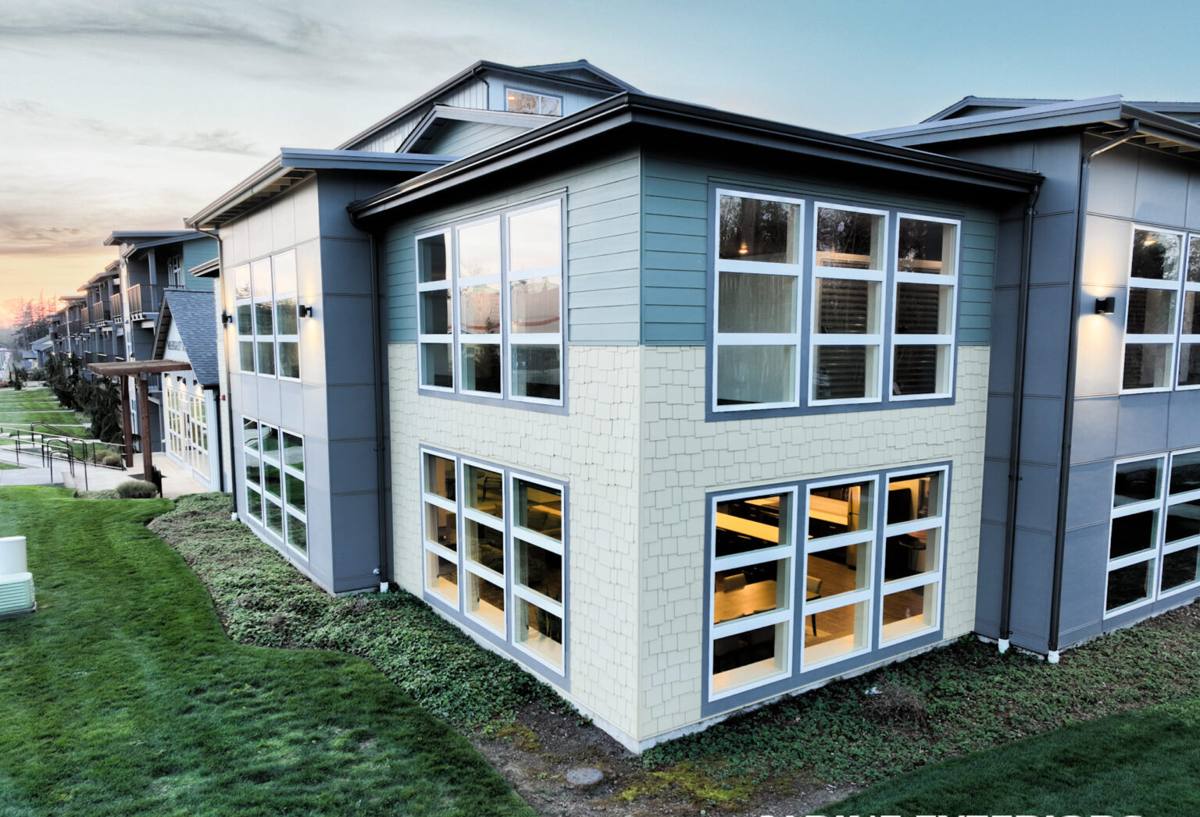
What Deer Harbor's Climate Does to Siding
Salt Air and Corrosion
Homes near the water deal with airborne salt that settles on every exterior surface. Salt accelerates corrosion on fasteners, flashing, and hardware, and it degrades some finishes faster than inland exposure ever would. Any siding installed near Deer Harbor needs corrosion-resistant fasteners and trim details that account for salt exposure, not generic hardware pulled off the shelf for an inland job.
Driving Rain
Wind off the water pushes rain sideways, not just down. On a lap-sided wall, gravity does a lot of the work keeping water out. On board and batten, wind-driven rain can find the vertical seams at the battens and push moisture behind the board if the joint isn't detailed correctly. This is the single biggest risk with this siding style in a place like Deer Harbor, and it's the reason installation technique matters more here than the material choice alone.
Moss and Sustained Dampness
San Juan County's moss season is long — shaded walls, north-facing elevations, and areas under tree cover stay damp for extended stretches. Moss and algae growth on siding isn't just cosmetic; sustained dampness against a wall assembly can trap moisture at the surface longer than a drier climate would ever allow. Siding that absorbs water or swells under that kind of exposure has a much harder time out here than siding engineered to resist it.
Why Material Choice Matters More With Board & Batten
Board and batten's vertical joints and butt seams put more stress on the material itself than a lapped horizontal profile does. Wood-based and engineered-wood siding products can swell, cup, or delaminate at those seams when moisture gets behind them repeatedly over a wet season. Vinyl board and batten can look the part from a distance, but it flexes and gaps at the battens over time, and it doesn't hold paint or color the way a factory-finished product does, which matters on a style where the seams are a visual feature, not something to hide.
We install James Hardie fiber cement exclusively, and for board and batten specifically, that decision comes down to how the material behaves at the joint. Hardie's fiber cement is non-combustible, doesn't swell or rot from moisture absorption the way wood-based products can, and holds its factory-applied ColorPlus finish at cut edges and seams far better than field-painted alternatives. On a profile where the seams see the most weather exposure, that's the detail that decides whether the job still looks right in year fifteen.
Hardie Board & Batten Options for This Area
| Product | What It Offers | Fit for Deer Harbor |
|---|---|---|
| HardiePanel vertical siding with battens | Large-format panels with applied battens over the joints | Fewer seams than individual boards means fewer water entry points on a wind-exposed wall |
| Individual board & batten (HardieTrim battens over HardiePanel or boards) | Traditional look with visible board width and batten spacing | Requires precise flashing and fastening detail at every seam given the rain and wind exposure here |
| HZ10 climate engineering | Formulated for wetter, harsher climates | Better suited to marine exposure than the HZ5 formulation used in drier regions |
What a Correct Board & Batten Installation Requires
Board and batten fails or succeeds based on details most homeowners never see once the job is done. On a Deer Harbor property, we treat these as non-negotiable:
- Weather-resistant barrier and rainscreen gap: A drainage plane behind the siding lets any moisture that does get past the surface dry out instead of sitting against the sheathing.
- Correct panel and batten fastening: Fasteners sized and spaced to Hardie's specifications, driven into framing, not just sheathing, with corrosion-resistant hardware appropriate for salt air exposure.
- Butt joint flashing: Every horizontal seam in a board run needs flashing behind it, not just caulk. Caulk alone fails; flashing sheds water permanently.
- Batten placement over structural framing where possible, and correctly fastened where it isn't, so the batten itself doesn't become a loose point of failure in wind.
- Proper clearance at grade, decks, and roof lines: Board and batten run down to grade or against a horizontal surface without a gap is one of the most common causes of rot in this style, anywhere it's installed.
- Factory-finished cut edges sealed: Every field cut gets sealed with the correct touch-up product so the cut edge doesn't become the first point of moisture intrusion.
Our Process for a Deer Harbor Board & Batten Job
1. On-Site Assessment
We walk the property and look specifically at wind exposure, proximity to water, shaded and moss-prone elevations, and the condition of the existing wall assembly before recommending a plan.
2. Moisture and Substrate Check
Before new siding goes up, we check for existing moisture damage or compromised sheathing — a common finding on older Orcas Island homes that have had water working behind the old siding for years unnoticed.
3. Product and Layout Plan
We lay out board and batten spacing and panel sizing for the specific elevations of the home, accounting for window and door details, corners, and transitions where water intrusion risk is highest.
4. Installation to Manufacturer Spec
Fastening, flashing, and rainscreen detail are installed to Hardie's published specifications for this climate zone — not shortcuts that might pass a casual inspection but won't hold up to a wet winter off the water.
5. Final Walkthrough
We review the finished job with the homeowner, including basic care guidance for a marine-exposed, moss-prone environment.
Getting to Deer Harbor for the Job
Logistics matter for any Orcas Island project — materials and crews have to come over by ferry, and scheduling has to account for that rather than treating it as an afterthought. A crew that already works this area knows the ferry schedule, has a materials staging plan that doesn't leave a job half-finished waiting on a delayed run, and isn't learning San Juan County's permitting and shoreline considerations for the first time on your project. That experience shows up in fewer surprises and a tighter timeline.
Maintenance Expectations After Installation
Board and batten in this climate isn't maintenance-free, but a correctly installed Hardie system keeps the maintenance list short:
- Periodic rinse-down to remove salt residue and reduce moss/algae buildup on shaded walls
- Visual check of caulking at trim and penetrations every year or two, resealing as needed
- Prompt attention to any gutter or downspout issues that could direct extra water onto a wall
- No repainting on a fixed schedule — ColorPlus factory finish is warrantied against fading and holds up without the repaint cycle that field-painted wood siding needs
Cost Factors for This Job
| Factor | Why It Affects Cost |
|---|---|
| Wall complexity (corners, dormers, window trim) | Board and batten requires more precise cutting and flashing at each transition than a plain wall |
| Existing damage behind old siding | Rot or moisture-compromised sheathing found during tear-off adds repair scope before new siding goes up |
| Access and ferry logistics | Material delivery and crew scheduling around ferry service is a real project variable on Orcas Island |
| HZ10 vs. standard product selection | Climate-engineered product costs modestly more upfront but is matched to this area's exposure |
We don't publish blanket per-square-foot pricing because these variables genuinely change the number — an accurate quote comes from seeing the specific walls involved.
If you're weighing board and batten for a home in Deer Harbor, we're happy to take a look and walk you through what your specific walls need. The estimate is free, there's no pressure, and you'll get a straight answer about what the job actually involves.