 Orcas Island
 Why North Beach Is a Different Window Job Than Inland
North Beach sits close enough to the water that salt air, wind-driven rain, and near-constant humidity are part of daily life for the houses out there. That combination is hard on windows in ways that don't show up right away. Salt-laden air corrodes hardware and fasteners faster than it would a few miles inland. Driving rain off the water pushes moisture sideways into gaps that would stay dry on a more sheltered lot. And the long gray stretch of the San Juan Islands' wet season keeps wood trim and sills damp for weeks at a time, which is exactly what moss and rot need to get started.
None of this means windows on North Beach are doomed — it means the frame material, the glass package, and especially the installation detailing have to be chosen and executed with that exposure in mind. A window that performs fine in a protected inland yard in the Skagit Valley or on the mainland side of San Juan County can fail early out here if it's installed the same generic way.
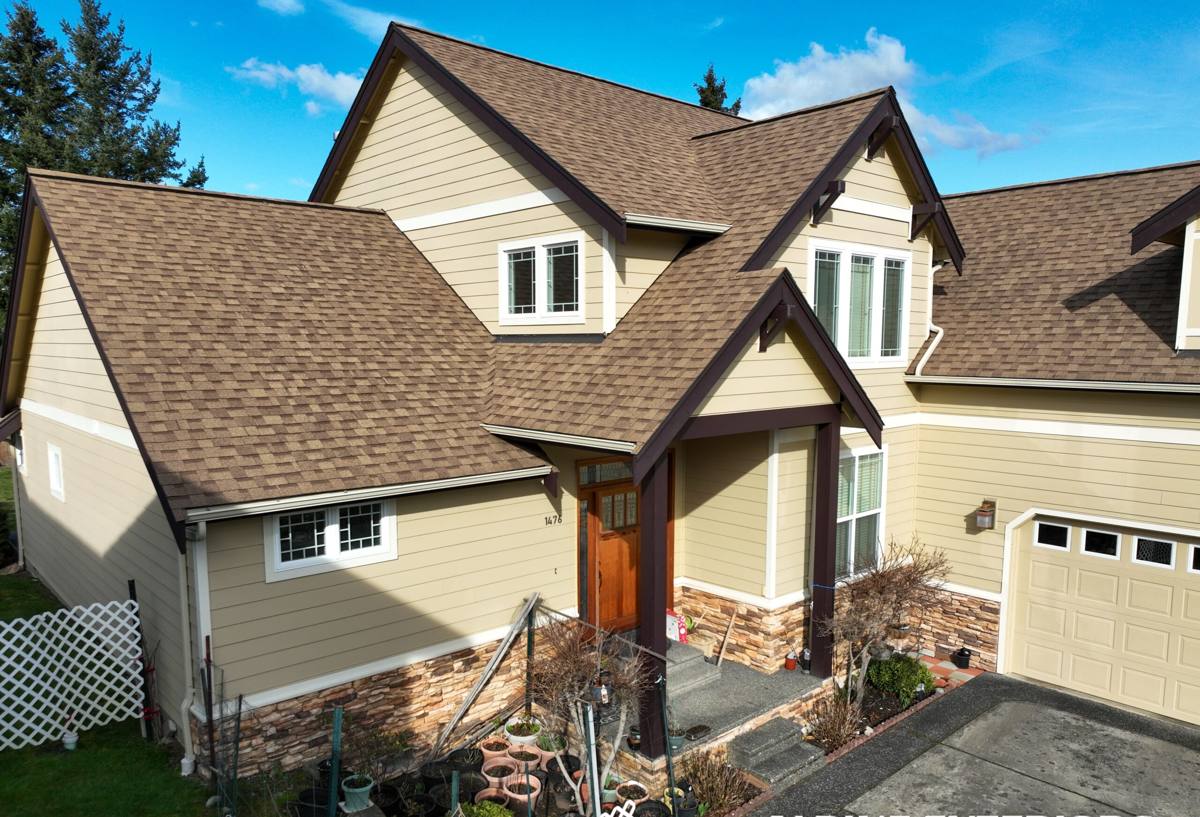
What "Custom" Actually Means for This Neighborhood
Custom doesn't have to mean unusual shapes or high-end architecture, though we do that work too. Most of the custom window jobs we do around North Beach fall into a few practical categories:
- Older homes with non-standard rough openings where stock sizes don't fit without expensive framing changes
- View-oriented replacements where owners want larger glass area or a different configuration than what's there now
- Matching window lines across additions or remodels so sightlines and trim details stay consistent
- Replacing failed original windows one-for-one in older cottages and cabins where the opening itself is sound but the sash and glass are not
Custom sizing costs more than off-the-shelf, but it also means the finished window fits tight without shims and gap-filling that become future leak points. On a site exposed to driving rain, that fit tolerance matters more than it would somewhere sheltered.
Measuring for the Real Opening, Not the Nominal One
Older Orcas Island homes were often built without the benefit of standard lumber sizing conventions that came later, and decades of settling change openings further. We measure each opening individually rather than assuming a rough opening matches what's on a floor plan or a previous permit. Getting this wrong is one of the most common causes of a custom window that still needs field modification on install day — which then compromises the flashing and sealing details that keep salt air and rain out.
Frame Material: What Holds Up on the Water Side of the Island
We get asked often whether vinyl, fiberglass, or wood-clad is the right call for a North Beach house. There's no single right answer, but there are real trade-offs worth understanding before you commit.
| Frame Material | Salt Air / Moisture Behavior | Maintenance | Typical Fit |
|---|---|---|---|
| Vinyl | Won't corrode or rot; can become brittle with age in cold snaps | Low — occasional cleaning | Good value replacement for standard openings |
| Fiberglass | Very stable dimensionally, resists moisture and salt exposure well | Low | Strong choice for larger custom openings and view windows |
| Wood, unclad | Attractive but needs real upkeep against damp coastal air | High — repainting/sealing on a schedule | Best where historic character is a priority and upkeep is expected |
| Wood-clad (aluminum or fiberglass exterior) | Good moisture resistance outside, wood warmth inside | Moderate | Common compromise for period homes near the water |
| Aluminum | Durable but conducts cold and can show condensation without a thermal break | Low | Less common for residential North Beach work |
For most North Beach homes we lean toward fiberglass or a quality wood-clad unit for street-facing or view windows, and vinyl where budget matters most and the opening is standard. We're honest that unclad wood requires a maintenance commitment most owners underestimate once they're living with salt air full-time — that's a trade-off to walk in with eyes open, not a reason to avoid wood if the look matters to you.
Glass Packages Built for Driving Rain and Marine Exposure
The frame gets most of the attention, but the glass package does a lot of the actual work against this climate. A few things worth understanding before you pick a package:
- Dual-pane with argon fill is the baseline we recommend for anything facing open water or prevailing weather — it cuts heat loss and reduces the interior condensation that damp coastal air can otherwise cause on cooler glass surfaces.
- Low-E coatings help manage both winter heat retention and glare off the water without darkening the glass noticeably.
- Warm-edge spacer systems (rather than older metal spacers) reduce the cold edge effect that shows up as fogging or frost lines around the perimeter of the glass in a house that's taking a steady beating from wind and moisture.
- Impact or laminated glass is worth discussing for exposed, ground-level openings where wind-driven debris is a realistic concern, though it's not something every North Beach home needs.
We don't push a single glass tier on every job — a sheltered upstairs window and a ground-floor window catching direct weather off the water don't need identical specs, and pricing should reflect that.
Where Installations Actually Fail — and How We Prevent It
Most window "failures" on the coast aren't the window itself — they're the flashing and sealing around it. Driving rain finds any gap in the weather-resistive barrier, and once water gets behind trim or siding it can sit there through a whole wet season before anyone notices rot.
What a Correct Install Includes
- Removing old flashing and inspecting the sheathing and framing underneath for hidden moisture damage before anything new goes in
- Self-adhering flashing membrane detailed at the sill, jambs, and head in the correct shingle-lap order so water sheds outward at every layer
- Sill pan flashing that gives any water that does get past the window a way back out, rather than letting it pool against the frame
- Backer rod and a quality exterior sealant rated for the movement and temperature range this climate sees, applied at the right joints — not everywhere, which can trap moisture instead of releasing it
- Shimming and fastening per the manufacturer's instructions so the frame isn't racked or bowed, which affects both operation and long-term seal integrity
Skipping any one of these steps is invisible on install day and expensive two or three winters later. This is the part of the job that separates a window that lasts twenty-plus years on the water side of Orcas Island from one that starts showing rot at the sill in five.
Our Process for a North Beach Job
- On-site assessment — we look at existing window condition, framing, and any signs of past moisture intrusion before quoting anything.
- Measure and material selection — individual opening measurements, plus a straightforward conversation about frame and glass trade-offs for that specific window's exposure.
- Ordering — custom units are built to spec and shipped to the island; we account for that lead time up front rather than surprising you with it later.
- Removal and inspection — old units come out carefully so we can check the opening itself for hidden rot before anything new is installed.
- Install with full flashing detail — as described above, not shortcut for speed.
- Final check and cleanup — operation, seal, and site cleanup before we call it done.
Signs It's Time to Replace, Not Repair
Not every window on a North Beach property needs full replacement. Here's a practical checklist for sorting out what actually needs custom replacement versus what can be repaired or re-sealed:
- Fogging or moisture between panes — the seal has failed and the insulated glass unit needs replacing at minimum
- Soft or spongy wood at the sill or lower corners of the frame — likely rot, worth a closer look before deciding
- Difficulty opening, closing, or locking that isn't fixed by cleaning the tracks or hardware
- Visible daylight or a draft you can feel around the frame on a windy day
- Chalky, pitted, or corroded hardware and fasteners — a common early sign of salt air exposure
- Moss or green growth building up on the sill or exterior trim, which points to standing moisture in that spot
Why a Crew That Already Works North Beach Matters Here
Orcas Island logistics are real. Custom windows have to be ordered with ferry and delivery schedules in mind, and a crew that doesn't already plan around that can leave you waiting on a job that's otherwise ready to go. Beyond scheduling, a contractor who's done work along this stretch of shoreline already knows how the wind and rain typically hit these homes, which openings tend to take the worst of it, and what framing quirks show up in the older cottages and cabins out here. That local familiarity shows up in fewer surprises mid-project and in flashing and sealing choices that match the actual exposure of your specific site, not a generic inland assumption.
Living With Moss Season
Once new windows are in, a little seasonal upkeep protects the investment. Keep sills and tracks clear of built-up debris and moss growth, especially going into the wetter months, and rinse salt residue off exterior frames periodically if the house takes direct exposure off the water. None of this is heavy maintenance — it's the kind of thing that takes minutes and prevents the slow moisture problems that shorten a window's life in this climate.
If you're weighing a window project for a North Beach home, we're happy to come take a look and talk through what your specific openings actually need — no pressure, no obligation. Use the form below to request a free estimate.