 Orcas Island
 Crow Valley Decks Age Differently Than Waterfront Decks
Crow Valley sits back from the shoreline, tucked between tree lines and open pasture on Orcas Island, and that setting changes how a deck fails. Waterfront decks on San Juan County take the brunt of salt spray and open wind, which dries them out between rains. Crow Valley decks deal with the opposite problem: shade from surrounding trees, slower air movement through the valley, and ground moisture that lingers longer after Orcas Island's driving winter rains. The result is more moss, more algae, and framing that stays damp longer than it should. Salt-laden air still reaches inland from Puget Sound weather systems, especially during winter storms, so you get a combination most siding and decking crews aren't set up to handle correctly: coastal moisture chemistry plus valley-floor shade and drainage issues.
A deck built or replaced without that combination in mind looks fine for a few years and then fails from the inside out — ledger boards, joists, and post bases going soft while the surface boards still look serviceable. Deck replacement done right here starts with understanding that the valley's long moss season isn't just a cosmetic nuisance; it's a sign of where moisture is sitting on the structure.
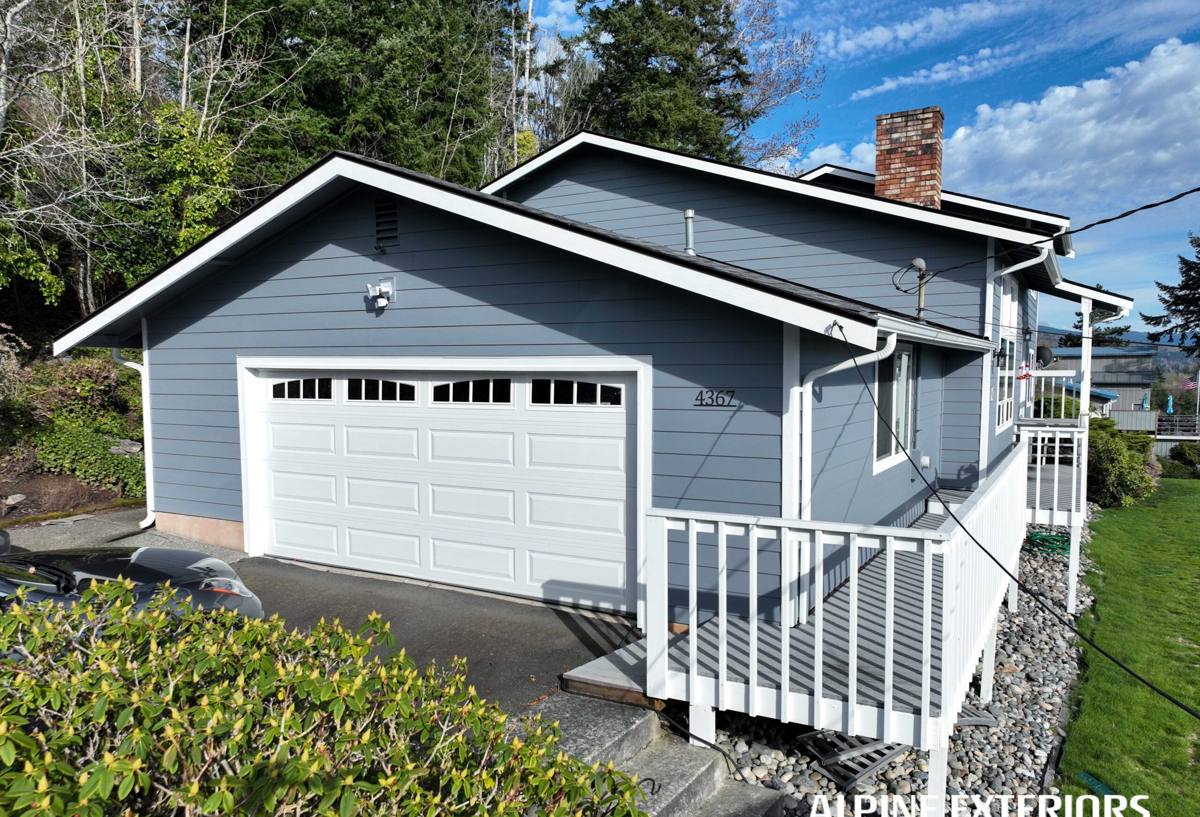
Signs Your Crow Valley Deck Needs Replacement, Not Repair
Not every tired deck needs a full replacement. But in this valley, certain signs mean the structure has moved past the point where patching makes sense.
- Soft or spongy decking, especially near the house or in shaded corners where moss holds moisture against the wood
- Rust streaking or corroded fastener heads, which usually means moisture has been sitting under the boards for a season or more
- Gaps opening between the ledger board and the house siding or trim
- Wobble in the railing posts or stair stringers when you put weight on them
- Persistent moss or black-green staining that comes back within weeks of cleaning
- Visible sagging between joists, even if it's minor
- Wood that sounds hollow or crumbles when probed with a screwdriver near ground contact points
If you're seeing two or more of these, the framing underneath has likely been compromised, not just the surface boards. That's a replacement conversation, not a repair one.
What a Correct Deck Replacement Actually Involves
It Starts Below the Surface
A deck is only as good as what's underneath it. Replacing the visible boards while leaving compromised framing, undersized footings, or a poorly flashed ledger connection just resets the clock on the same failure. A proper replacement in this climate means:
- Full inspection and, where needed, replacement of joists, beams, and posts — not just the boards you can see
- Footings checked for frost heave and adequate bearing, especially important on the uneven, often clay-heavy soils common in this valley
- A ledger board properly flashed and separated from the house wall so water sheds away from the structure instead of into it
- Post bases set above grade and away from standing water or landscaping beds that hold moisture
- Joist spacing and hardware rated for the decking material you're installing, not just whatever was on hand
Then the Decking Itself
Once the frame is sound, the decking material and fastening method determine how the deck holds up through Orcas Island's wet season after wet season. Ventilation between boards, proper gapping for seasonal movement, and hidden or coated fasteners all matter more here than in a drier inland climate.
Decking Material Options for This Valley
There's no single right material for every home, but each option has real trade-offs in a shaded, damp valley setting. We walk homeowners through this honestly rather than pushing whatever has the best margin.
| Material | How It Handles Shade & Moisture | Maintenance | Typical Lifespan Here |
|---|---|---|---|
| Pressure-treated fir/pine | Absorbs moisture readily; needs good airflow underneath to avoid rot | Annual cleaning, periodic sealing | 10-15 years with upkeep |
| Cedar | Naturally rot-resistant but still needs airflow; moss still grows on the surface in shade | Cleaning and re-oiling every 1-2 years | 15-20 years with upkeep |
| Composite decking | Won't rot, but can trap moss and algae on the surface if it never dries between rains | Periodic washing; no sealing needed | 20-25+ years |
| PVC/capped polymer | Fully moisture-resistant surface; still needs a properly ventilated frame underneath | Low; occasional washing | 25+ years |
In shaded, slow-drying sections of Crow Valley properties, we lean toward composite or capped polymer boards for surfaces that stay damp longest, and reserve natural wood for sunnier, better-ventilated sections of the same deck when a homeowner wants that look. The framing standard underneath stays the same regardless of which decking material you choose — that's where most deck failures actually start.
A Note on Composite Decking Choices
Not all composite boards behave the same in shade. Older-generation composites with less moisture-resistant capping can hold algae and discolor faster in low-sun areas. We install fully capped composite or polymer products specifically because the cap sheds water and resists staining better than uncapped or partially capped boards — that's a maintenance and moisture-behavior decision, not a brand preference.
Our Deck Replacement Process
- On-site assessment — We inspect the existing deck, ledger connection, footings, and surrounding drainage before quoting anything, since shaded valley lots often need more framing work than they appear to from the surface.
- Scope and material walkthrough — We explain what needs replacing versus what's still sound, and go over decking material trade-offs specific to how much sun and airflow your deck actually gets.
- Permitting — We handle the San Juan County permitting steps that apply to your project's size and location.
- Demolition — Old decking, and any compromised framing, is removed and hauled off; we check soil and post conditions once boards are off.
- Framing and structural work — Joists, beams, posts, and footings are repaired or replaced to current standards, with the ledger flashed correctly against the house.
- Decking installation — Boards are installed with proper gapping and fastening for the material chosen, with attention to airflow underneath.
- Final walkthrough — We check railings, stairs, and fastener finish work with you before calling the job done.
Permits and Code Considerations in San Juan County
Deck replacement on Orcas Island generally falls under San Juan County building permit requirements once you're dealing with structural framing, height above grade, or railing changes — not just a like-for-like board swap on an already-permitted deck. Requirements can vary based on your deck's size, height, and proximity to property lines, so we confirm what applies to your specific project before work starts rather than assuming. Skipping this step is one of the more common ways homeowners end up with problems at resale.
What Affects the Cost
Every deck replacement is priced around the actual scope of framing work and material choice, not a flat rate. The main variables we walk through with homeowners are below.
| Cost Factor | Why It Matters |
|---|---|
| Extent of framing damage | Hidden rot in joists or the ledger area adds labor and material that isn't visible until demo starts |
| Decking material | Pressure-treated wood costs less upfront than composite or polymer; composite costs less over time in maintenance |
| Footing and post condition | Undersized or heaved footings need to be corrected to code, which adds concrete and labor |
| Deck size and layout | Multiple levels, built-in benches, or complex stair runs add framing and finish time |
| Site access | Tree cover, slope, and material staging distance affect labor time on valley lots |
We give a written scope before any work starts, so you know what's structural versus cosmetic and why the price is what it is.
Why Hire a Crew That Already Works Crow Valley
Crews unfamiliar with this specific setting tend to treat every Orcas Island deck like a waterfront deck — heavy on wind and salt resistance, light on shade and drainage planning. Others treat it like a mainland suburban deck and miss the moisture chemistry entirely. Getting the framing, flashing, and material choice right for a shaded, damp valley lot takes site-specific judgment, not a one-size approach copied from a different climate.
Working regularly in Crow Valley and the surrounding San Juan County area also means knowing what local permitting actually requires, which soil conditions to expect, and which decking materials hold up against the valley's long moss season versus which ones just look good in a showroom. That local track record shows up in fewer surprises during demo and fewer callbacks after the job is done.
Ready to Talk About Your Deck
If your deck is showing soft spots, persistent moss, or movement in the framing, it's worth a look before another wet season passes. We offer a free, no-pressure estimate — we'll assess the structure honestly, tell you what actually needs replacing, and walk you through material options that make sense for your specific lot. Use the form below to get started.