 Orcas Island
 Composite Decking Built for Lopez Village's Island Climate
A deck in Lopez Village doesn't live an easy life. It sits under salt-laden air coming off the water, takes on driving rain for months at a time, and spends a good chunk of the year shaded and damp enough to grow moss on anything that isn't actively shedding water. Composite decking, installed correctly, handles that environment better than most wood options — but "installed correctly" is doing a lot of work in that sentence. A lot of composite decking problems we get called out to fix in San Juan County aren't material failures. They're installation shortcuts that a wetter, saltier climate exposes faster than it would on the mainland.
This page is about that specific combination: composite decking, in Lopez Village, dealing with San Juan County's marine weather. If you're comparing materials or trying to figure out why your current deck is already showing problems, the details below are the ones that actually matter here.
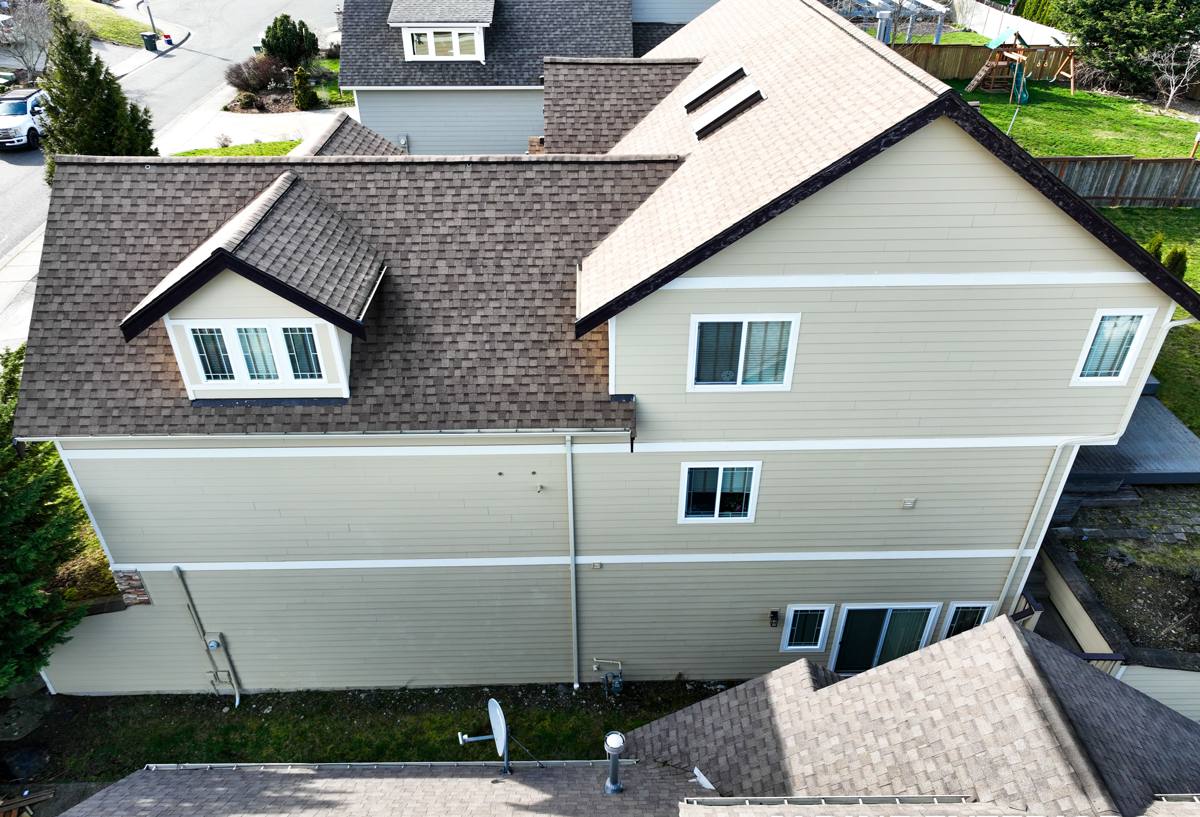
What San Juan County's Marine Climate Does to a Deck Over Time
Three things drive almost every deck problem we see on the islands:
- Salt air corrosion — hardware, fasteners, and any exposed metal connectors take a beating faster near open water than they would inland. Standard hardware corrodes visibly within a few seasons.
- Sustained wet periods — it's not just rainfall totals, it's how long surfaces stay wet between dry spells. Wood fiber swells and contracts repeatedly; anything with a joint, seam, or fastener hole is a place moisture can work its way in.
- Moss and algae growth — shaded decks, tree cover, and long damp stretches mean organic growth on decking surfaces isn't occasional here, it's expected. It also makes boards slippery well before it looks bad.
None of this is unique to Lopez Village specifically, but it's more pronounced on the islands than in a typical inland Washington yard, and it's a big part of why the material choice and the installation details both matter more here than they would somewhere drier.
Why This Pushes Homeowners Toward Composite
Composite decking doesn't absorb water into its structure the way wood does, so it doesn't swell, cup, or rot from the inside. It also doesn't need annual staining or sealing to keep moisture out — the material itself isn't relying on a surface coating to stay protected. That's a real advantage in a climate where a missed maintenance season on a wood deck can mean visible damage by the following spring. Composite isn't maintenance-free, and it isn't immune to moss or salt exposure, but the failure modes are slower and more forgiving.
Composite vs. Wood vs. PVC: A Straight Comparison for This Climate
| Material | Upfront Cost | Maintenance | Moisture & Salt Air Behavior | Typical Lifespan |
|---|---|---|---|---|
| Pressure-treated wood | Lowest | Annual cleaning, periodic staining/sealing | Absorbs moisture; prone to cupping, splintering, and rot without upkeep | 10–15 years in this climate with maintenance |
| Cedar or other natural wood | Moderate | Regular sealing to hold color and resist moisture | Better natural rot resistance than PT wood, but still absorbs moisture | 12–20 years with consistent care |
| Capped composite | Higher | Periodic washing; no staining or sealing | Doesn't absorb moisture into the core; resists mold better than wood | 25–30+ years, manufacturer-backed |
| PVC decking | Highest | Very low; wash as needed | Fully synthetic, excellent moisture resistance, lighter weight | 25–30+ years, manufacturer-backed |
Composite sits in a practical middle ground for most Lopez Village homeowners: a real step up from wood in a wet, salty climate, without the premium and different handling requirements of full PVC. The right call still depends on your specific structure, budget, and how the deck is used — that's a conversation, not a formula.
What a Correct Composite Decking Installation Actually Involves
The board itself is only part of the job. Most of the long-term performance — especially in a climate like this one — comes down to what's underneath and around it.
Substructure and Framing
Composite boards are heavier than wood and need a substructure built to the manufacturer's joist-spacing specs, not generic lumber-framing habits. Undersized or improperly spaced joists lead to bounce, sag, and premature fastener stress — problems that show up years later, not on install day.
Fasteners and Hardware
Given the salt air here, we don't cut corners on hardware. Stainless steel or coated fasteners rated for coastal/marine exposure cost more than standard deck screws, but standard hardware visibly corroding within a few seasons is one of the most common issues we're asked to fix on existing decks.
Ledger Board Flashing
Where a deck attaches to the house, proper flashing keeps water from tracking behind siding and into the wall structure. This is arguably the single most important — and most commonly skipped — detail in deck construction anywhere, and it matters more in a climate that sees this much sustained rain.
Ventilation and Drainage Underneath
Composite doesn't rot, but the framing underneath it still can if water and debris collect and can't dry out. Proper spacing, drainage slope, and airflow beneath the deck keep the structural wood components healthy for the life of the deck.
Our Process, Start to Finish
- On-site assessment — we look at the existing structure (if there is one), ledger connection, drainage path, and sun/shade exposure before recommending anything.
- Material selection — we walk through composite board options, colors, and hidden-fastener vs. face-screw systems based on your budget and how the deck will be used.
- Substructure work — repair or rebuild framing to spec, address any rot or undersized joists found during teardown, and install proper flashing at the ledger.
- Decking installation — boards, fasteners, and edge/fascia details installed to manufacturer specification, including expansion gaps that matter more in a climate with real seasonal temperature swings.
- Railing and finish details — code-compliant railing, stair, and trim work completed and inspected.
- Final walkthrough — we go over care basics with you before we consider the job done.
Board Spacing, Drainage, and Fastener Choices Matter More Here
In a drier inland climate, a slightly tight board gap or a skipped drainage detail might never cause a visible problem. In San Juan County, with this much sustained moisture and salt exposure, those same shortcuts show up faster — as trapped moisture, staining, or premature hardware failure. We size gapping for both drainage and the expansion/contraction composite boards go through with temperature changes, and we route water away from the structure rather than letting it pool against framing or house siding. None of this is visible once the deck is finished, which is exactly why it's worth asking a contractor about before work starts, not after.
Maintenance Realities: What Composite Still Needs Out Here
Composite is lower-maintenance than wood, not maintenance-free. In this climate, that distinction matters.
| Task | Frequency in This Climate | Why It Matters Here |
|---|---|---|
| Wash surface (soap and water or manufacturer-approved cleaner) | 2–3 times per year | Removes salt residue, pollen, and organic buildup before it stains or grows moss |
| Clear debris from board gaps and drainage channels | Seasonally, especially fall | Trapped leaf litter under a wet climate accelerates moss and mildew growth |
| Inspect fasteners and railing hardware | Annually | Catches early salt-air corrosion before it becomes a structural issue |
| Check ledger flashing and house connection | Annually | Early water intrusion here is usually invisible until it's a bigger repair |
Here's a practical checklist for staying ahead of problems on a composite deck in a climate like this one:
- Sweep or rinse off standing moisture and organic debris regularly, especially in shaded areas
- Don't let leaves and needles sit in gaps between boards through the wet season
- Check for slippery, moss-prone spots and treat them before they become a fall hazard
- Look at fastener heads and any exposed metal hardware once a year for early corrosion
- Confirm the area under the deck drains and dries out rather than staying saturated
Permits and Practical Logistics for an Island Deck Project
Building or replacing a deck in San Juan County typically means working through county permitting, and requirements can shift based on deck height, proximity to property lines, and whether the structure is attached to the house. We handle that process as part of the job rather than leaving it to the homeowner to sort out.
There's also the practical reality of working on the islands: materials, crews, and equipment generally move on a ferry schedule, not a same-day mainland delivery schedule. That means realistic project timelines account for ferry logistics and weather windows from the start, rather than promising mainland-style turnaround and missing it. A contractor who's used to working in Lopez Village builds that into scheduling instead of treating it as a surprise mid-project.
Why Hiring a Crew That Already Works Lopez Village Matters
A lot of what separates a composite deck that holds up for decades from one that develops problems in five years isn't the board brand — it's whether the person building it understands the specific stresses of this climate. A crew that mostly works inland jobs may not default to marine-grade fasteners, may not think twice about ledger flashing in a climate this wet, or may not build ferry logistics into their scheduling. Those aren't hypothetical gaps; they're the exact issues we get called to fix on decks built by out-of-area crews.
Working regularly in San Juan County also means we're not guessing at permitting expectations, typical site conditions, or how exposed a given lot is to wind and salt air. That familiarity shows up in decisions made before a single board goes down — decisions a homeowner usually can't evaluate until years later, when it's either still solid or it isn't.
If you're weighing composite decking for a home in Lopez Village, we're glad to walk the site, look at your existing deck or planned layout, and give you a straight assessment — no pressure, no upsell. Use the form below to request a free estimate.