 Orcas Island
 Cascade Lake's Microclimate Is Harder on Siding Than the Rest of Orcas Island
Most of the siding advice written for the Pacific Northwest assumes an open, breezy lot where sun and wind get a chance to dry a wall between storms. Homes around Cascade Lake rarely get that luxury. Between the tree canopy that surrounds much of the lake and the water itself sitting a stone's throw from many foundations, siding here spends more hours per day damp than siding on an open bluff or a cleared in-town lot elsewhere on Orcas Island. Add in San Juan County's long, wet shoulder seasons and the salt-laden air that moves in off the surrounding straits, and you have a combination that ages the wrong siding material fast.
None of this means a house near the lake is doomed to constant repairs. It means the siding, the water-management details behind it, and the installer's judgment about your specific lot all have to be matched to what that lot actually does to a wall — not to a generic weather average for "western Washington."
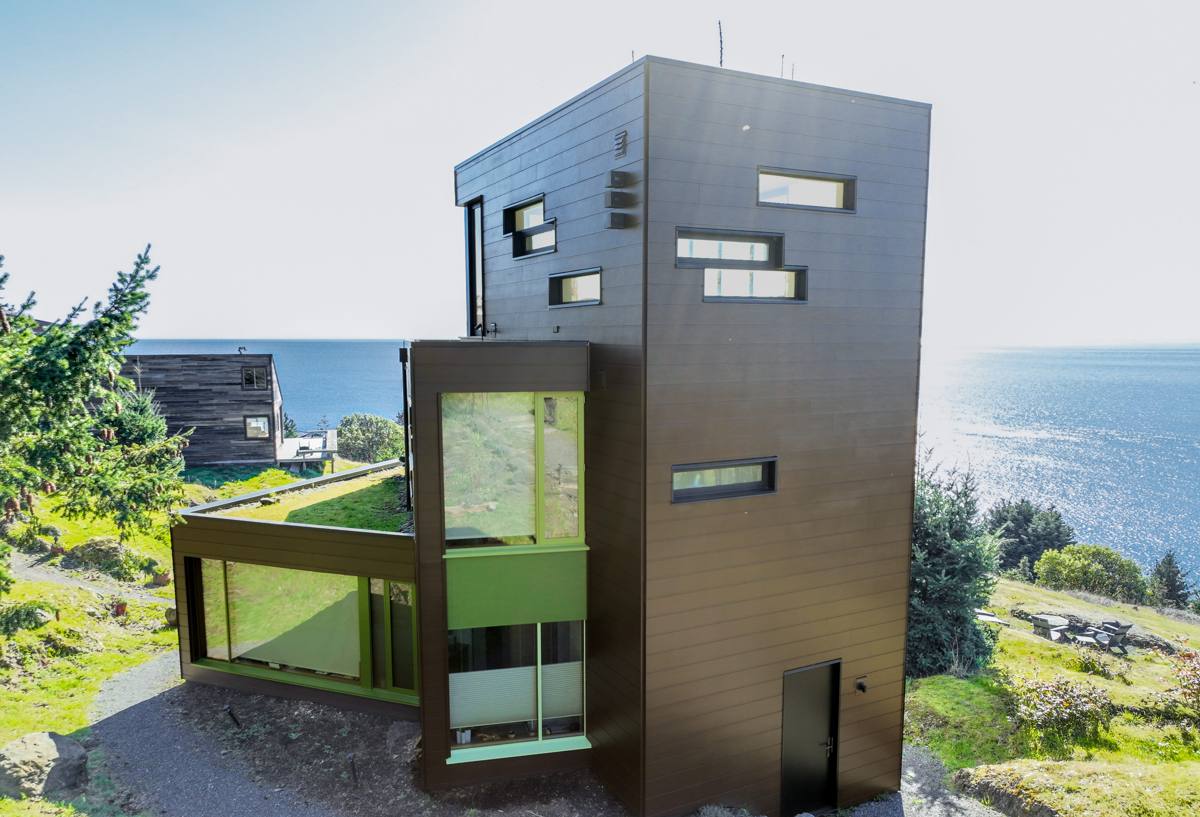
What the Shade and Moisture Actually Do to a Wall
Three things drive most of the siding failures we see on shaded, near-water lots like the ones around Cascade Lake:
- Slow drying cycles. A wall in full sun after a storm can dry out in a matter of hours. A wall shaded by fir and cedar for most of the day may stay damp for a day or more, giving moisture far more time to work into seams, fastener holes, and butt joints.
- Moss and algae colonization. Constant low light and ambient moisture are exactly what moss needs to establish on a horizontal lap or a north-facing wall. Once moss takes hold, it holds even more water against the surface underneath it, and on materials that aren't built to handle sustained dampness, that's where rot and delamination start.
- Driving rain off the water. Wind off Cascade Lake can push rain sideways into wall assemblies that were only ever detailed to shed water falling straight down. Poorly lapped siding, missing kick-out flashing, and undersized overhangs all show their weaknesses faster here than they would on a sheltered lot.
The fix isn't a different color or a thicker coat of paint. It's a siding material engineered for sustained moisture exposure, installed with the flashing and drainage details that actually move water back out of the wall.
Signs a Cascade Lake Home Needs Replacement, Not a Patch
Homeowners often call us thinking they need a few boards swapped, and sometimes that's true. But certain signs mean the whole wall assembly — not just the visible siding — has been compromised, and patching only buys a season or two before the problem resurfaces.
- Soft or spongy spots when you press on the siding near the bottom courses or below window sills
- Persistent moss or dark streaking that comes back within weeks of being cleaned off
- Paint that's bubbling, peeling, or won't hold no matter how many times it's redone
- Visible gaps at butt joints or corners where boards have shrunk, cupped, or pulled away from the wall
- A musty smell near exterior walls inside the house, especially in closets or corners that share a wall with a shaded exterior face
- Siding that was installed with no gap for drainage and now traps water against the sheathing
If more than one or two of these show up in the same area of the house, the sheathing and house wrap behind the siding usually need attention too, which is a job for a full replacement, not a repair.
What a Correct Replacement Actually Involves
A siding replacement done right isn't just pulling off old boards and nailing up new ones. On a shaded, moisture-prone lot like the ones around Cascade Lake, the work that happens underneath the visible siding matters more than usual.
Tear-off and inspection
Old siding comes off in sections so we can see the sheathing underneath before covering it back up. Soft or delaminated sheathing gets replaced, not painted over and hoped for. This is also when we find out whether past moisture problems were cosmetic or structural.
Water-resistive barrier and drainage plane
A weather-resistant barrier goes over the sheathing, lapped correctly from the bottom up so water always sheds outward. On sites with heavy shade and slow drying, we typically build in a drainage gap behind the siding so any moisture that does get past the cladding has somewhere to go instead of sitting against the wall.
Flashing at every penetration
Windows, doors, hose bibs, light fixtures, and anywhere else something interrupts the wall plane all need proper flashing, not just a bead of caulk. Caulk fails; flashing sheds water by shape and gravity, which is what actually holds up over years of wind-driven rain.
Manufacturer-spec installation
Fastener spacing, clearance from grade, gaps at butt joints, and caulking only where the manufacturer specifies it — these details are what separate siding that lasts thirty-plus years from siding that starts failing in five. This is also where a lot of installations go wrong, because it's tedious, unglamorous work that's easy to rush.
Why We Install Only James Hardie Fiber Cement
We get asked fairly often why we don't offer vinyl, LP SmartSide, or a cheaper fiber cement alternative alongside Hardie. The honest answer is that we've seen how each of those performs on shaded, moisture-heavy Orcas Island lots over time, and we'd rather stand behind one product we trust completely than offer options we'd have reservations about.
Vinyl siding is inexpensive and low-maintenance in the sense that it doesn't need painting, but it's a poor match for a site where moss and algae are a real issue — it doesn't hold up well to aggressive cleaning, and its seams and drainage gaps aren't engineered for constantly damp conditions the way fiber cement rainscreen assemblies are. Engineered wood products like LP SmartSide perform reasonably well when installation is flawless, but they're wood-based, which means their long-term moisture tolerance depends heavily on paint maintenance and sealed cut edges — a bigger ask on a lot that stays damp for days after every storm. Primed or unfinished wood siding faces the same issue in a more extreme form: it needs vigilant upkeep to avoid exactly the rot and moss problems that are already the biggest threat around the lake.
James Hardie fiber cement is non-combustible, dimensionally stable, and doesn't feed mold or moss growth the way wood-based products can. Its factory-applied ColorPlus finish is baked on and warrantied against fading and peeling, which matters on a shaded lot where a hand-painted finish would need touch-ups far sooner. Hardie's HZ5 product line in particular is engineered for the kind of freeze-thaw and moisture cycling this region sees. It's the product we're confident putting our name behind on a house that has to survive a lot of Cascade Lake's shade and rain, year after year.
How the materials compare on the factors that matter here
| Factor | James Hardie Fiber Cement | Vinyl | Engineered Wood (LP SmartSide) | Untreated/Primed Wood |
|---|---|---|---|---|
| Moisture tolerance | High — non-combustible, won't rot | Moderate — seams can trap moisture | Moderate — depends on sealed edges and paint | Low — absorbs and holds water |
| Moss/algae resistance | High — doesn't feed organic growth | Moderate — can be damaged by aggressive cleaning | Moderate — wood fibers are a food source | Low — a preferred surface for moss |
| Finish durability | Factory ColorPlus, 15-year finish warranty | Color molded in, can fade/chalk over time | Field-painted, needs repainting cycles | Field-painted, frequent repainting |
| Fire resistance | Non-combustible | Melts/deforms under heat | Combustible | Combustible |
| Typical lifespan when installed to spec | 30-50+ years | 20-30 years | 20-30 years | 15-25 years with maintenance |
Our Replacement Process for Cascade Lake Homes
- On-site assessment. We walk the exterior, check sheathing condition where we can, and note which walls take the most shade and moisture exposure so we can plan drainage details accordingly.
- Written scope and estimate. You get a clear breakdown of what's being replaced, what siding line and profile we recommend, and why — no vague allowances.
- Tear-off and sheathing repair. Old material comes off, damaged sheathing gets replaced, and we confirm the structure underneath is sound before covering it.
- Weather barrier and drainage plane installation. Properly lapped house wrap and, where the site calls for it, a rainscreen gap to let the wall breathe and drain.
- Flashing at every window, door, and penetration. Done before siding goes on, not patched in afterward.
- Hardie installation to manufacturer spec. Correct fastener pattern, clearances, and joint treatment for the specific HZ product line chosen for your site.
- Final walkthrough. We go over the finished work with you and address anything before calling the job complete.
Why Local Experience Around the Lake Matters
Getting siding materials to Orcas Island takes ferry scheduling and lead-time planning that a mainland crew won't have dialed in. Beyond logistics, a crew that has worked multiple homes near Cascade Lake already knows which walls on a shaded, tree-lined lot need extra drainage detail before the first course goes up, instead of learning that lesson after a callback. We're also familiar with San Juan County's permitting expectations for exterior work, which keeps a project from stalling on paperwork.
None of that replaces sound installation practice — every wall still needs to be flashed and drained correctly regardless of who's doing the work. But knowing the island's ferry rhythms, supply lead times, and the way a particular microclimate behaves means fewer surprises and a tighter schedule for you.
What Drives the Cost of a Replacement Here
Every house is different, but on Cascade Lake lots the biggest cost swings usually come from a handful of factors:
| Cost Factor | Why It Matters Here |
|---|---|
| Sheathing condition | Shaded, damp walls are more likely to need sheathing replacement discovered during tear-off, not just siding |
| Wall complexity | Dormers, multiple gables, and cut-ins around windows add labor time and material waste |
| Access and staging | Wooded lots and steep grades near the lake can require more setup time for scaffolding or lifts |
| Siding profile chosen | Lap, shingle, and panel Hardie profiles carry different material and labor costs |
| Existing drainage details | Adding a rainscreen gap where none existed adds a step but pays off in wall longevity |
Questions Worth Asking Before You Hire Anyone
- Will you inspect and replace damaged sheathing before installing new siding, not just cover it up?
- What water-resistive barrier and flashing details do you use, and will they be spelled out in the estimate?
- Is a drainage gap or rainscreen included, especially on shaded walls?
- What siding product and specific line are you installing, and why that one for this house?
- Will fastener spacing and installation follow the manufacturer's published requirements?
- What does the warranty actually cover, and is it transferable if you sell the home?
A contractor who answers these clearly, without dodging into vague reassurances, is one worth trusting with a job that has to hold up to what this specific lot puts a wall through.
If your siding is showing moss that won't stay away, soft spots, or paint that won't hold, we're happy to take a look and talk through what your home actually needs. Reach out below for a free, no-pressure estimate.